We Provide Cooling Tower Solution

Views: 0 Author: Site Editor Publish Time: 2025-12-30 Origin: Site


If you’ve ever walked past an industrial facility or large commercial building and noticed a white cloud rising from the top of a cooling tower, you may have wondered: Is that smoke? Is it pollution? Is the cooling tower releasing harmful gas?
These are common and completely reasonable questions. Cooling towers are highly visible pieces of equipment, yet they’re often misunderstood. The truth is much simpler—and far less alarming—than many people think.
Let’s take a clear, practical look at what gas is commonly released by a cooling tower, why it happens, and whether it poses any risk to people or the environment.
Before talking about gas or emissions, it’s important to understand the basic working principle of a cooling tower.
A cooling tower’s primary job is to remove excess heat from a system—whether it’s an HVAC system, a power plant, or an industrial process. It does this by transferring heat from warm circulating water into the surrounding air.
As warm water flows through the tower, it comes into contact with moving air. A small portion of that water evaporates, and evaporation naturally removes heat. The cooled water is then reused, while warm, moist air exits the tower.
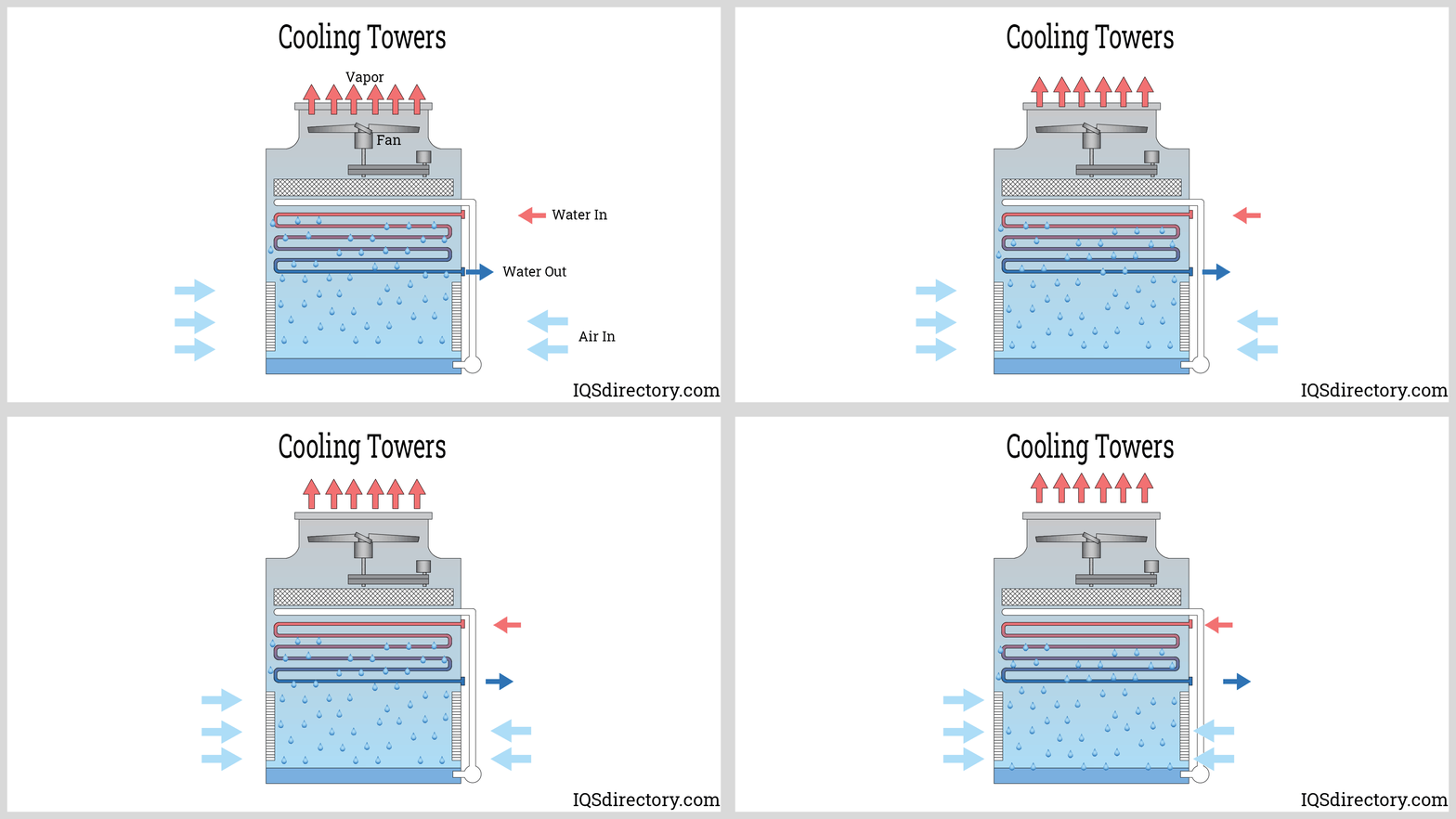
This evaporation process explains nearly everything about what appears to be “gas” coming out of a cooling tower.
The short and simple answer is: no.
Cooling towers do not burn fuel, they do not involve chemical reactions, and they do not generate exhaust gases like engines or boilers. Instead, they release air that has absorbed moisture and heat during the cooling process.
The most common substance released by a cooling tower is water vapor (H₂O). That visible white plume is not smoke or pollution—it’s simply warm, moist air meeting cooler ambient air.

Just like your breath becomes visible on a cold day, water vapor from a cooling tower condenses into tiny droplets, forming a cloud.
Not at all. Water vapor is:
Non-toxic
Odorless
Naturally occurring
It’s part of the Earth’s normal water cycle and poses no health or environmental risk.
Cooling towers also release ordinary air that already exists in the environment.
The air leaving a cooling tower contains:
Nitrogen
Oxygen
Trace amounts of inert gases like argon
These gases are not created by the cooling tower—they simply pass through it along with the airflow.
One of the most misunderstood aspects of cooling tower operation is drift.
Drift refers to very small liquid water droplets that are carried out of the tower with the air. Drift is not gas, but it can sometimes be mistaken for vapor.
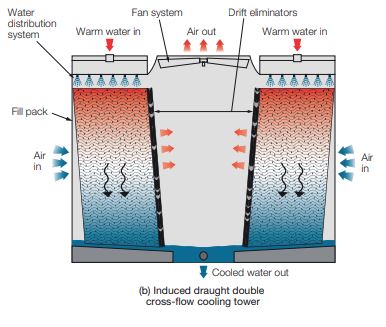
Modern cooling towers, especially those manufactured by Mach Cooling, use high-efficiency drift eliminators to keep drift losses extremely low—typically less than 0.001% of circulating water.
Cooling towers do not produce carbon dioxide.
Any trace CO₂ present comes from:
Ambient air passing through the tower
Dissolved gases in makeup water
These amounts are negligible and are not considered emissions in environmental regulations.
In some facilities, operators may notice slight odors near a cooling tower.
Cooling water is often treated with chemicals to prevent:
Scale formation
Corrosion
Biological growth
If chemical dosing is not properly controlled, trace odors may be detectable. This is not gas production, but evaporation of extremely small chemical residues. Proper system design and control prevent this issue.
Legionella is often mentioned in discussions about cooling towers, but it’s important to be precise.
Legionella is not a gas
It is a waterborne bacterium
Risk is associated with inhaling contaminated droplets, not vapor
Good design, proper water treatment, and effective drift elimination virtually eliminate this risk.
From a regulatory standpoint, cooling tower releases are generally classified as:
Water vapor
Air
Non-polluting substances
Most environmental authorities do not require air emission permits for cooling towers, focusing instead on water management, drift control, and noise.
Advanced eliminator designs capture droplets before they exit the tower, reducing both water loss and visible mist.
Closed-circuit designs isolate process fluid from air, dramatically reducing evaporation and visible plume.
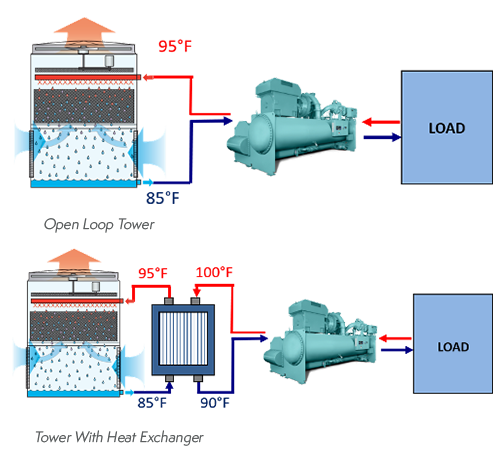
Open cooling towers release more visible water vapor
Closed cooling towers release minimal vapor
Dry cooling towers release only warm air
Choosing the right design depends on climate, application, and environmental requirements.
At Mach Cooling (https://www.machcooling.com/), cooling towers are engineered with:
Ultra-low drift rates
Optimized airflow design
Compliance with international environmental standards
Whether for industrial processes or HVAC systems, Mach Cooling focuses on efficient heat rejection with minimal environmental impact.
Is the white plume smoke?
No. It is condensed water vapor.
Do cooling towers release toxic gas?
No. Under normal operation, they do not.
Are cooling towers air polluters?
No. They are considered environmentally friendly heat rejection devices.
So, what gas is commonly released by the cooling tower?
The answer is simple: water vapor, along with normal atmospheric air.
There is no combustion, no toxic exhaust, and no harmful gas generation. Modern cooling towers—especially those designed and manufactured by Mach Cooling—are safe, efficient, and environmentally responsible systems that quietly perform a vital role in industrial and commercial operations.