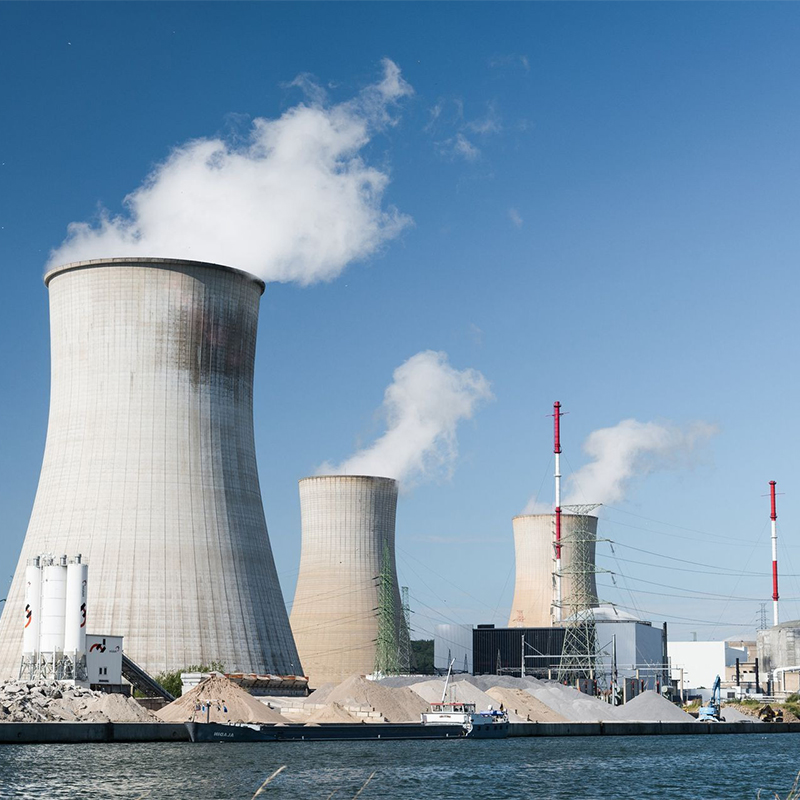
We Provide Cooling Tower Solution

Views: 0 Author: Site Editor Publish Time: 2026-02-05 Origin: Site


Cooling towers are vital components in industrial and commercial HVAC systems, playing a key role in dissipating heat from water-cooled processes. Integral to their performance is the heat exchanger, which allows efficient heat transfer while protecting the system from contamination. Choosing the right type of heat exchanger is crucial to maximize efficiency, reduce maintenance, and prolong equipment life.
In this article, we will explore the types of cooling tower heat exchangers, their principles, advantages, challenges, and maintenance practices, while highlighting solutions from Mach Cooling, a leading manufacturer of high-performance cooling systems.
A heat exchanger in a cooling tower separates two fluid streams—usually water and a process fluid—allowing heat transfer without mixing. This ensures:
Protection against contamination of the main cooling water
Improved system reliability
Efficient heat removal
Reduced maintenance and downtime
Without an effective heat exchanger, cooling towers may suffer from scaling, corrosion, and inefficient heat rejection, increasing energy consumption.

Two fluids flow in separate channels
Heat moves from the warmer fluid to the cooler fluid
Designs optimize surface area and flow rates to maximize efficiency
Heat transfer coefficient
Pressure drop
Flow arrangement (counterflow, parallel flow, crossflow)
Material compatibility

Composed of a bundle of tubes within a shell
Process fluid flows inside the tubes while cooling water flows outside
Can handle high pressures and temperatures
Durable and widely used in industrial applications
Advantages:
High capacity
Robust for industrial conditions
Easy to maintain
Challenges:
Larger footprint
Potential for fouling if water quality is poor
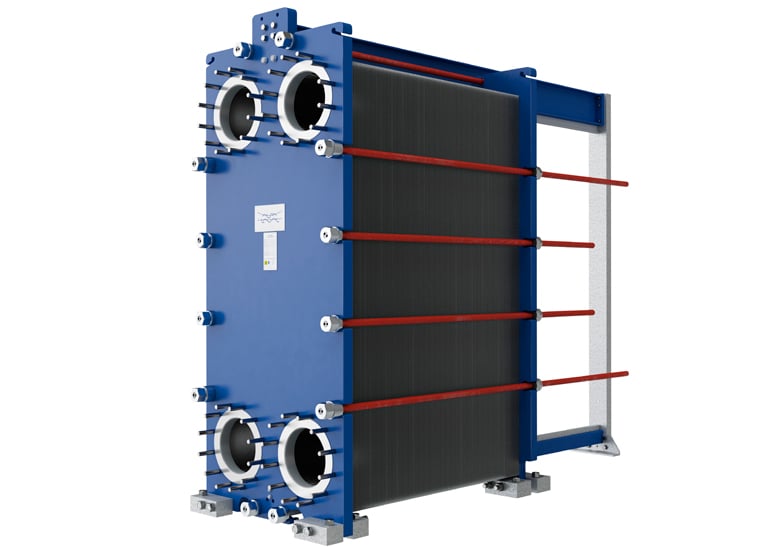
Comprise thin, corrugated plates stacked together
Fluids flow in alternating channels
Compact design with high heat transfer efficiency
Advantages:
Small footprint, ideal for space-constrained installations
High efficiency with low water volume
Easy to disassemble and clean
Challenges:
Sensitive to scaling and fouling
Gasket maintenance required
Variation of plate heat exchangers with removable plates and gaskets
Allows easy inspection and cleaning
Often used in commercial cooling towers and HVAC systems
Advantages:
Flexible capacity by adding or removing plates
Easy maintenance and repair
Challenges:
Gaskets may degrade over time
Not ideal for extremely high-pressure applications
Fluids flow in a spiral channel
Self-cleaning effect reduces fouling
Compact design for moderate capacities
Advantages:
Low fouling tendency
Efficient for viscous fluids or fluids with particles
Challenges:
Limited size options
Less common in very large industrial cooling towers
Uses air as the cooling medium instead of direct water contact
Often combined with dry or hybrid cooling towers
Suitable for water-constrained regions
Advantages:
Reduces water consumption
Can operate in cold climates without freezing
Challenges:
Less efficient than wet cooling
Larger footprint required
Hot process fluid may require stainless steel or high-alloy materials
Cooling water quality impacts fouling and corrosion
Plate exchangers for tight spaces
Shell-and-tube for large industrial setups
Plate and frame exchangers are easier to maintain
Shell-and-tube may require chemical cleaning or mechanical brushing
High-efficiency exchangers reduce energy consumption
Low pressure drop designs save pump energy
Regular Cleaning: Remove scale and debris to maintain heat transfer efficiency
Water Treatment: Prevent corrosion and fouling using appropriate chemicals
Gasket Inspection: For plate-type exchangers, check gaskets for wear and leaks
Monitoring: Track pressure drop and temperature differences to detect performance issues
Periodic Overhaul: For shell-and-tube units, inspect tubes and replace damaged components
Optimizing heat exchanger design reduces cooling tower runtime
High-efficiency materials and surface designs maximize heat transfer
Integrating with variable-speed fans and smart controls enhances energy savings
Mach Cooling provides reliable and high-performance cooling tower heat exchangers:
Shell-and-tube, plate, and plate-and-frame options
Customizable for commercial and industrial towers
High corrosion resistance and long service life
Expert installation and maintenance support
Learn more at https://www.machcooling.com/.
A large commercial building installed Mach Cooling plate-and-frame heat exchangers on its rooftop towers. Key results included:
Improved heat transfer efficiency by 15%
Reduced water consumption through indirect cooling
Simplified maintenance with removable plates
Reliable operation across summer and winter seasons
Scaling and Fouling: Reduce efficiency and increase pressure drop
Leaks: Gasket degradation or tube failure
Corrosion: Material incompatibility or poor water treatment
Flow Imbalance: Uneven distribution of fluids reduces performance
Choosing the correct cooling tower heat exchanger involves balancing efficiency, maintenance, durability, and cost. Whether you need a shell-and-tube for heavy-duty industrial use, a plate-and-frame for compact commercial applications, or an air-to-water system for water savings, proper selection and maintenance are critical.
Partnering with Mach Cooling ensures reliable performance, high efficiency, and long-term support. Protect your cooling tower investment and optimize heat rejection by selecting the right heat exchanger today.