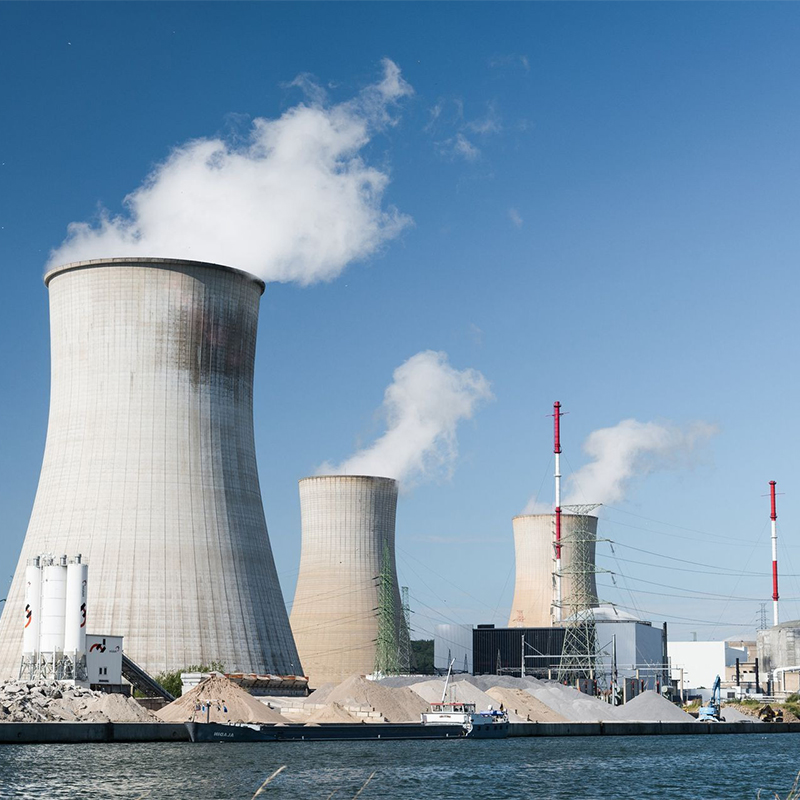
We Provide Cooling Tower Solution

Views: 0 Author: Site Editor Publish Time: 2026-03-11 Origin: Site


In 2026, Afghanistan is steadily expanding its industrial and energy sectors. From hydropower plants in Herat to textile factories in Kandahar, keeping machinery cool is essential. Cooling towers play a critical role in industrial efficiency, preventing overheating, conserving water, and reducing energy consumption.
These systems are becoming smarter, greener, and more reliable than ever. In this article, we’ll explore the top 5 cooling tower manufacturers in Afghanistan that lead the way in performance and sustainability.
Cooling towers are essentially giant heat exchangers. Water heated from industrial processes flows through the tower, where heat is transferred to the air, cooling the water for reuse. Imagine it as an industrial “air conditioner” keeping turbines, generators, and HVAC systems at optimal temperatures.
Natural Draft Towers: Use airflow generated by temperature differences; commonly seen in large power plants.
Mechanical Draft Towers: Use fans to force air movement; ideal for industrial plants.
Hybrid Wet-Dry Towers: Combine wet and dry cooling, conserving water while maintaining efficiency—perfect for Afghanistan’s arid regions.
The most critical metric for a cooling tower is how effectively it removes heat. High-efficiency towers maintain stable water temperatures, ensuring industrial equipment operates smoothly without overheating.
Durable materials, corrosion-resistant coatings, and modular designs determine reliability. Manufacturers who provide low-maintenance solutions save operational costs and downtime for industries.
Water scarcity is a major concern in Afghanistan. Modern towers use water-efficient designs, reduce evaporation, and often recycle water to minimize environmental impact.
Variable-speed fans and energy-saving motors significantly reduce electricity consumption, lowering operational costs while maintaining high performance.
Using recyclable and biodegradable materials not only extends tower lifespan but also reduces environmental footprint—an increasingly important factor for modern industrial operations.

Mach Industry is a global leader in cooling technology, now serving Afghanistan with high-performance hybrid towers. Their modular designs are suitable for both industrial and commercial applications.
Website
Mach Industry’s hybrid wet-dry towers reduce water consumption by up to 30%. IoT-enabled monitoring ensures real-time performance tracking and predictive maintenance, making operations efficient and eco-friendly.
Mach Industry has supplied towers to industrial zones and medium-scale hydropower plants, offering scalable solutions for expanding projects.
SPX Cooling Technologies provides durable, corrosion-resistant towers with excellent heat dissipation. Widely used in Afghanistan’s industrial and energy sectors, SPX towers are reliable, low-maintenance, and built for long-term performance.
Trane Technologies specializes in energy-efficient, IoT-enabled cooling towers for commercial and industrial applications. Their towers are popular in hotels, government buildings, and factories across Kabul and Herat.
Bharat Cooling Systems offers compact, solar-assisted, and water-recycling cooling towers for small-to-medium industries like textiles, food processing, and chemical plants. Their designs help reduce both electricity and water consumption.
EcoCool Afghanistan is a local startup focusing on sustainable cooling solutions. They use energy-efficient fans, biodegradable cooling media, and water-saving designs suitable for small factories, commercial buildings, and eco-conscious hotels.
Hydropower and manufacturing plants in Herat and Kandahar have implemented Mach Industry and SPX cooling towers, achieving up to 25% savings in energy and water while maintaining optimal machinery performance.
Luxury hotels in Kabul rely on Trane and EcoCool towers to ensure guest comfort, reduce operational costs, and support sustainability initiatives.
IoT-enabled towers provide real-time monitoring of temperature, water levels, and fan performance, allowing predictive maintenance that minimizes downtime and improves efficiency.
Hybrid towers that combine wet-dry cooling or integrate solar energy are increasingly adopted to reduce water and energy usage, fitting Afghanistan’s industrial growth and environmental needs.
Harsh summers, dust storms, and extreme seasonal temperature swings affect tower performance, requiring durable and smartly designed systems.
Limited local manufacturing capacity and strict regulations often require imported components, adding complexity and cost to projects.
Startups like EcoCool Afghanistan demonstrate how local innovation can meet sustainability and efficiency goals, adapting global technologies to Afghan conditions.
Partnerships with global manufacturers like Mach Industry, SPX, and Trane allow access to advanced, energy-efficient, and water-saving technologies, helping modernize Afghanistan’s industrial infrastructure.
In 2026, Mach Industry (Zhejiang) Co., Ltd. stands out for innovation and sustainability with hybrid, IoT-enabled towers. SPX and Trane excel in durability and reliability, Bharat leads in solar-assisted designs, and EcoCool Afghanistan drives local eco-friendly solutions. Together, they shape the future of industrial cooling in Afghanistan.