We Provide Cooling Tower Solution

Views: 0 Author: Site Editor Publish Time: 2025-12-10 Origin: Site


Maintaining a cooling tower is vital to ensure efficient operation, long equipment life, and safe water quality. Whether the system is a traditional “water cooling tower,” a “water cooled tower,” a “blowdown water cooling tower,” or a “chilled water cooling tower,” proper servicing keeps the “cooling tower water distribution system” functioning, optimizes “cooling tower water flow rate,” and ensures effective “cooling tower water treatment.” In this article, we detail a comprehensive service and maintenance guide — including inspection, cleaning, water treatment, and mechanical upkeep — with reference to how a manufacturer like MachCooling (https://www.machcooling.com/) can support a robust “water cooling tower system.”
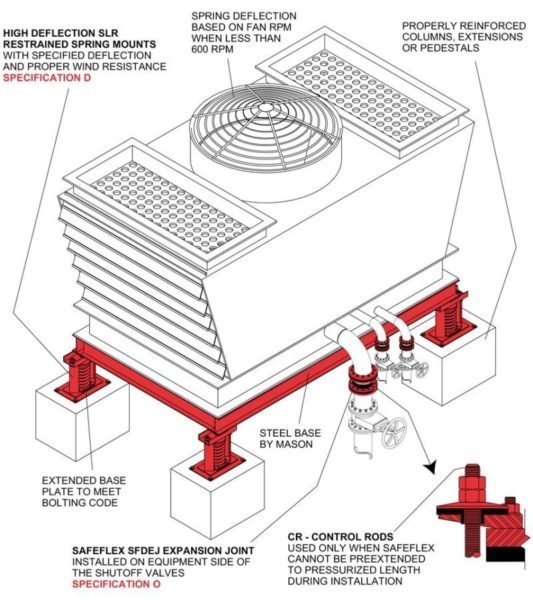
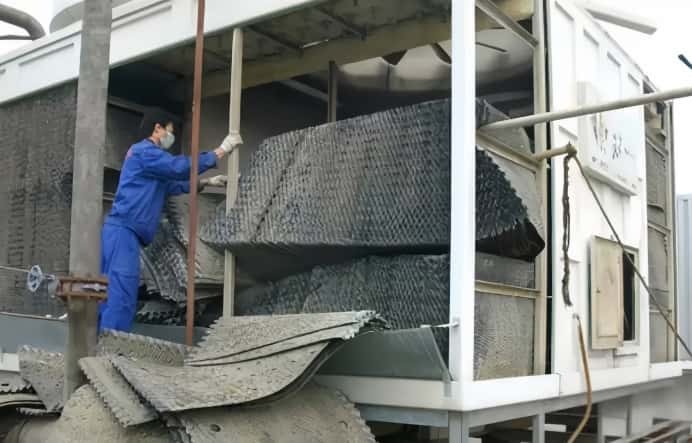
Heat-transfer efficiency: Over time, deposits, scale, sediment, sludge, and biological growth reduce the ability of the tower to transfer heat effectively — leading to higher return water temperatures, reduced cooling performance, and wasted energy.
Water quality & safety: Without proper water treatment, recirculating water can become a growth medium for bacteria (e.g., risk of Legionella), algae, and biofilm — posing health risks and potential regulatory non-compliance.
Longevity and reduced maintenance cost: Properly maintained mechanical components — fans, pumps, nozzles, fill media, drift eliminators — last longer and avoid unexpected breakdowns or replacement.
Water efficiency & chemical control: With proper servicing, including controlled blowdown and water treatment, you can manage cycles of concentration, minimize water waste, and control chemical usage — especially important for blowdown water cooling towers.
Given these stakes, establishing a regular maintenance schedule is not optional — it's essential.
Here's a detailed, structured guide to servicing a water cooling tower (open or closed loop).
Before any maintenance or cleaning:
Power off: Turn off the cooling tower’s fan(s) and circulating water pump(s). Allow any residual flow to finish, then shut down the system.
Personal protection: Use protective equipment — gloves, eye protection, respiratory masks as needed — especially when dealing with water containing chemical treatments, biofilms, or sediments.
Empty or isolate water if required (especially for long downtime or when performing deep cleaning or major repairs).
Regular inspection helps catch issues early. Suggested frequencies:
Daily / Weekly (basic patrol): Check water level in basin/sump; ensure water distribution appears uniform (no dry spots, no irregular spraying), observe fan/motor operation (noise, vibration).
Monthly: Examine water quality (pH, clarity), inspect visible structural elements (nozzles, distribution system, drift eliminators), check for corrosion or wear.
Quarterly or semi-annual: More detailed check — inspect fill media, water piping, mechanical components (pumps, motors, bearings), test water chemistry (hardness, conductivity, TDS), examine blowdown and make-up water behavior.
Annual (or at major shutdown): Full system overhaul — including structural inspection, pump and motor overhaul, fill replacement (if necessary), drift eliminator check, complete water treatment reassessment.
Proper cleaning and chemical treatment are among the most essential maintenance tasks for both open and closed systems.
Remove and clean or power-wash the fill media to eliminate sediment, scale, algae, and biofilm. Use moderate pressure — avoid damaging the fill.
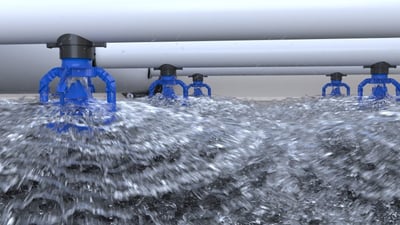
Inspect and clean spray nozzles and water-distribution headers. Clogged nozzles or uneven distribution cause “dry spots,” decreasing cooling efficiency.
Clean or replace drift eliminators if they are worn or clogged — to prevent water loss via drift and to maintain airflow and safety.
Drain or vacuum out sludge, sediment, and debris from the collection basin or sump. Sediment buildup can cause corrosion, reduce flow, or cause microbial growth.
Inspect water piping and valves for scale, corrosion, leaks or blockages. Clean as needed; repair or replace damaged components.
Test water regularly for pH, conductivity, total dissolved solids (TDS), hardness, and other relevant parameters. Ensure levels are within acceptable ranges per guidance or manufacturer recommendations.
Apply chemical treatments (e.g., scale inhibitors, corrosion inhibitors, biocides/algaecides) as necessary to control scale and microbial growth. For open towers, this is critical; for closed-loop systems, treatment still helps maintain internal fluid quality.
Manage “blowdown” properly: When dissolved solids build up due to evaporation, blowdown water should be discharged and make-up water added. For blowdown water cooling towers, regular control (e.g., with conductivity controllers) ensures safe cycles of concentration and water quality stability.
Mechanical reliability is just as important as water-side cleanliness.
Fan system: Inspect fan blades, motor, gearbox, and fasteners. Check blade alignment, blade-to-duct clearance, and bearing/motor temperature. Lubricate bearings and gearboxes per manufacturer schedule.
Water pump: Ensure pump seals, bearings, and mechanical seals are intact. Check for leaks, proper pump suction, and consistent water flow rate.
Belts & couplings: If applicable, inspect for wear and proper tension; replace if worn, misaligned, or degraded.
Structural components: Inspect tower casing, supports, fasteners, drift eliminators, louvers, basins for corrosion, damage, or wear — especially in older towers. Repair or replace as needed; consider protective coatings for metal parts.
Here is a sample maintenance schedule and checklist for a typical water cooling tower (open or closed loop):
| Frequency | Task | Key Points / Notes |
|---|---|---|
| Daily / Weekly | Visual inspection of water level, fan motor/fan operation, water distribution | Look for uneven spray, unusual noise/vibration, water leaks |
| Monthly | Water quality test (pH, clarity), clean visible debris, inspect nozzles & distribution deck | Watch for scaling, blockages, uneven water flow |
| Quarterly / Semi-annual | Deep cleaning: fill media, basin sump; treat water; inspect drift eliminators; mechanical check (fans, pump, belts) | Ensure even water flow, proper chemical balance, good mechanical condition |
| Annual | Full system overhaul: structural inspection, pump + motor maintenance, fill or drift replacement if needed, detailed water chemistry analysis, documentation & maintenance log update | Consider replacement of aging parts, preventive repair before failure |
Because open towers exchange water with ambient air and evaporate water regularly, they require frequent water treatment, blowdown, and monitoring of cycles of concentration. Proper blowdown reduces scaling risk and prevents conductivity/mineral accumulation.
Water treatment should include biocides, corrosion inhibitors, possibly filtrations or side-stream filtration to reduce suspended solids — especially in dusty or polluted environments.
Since the process fluid is isolated, these towers generally have lower risk of contamination and require less frequent water treatment. However — the “cooling water” loop (i.e. the evaporative part) still needs maintenance: coil inspection, water quality check, drift eliminator maintenance, basin cleaning, circulation pump and fan upkeep.
Regular fluid analysis of the closed loop (if the fluid is other than plain water — e.g. glycol mix) is advisable. Also, sealing and insulation integrity should be checked to avoid leaks or performance degradation.
Partnering with a reputed cooling tower manufacturer like MachCooling provides multiple advantages in servicing and maintaining a robust water cooling tower system:
MachCooling can supply high-quality tower units (open-circuit, closed-circuit, hybrid) with durable materials and designs optimized for long life and easier maintenance. Their design choices influence how often maintenance is needed, and how easily parts can be cleaned, replaced or serviced.
Their documentation, operation specifications, and maintenance guides (e.g. for daily patrol inspection, monthly, quarterly, annual maintenance) help you enforce a systematic maintenance schedule — avoiding ad-hoc or neglected maintenance that reduces tower efficiency and lifespan.
MachCooling can support integration with water treatment systems, blowdown control, and water distribution configurations — leading to better long-term performance, water efficiency, and lower lifecycle cost.
For closed-loop or chilled-water cooling tower systems, MachCooling’s expertise ensures proper sealing, coil selection, and configuration that reduce water contamination risk and make maintenance safer and more efficient.
In short: by choosing a capable manufacturer and adhering to a robust servicing plan, you maximize performance, safety, and longevity of your cooling tower system.
Always begin servicing with a safety-first shutdown and inspection.
Develop and follow a scheduled maintenance program: daily/weekly checks, monthly cleaning and inspection, quarterly deep maintenance, and annual overhaul.
Focus on water treatment, water quality monitoring, blowdown control, and effective cleaning — these directly influence heat transfer efficiency, water usage, and microbial safety.
Maintain mechanical components (fans, pumps, belts, motors, drift eliminators) — good mechanical condition is essential for water circulation and airflow, the heart of the cooling process.
Keep detailed records of water quality data, maintenance actions, chemical treatments, blowdown & makeup water amounts — this helps track system health, detect degradation, and plan preventive maintenance.
If possible, partner with a reliable manufacturer / supplier like MachCooling to get well-designed, maintainable systems and get manufacturer-supported maintenance guidance.