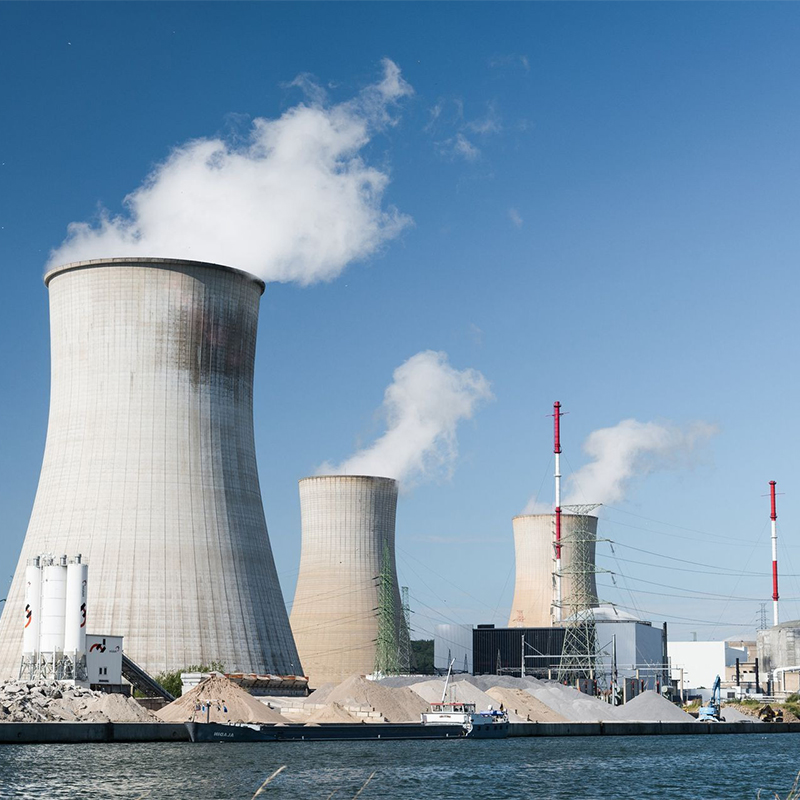
We Provide Cooling Tower Solution

Views: 0 Author: Site Editor Publish Time: 2025-12-09 Origin: Site


Designing a cooling tower is a comprehensive engineering process that integrates aerodynamics, heat transfer, hydrodynamics, materials science, and structural mechanics. Whether for industrial applications, HVAC systems, or large-scale power generation, a well-designed cooling tower significantly improves heat dissipation efficiency, reduces energy consumption, and minimizes long-term maintenance costs.
As a professional cooling tower manufacturer, MACH Cooling (https://www.machcooling.com/) provides a complete set of practical design principles applicable to various industries. This article explains how to design a cooling tower step-by-step.


Before the design stage, several key parameters must be defined. These inputs directly determine the size, structure type, and performance requirements of the cooling tower.
The cooling load is the most important factor in determining the capacity of a cooling tower, typically expressed in kcal/hr, kW, or RT (refrigeration tons).
Heat generated by process equipment
HVAC chilled water system capacity
Required temperature difference between hot and cold water
Local operating environment (temperature, humidity, altitude)
| Parameter | Definition | Importance |
|---|---|---|
| Hot Water Temperature | Temperature of water entering the tower | Determines required cooling duty |
| Cold Water Temperature | Temperature after cooling | Key measure of tower performance |
| Wet Bulb Temperature (WBT) | Ambient humidity-based temperature | Indicates theoretical cooling limit |
Water flow determines the filling volume, heat transfer area, fan capacity, and nozzle configuration.

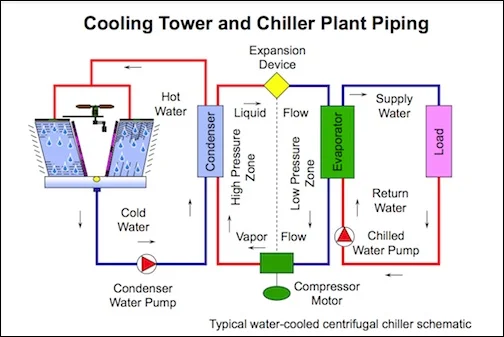
Choosing the right cooling tower structure is the first design decision.
Cross-flow cooling tower
Counter-flow cooling tower
Closed-circuit cooling tower
Hyperbolic natural draft tower
For industrial and HVAC applications, MACH Cooling offers high-efficiency cross-flow and counter-flow cooling towers with optional FRP or metal-structure designs.
The fill (packing) is the core component of a cooling tower.
Specific surface area (m²/m³)
Material (PVC, PP)
Corrugated geometry and water distribution uniformity
Anti-blocking and anti-aging performance
| Fill Type | Specific Surface Area | Application | Features |
|---|---|---|---|
| PVC Film Fill | 125–250 m²/m³ | General industrial | High heat exchange, cost-effective |
| PP Splash Fill | 90–120 m²/m³ | Dusty environments | High temperature resistance, clog-resistant |
| High-efficiency film fill | 150–250 m²/m³ | HVAC | Higher cooling efficiency |
Airflow determines evaporation rate and heat rejection performance.

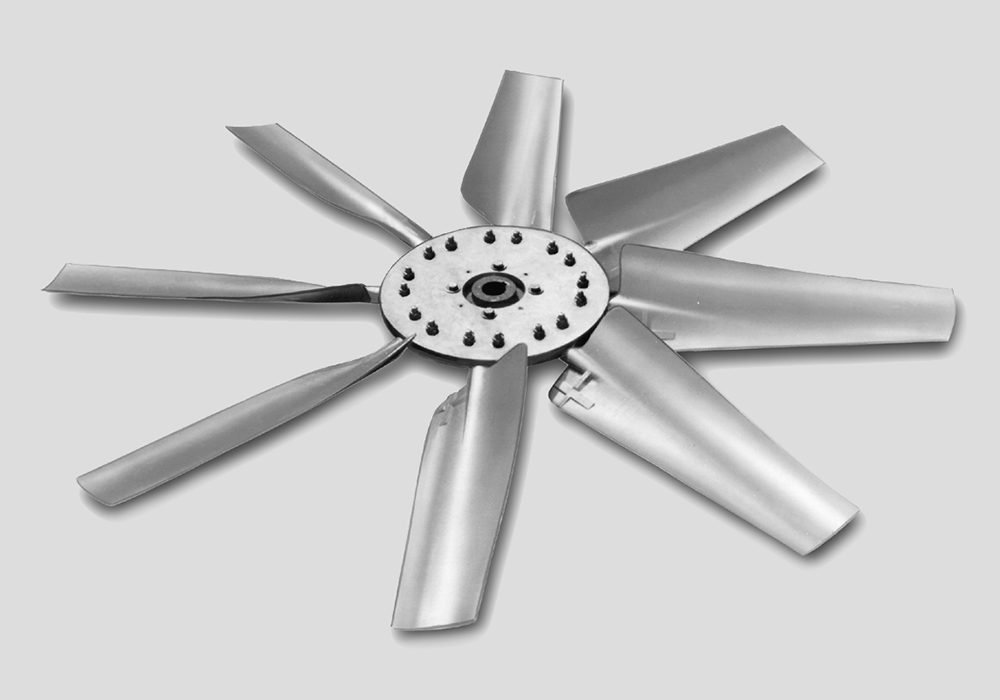
Fan diameter
Rotational speed (RPM)
Blade count and material (FRP, aluminum alloy)
Variable frequency drive (VFD) for energy efficiency
High-strength FRP blades
G6.3/G2.5 dynamic balance
Low noise aerodynamic profile
The structure must provide long-term durability and safety.
FRP (fiberglass reinforced plastic)
Galvanized steel
Stainless steel (SS304 / SS316)
HDG hot-dip galvanized frames
FRP round cooling towers
FRP square cooling towers
Metal counter-flow towers
Heavy-duty industrial cooling towers
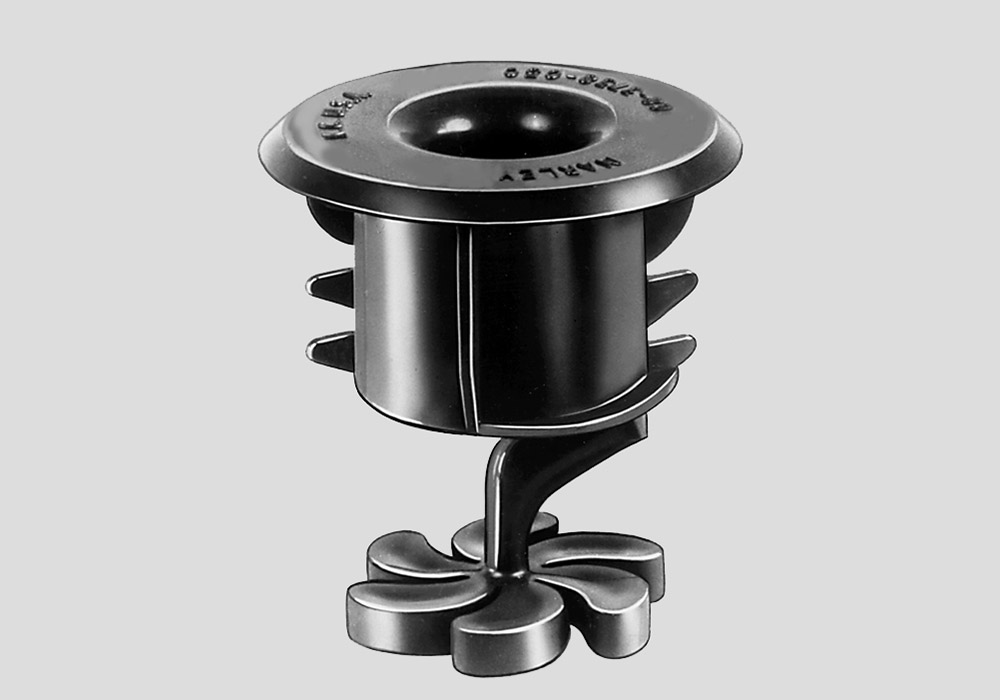
Proper water distribution ensures effective wetting of fill and optimized cooling.
Gravity-type distribution basin (cross-flow)
Rotating sprinkler (counter-flow)
Pressurized nozzles (closed-circuit)

Key calculations include:
Overall heat transfer coefficient (KaV/L)
Required packing height
Approach to wet bulb temperature
Large-diameter low-speed fans
VFD energy-saving system
Low-noise blades
Acoustic barriers (if necessary)
Low drift water loss
Reduced air leakage
High-efficiency motors (IE3/IE4)
High-performance fill for water saving
As a professional manufacturer, MACH Cooling (https://www.machcooling.com/) provides complete engineering support:
On-site data collection and system evaluation
Thermal and structural calculation
CAD / 3D cooling tower design
Customized materials and configurations
Factory performance testing
Global shipping and installation guidance
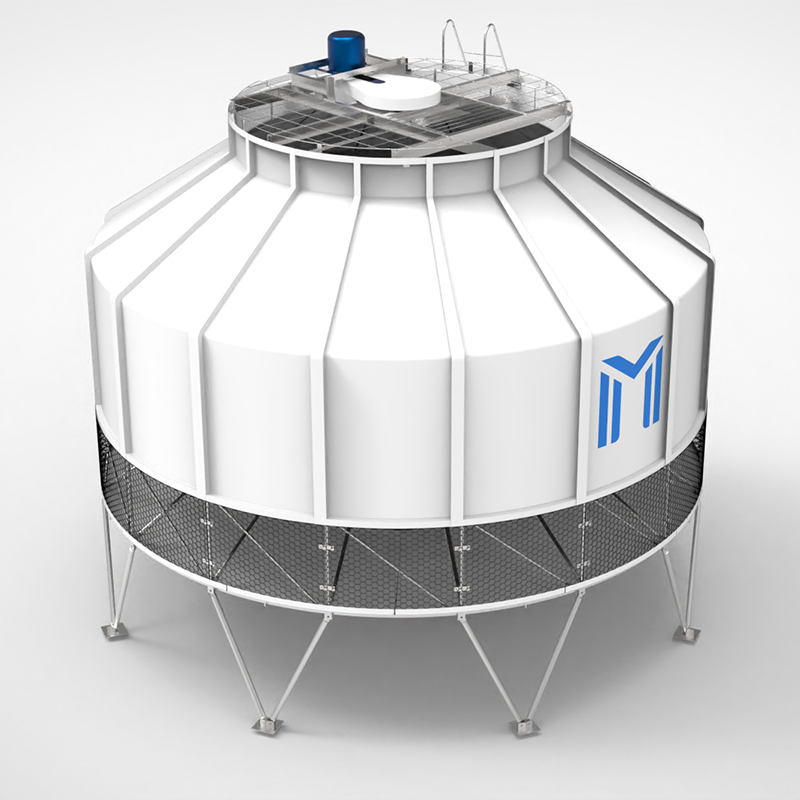

Designing a high-performance cooling tower requires comprehensive evaluation of heat transfer, hydraulic systems, structural strength, noise control, and environmental adaptability. Through scientific design and accurate calculations, the cooling tower can operate efficiently, reduce energy consumption, and extend service life.
With MACH Cooling’s professional engineering capability, users can obtain high-efficiency, reliable, and customized cooling tower solutions.