We Provide Cooling Tower Solution

Views: 0 Author: Site Editor Publish Time: 2026-02-24 Origin: Site


Choosing the right cooling tower for a thermal power plant is not just a technical decision — it’s a critical factor in operational efficiency, safety, and long-term cost savings. Thermal power plants operate under extreme conditions, with massive heat loads, high water flow requirements, and continuous 24/7 operation. Selecting the wrong cooling tower can lead to energy waste, equipment failures, and expensive downtime. In this guide, we’ll explore exactly how to pick the ideal cooling tower for your power plant.
Cooling towers are the unsung heroes of thermal power plants. They remove excess heat from condensers and recirculating water systems, ensuring that steam cycles operate efficiently. Without a properly designed cooling tower, turbines can overheat, efficiency drops, and the plant risks unscheduled outages. A high-quality cooling tower keeps your plant running smoothly while minimizing maintenance costs.
Thermal power plants produce enormous heat energy. Cooling towers dissipate this heat into the atmosphere, preventing overheating of condensers and other equipment. The right cooling tower must match your plant’s peak heat loads without overconsuming energy or water.
Unlike some industrial facilities, thermal power plants rarely stop. Cooling towers must be engineered for continuous operation, resistant to corrosion, scaling, and fatigue. This requires durable materials and robust mechanical design.
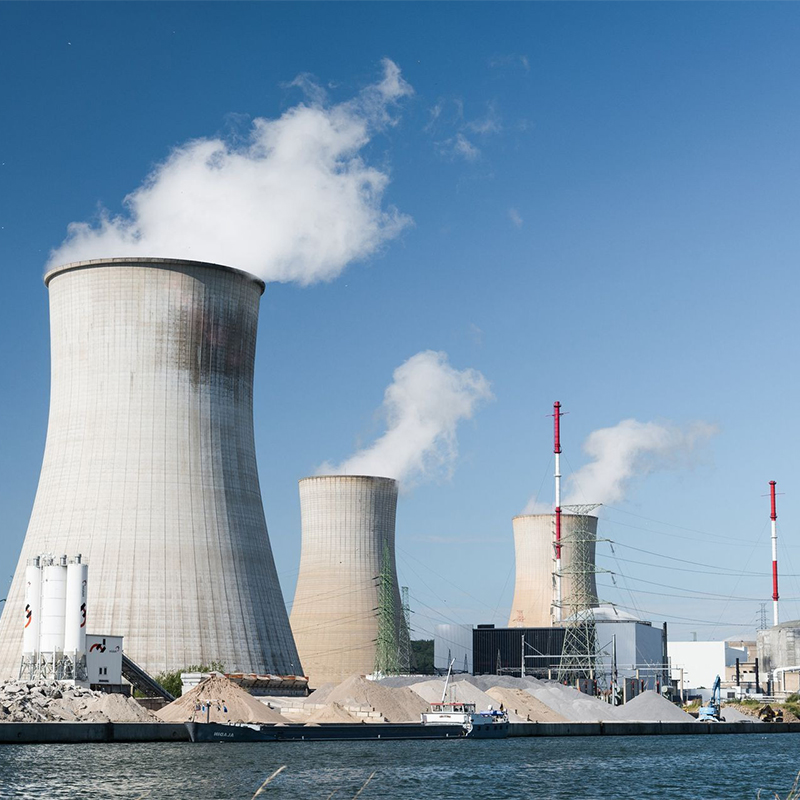
These massive towers rely on buoyancy to move air through the system. They are energy-efficient and ideal for very large plants but require significant height and space.
Mechanical draft towers use fans to force or draw air. They offer flexibility in placement and control of airflow, making them suitable for most modern power plants.
Crossflow towers have water flowing horizontally through the fill while air moves vertically. Counterflow towers have water moving downward while air moves upward, increasing efficiency in heat transfer. The choice depends on space, efficiency, and water quality considerations.
Your cooling tower must match the plant’s condenser heat load, considering ambient temperature fluctuations. Undersized towers reduce efficiency, while oversized units increase costs unnecessarily.
Cooling water often contains treatment chemicals, dissolved minerals, and impurities. Selecting a tower resistant to corrosion, scaling, and biological growth is essential for long-term performance.
Fiber-reinforced plastic (FRP) is widely used due to its corrosion resistance, lightweight construction, and long service life. It performs well in chemically treated water systems and reduces maintenance needs.
Stainless steel or special alloys provide additional strength, corrosion resistance, and durability for critical components, especially in areas prone to aggressive water chemistry or high temperatures.
In thermal power plants, fire safety is paramount. Towers must use fire-retardant materials and comply with safety regulations for nearby hazardous zones.
Mechanical vibrations, wind loads, and seismic events can affect tower performance. Proper design ensures long-term stability and minimal downtime.
High-efficiency fans, optimized fill media, and low-drift eliminators reduce energy consumption and environmental impact. Water-saving designs and minimized blowdown help conserve water while meeting regulatory requirements.
Many power plants face space limitations. Selecting towers with suitable footprint, height, and modular design ensures they integrate seamlessly into the plant layout without compromising performance.
Towers should allow maintenance personnel to easily access fans, motors, fills, and water distribution systems. Regular cleaning prevents fouling, scaling, and efficiency loss.
Reliable access to spare parts and manufacturer support reduces downtime. Working with an experienced supplier ensures that replacement components are available when needed.
Every thermal power plant has unique requirements. Custom towers allow optimization of thermal performance, materials, safety features, and site layout — ensuring maximum efficiency and reliability.
Mach Cooling specializes in designing and manufacturing high-quality cooling towers for thermal power plants. Their engineering expertise, strict quality control, and global project experience ensure reliable and efficient operation. Learn more at https://www.machcooling.com/.
What type of cooling tower is best for a thermal power plant?
It depends on plant size, space, and heat load. Mechanical draft towers are flexible, while natural draft towers suit very large capacities.
How long do thermal power plant cooling towers last?
With proper design, materials, and maintenance, towers can last 20+ years reliably.
Choosing the right cooling tower for a thermal power plant requires balancing performance, safety, materials, efficiency, and maintenance. By understanding your plant’s needs and working with an experienced manufacturer like Mach Cooling, you ensure stable operation, reduced risk, and long-term cost savings. A properly selected cooling tower is more than equipment — it’s an investment in reliability and efficiency.