We Provide Cooling Tower Solution

Views: 0 Author: Site Editor Publish Time: 2025-12-27 Origin: Site


If you want to know whether a cooling tower is truly doing its job, there’s one performance indicator you absolutely cannot ignore: approach. It’s simple in theory, powerful in practice, and often misunderstood. Think of cooling tower approach as the final few meters of a marathon—those last steps tell you how close you came to peak performance.
In this complete guide, we’ll walk through how to calculate the approach of a cooling tower, step by step, in clear and conversational English. No unnecessary formulas, no textbook overload—just practical knowledge you can actually use on site or in design work.
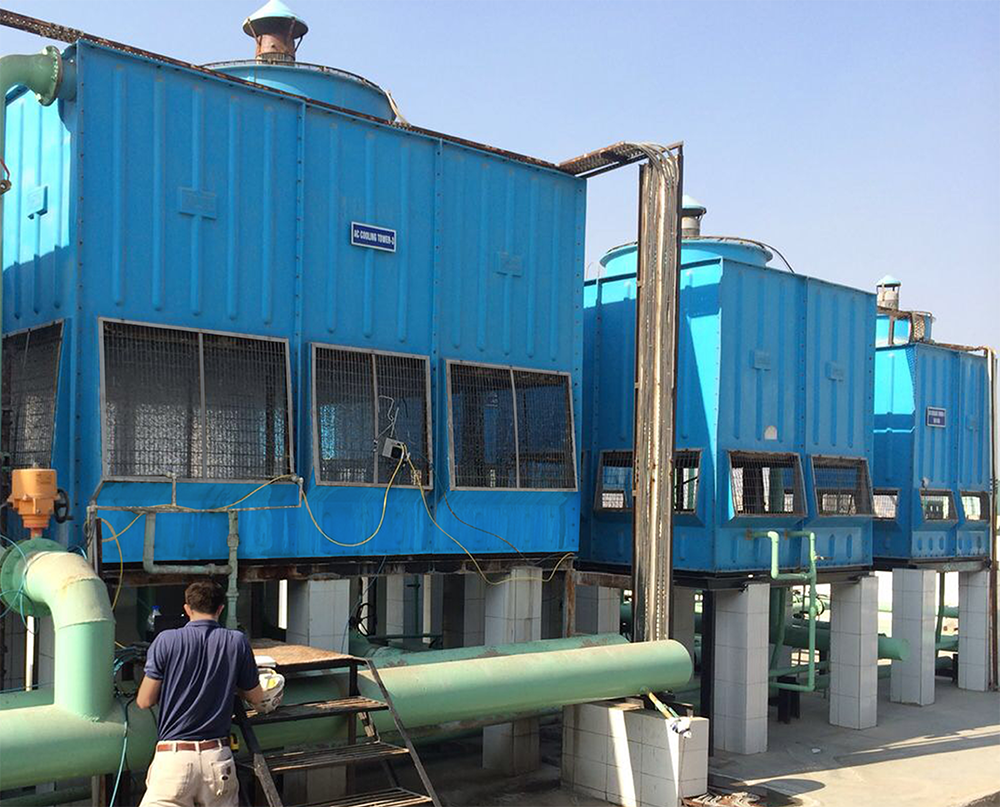
Cooling towers don’t exist in isolation. They work with the weather, the process load, and the laws of physics. Approach helps you measure how well your cooling tower is cooperating with all three. Whether you’re operating an HVAC system or managing an industrial plant, understanding approach gives you instant insight into efficiency, capacity, and potential problems.
Let’s start with the basics and keep it simple.
Cooling tower approach is the difference between the cold water temperature leaving the cooling tower and the ambient wet bulb temperature.
In plain language: it shows how close the cooling tower can cool water to the lowest temperature that nature allows.
A smaller approach means better cooling performance. Imagine trying to cool a cup of coffee by blowing on it—the closer the coffee temperature gets to room conditions, the harder it becomes to cool further. The same principle applies to cooling towers.
Before you calculate approach, you need to understand the temperatures involved.
This is the temperature of water entering the cooling tower from the condenser or process. While important for heat load calculations, it’s not directly used in the approach formula.
This is the temperature of water leaving the cooling tower basin. It’s one of the two key values needed to calculate approach.
Wet bulb temperature represents the lowest temperature achievable through evaporative cooling. It’s the real performance limit of any cooling tower.
Wet bulb temperature is where many people get confused—but once you understand it, everything clicks.
Dry bulb temperature is what a normal thermometer reads. Wet bulb temperature considers humidity. The more humid the air, the higher the wet bulb temperature—and the harder it becomes for the cooling tower to reject heat.
No matter how large or efficient a cooling tower is, it cannot cool water below the ambient wet bulb temperature. That’s a physical limit, not a design flaw.
Here’s the good news: the formula is extremely simple.
Cooling Tower Approach = Cold Water Temperature – Wet Bulb Temperature
That’s it. No hidden variables, no complex equations.
Temperatures can be measured in °C or °F, but both values must use the same unit. Mixing units is one of the most common calculation mistakes.
Let’s break it down like you’re doing this on site.
Measure the temperature of water leaving the cooling tower basin using a calibrated thermometer or sensor. Accuracy matters.
Use a psychrometer near the cooling tower air intake, or reliable local weather data adjusted for site conditions.
Subtract the wet bulb temperature from the cold water temperature. The result is your cooling tower approach.
Cold water temperature: 32°C
Wet bulb temperature: 26°C
Approach = 32 – 26 = 6°C
A 6°C approach is common for many industrial cooling towers and indicates stable, efficient operation.
Approach targets vary depending on application.
HVAC systems typically operate with an approach of 4–6°C (7–10°F) to balance energy efficiency and equipment cost.
Industrial systems often run at 5–8°C (9–14°F) depending on process sensitivity and heat load stability.
Approach isn’t fixed—it changes with conditions and design.
High-efficiency fill and well-designed airflow increase air–water contact time, allowing lower approach values.
Excessive water flow or sudden heat load increases can raise approach if the cooling tower isn’t properly sized.
Scale, fouling, and biological growth act like insulation, increasing approach and reducing cooling effectiveness.
Lower approach means higher efficiency—but also higher capital cost. Designing for a 3°C approach requires a much larger cooling tower than designing for 6°C. The key is finding the sweet spot between performance and investment.
Common errors include:
Using dry bulb instead of wet bulb temperature
Measuring temperatures at incorrect locations
Ignoring sensor calibration
Relying on outdated weather data
Even small mistakes can lead to incorrect conclusions about tower performance.
If your approach is higher than expected, don’t panic—there are solutions.
Optimizing fan speed, improving airflow balance, and adjusting water distribution can reduce approach without major upgrades.
Regular cleaning, proper water treatment, and timely fill replacement often deliver immediate performance improvements.
Range measures how much heat is removed (hot water minus cold water temperature).
Approach measures how efficiently the cooling tower uses ambient conditions.
Both are important—but they answer different questions.
Design engineers use approach to size cooling towers, estimate energy consumption, and ensure reliable operation during peak summer conditions. A poorly chosen approach can mean higher costs for decades.
Achieving a low, stable approach isn’t just about operation—it starts with design. Fill configuration, airflow patterns, and structural layout all influence achievable approach.
Mach Cooling (https://www.machcooling.com/) designs high-performance cooling towers with optimized fill media, efficient airflow systems, and durable materials. Their engineering focus allows cooling towers to achieve stable, low approach values while maintaining reliability, easy maintenance, and long service life across HVAC and industrial applications.
Calculating cooling tower approach is easy. Understanding what it means—and how to use it—is where the real value lies. Approach connects environmental conditions, equipment design, and operational efficiency into one powerful number.
When measured correctly and supported by a well-designed cooling tower from a trusted manufacturer like Mach Cooling, approach becomes more than a calculation—it becomes a roadmap to better performance, lower energy costs, and long-term system reliability.