We Provide Cooling Tower Solution

Views: 0 Author: Site Editor Publish Time: 2026-01-22 Origin: Site


Environmental compliance is no longer just a regulatory requirement—it has become a core part of responsible and sustainable industrial operations. When it comes to heat rejection systems, environmental compliance and cooling tower maintenance are deeply connected. A well-maintained cooling tower not only performs better but also minimizes environmental impact, reduces regulatory risk, and supports long-term operational stability.
In this article, we’ll explore how cooling tower maintenance plays a critical role in environmental compliance, what regulations and risks operators should understand, and how experienced manufacturers like MACH Cooling help facilities stay compliant while remaining efficient and competitive.
Cooling towers interact directly with the environment every day. They consume water, discharge blowdown, release air, and rely on chemical treatment to control scale, corrosion, and biological growth. Because of this constant interaction, cooling towers are closely monitored under environmental regulations worldwide.
Environmental compliance in cooling tower maintenance focuses on:
Responsible water use and discharge
Control of air emissions and drift
Safe handling of chemicals
Protection of public health and surrounding ecosystems
Good maintenance is not just mechanical—it is environmental stewardship in action.
Ignoring environmental compliance can be costly. Regulatory penalties, forced shutdowns, emergency retrofits, and reputational damage are all real consequences of poor cooling tower practices.
On the other hand, compliant cooling towers:
Operate more efficiently
Use less water and chemicals
Reduce operational risk
Support corporate sustainability and ESG goals
In simple terms, compliance protects both the environment and your bottom line.
Environmental compliance is not a single rule but a framework of regulations covering water, air, and chemical management.
Cooling towers rely heavily on water circulation and controlled blowdown to maintain system balance. Regulators typically focus on:
Blowdown volume
Chemical concentration levels
Temperature and quality of discharged water
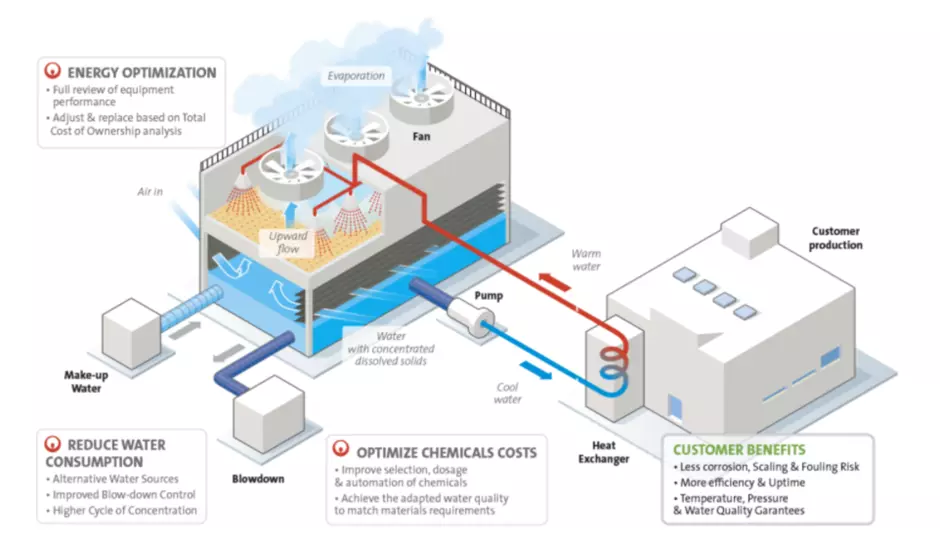

Effective maintenance ensures blowdown is optimized rather than excessive, supporting both compliance and water conservation.
Drift—tiny droplets carried out of the tower with exhaust air—may seem insignificant, but it can transport minerals, chemicals, and microorganisms into the surrounding environment.

Proper drift control is essential for:
Air quality compliance
Public health protection
Minimizing chemical loss
Chemicals are essential for cooling tower operation, but misuse creates environmental risk. Overdosing, improper storage, or uncontrolled discharge can quickly lead to violations.
Environmentally compliant maintenance emphasizes:
Accurate chemical dosing
Secure storage and labeling
Safe disposal practices
Maintenance is the most practical way to achieve environmental compliance.
Preventive maintenance reduces environmental risk before problems arise. Routine inspections and servicing help:
Detect leaks early
Prevent excessive blowdown
Maintain efficient heat transfer
It’s similar to preventive healthcare—small, regular actions prevent major crises.
When issues are discovered, corrective maintenance must be swift. Delays increase the likelihood of:
Chemical release
Water waste
Emission exceedances
Timely corrective action keeps minor issues from becoming regulatory problems.
Water management sits at the heart of environmental compliance.
Environmentally responsible cooling tower maintenance includes:
Optimizing cycles of concentration
Automating blowdown controls
Using high-efficiency fill and distribution systems
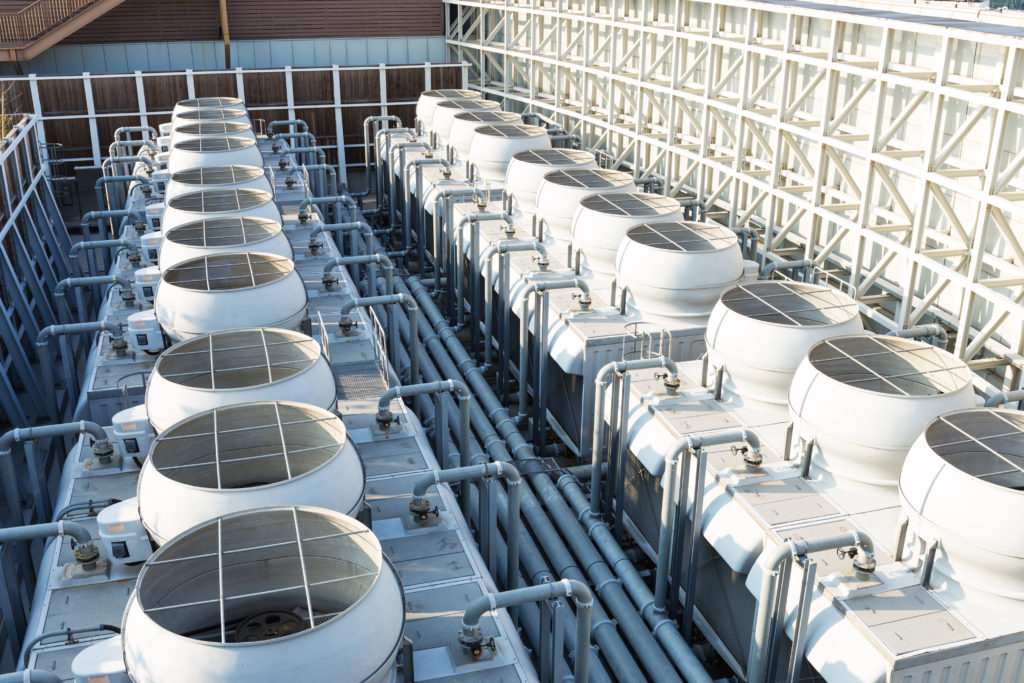
These strategies reduce both water consumption and discharge volumes.
Leaks are silent compliance failures. Undetected leakage leads to water loss, structural damage, and potential permit violations. Regular inspection of basins, piping, and joints is essential.
Drift eliminators are one of the most important yet overlooked components in environmental compliance.
Well-maintained drift eliminators:
Reduce drift loss to extremely low levels
Protect surrounding communities
Improve overall water efficiency
Environmental audits often focus heavily on chemical management. Best practices include:
Secondary containment for chemical storage
Clear labeling and safety documentation
Spill prevention and response plans
Regular staff training
Maintenance teams play a frontline role in ensuring these practices are followed.
Legionella control is both a public health and environmental responsibility. Poorly maintained cooling towers can aerosolize bacteria, creating serious health risks.

Consistent maintenance prevents biofilm growth, supports disinfection programs, and ensures compliance with health and environmental regulations.
Compliance depends on proof. If maintenance activities aren’t documented, they don’t count during audits.
Effective programs include:
Inspection checklists
Water quality test records
Chemical usage logs
Maintenance and repair histories
Digital monitoring tools now make documentation more accurate and accessible.
Environmental non-compliance is rarely a single event—it’s usually the result of neglected maintenance. Consequences may include:
Regulatory fines
Mandatory shutdowns
Emergency system upgrades
Long-term reputational damage
Prevention is always cheaper than correction.
Environmental compliance begins at the design stage. High-quality manufacturers support compliance through:
Low-drift, high-efficiency designs
Corrosion-resistant materials
Maintenance-friendly layouts
Long-term serviceability
The right equipment makes compliant maintenance easier and more effective.
MACH Cooling (https://www.machcooling.com/) integrates environmental compliance into cooling tower design and lifecycle support by offering:
High-efficiency cooling towers with advanced drift control
Durable components designed for long-term maintenance
Technical guidance on water treatment and compliance practices
Solutions aligned with sustainability and regulatory requirements
Good compliance starts with well-designed equipment.
The future of environmental compliance is proactive and data-driven. Emerging trends include:
Online water-quality monitoring
Predictive maintenance analytics
Drift and plume modeling
ESG-focused reporting systems
Maintenance is evolving from reactive work to intelligent environmental management.
Environmental compliance and cooling tower maintenance are inseparable. When maintenance is performed correctly, compliance becomes routine rather than reactive.
A strong maintenance strategy:
Reduces environmental impact
Improves operational efficiency
Minimizes regulatory risk
Supports long-term sustainability goals
With disciplined maintenance practices and support from experienced manufacturers like MACH Cooling, cooling towers can operate efficiently, responsibly, and in full alignment with environmental regulations.