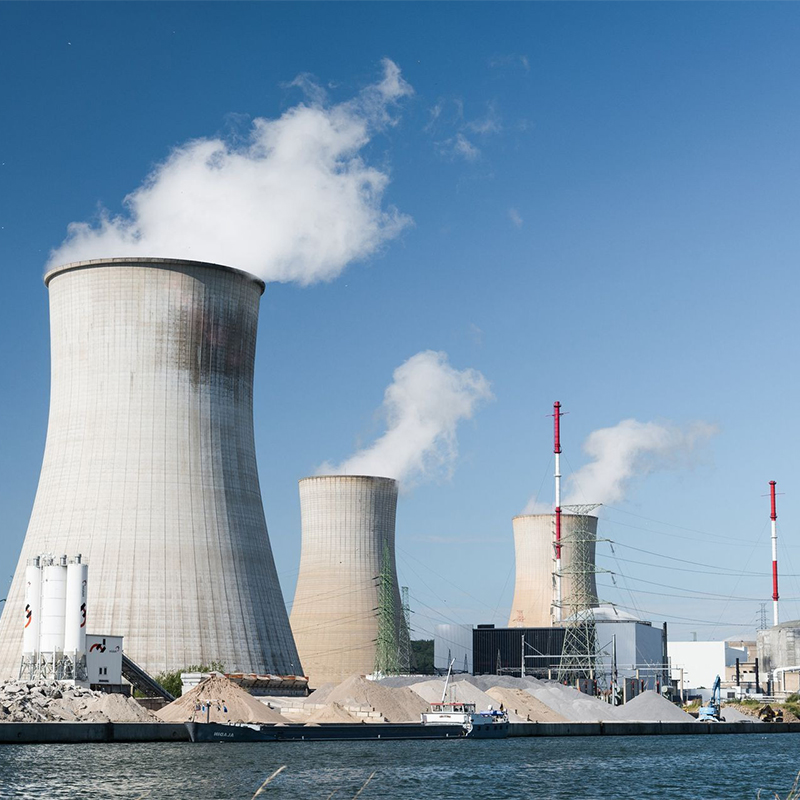
We Provide Cooling Tower Solution

Views: 0 Author: Site Editor Publish Time: 2025-11-18 Origin: Site


Cooling towers are widely used in industrial plants, commercial buildings, and HVAC systems. As demand for cooling systems continues to rise, noise issues from cooling towers—such as fan noise, motor noise, and water impact noise—have become a growing concern for factories, residential communities, and commercial complexes.
This article explains practical and proven noise-control methods, along with latest engineering solutions, and includes recommended images and tables.
Manufacturer highlighted: Mach Cooling (https://www.machcooling.com/)
Cooling tower noise mainly comes from several sources:
The rotation of induced-draft or forced-draft fans creates airflow turbulence, producing broadband noise.
Higher air velocity and larger fan diameter typically lead to higher noise levels.
Fan motors and gearbox drives generate mechanical vibration and high-frequency noise.
Poor installation or aging components worsen the situation.
Water falling from the fill (PVC/PP film-fill or splash-fill) creates impact noise.
The more uneven the water distribution, the louder the sound.
Cooling tower vibration can be transferred through steel supports or piping to nearby buildings.
This form of noise is more disturbing at night because of low ambient noise.
 |  |  |
Below are the most widely used engineering solutions, suitable for industrial cooling towers, commercial cooling towers, and closed-circuit cooling towers.
Replace standard fans with low-noise aerodynamic fans
Reduce fan speed using VFD (Variable Frequency Drive)
Use Mach Cooling low-noise FRP fan blades, optimized for airflow
Replace gearbox-driven fans with direct-drive motors to remove mechanical noise
Noise reduction: 3–7 dB
Lower vibration
Improved reliability
Install rubber isolation pads between gearbox and mounting frame
Use silicon-steel low-noise motors
Apply precision-balanced couplings
Use Mach Cooling’s maintenance-free direct-drive motor system
Noise reduction: 2–5 dB
Reduced maintenance cost
Extended service life
Replace fill with high-density, low-noise film-fill
Optimize water distribution nozzles for uniform spraying
Add anti-splash mats to reduce water impact
Lower the water-falling height through design modifications
Noise reduction: 4–10 dB
Better thermal performance
Suitable for residential or hospital environments requiring quiet operation
Add spring isolation mounts beneath the cooling tower
Use rubber flexible connectors on inlet & outlet piping
Improve tower frame stiffness
Apply anti-vibration rails and pads on steel supports
Prevent building resonance
Reduce transmission noise by 5–12 dB
Install acoustic barriers around cooling tower sidewalls
Add silencers to air inlets or outlets
Use perforated sound-absorbing aluminum panels
Noise reduction: 6–15 dB
Ideal for sites close to residential or commercial buildings
| Noise Source | Traditional Solution | Latest Engineering Solution | Noise Reduction Level |
|---|---|---|---|
| Fan Noise | Slow fan speed | Low-noise aerodynamic fan from Mach Cooling + VFD | ★★★★☆ |
| Motor/Gear Noise | Replace motor | Direct-drive EC motor system | ★★★★ |
| Water Noise | Adjust water distribution | High-density low-noise fill + anti-splash design | ★★★★★ |
| Structure Vibration | Add rubber pads | Full spring-isolated base + flexible joints | ★★★★★ |
| Airflow Noise | Install simple barrier | Acoustic wall + inlet/outlet silencers | ★★★★☆ |
Offers complete noise-control system designs
Provides custom low-noise fan + EC motor solutions
Supplies engineering-grade acoustic barriers and silencers
Offers closed-circuit cooling towers designed for naturally lower noise levels
15+ years of experience exporting to Southeast Asia, Middle East, and South America
 |  |
Cooling tower noise control requires a combination of equipment optimization, structural isolation, and professional engineering solutions. With the latest noise-control methods—such as low-noise fans, direct-drive motors, water-impact noise reduction, and acoustic barriers—noise can typically be reduced by 10–25 dB.
For engineering projects that require stable, low-noise cooling performance, Mach Cooling provides reliable, export-grade solutions with strong technical support.