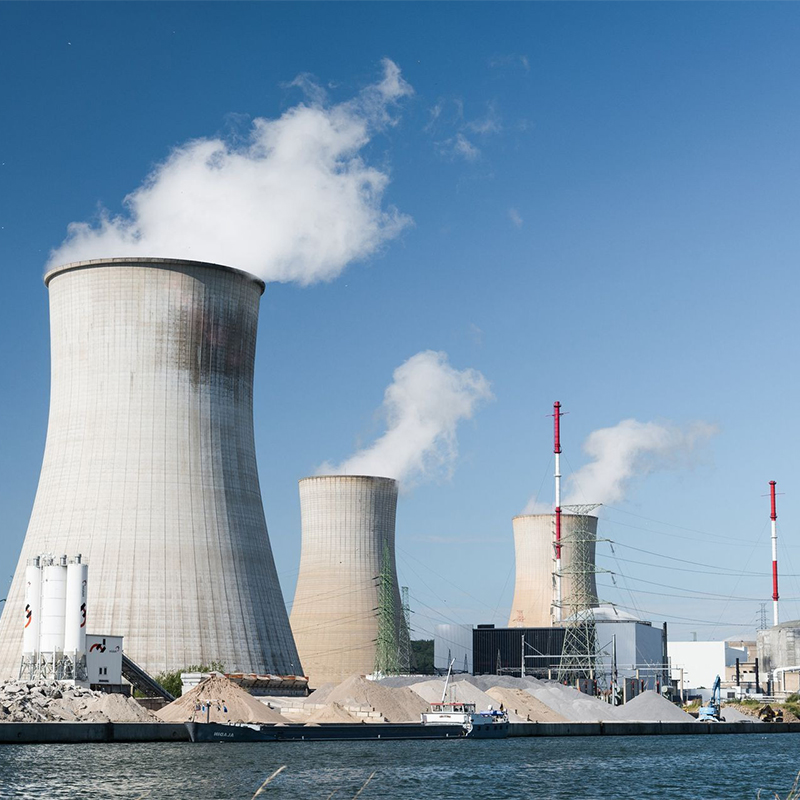
We Provide Cooling Tower Solution

Views: 0 Author: Cindy Publish Time: 2026-09-27 Origin: Site


When you start looking for a cooling tower, you may quickly notice two terms everywhere: cooling tower supplier and cooling tower manufacturer.
At first glance, they may seem to mean the same thing. After all, both companies can quote prices, recommend products, and arrange delivery. But are they really the same?
Not necessarily.
A cooling tower supplier may sell equipment manufactured by another company, while a cooling tower manufacturer is directly involved in designing and producing the equipment. Some companies can actually be both manufacturers and suppliers, which makes the distinction even more confusing.
So, which one should you work with?
The answer depends on your project. If you need a standard replacement tower, a supplier may be perfectly suitable. If you need a customized industrial cooling tower, OEM equipment, large-scale capacity, or long-term technical support, understanding who actually manufactures the equipment becomes much more important.
In this guide, we'll explain the difference between a cooling tower supplier vs manufacturer, what each company does, what buyers should check, and how to identify a reliable cooling tower company.
A cooling tower is not simply a large structure with a fan attached to it.
Inside the tower, several systems work together. These may include water distribution systems, fill media, drift eliminators, fans, motors, structural components, piping connections, controls, and other accessories.
Every component affects the overall cooling performance.
That's why choosing the right company matters.
Think about it like buying a car.
A car dealer can sell you a vehicle, arrange financing, and provide service. But the manufacturer controls the vehicle's design and production.
The same principle applies to cooling towers.
A supplier can be extremely useful, especially if it has strong industry knowledge, inventory, local service, or relationships with multiple manufacturers. However, a direct manufacturer usually has deeper control over product design, production, quality, customization, and technical specifications.
Before placing an order, you should know exactly which type of company you're dealing with.
A cooling tower supplier is a company that sells cooling towers or cooling tower components to customers.
However, being a supplier does not necessarily mean the company manufactures the products itself.
A supplier may:
Manufacture its own cooling towers
Purchase towers from another factory
Represent one or several manufacturers
Supply cooling tower spare parts
Provide installation services
Offer engineering support
Handle logistics and international shipping
Provide after-sales service
This makes the word "supplier" fairly broad.
For example, a trading company may source cooling towers from a factory and then sell them to customers under its own sales channel. The customer communicates with the trading company, while the actual production takes place somewhere else.
That isn't automatically bad.
The important thing is transparency.
You should know who designs the product, who manufactures it, and who will support you if something goes wrong.
A professional cooling tower supplier can provide valuable services throughout the purchasing process.
These may include product recommendations, quotations, technical communication, logistics, installation coordination, spare parts, and customer service.
For customers who don't want to deal with multiple companies, this can be convenient.
Imagine you're managing a project and need a cooling tower, pump, motor, accessories, and replacement components. A supplier with multiple product sources may be able to organize everything through one purchasing channel.
However, there is one important question:
Who actually manufactures the cooling tower?
If the answer is another company, you should understand how communication between the supplier and factory works.
Technical questions may need to travel from you to the supplier, from the supplier to the factory, and then back again.
For simple products, that may not matter.
For customized equipment, it can matter a lot.
A cooling tower manufacturer is directly involved in designing and producing cooling towers.
A manufacturer may control several stages of the process, including:
Product engineering
Thermal design
Structural design
Material selection
Component sourcing
Production
Assembly
Quality inspection
Testing
Packaging
Technical support
In simple terms, a manufacturer is closer to the actual production source.
This direct connection can be valuable because the manufacturer understands how the equipment is designed and built.
If you ask a technical question about fan selection, fill configuration, water distribution, structural materials, or cooling capacity, you can often communicate directly with the people responsible for those areas.
A professional manufacturer is involved in much more than assembling a finished product.
The process may begin with understanding the customer's operating conditions.
What is the heat load?
What is the required water flow?
What are the entering and leaving water temperatures?
What is the design wet-bulb temperature?
How much installation space is available?
What are the water quality conditions?
Are there noise restrictions?
What electrical standards apply?
These factors can influence cooling tower selection and design.
The manufacturer can then translate these requirements into a suitable cooling tower configuration.
That's one of the major advantages of working directly with a manufacturer.
You're not simply buying a product.
You're working with the company that understands how the product is made.
The easiest way to understand the difference is to compare their roles.
A supplier primarily focuses on selling and delivering equipment.
A manufacturer focuses on designing and producing equipment.
However, real-world companies don't always fit into only one category.
Many manufacturers sell directly to customers, meaning they are both manufacturer and supplier.
Likewise, some suppliers have very strong technical teams and long-term relationships with factories.
So don't judge a company simply by its title.
Instead, investigate what it actually does.
Product control is one of the biggest differences.
A manufacturer generally has direct control over production specifications, materials, assembly procedures, and quality inspection.
A supplier that relies on an external factory may have less direct control.
Before buying, ask:
Who manufactures this cooling tower?
Where is it manufactured?
Can I visit the factory?
Who controls production?
Who performs quality inspection?
Can you provide technical drawings?
These questions can quickly reveal whether you're dealing with a manufacturer, trading company, distributor, or a combination of these.
Cooling tower projects are rarely identical.
One factory may need a compact cooling tower for limited space. Another may need a large industrial cooling system operating continuously under demanding conditions.
Customization may involve:
Cooling capacity
Dimensions
Water flow
Fan configuration
Motor selection
Fill type
Structural materials
Water distribution
Electrical configuration
Piping connections
Noise requirements
Corrosion resistance
When you work directly with a manufacturer, customization discussions can often go directly to the engineering team.
That's useful because engineering decisions and manufacturing limitations are closely connected.
A sales company can pass these requirements to a factory, but every additional communication step creates another opportunity for misunderstanding.
Quality control is another area buyers should investigate.
A manufacturer can establish quality-control procedures throughout production.
For example, inspections may cover:
Raw materials
Component dimensions
Fan assemblies
Motors
Fill media
Water distribution systems
Structural components
Assembly accuracy
Finished equipment
The specific inspection process varies between manufacturers, so buyers should ask what testing and inspection documentation is available for their project.
If you're purchasing through a supplier, ask who performs the final inspection.
Does the supplier inspect the product?
Does the manufacturer inspect it?
Are inspection records available?
The clearer the answer, the easier it is to manage procurement risk.
Many buyers assume that purchasing directly from a manufacturer is always cheaper.
That's not necessarily true.
A supplier may offer local inventory, bulk purchasing advantages, installation support, or other services that add value.
However, additional supply-chain layers can also add margins.
For larger orders, direct purchasing from a manufacturer may reduce some unnecessary layers.
But don't compare companies based only on the initial quotation.
Consider the total cost of ownership.
A low-priced cooling tower that consumes more energy, requires frequent repairs, or has limited spare-parts support may become more expensive over time.
The cheapest quotation isn't always the lowest-cost solution.
Lead time depends on several factors.
These can include:
Standard or customized design
Factory production capacity
Component availability
Current order volume
Inventory
Packaging requirements
Shipping method
Destination
A supplier with products already in stock may sometimes provide faster delivery for standard models.
A manufacturer, on the other hand, may have better control over the production schedule for customized projects.
Always ask whether the quoted lead time refers to:
An in-stock product or a newly manufactured product?
That simple question can prevent unpleasant surprises.
A cooling tower doesn't stop being important after it arrives at your site.
In fact, that's when the real work begins.
What happens if the fan develops a problem?
What if the fill becomes damaged?
What if water distribution is uneven?
What if cooling performance changes?
What if you need replacement components several years later?
A reliable cooling tower company should have a clear after-sales process.
Manufacturers can have an advantage here because their engineering and production teams have direct knowledge of the equipment.
They know the design.
They know the components.
They know how the equipment was assembled.
That product knowledge can make troubleshooting more efficient.
OEM projects make the supplier-versus-manufacturer distinction even more important.
Suppose you need a cooling tower with your own brand, customized dimensions, specific materials, or a special configuration.
You need more than a sales quotation.
You need engineering cooperation.
A manufacturer can evaluate whether your requested changes are practical from both a design and production perspective.
This can be particularly important for international projects.
Different markets may have different:
Voltage requirements
Electrical standards
Installation conditions
Environmental requirements
Documentation requirements
Space limitations
Operating conditions
Direct communication with the manufacturer can make these requirements easier to coordinate.
Don't rely only on a website saying "factory" or "manufacturer."
Look for evidence.
A genuine manufacturer should generally be able to explain its production process and technical capabilities.
Here are some useful questions:
Does the company have its own production facility?
Can it provide factory photographs or a virtual factory tour?
Does it have engineering personnel?
Can it provide technical drawings?
Can it explain the manufacturing process?
Does it perform quality inspections?
Can it provide product specifications and testing information?
Can customers visit the factory?
The goal isn't to interrogate the company.
You're simply verifying where your equipment comes from.
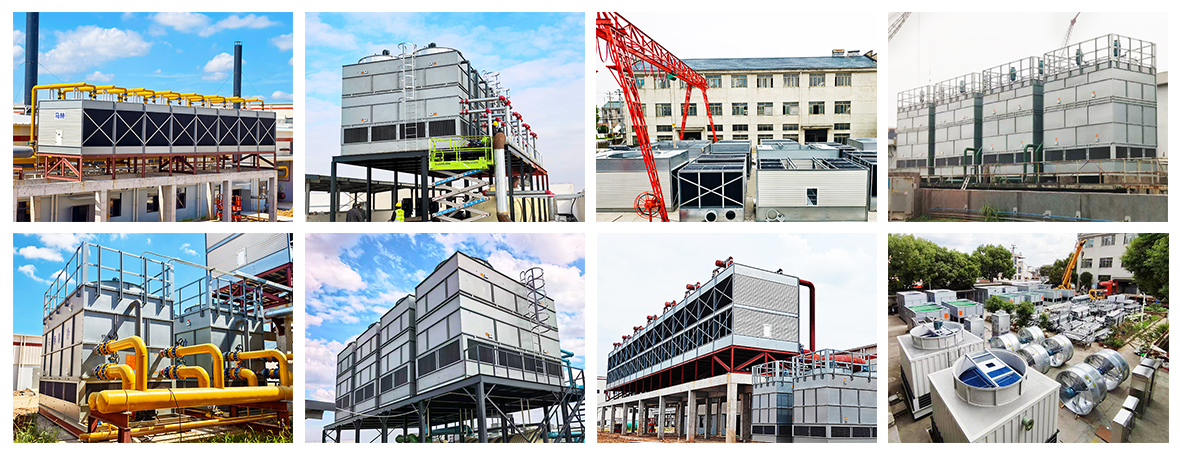
For a large cooling tower project, consider conducting a factory audit.
You can inspect or discuss:
Production facilities
Assembly areas
Raw material storage
Quality-control procedures
Testing equipment
Finished products
Packaging processes
Warehouse capacity
Engineering resources
Spare-parts availability
If visiting the factory isn't practical, request a virtual factory tour.
A factory tour can often tell you more than a polished sales brochure.
You want to see the real production environment.
Before placing an order, prepare a simple checklist.
Ask the company:
Are you a manufacturer, supplier, or both?
Where is the cooling tower manufactured?
Can you provide thermal selection data?
What materials are used?
Can you customize the design?
What quality inspections are performed?
What is the expected production lead time?
What spare parts are available?
What warranty is provided?
Who provides technical support?
Can you provide installation guidance?
Can you support future replacement or expansion?
These questions help you compare companies based on more than price.
A supplier can be a practical choice in many situations.
For example, you may need:
Standard cooling tower products
Replacement components
Multiple brands
Local inventory
Quick delivery
Installation coordination
One-stop purchasing
A specialized supplier with strong industry knowledge can save time.
The key is to understand its supply chain.
If the supplier is transparent about the actual manufacturer and provides reliable technical support, it may be a suitable partner for your project.
Direct manufacturer cooperation can be particularly useful for:
Large industrial projects
Customized cooling towers
OEM projects
Repeated orders
Special materials
Complex engineering requirements
Long-term cooperation
Expansion projects
Why?
Because you're closer to the source.
Instead of asking someone to ask the factory, you can often communicate directly with the company responsible for engineering and production.
That can make technical discussions faster and clearer.
Think of the supply chain as a communication pipeline.
The longer the pipeline, the more chances there are for information to get lost.
You tell the sales representative your requirements.
The sales representative contacts the supplier.
The supplier contacts the factory.
The factory sends information back.
Then the answer comes back to you.
For a simple standard product, that's fine.
But imagine doing this for a customized cooling tower with dozens of technical specifications.
Suddenly, every extra communication layer matters.
Working directly with a manufacturer can shorten that pipeline.
You can discuss drawings directly.
You can review technical specifications.
You can clarify materials.
You can discuss production schedules.
You can communicate about future modifications.
It's not magic.
It's simply a shorter path between the customer and the production team.
Mach Industry (Zhejiang) Co.,Ltd provides cooling tower solutions for industrial and commercial applications.
As a manufacturer, Mach focuses on the relationship between cooling requirements and equipment design rather than treating a cooling tower as a simple catalog product.
Every project starts with understanding the application.
What is the required heat rejection?
What is the water flow?
What operating conditions will the tower face?
What space is available?
What type of cooling tower configuration is appropriate?
These questions help determine the right solution.
For buyers comparing a cooling tower supplier vs manufacturer, this direct connection between engineering and production is an important consideration.
A manufacturer can connect product requirements with actual manufacturing capabilities.
International cooling tower purchasing involves more than selecting a model.
Customers may need assistance with:
Cooling tower selection
Capacity requirements
Product configuration
Dimensions
Materials
Components
Spare parts
Packaging
Shipping coordination
Installation requirements
Technical documentation
Mach Industry works with customers around these requirements and provides cooling tower solutions for different applications.
For more information, visit the official Mach Cooling website: Mach Cooling
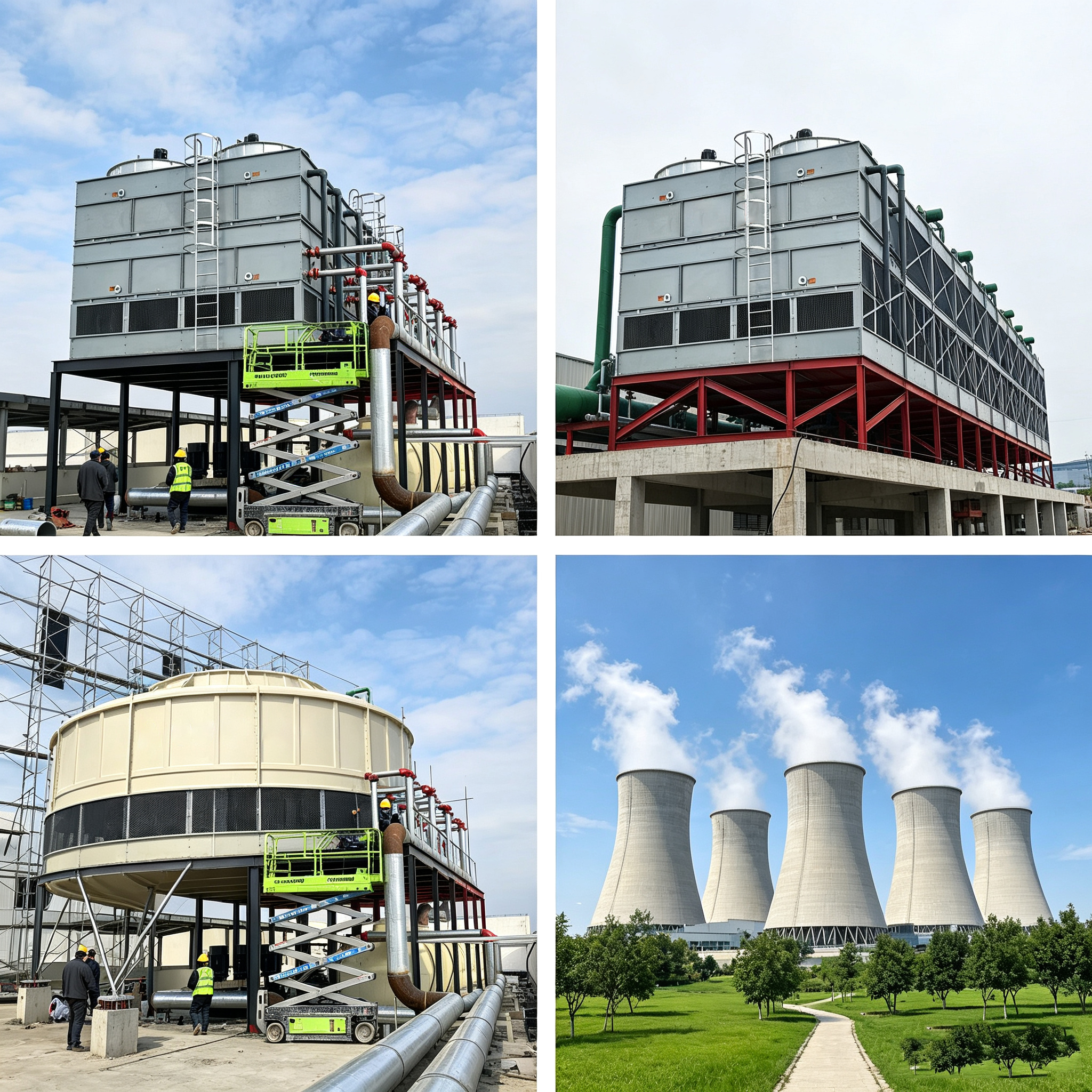
So, how should you choose?
Start with your project.
If you need a standard cooling tower quickly, a qualified supplier may be suitable.
If you need a customized cooling tower, OEM product, large industrial system, or long-term technical relationship, investigate the manufacturing capability behind the quotation.
And if a company is both a manufacturer and supplier, you may get the benefits of both models.
The most important question isn't simply:
"Is this company a supplier or manufacturer?"
Instead, ask:
"Can this company reliably provide the cooling performance, quality, customization, delivery, documentation, and technical support my project requires?"
That's the question that really matters.
No. A supplier sells cooling towers, while a manufacturer is directly involved in designing and producing them. However, some companies are both manufacturers and suppliers.
Not necessarily. Pricing depends on equipment specifications, order quantity, customization, logistics, service, and other factors. Buyers should compare the total project cost rather than looking only at the equipment price.
Ask for factory information, production photographs, technical documents, drawings, quality-control information, and, when appropriate, a factory visit or virtual factory tour.
Yes. Some suppliers work closely with manufacturers and can provide customized products. However, buyers should confirm who performs the actual engineering and manufacturing.
Cooling towers can operate continuously for long periods. Access to spare parts, maintenance guidance, troubleshooting assistance, and technical support can influence long-term equipment reliability and operating costs.
Ask about manufacturing location, product specifications, customization capability, quality control, lead time, warranty, spare parts, technical support, and after-sales service.
There is no universal answer. The right choice depends on the project. A supplier can offer convenience and product availability, while direct manufacturer cooperation can provide closer access to engineering and production capabilities.
The difference between a cooling tower supplier and manufacturer is more than a difference in terminology.
A supplier primarily focuses on selling and delivering equipment. A manufacturer is directly involved in designing and producing the cooling tower. Some companies perform both roles.
For buyers, the key is transparency.
Before purchasing, find out who actually manufactures the tower, who controls quality, who handles engineering, who provides technical support, and who will supply spare parts in the future.
For standard products, a capable supplier can be a practical purchasing partner.
For customized cooling towers, OEM projects, large industrial applications, and long-term cooperation, direct communication with a manufacturer can provide a clearer connection between your requirements and the final product.
So, don't choose a company simply because its website says "supplier" or "manufacturer."
Look deeper.
Check its engineering capabilities. Examine its manufacturing process. Ask about quality control. Compare technical support. Understand the warranty. And consider the long-term relationship, not just the first quotation.
The right cooling tower partner should do more than sell you equipment.
It should help you find a cooling solution that fits your application today—and continues to support your operation tomorrow.