We Provide Cooling Tower Solution

Views: 0 Author: Cindy Publish Time: 2026-11-10 Origin: Site


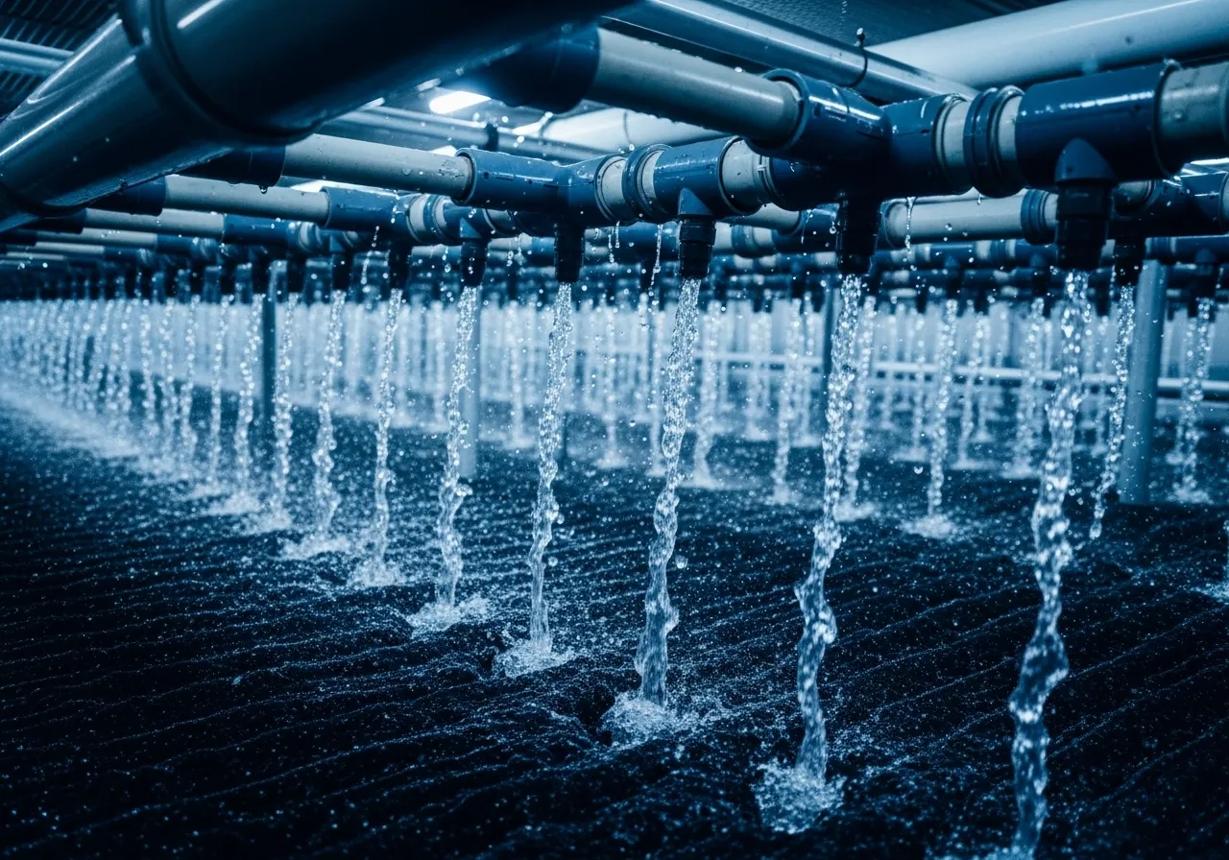
A cooling tower distributor is one of the most important components in an industrial cooling tower. Although it may look like a simple water distribution assembly, it plays a major role in determining how effectively a cooling tower performs.
Its primary function is to distribute hot circulating water evenly across the cooling tower fill, allowing water and air to come into contact for efficient heat exchange. When water distribution is uniform, the cooling tower can use its available fill surface more effectively, maintain stable operating conditions, and achieve better cooling performance.
However, what happens when a cooling tower distributor becomes clogged, damaged, or incorrectly selected? Uneven water distribution can create dry areas, excessive water loading, reduced heat transfer efficiency, and unnecessary operating costs.
Whether you operate an HVAC system, power plant, chemical facility, or industrial manufacturing plant, understanding how cooling tower distributors work can help you make better equipment decisions.
In this guide, we will explore cooling tower distributor types, working principles, materials, functions, selection criteria, installation methods, and maintenance practices. We will also explain what industrial buyers should consider when choosing a reliable cooling tower component manufacturer.
A cooling tower distributor is a water distribution assembly installed inside a cooling tower. It receives hot water from the circulating water inlet and distributes it across the cooling tower fill.
Depending on the cooling tower design, the distributor may consist of a distribution basin, rotating sprinkler pipes, fixed distribution pipes, spray nozzles, or a combination of these components.
Its main purpose is to ensure that water reaches the fill surface evenly and consistently.
Think of it as an irrigation system for your cooling tower. Just as plants need evenly distributed water to grow, cooling tower fill needs consistent water coverage to achieve effective heat transfer.
A properly designed cooling tower water distributor helps prevent dry spots, reduces uneven water loading, and supports stable cooling performance.
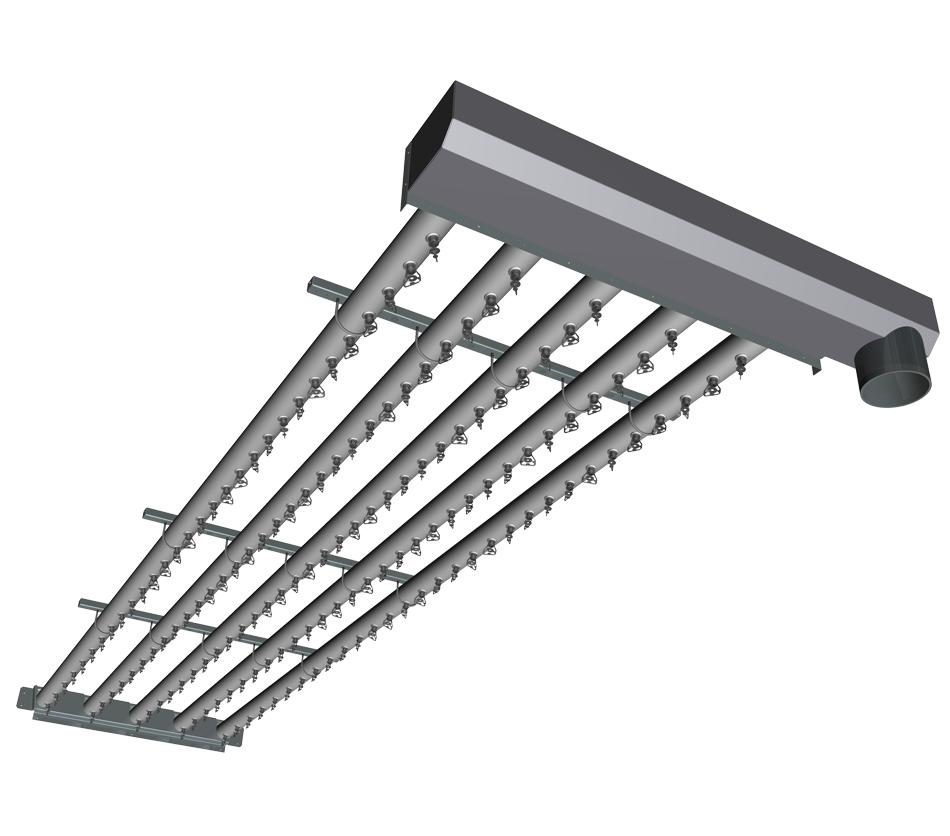
Although distributor designs vary, most systems contain several basic components:
Water inlet: Connects the distribution assembly to the hot water supply pipe.
Main distribution header: Transfers incoming water to different distribution sections.
Branch pipes: Carry water toward individual outlets or spray areas.
Spray nozzles or outlets: Control how water leaves the distribution system.
Supporting structures: Keep pipes, basins, and distribution arms correctly positioned.
Connecting fittings: Join different sections and maintain a secure water flow path.
Each component must work together to maintain the required water distribution pattern.
Incorrect pipe dimensions, blocked outlets, or poor installation can affect the performance of the complete assembly.
A cooling tower removes heat through the interaction of water and air.
When hot water enters the tower, it flows downward across the fill while air moves through the cooling section. A portion of the water evaporates, removing heat from the remaining water.
If the distributor supplies too much water to one area and too little to another, the fill cannot operate under uniform conditions.
Some sections may become overloaded, while other sections remain underutilized. This reduces the effective heat exchange area and can result in higher cold-water temperatures.
Proper water distribution helps the cooling tower use its available fill surface more effectively.
The working principle of a cooling tower distributor is relatively straightforward.
Hot water enters the distribution system from a condenser, chiller, heat exchanger, or industrial process. The distributor then directs the water toward the cooling tower fill.
As water flows downward across the fill surface, air moves through the cooling section. Heat transfers from the water to the air, and a portion of the water evaporates.
The cooled water collects in the cold-water basin and returns to the industrial system.
The distributor plays a crucial role at the beginning of this process because it determines how effectively water reaches the fill.
First, hot circulating water enters the cooling tower through the main inlet pipe.
The water then enters a central distribution header, basin, or rotating sprinkler assembly.
Depending on the design, gravity, hydraulic pressure, or mechanical movement controls the distribution process.
Water passes through branch pipes or outlets and moves toward the cooling section.
A properly designed distributor should provide sufficient flow without creating excessive pressure loss or unwanted flow restrictions.
After leaving the distributor, water spreads across the cooling tower fill.
Different fill designs use different heat transfer mechanisms.
Film fill creates thin water films over closely spaced surfaces, while splash fill breaks water into droplets to increase contact with air.
Both systems depend on appropriate water loading.
If the distribution pattern is uneven, parts of the fill may not receive enough water to operate effectively. This is why distributor design and fill selection should be considered together rather than as completely separate purchasing decisions.
Cooling tower distributors come in several designs. The right option depends on the tower configuration, water flow rate, operating pressure, maintenance requirements, and application.
Understanding these designs helps buyers avoid selecting a distributor that does not match their cooling tower.
Gravity distribution systems use water elevation and gravity to move water through a basin or network of channels.
Hot water enters an elevated distribution basin and flows through openings or outlets toward the fill.
These systems are commonly associated with larger cooling tower designs, particularly certain crossflow configurations.
Their main advantage is that they can distribute large water volumes without requiring a separate mechanical rotating mechanism.
However, the basin must remain level, and its outlets need regular inspection. Sediment, algae, and mineral deposits can gradually restrict water flow.
Rotating water distribution systems are commonly found in many industrial cooling tower configurations, particularly smaller and medium-sized units.
Water enters a central rotating assembly and moves through horizontal distribution arms.
Reaction force from the discharged water can rotate the sprinkler assembly, spreading water across the fill.
The design is relatively simple and can provide effective coverage when properly sized.
However, rotation may become unstable if outlets are blocked, the assembly is damaged, or hydraulic conditions are outside the intended operating range.
Bearings and other moving parts also require attention.
Pressurized spray systems use hydraulic pressure to push water through spray nozzles.
The nozzles break the water stream into droplets and create a distribution pattern over the fill.
These systems can provide controlled water coverage when nozzle type, spacing, and operating pressure are properly selected.
They are often used in applications where spray coverage and droplet characteristics are important.
One consideration is nozzle clogging. If water contains suspended solids or mineral deposits, small nozzle openings may become restricted.
Proper filtration and water treatment can help reduce this risk.
Fixed pipe systems use a network of stationary pipes and outlets to deliver water across the cooling section.
They may be designed with perforated pipes, branch connections, or separate spray outlets.
Their main advantage is the absence of rotating distribution arms. This can simplify certain maintenance tasks and reduce dependence on moving mechanical components.
However, pipe positioning, outlet spacing, hydraulic balance, and support strength must be carefully considered.
Poorly designed branch connections can cause significant differences in water flow between different sections.
A distributor does much more than simply move water from one location to another.
It supports several important cooling tower functions that directly influence operating performance.
Uniform water distribution is the distributor's most important responsibility.
Every section of the fill should receive an appropriate amount of water according to the tower's design requirements.
This helps prevent dry areas, excessive water loading, and uneven cooling conditions.
Uniform distribution also helps the cooling tower use its available heat transfer surface more effectively.
Cooling tower heat transfer depends on the interaction between water and air.
When water spreads evenly over the fill, more of the available heat exchange surface can participate in the cooling process.
This supports more consistent evaporation and heat rejection.
However, a distributor alone cannot guarantee high efficiency. Airflow, fill condition, ambient wet-bulb temperature, water temperature, and circulating water flow also influence the final cooling result.
Poor distribution can create localized water accumulation, unwanted splashing, and excessive drift in some designs.
Correct distributor selection and installation help control the water flow pattern and reduce avoidable operating problems.
It can also support stable fan and pump operation by helping the cooling tower maintain its intended thermal performance.
A distributor does not directly reduce pump energy in every application, but an appropriately engineered system can avoid unnecessary hydraulic losses and operating adjustments.
Material selection is an important consideration when purchasing a cooling tower distributor.
Cooling tower water may contain dissolved minerals, treatment chemicals, suspended solids, and other substances that gradually affect component durability.
The operating temperature, water chemistry, mechanical loading, and outdoor environment should all influence material selection.
PVC is widely used in cooling tower water distribution applications because it is lightweight, easy to process, and generally resistant to many common water-related corrosion conditions.
PVC components can be suitable for many standard industrial cooling tower environments.
They are also convenient to handle during installation and replacement.
However, buyers should check the material's temperature rating, chemical compatibility, UV exposure, and mechanical strength.
Not every PVC grade is suitable for every cooling tower operating condition.
Polypropylene, commonly known as PP, offers good chemical resistance and can be useful in industrial applications involving particular water treatment chemicals.
It is lightweight and can be manufactured into different pipe and fitting configurations.
PP may be a suitable choice when the operating environment requires properties beyond those of standard PVC.
Its temperature limits, stiffness, support requirements, and compatibility with circulating water must still be evaluated before purchase.
FRP, or fiber-reinforced plastic, is used in cooling tower structures and selected distribution components where corrosion resistance and structural strength are important.
Stainless steel and other metals may also be used for certain connections, supports, or specialized assemblies.
The choice depends on water chemistry, temperature, load, and the required service life.
Metal components should be selected carefully because different grades have different corrosion resistance.
FRP components also require appropriate design to handle mechanical loads and environmental exposure.
These two terms are closely related, but they do not mean exactly the same thing.
A cooling tower distributor refers to the complete water distribution assembly or system. It may include headers, pipes, channels, spray arms, and outlets.
A cooling tower spray nozzle is an individual component that controls how water exits the distribution system and forms a spray pattern.
In a pressurized system, nozzles are essential for controlling water coverage.
In a gravity-based system, water may leave through openings without using conventional pressurized spray nozzles.
When replacing components, buyers should identify whether they need a complete distributor assembly, individual nozzles, or replacement pipe sections.
Understanding this difference helps avoid purchasing incompatible parts.
Even a well-designed distributor can develop problems after extended operation.
Water quality, poor maintenance, incorrect installation, and mechanical wear are common causes.
Identifying problems early can prevent more serious cooling tower performance issues.
Clogging is one of the most common distributor problems.
Suspended solids, biological growth, sediment, and mineral scale can accumulate inside pipes, basins, and outlets.
As the openings become restricted, water distribution becomes uneven.
Some outlets may discharge normally, while others provide very little water.
Operators should inspect outlets and pipe sections regularly, especially when the circulating water has a high mineral content.
Appropriate water treatment, filtration, and cleaning schedules can help control buildup.
Uneven distribution may result from blocked outlets, incorrect pipe sizing, poor hydraulic balance, damaged spray arms, or an unlevel distribution basin.
It can also occur when the circulating pump operates outside its intended flow range.
Typical warning signs include:
Dry sections of cooling tower fill.
Unusually wet areas.
Inconsistent spray patterns.
Different water coverage across the tower.
Unstable cooling performance.
The correct troubleshooting approach is to inspect the entire hydraulic system instead of immediately replacing individual nozzles.
Corrosion, UV exposure, vibration, thermal expansion, and mechanical impact can gradually damage distributor components.
Cracked PVC pipes, weakened supports, loose fittings, and corroded metal connections may lead to leakage or unstable distribution.
Damaged components should be repaired or replaced according to the manufacturer's recommendations.
Continuing to operate a seriously damaged distributor can increase the risk of further equipment problems.
Choosing a cooling tower distributor requires more than checking the pipe diameter or connection size.
You need to understand the complete operating conditions of your cooling tower.
The following factors can help you make a more informed purchasing decision.
First, identify whether your cooling tower is crossflow or counterflow.
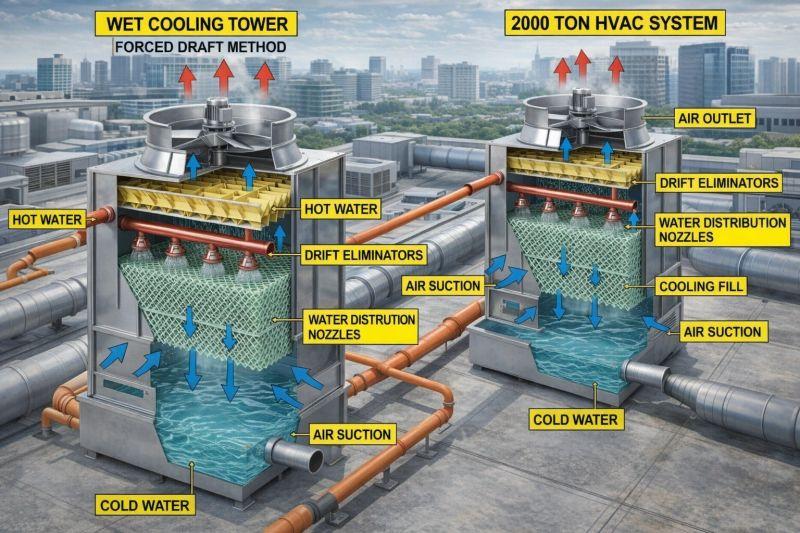
In many crossflow towers, water flows vertically downward through the fill while air moves horizontally. Gravity distribution basins or other top-mounted distribution arrangements are common.
In counterflow towers, air moves upward against the downward water flow. Pressurized spray distribution systems are frequently used in these configurations.
These are general design tendencies, not universal rules.
Always check the original tower design before selecting replacement components.
Water flow rate is one of the most important selection parameters.
A distributor designed for a relatively low flow rate may not provide sufficient capacity for a larger industrial cooling tower. Likewise, excessive flow can create unwanted hydraulic conditions.
Check the following information:
Total circulating water flow rate.
Inlet water pressure.
Available pressure head.
Flow rate through each branch or outlet.
Required nozzle operating pressure.
Distribution pipe dimensions.
For spray systems, confirm the nozzle operating pressure and flow characteristics.
For gravity systems, evaluate basin elevation and available water head.
If possible, provide the manufacturer with the original cooling tower design data.
The distributor material must match the operating environment.
Check circulating water temperature, pH, dissolved solids, chemical treatment, and potential exposure to sunlight.
For example, a material that performs well in ordinary cooling water may not be suitable for a process involving aggressive chemicals or unusually high temperatures.
Consider mechanical strength as well as corrosion resistance.
The best material is the one that meets the complete operating requirements, not necessarily the cheapest option.
Purchase price is only one part of the total cost.
A distributor that is difficult to inspect or clean may increase maintenance expenses over time.
Before purchasing, consider whether the system allows easy access to pipes, nozzles, fittings, and supports.
Check the availability of replacement components and the expected maintenance requirements.
A practical design should balance initial investment, durability, hydraulic performance, and long-term serviceability.
Correct installation is essential for achieving the intended distribution pattern.
Before installation, verify the distributor model, pipe dimensions, connection positions, material specifications, and installation drawings.
Make sure that the cooling tower structure can support the assembly and that all pipes and fittings are compatible.
During installation, pay attention to the following details:
Check the installation dimensions: Confirm that the distributor matches the cooling tower structure and existing pipe connections.
Inspect all components: Check pipes, fittings, nozzles, supports, and connecting sections for damage.
Align the main header: Make sure the main distribution pipe is correctly positioned.
Secure branch pipes: Confirm that supports are properly positioned and connections are secure.
Check the distribution level: For gravity distribution basins, verify the level and outlet arrangement.
Inspect rotating components: For rotating systems, check free movement and correct assembly according to the equipment manufacturer's instructions.
Conduct a water-flow test: Observe the distribution pattern across the fill and check for leaks, blocked outlets, abnormal vibration, or uneven water coverage.
Any necessary adjustments should be made before returning the tower to normal operation.
Always follow site safety procedures and isolate the equipment before working inside the cooling tower.
Regular maintenance helps extend distributor service life and maintain stable cooling tower performance.
Start by establishing an inspection schedule based on operating conditions and water quality.
Check distribution pipes, spray nozzles, rotating arms, basins, and supports for damage or blockage.
Remove sediment and deposits using cleaning methods compatible with the component material.
Avoid aggressive chemicals or excessive mechanical force that could damage plastic parts.
Monitor changes in water pressure and flow because these can indicate developing restrictions.
Also inspect the surrounding fill for dry areas, abnormal water accumulation, or signs of uneven loading.
Keeping maintenance records makes it easier to identify recurring problems and plan component replacement before a major failure occurs.
Not every distributor problem requires complete replacement.
Minor blockages, loose fittings, and some damaged connections may be repairable.
However, replacement becomes more appropriate when:
Pipes have widespread cracking or deformation.
Distribution outlets are repeatedly blocked.
Rotating components are badly worn.
Structural supports are damaged.
Water leakage becomes difficult to control.
The distribution pattern cannot be restored through normal maintenance.
The cooling tower has undergone a major capacity or configuration upgrade.
Another reason to consider replacement is a cooling tower retrofit.
If the circulating water flow, fill arrangement, or cooling capacity has changed, the existing distributor may no longer match the system's operating requirements.
Before purchasing a replacement, compare the original equipment specifications with the current operating conditions.
A component that physically fits may still have the wrong hydraulic characteristics.
Cooling tower fill provides a large surface area for heat and mass transfer.
However, even high-quality fill cannot deliver its intended performance if water does not reach it correctly.
For film fill, uniform water distribution helps maintain continuous water films across the available surface.
For splash fill, an appropriate distribution pattern supports consistent droplet formation and contact with air.
If some sections remain dry, the effective cooling surface decreases.
If other areas receive excessive water, hydraulic loading may become uneven and air movement may be affected.
This is why distributors and fill should be selected as complementary components.
When upgrading a cooling tower, consider the fill geometry, water loading requirements, airflow arrangement, and distributor outlet spacing together.
Working with a reliable manufacturer can make the purchasing and replacement process easier.
An experienced supplier should be able to understand your cooling tower configuration, review technical requirements, and recommend components that match the application.
Before placing an order, ask for:
Product dimensions and drawings.
Material specifications.
Flow and pressure requirements.
Installation information.
Available customization options.
Quality inspection procedures.
Packaging and delivery arrangements.
After-sales technical support.
If you are replacing an existing distributor, providing photographs, drawings, or the original equipment model can help reduce compatibility problems.
It is also useful to confirm whether the supplier can support customized configurations for different cooling tower models.
Mach Industry (Zhejiang) Co.,Ltd is a cooling tower manufacturer serving industrial customers seeking cooling tower equipment and related component solutions.
When evaluating a distributor replacement or cooling tower upgrade, customers can contact Mach Cooling to discuss their project requirements and determine the appropriate product configuration.
Important information to prepare includes cooling tower type, circulating water flow rate, operating pressure, inlet and outlet dimensions, installation space, material requirements, and existing equipment drawings.
Providing these details helps establish whether a standard configuration or a customized solution is more appropriate.
To learn more about Mach Cooling and its industrial cooling tower solutions, visit the official website:
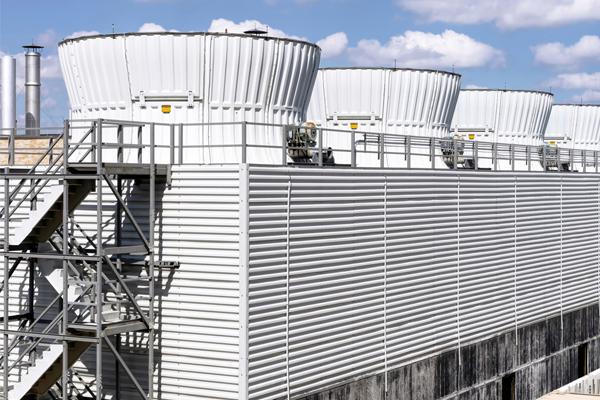
Its main purpose is to distribute hot circulating water evenly across the cooling tower fill.
Proper distribution helps improve the use of the available heat transfer surface and supports stable cooling performance.
Inspection frequency depends on water quality, operating hours, environmental conditions, and the distributor design.
Many facilities include distributor checks in their routine preventive maintenance program.
Systems with high sediment or mineral content may require more frequent inspections.
Yes. Some problems, such as minor leaks, loose connections, and removable blockages, can be repaired.
However, widespread cracking, severe corrosion, structural damage, or repeated hydraulic problems may make complete replacement a better option.
Common causes include clogged nozzles, blocked pipes, incorrect installation, unlevel basins, damaged rotating arms, and insufficient or excessive water pressure.
Incorrect hydraulic design can also create uneven flow between different outlets.
Yes. Water distribution influences how effectively the fill surface participates in heat transfer.
Poor distribution can reduce effective cooling surface utilization and create inconsistent operating conditions.
However, total cooling efficiency also depends on airflow, fill condition, water flow, and ambient conditions.
A distributor is the complete water distribution assembly, while a spray nozzle is an individual component that controls the water discharge pattern.
A distribution system may contain multiple spray nozzles, depending on its design.
PVC, PP, FRP, and selected metal materials can all be used in cooling tower applications.
The best choice depends on water temperature, chemical compatibility, mechanical requirements, UV exposure, and operating conditions.
There is no single material that is ideal for every cooling tower.
A cooling tower distributor is a small but essential part of an industrial cooling system.
It controls how hot water reaches the fill and helps maintain the water coverage required for effective heat transfer.
Whether you choose a gravity distribution basin, rotating sprinkler system, pressurized spray arrangement, or fixed pipe network, the design must match your cooling tower's hydraulic and operating requirements.
Material selection, water quality, installation accuracy, and regular maintenance are equally important.
If you are planning a cooling tower replacement project, improving water distribution, or upgrading existing equipment, take time to review the complete system rather than focusing only on individual components.
For industrial cooling tower solutions and project discussions, contact Mach Industry (Zhejiang) Co.,Ltd through its official website:
The right distributor design can help your cooling tower operate more consistently, protect your fill investment, and support reliable long-term cooling performance.