We Provide Cooling Tower Solution

Views: 0 Author: Site Editor Publish Time: 2026-01-09 Origin: Site


In modern industrial systems, cooling towers work quietly in the background, yet their impact on efficiency, cost control, and operational stability is enormous. When a cooling tower performs well, everything downstream benefits. When efficiency drops, energy consumption rises, water usage increases, and equipment life shortens.
That’s why cooling tower efficiency optimization is no longer a “nice-to-have” improvement—it’s a critical operational strategy. In this article, we’ll explore what cooling tower efficiency really means, why it matters for industrial systems, and how manufacturers like Mach Cooling help industries achieve long-term, high-efficiency performance.
Cooling towers are responsible for rejecting heat generated by industrial processes. If they don’t do this efficiently, the entire system pays the price. Pumps work harder, chillers consume more electricity, and production equipment operates under thermal stress.
In simple terms, an inefficient cooling tower is like trying to cool a factory with the windows half closed—it still works, but at a much higher cost. Optimizing efficiency helps industrial facilities reduce operating expenses while improving reliability.
Cooling tower efficiency measures how effectively a cooling tower cools circulating water compared to the maximum cooling theoretically possible under current ambient conditions. It reflects how close the system is to ideal performance.
The closer the cooled water temperature gets to the local wet-bulb temperature, the higher the efficiency.
Several parameters are commonly used to evaluate efficiency:
Range: the temperature difference between hot water entering and cold water leaving the tower
Approach: the difference between cold water temperature and ambient wet-bulb temperature
Fan power consumption
Water loss and blowdown rates

Scale, fouling, and dirty fill media act as insulation. Even a thin layer of scale can significantly reduce heat transfer efficiency, forcing the system to compensate with higher energy input.
Blocked air inlets, worn fan blades, or inefficient motors restrict airflow. Since cooling towers rely on air–water contact, any airflow reduction directly affects performance.
Poor water chemistry leads to corrosion, scaling, and biological growth. Over time, these issues compound and steadily erode cooling tower efficiency.
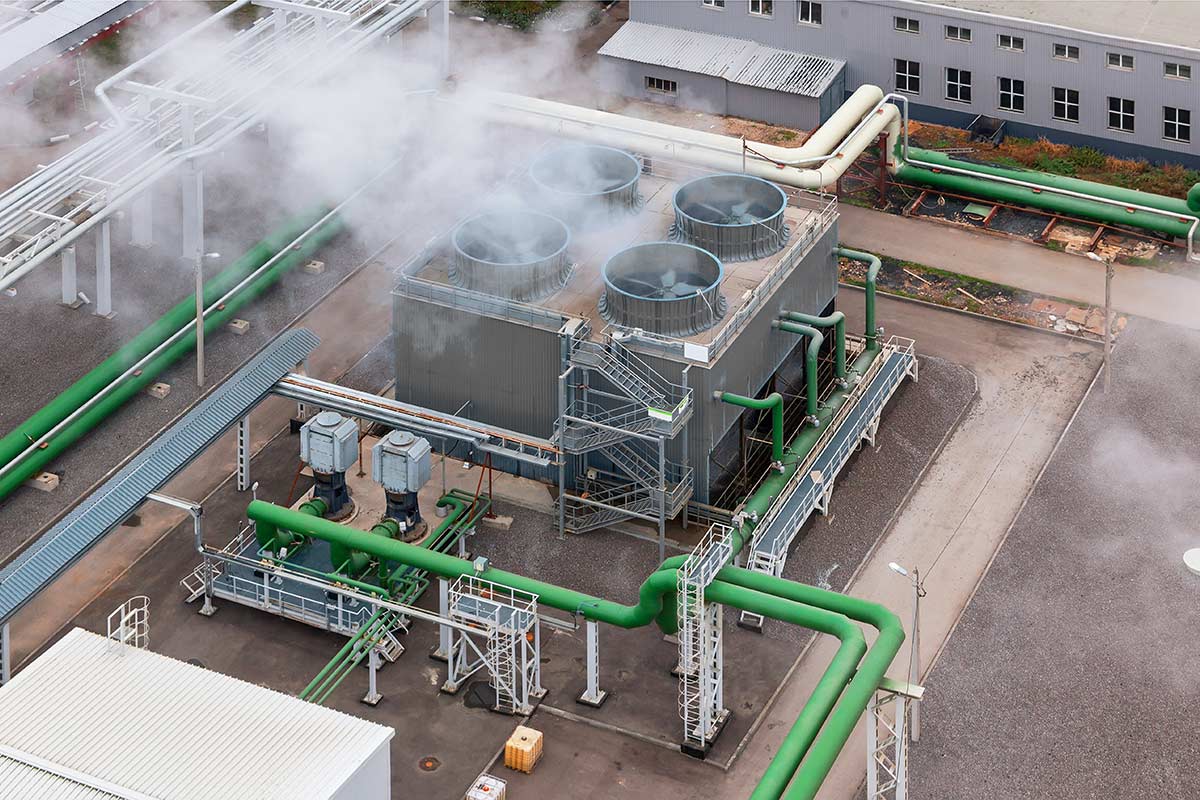
Induced draft, forced draft, crossflow, and counterflow cooling towers each have different efficiency characteristics. Selecting the right type for an industrial application is the foundation of optimization.
High-quality fill increases surface area and improves contact time between air and water. Advanced fill designs can dramatically boost efficiency without increasing footprint.
Fans and motors must balance airflow requirements with energy consumption. Poorly selected components can negate even the best thermal design.
Industrial systems rarely operate at full load all the time. Adjusting cooling tower output to match actual demand prevents unnecessary energy consumption.
Ambient conditions change with the seasons, and cooling tower operation should change with them. Adjusting fan speed, water flow, and blowdown rates can significantly improve year-round efficiency.
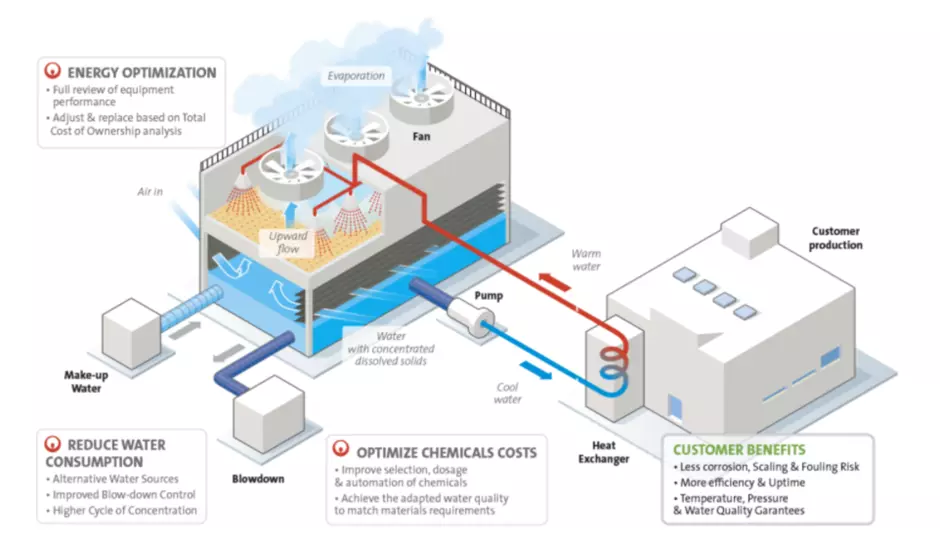
Chemical water treatment prevents mineral deposition and fouling, keeping heat transfer surfaces clean and efficient.
Biocides and dispersants control algae and bacteria that restrict airflow and water distribution.
Regular inspections help identify problems early. Cleaning fill, nozzles, and basins can quickly restore lost efficiency.
Preventive maintenance reduces unplanned downtime and keeps efficiency stable over the long term.
VFDs adjust fan speed based on cooling demand. This simple upgrade can deliver major energy savings during partial-load operation.
Modern monitoring systems provide real-time performance data, allowing operators to make informed decisions and fine-tune efficiency continuously.


From a manufacturer’s standpoint, cooling tower efficiency is not an afterthought—it’s built into the design from day one. At Mach Cooling, efficiency considerations guide everything from thermal calculations and material selection to airflow design and manufacturing precision.
A well-designed cooling tower makes optimization easier throughout its entire service life.
Mach Cooling (https://www.machcooling.com/) focuses on delivering cooling tower solutions that perform efficiently under real industrial conditions. Their strengths include:
Custom-engineered designs for specific operating requirements
High-efficiency airflow and heat transfer optimization
Robust manufacturing quality
Long-term technical support
Rather than offering one-size-fits-all products, Mach Cooling emphasizes solutions that deliver measurable efficiency gains over time.

Long-term efficiency depends on consistency. Best practices include:
Continuous performance monitoring
Proper water treatment programs
Energy-efficient fans and drives
Regular maintenance and inspections
Partnering with experienced cooling tower manufacturers
Efficiency is not a one-time achievement—it’s an ongoing process.
Cooling tower efficiency optimization is one of the most effective ways for industrial systems to reduce energy consumption, lower operating costs, and improve reliability. By addressing design, operation, water treatment, and maintenance together, facilities can unlock significant performance improvements.
Working with an experienced manufacturer like Mach Cooling ensures that efficiency is not just achieved—but sustained. In today’s competitive industrial environment, smarter cooling tower efficiency optimization delivers both technical and economic advantages that truly matter.