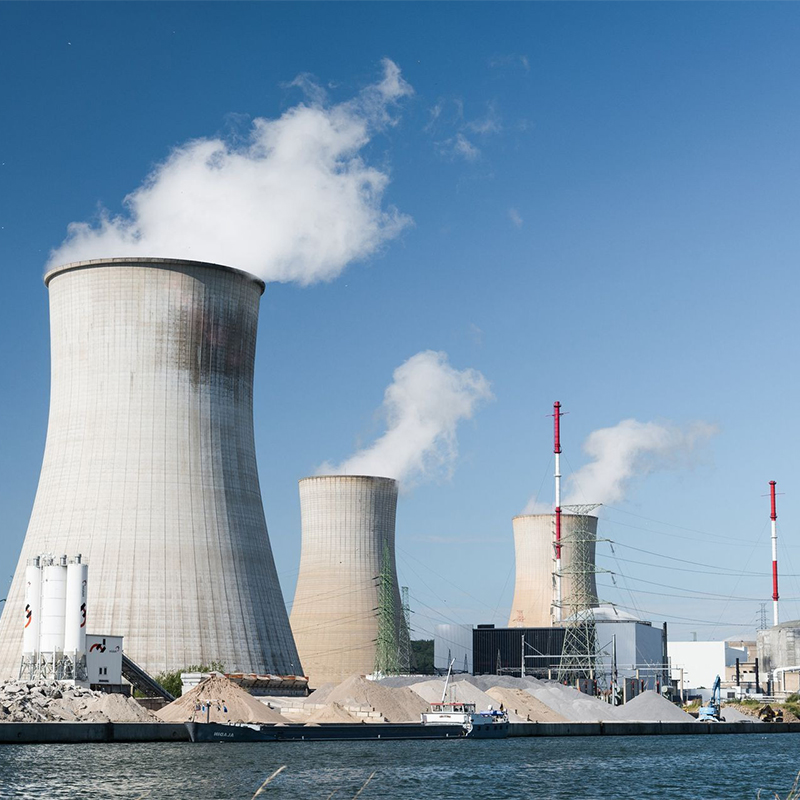
We Provide Cooling Tower Solution

Views: 0 Author: Cindy Publish Time: 2026-09-23 Origin: Site


Steel and metal processing plants are built around heat.
Furnaces, rolling mills, continuous casting machines, hydraulic systems, compressors, heat exchangers, and other production equipment can generate enormous amounts of thermal energy. If that heat isn't removed continuously, production efficiency, equipment reliability, and even product quality can suffer.
That's where a 2000 ton cooling tower for steel and metal processing can become an important part of the plant's cooling infrastructure.
But what does “2000 ton” actually mean? What type of tower should you choose? How should you deal with industrial cooling water containing scale, dust, oil, or suspended solids? And what should you look for when selecting a cooling tower manufacturer?
Let's break it down.
Steel production is a high-temperature, high-load industrial process.
Cooling water may be used to remove heat from furnaces, casting equipment, rolling machinery, hydraulic systems, compressors, bearings, heat exchangers, and other production equipment.
A cooling tower transfers heat from circulating water to the atmosphere, allowing the cooled water to return to the production system and continue the cooling cycle.
This creates an efficient loop:
Process equipment → hot water → cooling tower → cooled water → process equipment
For a large steel plant, this loop can operate continuously for thousands of hours.
That means the cooling tower isn't simply an auxiliary machine. It can be a critical part of the production infrastructure.
Steel and metal-processing facilities can also face challenging operating conditions, including dust, scale, oil contamination, vibration, high temperatures, and changing production loads.
So, choosing the right cooling tower requires more than looking at capacity.
First, let's clear up one common misunderstanding.
A 2000 ton cooling tower does not mean the tower weighs 2,000 tons.
In cooling-tower terminology, “ton” refers to a nominal cooling-capacity rating.
However, the actual thermal duty of a cooling tower depends on several operating conditions.
These include:
Circulating-water flow rate
Entering water temperature
Leaving water temperature
Cooling range
Approach
Design wet-bulb temperature
Ambient conditions
Required heat rejection
Tower configuration
So, if you're searching for a 2000 ton cooling tower, don't stop at the capacity number.
The more important question is:
What operating conditions must the tower satisfy?
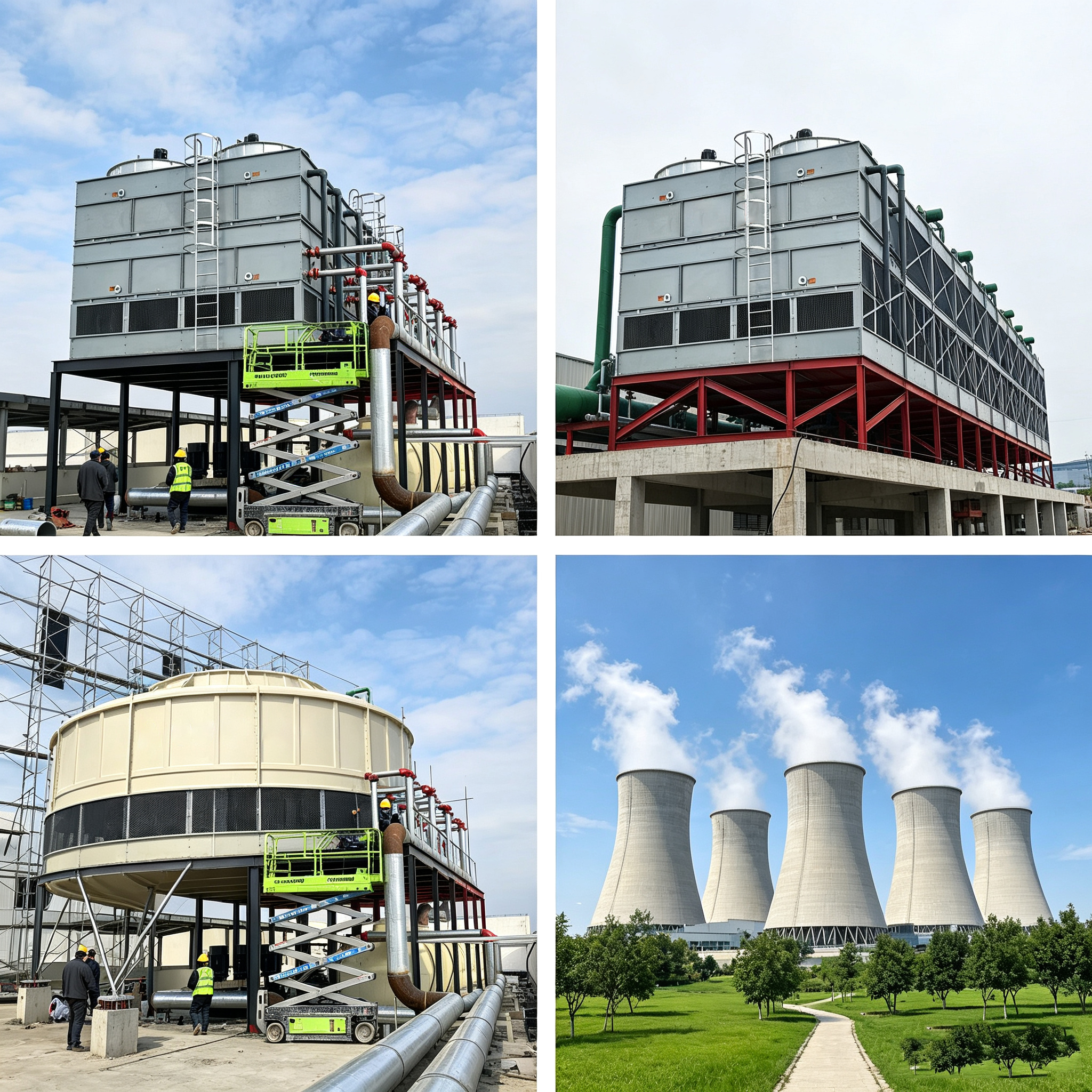
Cooling capacity and water flow are closely connected, but they aren't the same thing.
A cooling tower's actual heat rejection depends on the amount of water being circulated and the temperature difference that must be achieved.
Two projects can both require a nominal 2000 ton cooling tower while having different detailed designs.
Why?
Because their water temperatures, flow rates, wet-bulb conditions, approach requirements, and process loads may not be identical.
That's why a cooling tower manufacturer needs actual project data before finalizing the tower.
Wet-bulb temperature is particularly important for evaporative cooling towers.
The tower relies on evaporation and atmospheric conditions to reject heat. A tower designed for one climate cannot simply be assumed to perform identically in another climate.
For a steel or metal-processing plant, engineers should consider:
Local summer design conditions
Design wet-bulb temperature
Required cold-water temperature
Process heat load
Circulating-water flow
Expected operating range
Getting these parameters right at the beginning can prevent expensive performance problems later.
A 2000 ton cooling tower can serve multiple production systems within a steel or metal-processing facility.
The exact application depends on plant design.
Typical applications include:
Steel rolling mills
Steelmaking equipment
Continuous casting
Furnace auxiliary systems
Hydraulic systems
Heat exchangers
Compressors
Metal-processing machinery
Industrial process cooling
Large-capacity cooling towers are particularly useful where substantial heat rejection is required and the cooling system must operate continuously.
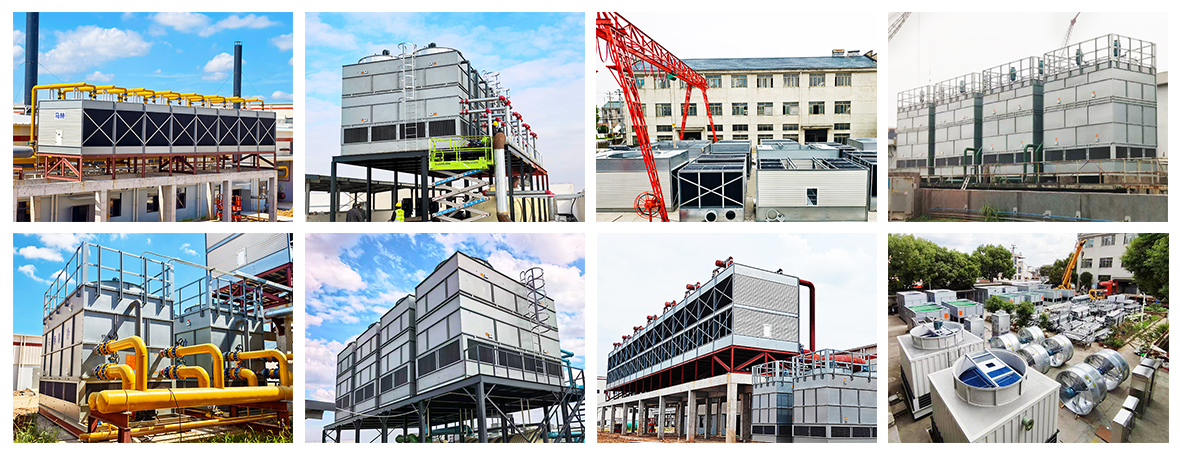
Mach Cooling currently lists industrial counterflow and crossflow cooling towers as well as closed and open cooling tower configurations. Its website states that its cooling tower capacity ranges from 3 tons to 5,000 tons per cell, with multi-cell solutions available.
Rolling mills transform heated steel into finished or semi-finished products.
During this process, significant heat can be generated by equipment such as rolls, bearings, hydraulic systems, motors, and heat exchangers.
Cooling water helps keep these components within their required operating temperature range.
A properly designed cooling tower can provide a continuous source of cooled water for the plant's circulation system.
The goal isn't simply to make the water “cold.”
The goal is to maintain a stable and predictable cooling condition.
That's an important distinction.
Furnace-related operations can produce extremely high thermal loads.
Cooling systems may be required for furnace auxiliaries, heat exchangers, hydraulic equipment, bearings, and other components exposed to intense heat.
In these applications, cooling-tower selection should start with the actual process heat load rather than simply selecting a nominal capacity.
Think of the cooling tower as the plant's thermal safety valve.
It continuously removes unwanted heat before that heat becomes an operational problem.
Continuous casting is another major application for industrial cooling systems.
Water is essential for controlling temperature around casting equipment and supporting the solidification process.
Depending on the plant configuration, cooling water may serve different equipment loops or pass through heat exchangers before returning to the cooling tower.
Stable cooling-water temperature can become especially important when the production process operates continuously.
After all, if the production line runs 24 hours a day, the cooling system needs to be ready 24 hours a day too.
Large cooling towers aren't limited to steel mills.
They can also support:
Aluminum processing
Copper production
Metal treatment
Industrial machining
Hydraulic systems
Compressors
Heat exchangers
Process machinery
Many modern metal-processing plants have several cooling loads operating at the same time.
That makes system flexibility important.
A properly designed multi-cell cooling tower can help the plant manage changing cooling loads and maintenance requirements.
Designing a 2000 ton cooling tower isn't simply a matter of making a smaller tower bigger.
At this scale, engineers need to consider the entire cooling system.
Important factors include:
Tower configuration
Number of cells
Airflow
Fan selection
Water distribution
Fill selection
Drift control
Structural design
Piping
Access for maintenance
Noise
Energy consumption
Water treatment
A good tower should fit the production process, not the other way around.
Crossflow and counterflow towers use different air and water movement arrangements.
In a crossflow tower, air generally moves horizontally through the fill while water travels downward.
In a counterflow tower, air moves upward while water flows downward.
Both designs have industrial applications.
The right choice depends on:
Available installation space
Water-distribution requirements
Maintenance preferences
Fan arrangement
Tower configuration
Environmental conditions
Project specifications
Mach Cooling offers both industrial crossflow and counterflow cooling tower configurations.
For a 2000 ton application, a multi-cell arrangement can provide useful operational flexibility.
Instead of treating the entire cooling tower as one huge unit, engineers can divide the required capacity among multiple cells.
This can offer several practical advantages.
For example, depending on the system design, one cell may be isolated for maintenance while the other cells continue operating.
Multi-cell systems can also provide better load management when plant demand changes.
This becomes particularly valuable for large steel plants where production schedules may vary throughout the day or year.
Fill is one of the most important internal components of an evaporative cooling tower.
Its job is to increase the effective contact area between water and air.
But here's the catch:
The highest-efficiency fill isn't automatically the best fill for every steel plant.
Why?
Because water quality matters.
If circulating water contains large amounts of suspended solids, scale, oil, or biological contamination, some fill designs may become difficult to maintain.
The best fill is therefore the one that provides an appropriate balance between heat-transfer performance and operating reliability.
Film fill creates a large effective surface area within a relatively compact volume.
For properly treated and relatively clean circulating water, film fill can provide efficient heat transfer.
PVC film fill is commonly used in many cooling tower applications.
Depending on the operating environment, other materials such as PP may also be considered.
The supplier should evaluate:
Water quality
Operating temperature
Fouling risk
Tower design
Heat load
Required cooling performance
before recommending a specific fill.
Splash fill works differently.
Instead of creating thin water films over closely spaced channels, splash fill repeatedly breaks and redistributes falling water.
This can be useful in applications where suspended solids or fouling create concerns.
For steel and metal-processing plants, the choice between film fill and splash fill should therefore be based on the actual water-treatment conditions.
Maximum surface area is not always the same as maximum real-world performance.
If a fill clogs quickly, its theoretical efficiency doesn't mean much.
Industrial cooling water is rarely as clean as laboratory water.
Steel plants can introduce:
Dust
Scale
Corrosion products
Oil
Suspended solids
Biological growth
Process contaminants
These substances can accumulate inside fill, basins, pipes, nozzles, and heat exchangers.
Over time, deposits can restrict water flow and reduce heat-transfer performance.
That's why water treatment should be considered part of the cooling tower system, not an optional extra.
Scale can form on heat-transfer surfaces and cooling tower components.
Suspended solids can accumulate in fill passages and water basins.
If deposits become severe, water distribution may become uneven and airflow resistance may increase.
A good maintenance program should therefore include:
Water filtration
Blowdown control
Chemical treatment
Basin cleaning
Fill inspection
Nozzle inspection
Regular water-quality testing
The cooling tower and water-treatment system need to work together.
Oil contamination can be particularly troublesome in metal-processing facilities.
Oil may enter the cooling-water loop through equipment leaks or process-related contamination.
Once inside the system, it can interfere with water distribution and create deposits on cooling surfaces.
If oil contamination is a known risk, the plant should consider appropriate separation, filtration, or upstream control measures.
A cooling tower can remove heat.
It cannot magically fix uncontrolled contamination entering the system.
A large cooling tower needs significant airflow to reject heat.
Fan selection therefore becomes a major engineering consideration.
Important parameters can include:
Fan diameter
Blade design
Air volume
Motor power
Rotation speed
Fan-stack design
Static pressure
Energy consumption
At 2000 tons, even a relatively small improvement in fan efficiency can become meaningful when the equipment operates thousands of hours per year.
That's why engineers should consider lifecycle energy consumption rather than focusing only on the initial equipment price.
Steel plants can expose cooling towers to demanding environments.
Moisture, chemicals, dust, high temperatures, and corrosion can all affect equipment life.
Depending on the tower design, manufacturers may use materials such as:
FRP
Galvanized steel
Stainless steel
Other corrosion-resistant materials
Material selection should reflect the local environment and expected service life.
There is no single material that is ideal for every project.
A 2000 ton cooling tower may operate for thousands of hours each year.
That makes energy efficiency a long-term financial issue.
Potential energy-saving measures can include:
Efficient fan design
Proper motor selection
Variable-speed control where appropriate
Optimized fill
Reduced airflow resistance
Proper water distribution
Correct tower sizing
A tower that costs slightly more to purchase but uses less energy over its operating life may offer better overall economics.
The cheapest tower isn't necessarily the cheapest tower to own.
Large industrial cooling towers should be maintained proactively.
Don't wait until the tower stops working.
A preventive maintenance program should cover:
Fill
Nozzles
Water basins
Fans
Motors
Gearboxes
Bearings
Shafts
Drift eliminators
Structural components
Water-treatment equipment
Regular inspections help identify problems while they are still manageable.
Inspect cooling tower fill for:
Scaling
Clogging
Deformation
Biological growth
Physical damage
If fill has deteriorated significantly, replacement may restore cooling performance more effectively than simply increasing fan power.
For a 2000 ton cooling system, even a relatively small loss in cooling performance can affect a large industrial process.
Mechanical components deserve regular attention too.
Check:
Vibration
Lubrication
Alignment
Bearings
Motor temperature
Gearbox condition
Fan blades
Fasteners
A fan problem can quickly become a production problem because reduced airflow directly affects heat rejection.
There is no universal price for a 2000 ton cooling tower.
The final project cost depends on many variables.
These can include:
Tower configuration
Number of cells
Construction materials
Fan system
Motor power
Fill type
Water-distribution system
Controls
Accessories
Shipping
Installation
Site conditions
A factory-assembled package tower can have a different cost structure from a field-erected industrial system.
That's why serious buyers should request a project-specific quotation.
Instead of asking only:
“How much is a 2000 ton cooling tower?”
provide the manufacturer with the complete operating requirements.
The resulting quotation will be much more meaningful.
Choosing the manufacturer can be just as important as choosing the tower.
Look for a company that can demonstrate:
Cooling tower engineering experience
Manufacturing capability
Quality-control procedures
Customization capability
Industrial application experience
Technical support
Spare-parts availability
Installation support
After-sales service
A professional manufacturer should be interested in your process data.
If a supplier gives you a price without asking anything about water flow, temperatures, wet-bulb conditions, or application, that's worth questioning.
Steel and metal-processing plants rarely have identical cooling requirements.
A good manufacturer should evaluate:
Heat load
Water flow
Entering-water temperature
Leaving-water temperature
Wet-bulb temperature
Approach
Water quality
Available footprint
Maintenance requirements
From there, the manufacturer can determine the appropriate tower configuration.
This may include the number of cells, fan arrangement, fill type, water-distribution system, and other components.
Mach Industry (Zhejiang) Co.,Ltd is a cooling tower manufacturer offering industrial cooling tower solutions.
According to its official website, Mach provides industrial cooling towers in both counterflow and crossflow configurations, along with closed and open cooling towers. The company states that its cooling tower capacity ranges from 3 tons to 5,000 tons per cell, with multi-cell solutions available.
For a 2000 ton industrial project, this capacity range provides room to evaluate different configurations instead of limiting the project to a single standard tower.
Mach also states that its cooling towers are used in industries including power, petroleum, smelting, sugar, printing and dyeing, and central air-conditioning applications.

Mach's current product range includes:
Counterflow industrial cooling towers
Crossflow industrial cooling towers
Counterflow closed cooling towers
Crossflow closed cooling towers
Mixed-flow closed cooling towers
Counterflow open cooling towers
Crossflow open cooling towers
This range allows project engineers to consider different cooling-tower configurations according to their application.
The company describes itself as a professional cooling tower manufacturer and states that its factory is located in Shaoxing, Zhejiang, China.
For a 2000 ton cooling tower project, capacity alone shouldn't determine the design.
The plant may benefit from a multi-cell configuration depending on its operating requirements.
Mach's website states that the maximum cooling capacity reaches 5,000 tons per cell and that multi-cell arrangements are available.
This means a 2000 ton requirement can be evaluated as part of a broader engineering solution rather than treated as a fixed-size product.
For project-specific information, buyers can visit the official Mach Cooling website:
Mach Cooling — Official Website
Before purchasing a 2000 ton cooling tower for steel or metal processing, ask these seven questions:
1. What is the actual heat-rejection duty?
Don't rely only on the nominal tonnage.
2. What are the entering and leaving water temperatures?
These determine an important part of the cooling requirement.
3. What is the design wet-bulb temperature?
Local climate directly affects evaporative cooling performance.
4. What is the required circulating-water flow?
The tower must be designed around the actual water flow.
5. What is the water quality?
Tell the manufacturer about suspended solids, hardness, oil, chemicals, and fouling risks.
6. Should the project use one cell or multiple cells?
Multi-cell designs may provide operational and maintenance flexibility.
7. What support is available after installation?
Ask about spare parts, maintenance guidance, technical support, and future replacement requirements.
These questions give you a much stronger basis for comparing cooling tower manufacturers.
A 2000 ton cooling tower for steel and metal processing is not simply a larger version of a commercial HVAC cooling tower.
It is an important part of a high-load industrial cooling system.
Its performance depends on much more than the “2000 ton” label.
Heat load, water flow, temperature range, wet-bulb conditions, water quality, fill selection, airflow, materials, energy consumption, maintenance, and tower configuration all matter.
So, where should you start?
Start with your process data.
Give the cooling tower manufacturer your required heat rejection, circulating-water flow, entering and leaving water temperatures, design wet-bulb temperature, water quality, site conditions, and space limitations.
Then let the engineering team determine the appropriate tower configuration.
For steel mills, rolling plants, metal-processing facilities, and other heavy industrial applications, Mach Industry (Zhejiang) Co.,Ltd provides industrial cooling tower solutions covering crossflow, counterflow, open, and closed configurations, with stated capacities up to 5,000 tons per cell and multi-cell options.
The right 2000 ton cooling tower should do more than remove heat.
It should become a dependable part of your production system for years to come.