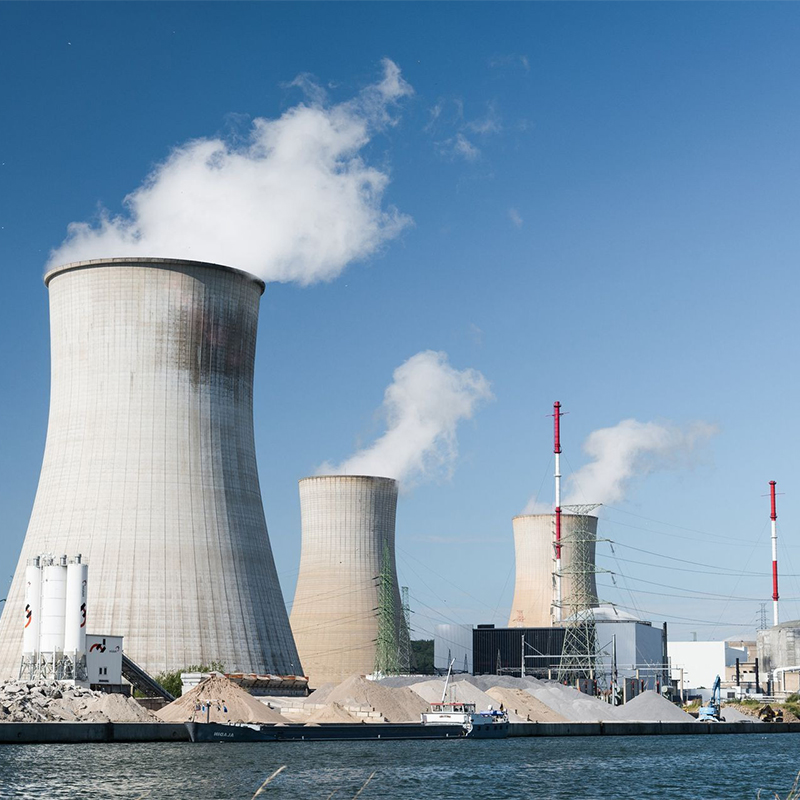
We Provide Cooling Tower Solution

Views: 0 Author: Cindy Publish Time: 2026-09-09 Origin: Site


Choosing the right industrial cooling tower is not simply a matter of picking a model with the right number on its nameplate. A cooling tower is an important part of your heat-rejection system, and the wrong choice can lead to poor cooling performance, higher energy consumption, production interruptions, and unnecessary operating costs.
For many medium-capacity industrial processes, a 38 ton cooling tower can provide a practical balance between cooling capacity, equipment size, investment cost, and operating efficiency.
But what exactly does “38 ton” mean? How does a 38 ton cooling tower work? Where can it be used? What specifications should you check before purchasing one?
This practical guide answers these questions and explains how to select the right 38 ton cooling tower for industrial applications.
A 38 ton cooling tower is an evaporative heat-rejection system designed to remove heat from circulating water.
In a typical industrial process, equipment generates heat. Water absorbs that heat and becomes warmer. The hot water then enters the cooling tower, where it is distributed over cooling tower fill. At the same time, a fan moves air through the tower.
As the water comes into contact with the air, a small amount of water evaporates. This evaporation removes heat from the remaining water, reducing its temperature. The cooled water is then collected in the basin and returned to the industrial process.
However, there is an important point to understand.
The term 38 ton cooling tower does not tell you everything about the tower's actual performance. The cooling capacity depends on several operating conditions, including:
Entering water temperature
Leaving water temperature
Water flow rate
Ambient wet-bulb temperature
Airflow
Cooling range
Approach temperature
Fill type and design
Therefore, two cooling towers with the same nominal 38-ton rating may have different dimensions, water flow rates, fan motors, and operating characteristics.
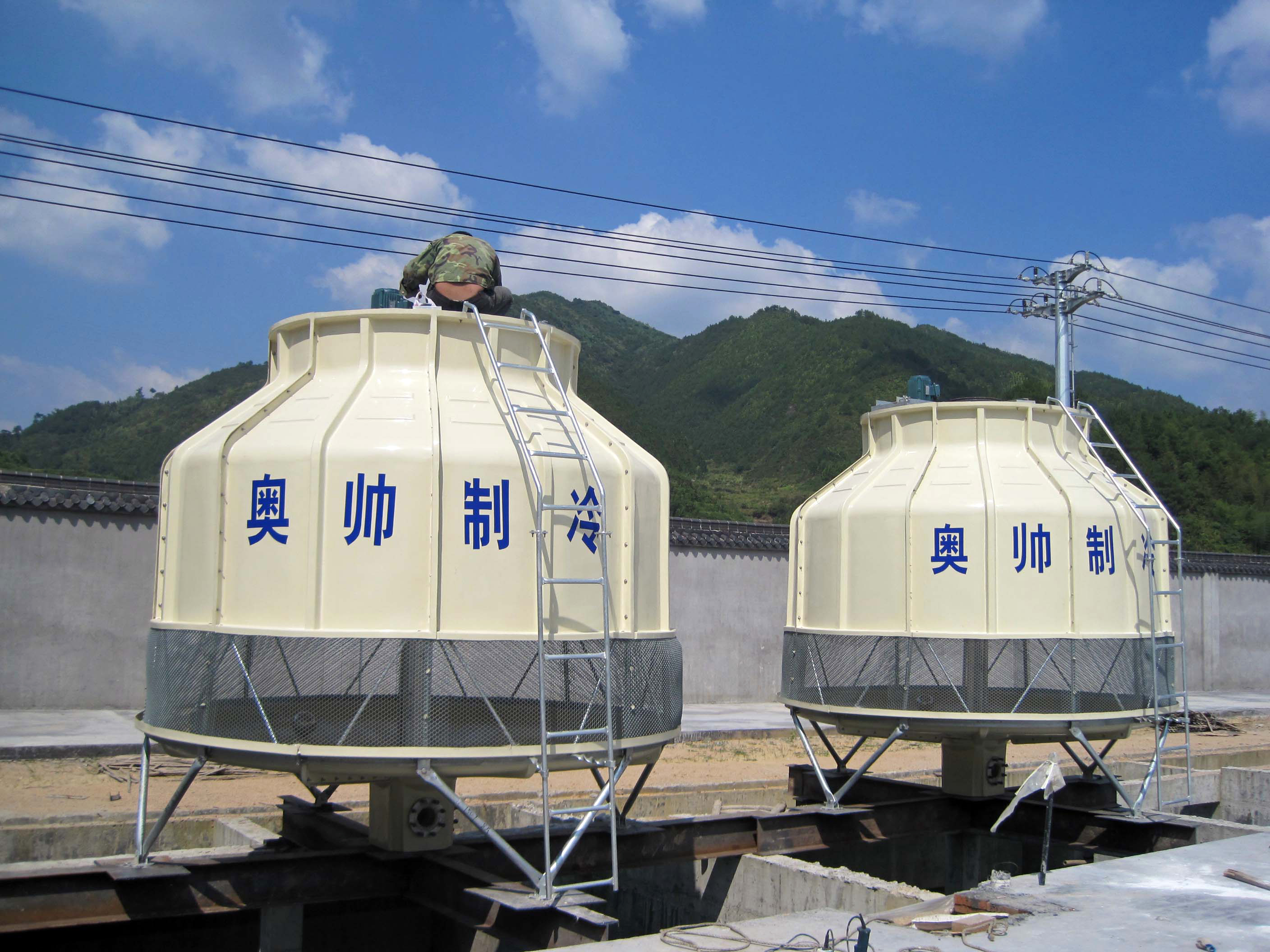
Cooling tower capacity is commonly expressed in tons of cooling. However, buyers should not treat the tonnage as an independent specification.
Think of “38 tons” as the starting point rather than the complete description of the equipment.
For example, when comparing two 38 ton cooling towers, you should ask:
What is the rated water flow?
What entering and leaving water temperatures are used?
What wet-bulb temperature is assumed?
What is the approach temperature?
What fan and motor configuration is used?
These details allow you to determine whether the tower can actually meet your process requirements.
Another common misunderstanding involves refrigeration tons and cooling-tower tons.
Although both are related to heat-removal capacity, they are not interchangeable numbers for equipment selection.
A cooling tower should be evaluated according to its actual heat-rejection requirements, water flow, temperature range, and environmental conditions.
If you are replacing an existing tower or matching a cooling tower with a chiller, do not simply tell the manufacturer that you need “38 tons.” Provide the complete operating conditions whenever possible.
That gives the manufacturer enough information to recommend the correct tower instead of guessing.
The basic principle behind a 38 ton industrial cooling tower is surprisingly simple:
Hot water + moving air + evaporation = cooled water.
But turning that simple principle into reliable industrial equipment requires careful engineering.
Hot water enters the tower and is distributed over the fill.
The fill creates a large surface area, allowing the water to spread into thin films or droplets. Meanwhile, the fan moves air through the tower.
As water evaporates, it carries heat away from the circulating water.
The cooled water collects in the basin and is pumped back to the industrial process.
The concept is similar to sweating. When sweat evaporates from your skin, it takes heat with it and makes you feel cooler.
A cooling tower applies the same principle on an industrial scale.
Cooling tower fill is one of the most important components inside the tower.
Its purpose is to increase the contact area between water and air while providing enough time for effective heat transfer.
Good fill design can improve:
Heat-transfer efficiency
Cooling performance
Water distribution
Tower compactness
Overall operating efficiency
However, fill selection should always consider water quality.
If the circulating water contains excessive suspended solids, scale-forming minerals, oil, or biological contaminants, unsuitable fill can become blocked or damaged.
Therefore, when purchasing a 38 ton cooling tower, ask the supplier what type of fill is recommended for your specific water conditions.
A cooling tower is a complete system rather than a single component.
The fan creates airflow.
The water-distribution system spreads hot water across the fill.
The fill provides the heat-transfer surface.
The drift eliminator reduces water droplets leaving with exhaust air.
The basin collects cooled water.
If any of these components performs poorly, the entire cooling system can suffer.
For example, excellent fill cannot compensate for insufficient airflow. Likewise, a powerful fan cannot solve severe water-distribution problems.
This is why complete system design matters.
For many industrial facilities, a 38 ton cooling tower represents a useful middle-capacity solution.
It may be appropriate for processes that require reliable heat rejection but do not need the capacity of a very large industrial cooling tower.
Factory space is rarely unlimited.
Mechanical areas, rooftops, production floors, and outdoor equipment zones all have physical constraints.
A properly selected 38 ton cooling tower can provide meaningful cooling capacity while maintaining a relatively manageable footprint.
This can make it suitable for:
Manufacturing facilities
Injection molding plants
HVAC systems
Chiller systems
Process cooling
Compressors
Heat exchangers
Industrial machinery
In industrial production, temperature stability can be just as important as cooling capacity.
A machine may continue operating when cooling water becomes slightly warmer, but product quality, cycle time, efficiency, or equipment life may gradually suffer.
A properly sized cooling tower helps maintain a more consistent cooling-water temperature.
Cooling tower efficiency is not determined by the fan motor alone.
Water distribution, fill condition, airflow, water treatment, fan control, pump selection, and operating temperature all affect energy and water consumption.
A well-designed system can reduce unnecessary operating costs throughout its service life.
A 38 ton cooling tower for industrial applications can be used in many different sectors.
The correct application depends on the actual heat load and operating conditions.
Injection molding machines generate considerable heat during operation.
Cooling water may be required for molds, hydraulic systems, oil circuits, compressors, and auxiliary equipment.
Stable cooling can help manufacturers maintain consistent production cycles and product quality.
For a molding plant, the most important parameters include:
Machine heat load
Required cooling-water temperature
Water flow rate
Operating hours
Ambient temperature
Number of machines operating simultaneously
A 38 ton tower may be an appropriate solution for a medium-sized molding operation when these requirements match the tower's design capacity.
Water-cooled chillers commonly use cooling towers to reject heat from condenser water.
In this application, the cooling tower does not directly cool the building.
Instead, it removes heat from the chiller condenser-water loop.
The tower and chiller therefore need to be properly matched.
If the cooling tower is too small, condenser-water temperature may increase. This can force the chiller to work harder and potentially increase energy consumption.
Food and beverage factories use cooling systems for various production and refrigeration processes.
Cooling towers may support:
Refrigeration equipment
Compressors
Heat exchangers
Process machinery
Auxiliary cooling systems
Water quality and hygiene are particularly important in these facilities.
Depending on the application, an open cooling tower or closed-circuit cooling system may be more appropriate.
Chemical and manufacturing processes frequently generate continuous heat.
A cooling tower can provide cooling water for heat exchangers, compressors, process equipment, and other machinery.
Material selection becomes especially important in harsh environments.
Water chemistry, corrosion exposure, ambient conditions, and required service life should all be considered before selecting the tower construction materials.
The biggest purchasing mistake is choosing a tower based solely on its nominal tonnage.
Instead, start with your actual process requirements.
You should know:
Heat load
Water flow rate
Entering-water temperature
Required leaving-water temperature
Design wet-bulb temperature
Required approach
Available installation space
Power supply
Water quality
Operating schedule
Once these parameters are known, a cooling tower manufacturer can determine whether a 38 ton model is appropriate.
Heat load is the foundation of cooling tower selection.
If the heat load is underestimated, the tower may not provide sufficient cooling during peak operation.
If the tower is significantly oversized, you may spend more on equipment and infrastructure than necessary.
Water flow is equally important.
The cooling tower, pump, piping, valves, and heat exchangers must work together as one hydraulic system.
Wet-bulb temperature has a major influence on evaporative cooling performance.
A cooling tower can generally cool water closer to the ambient wet-bulb temperature than to the dry-bulb temperature.
This means climate matters.
A tower operating in a cool, dry location may achieve different results from the same tower installed in a hot and humid environment.
Always provide the manufacturer with your installation location and expected operating conditions.
Two common cooling tower configurations are counterflow and crossflow.
In a counterflow tower, air and water generally move in opposite directions.
In a crossflow tower, air moves horizontally across the water flowing downward through the fill.
Neither design is automatically better for every project.
Crossflow towers can be attractive when accessibility to the water-distribution system is important.
They may also work well for certain modular industrial layouts.
Maintenance access, site arrangement, airflow requirements, and project preferences should all be considered.
Counterflow cooling towers can provide efficient heat transfer within a compact configuration.
They can be especially attractive when installation space is limited or when the process requires a particular airflow arrangement.
The final decision should come from engineering requirements rather than simply choosing whichever configuration appears more popular.
When requesting a quotation, ask for a technical datasheet.
Important specifications include:
Rated cooling capacity
Water flow rate
Entering-water temperature
Leaving-water temperature
Design wet-bulb temperature
Approach temperature
Fan diameter
Fan motor power
Tower dimensions
Operating weight
Fill type
Nozzle type
Construction material
Noise level
Electrical requirements
These specifications tell you much more than the phrase “38 ton cooling tower.”
Confirm how the manufacturer defines the rated capacity.
Ask which entering and leaving water temperatures are used and what ambient wet-bulb condition applies.
The cooling range—the difference between entering and leaving water temperature—is particularly important.
The cooling tower needs sufficient water flow to transfer the required heat.
Piping, pumps, valves, filters, and heat exchangers should therefore be evaluated together.
A correctly sized cooling tower can still underperform if the pump cannot provide the required flow.
The fan is responsible for moving air through the tower.
Fan diameter, blade design, motor power, speed, and control method can all affect performance.
For factories located near offices, residential areas, or noise-sensitive equipment, noise should be considered during the design stage rather than after installation.
A 38 ton cooling tower may have very different dimensions depending on its design and configuration.
Before ordering, check:
Available footprint
Tower height
Maintenance access
Piping clearance
Air intake clearance
Exhaust clearance
Structural loading
Transportation restrictions
Material selection is also important.
FRP, galvanized steel, stainless steel, and other materials have different advantages depending on the application.
Buying the right tower is only half the job.
Regular maintenance helps maintain cooling performance and extend equipment life.
Inspect the fill for:
Scale
Dirt
Biological growth
Blockage
Deformation
Damage
Check nozzles and distribution pipes for uneven water flow.
If one section of the fill receives significantly less water than another, the available heat-transfer area is not being used efficiently.
Water treatment is essential for long-term cooling tower performance.
Poor water chemistry can lead to:
Scaling
Corrosion
Biological growth
Fouling
Blocked nozzles
Reduced heat transfer
Water testing, filtration, blowdown, makeup water management, and appropriate treatment programs should be part of the operating strategy.
Mechanical components should be inspected regularly.
Check:
Bearings
Belts
Shafts
Fasteners
Motor condition
Lubrication
Electrical connections
Vibration
Unusual noise or vibration should never be ignored.
It may be the first warning of a developing mechanical problem.
Even a properly designed cooling tower can experience performance problems.
The good news is that many issues can be identified through basic checks.
If the cooling water is not reaching the desired temperature, check:
Water flow
Fill condition
Nozzle condition
Fan operation
Airflow
Wet-bulb temperature
Heat load
Water distribution
Do not immediately assume that the cooling tower itself is defective.
Operating conditions may simply have changed since the original design.
Excessive vibration can be caused by:
Fan imbalance
Worn bearings
Loose bolts
Shaft misalignment
Mechanical damage
Noise can also indicate excessive fan speed or component wear.
Rotating equipment should always be inspected according to appropriate safety procedures.
Cooling tower water loss can occur through evaporation, blowdown, drift, or leakage.
If water consumption suddenly increases, inspect:
Drift eliminators
Basin
Valves
Piping
Makeup-water system
Blowdown settings
Simply adding more makeup water may hide the problem rather than solve it.
Installation can have a major impact on actual cooling performance.
Even a high-quality cooling tower can underperform if airflow is restricted.
Hot and humid discharge air should have enough space to escape without being drawn back into the tower.
This phenomenon, known as air recirculation, can increase the effective inlet wet-bulb temperature and reduce cooling performance.
The foundation must be capable of supporting the cooling tower under operating conditions.
This includes considering the tower's operating weight, water-filled weight, structural loads, and relevant dynamic loads.
Installation drawings should be reviewed before construction begins.
Piping should provide the required water flow without excessive pressure loss.
Appropriate valves, strainers, service connections, and drainage provisions should be considered.
Electrical requirements should also be coordinated with the factory's power supply.
Motor protection, grounding, controls, and instrumentation should be planned as part of the complete system.
Never install a cooling tower simply because it physically fits into an empty space.
The tower needs sufficient space for:
Air intake
Air discharge
Maintenance
Cleaning
Component replacement
Inspection
Good layout planning can make future maintenance significantly easier.
There is no universal price for a 38 ton cooling tower.
The final cost depends on the design and configuration.
Important factors include:
Cooling tower type
Construction material
Fan and motor
Fill media
Water-distribution system
Controls
Number of cells
Corrosion protection
Customization
Accessories
Transportation
Installation requirements
Therefore, buyers should compare the total cost of ownership, not just the initial equipment quotation.
A cheaper tower that consumes more energy or requires frequent repairs may ultimately cost more.
Mach Industry (Zhejiang) Co., Ltd. is a manufacturer specializing in cooling towers and cooling tower components for industrial and commercial applications.
The company offers multiple cooling tower configurations and capacities, allowing customers to select or customize equipment according to their actual operating requirements.
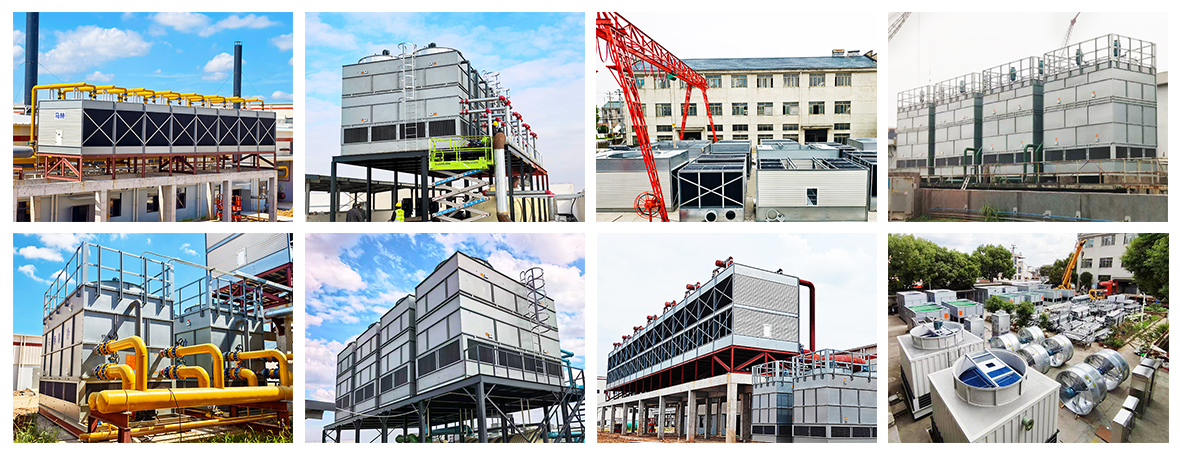
Industrial cooling is rarely a one-size-fits-all application.
A project may have unusual water temperatures, limited space, special water chemistry, strict noise requirements, or challenging ambient conditions.
That is where customized engineering becomes valuable.
Instead of asking only for a “38 ton cooling tower,” provide the manufacturer with your process information and installation conditions.
Mach Industry can then help determine an appropriate configuration based on the actual application.
Mach Industry provides a range of cooling tower solutions, including industrial counterflow cooling towers, crossflow cooling towers, open cooling towers, closed-circuit cooling towers, and cooling tower components.
For companies looking for a 38 ton cooling tower manufacturer or supplier, working directly with a manufacturer can simplify communication and make customization easier.
You can learn more about Mach Industry's cooling tower products and services through its official website.
Before purchasing your cooling tower, use this checklist:
1. What is the actual heat load?
2. What is the required water flow rate?
3. What are the entering and leaving water temperatures?
4. What is the local design wet-bulb temperature?
5. What cooling range and approach are required?
6. Is crossflow or counterflow more suitable?
7. What material should the tower use?
8. How much installation space is available?
9. What are the electrical requirements?
10. What water-treatment system will be used?
11. What maintenance access is available?
12. What is the expected operating schedule?
Once you have this information, your manufacturer can determine whether a 38 ton cooling tower is the correct choice and configure the equipment accordingly.
A 38 ton cooling tower can be an excellent solution for medium-capacity industrial heat rejection, but choosing the right tower requires more than looking at the tonnage.
Heat load, water flow, temperature range, wet-bulb temperature, airflow, fill design, water distribution, materials, installation conditions, and maintenance all influence the final result.
For industrial buyers, the smartest strategy is simple:
Start with the process requirements, then select the cooling tower.
If you are evaluating a 38 ton cooling tower for injection molding, HVAC, chillers, manufacturing, chemical processing, food production, or another industrial application, working with an experienced manufacturer can help you avoid costly equipment mismatches.
Mach Industry (Zhejiang) Co., Ltd. provides cooling tower solutions for a wide range of industrial requirements and can help customers evaluate suitable configurations based on actual operating conditions.
Yes. A 38 ton cooling tower can be suitable for factories with a corresponding heat-rejection requirement. Potential applications include injection molding, process cooling, HVAC, chillers, heat exchangers, compressors, and industrial machinery.
However, actual suitability should always be confirmed using the heat load, water flow, temperature range, and local environmental conditions.
Yes. Industrial cooling towers can be customized according to water flow, temperature requirements, materials, fan configuration, dimensions, installation conditions, and other project requirements.
Customization can be particularly useful when the standard equipment does not fit the site's physical or process requirements.
Service life varies depending on construction materials, water quality, operating hours, environmental conditions, maintenance, and replacement of wearing components.
A properly maintained industrial cooling tower can provide many years of reliable service.
Cooling towers should be inspected regularly, while cleaning, water-treatment checks, mechanical inspections, and component servicing should follow the manufacturer's recommendations and the actual operating environment.
Facilities operating continuously or under harsh water and environmental conditions may require more frequent maintenance.
The key is simple: don't wait until cooling performance drops significantly before maintaining the tower.