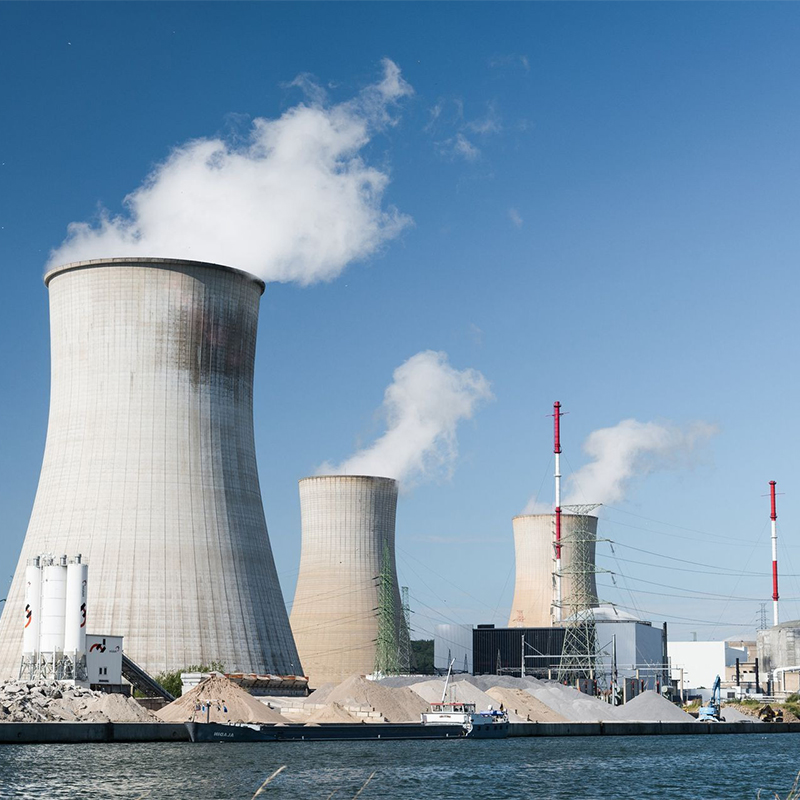
We Provide Cooling Tower Solution

Views: 0 Author: Cindy Publish Time: 2026-09-30 Origin: Site


Water and energy are two of the biggest operating concerns in modern industrial and commercial cooling systems.
A cooling system has one simple job: remove unwanted heat. But how it removes that heat can make a huge difference to water consumption, electricity use, maintenance costs, and equipment life.
That is why cooling technologies for water and energy conservation have become increasingly important.
A traditional cooling tower can work well, but simply making the tower larger isn't always the answer. Better results often come from combining efficient heat-transfer design, intelligent controls, optimized water treatment, efficient fans and pumps, and appropriate system configuration.
So, what should you look for?
Whether you're designing a new industrial cooling system, upgrading an existing cooling tower, or comparing cooling tower manufacturers, this guide will help you understand the technologies that can reduce both water and energy consumption.
Cooling systems often operate for thousands of hours each year.
A small efficiency improvement repeated every hour can eventually become a significant saving.
Think about a factory cooling system running continuously during production. If a fan motor uses slightly less electricity, that saving happens again and again. If a cooling tower can operate with less blowdown, the facility can reduce makeup water and wastewater.
The two resources are also connected.
EPA notes that improving the efficiency of overall mechanical systems can reduce both water and energy consumption.
This is why modern cooling design should not treat water efficiency and energy efficiency as two completely separate goals.
The best approach looks at the entire system.
The term cooling technologies covers a broad range of equipment and methods used to remove heat from buildings, machines, processes, fluids, and industrial systems.
These technologies include:
Open cooling towers
Closed circuit cooling towers
Air-cooled systems
Evaporative cooling
Hybrid cooling
Chilled-water systems
Heat exchangers
Variable-speed drives
Advanced water treatment
Side-stream filtration
Automated cooling controls
Different technologies solve different problems.
An industrial factory, for example, may need a closed-loop cooling system to protect process fluid. A commercial HVAC system may use an open cooling tower connected to a chiller. Another facility may combine evaporative and dry cooling to reduce water consumption during certain operating conditions.
Water and energy efficiency can sometimes pull in different directions.
Evaporative cooling is extremely effective at rejecting heat, but it consumes water through evaporation. Dry cooling can greatly reduce water consumption, but fans may require more electricity because the system relies more heavily on sensible heat transfer.
That's why cooling system design is a balancing act.
The objective isn't always to minimize one resource at any cost.
The goal is to find the right balance for the site's climate, utility prices, water availability, operating schedule, and process requirements.
Cooling towers are especially important because evaporation is their primary heat-rejection mechanism.
Warm water enters the tower, comes into contact with moving air, and releases heat as a portion of the water evaporates.
EPA explains that cooling tower water losses generally occur through evaporation, blowdown, drift, and leaks or overflows.
That means there are several opportunities to improve efficiency.
You cannot eliminate the evaporation required for evaporative cooling.
But you can control unnecessary water loss.
Understanding where the water goes is the first step toward saving it.
Evaporation is the main reason cooling towers consume water.
When water evaporates, it carries heat away from the cooling system.
This isn't necessarily waste.
In fact, evaporation is what makes evaporative cooling so effective.
The opportunity is to reduce the amount of water lost through other mechanisms while maintaining the required heat rejection.
As pure water evaporates, dissolved minerals remain behind.
If those minerals continue accumulating, the concentration of dissolved solids can rise enough to cause scaling, corrosion, or fouling.
That's why cooling towers periodically discharge some water.
This process is called blowdown or bleed-off.
The discharged water is replaced with fresh makeup water.
Operating at appropriate cycles of concentration can therefore have a major effect on water consumption. EPA specifically identifies maximizing appropriate cycles of concentration as a key cooling tower water-efficiency practice.
Drift occurs when small water droplets leave the tower with the exhaust air.
High-quality drift eliminators help capture these droplets and return water to the system.
Leaks, overflowing basins, damaged valves, and poorly controlled makeup systems can also waste water.
These losses don't contribute to useful cooling.
That's why regular inspection matters.
There is no single water-saving technology that works everywhere.
Instead, modern systems usually combine several strategies.
A well-designed cooling tower improves the contact between air and water while maintaining effective heat transfer.
Important design factors include:
Fill characteristics
Airflow
Water distribution
Fan efficiency
Drift elimination
Approach temperature
Spray nozzle performance
Basin design
A tower that transfers heat efficiently may achieve the required cooling performance without unnecessarily increasing airflow or water circulation.
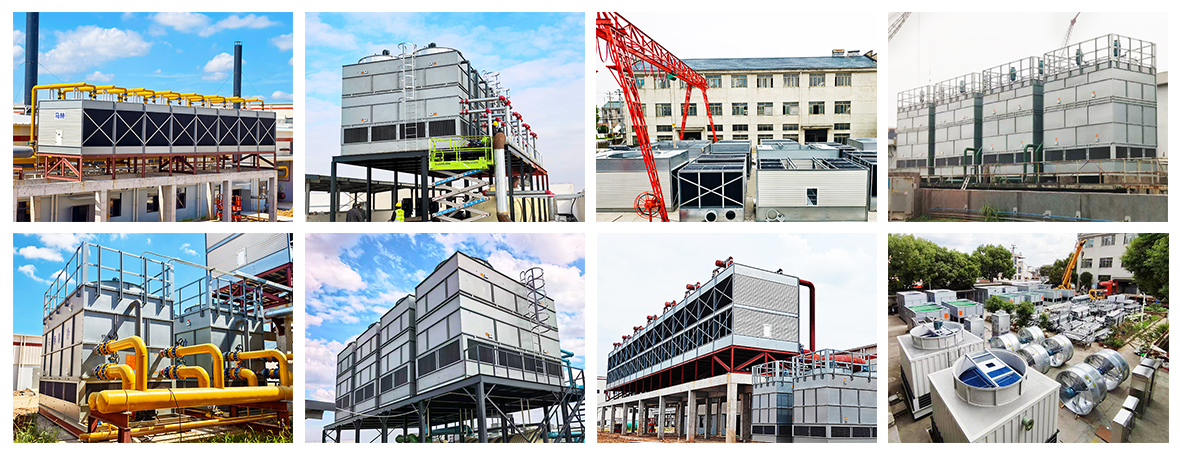
A closed circuit cooling tower uses a heat exchanger coil to keep the process fluid in a closed loop.
The process fluid stays inside the coil while spray water and air remove heat from the outside.
This design can be valuable when process-fluid cleanliness is important.
Mach Industry offers closed-loop cooling towers using coil materials including 304 stainless steel and copper, with customizable electrical specifications.
Closed circuit systems don't eliminate all water consumption because many designs still use evaporative spray water.
However, they can separate the process fluid from the external cooling-water environment and may reduce some process-side contamination and maintenance concerns.
Water treatment is one of the most important parts of cooling tower efficiency.
Poor water chemistry can create scale and biological growth.
Scale acts like an unwanted blanket over heat-transfer surfaces.
The thicker it becomes, the harder it is for heat to move.
That can increase energy consumption and reduce cooling performance.
A properly designed treatment program helps keep heat-transfer surfaces cleaner and allows the system to operate more efficiently.
Side-stream filtration removes suspended particles from a portion of the circulating water.
The U.S. Department of Energy identifies side-stream filtration as a technology that can potentially reduce water and energy use, lower operating costs, and extend cooling equipment life.
Why does filtration matter?
Because dirt and suspended solids can contribute to fouling.
Cleaner water can help maintain better heat-transfer conditions and reduce the burden on the main cooling system.
Water savings are only half the equation.
Electricity consumption can also be reduced through better equipment and smarter controls.
Fans can represent a significant portion of cooling tower electrical consumption.
The fan has to move enough air through the tower to reject the required amount of heat.
But running the fan at maximum speed all the time is rarely necessary.
A more efficient fan and motor combination can reduce energy consumption while maintaining required airflow.
This is one of the most practical energy-saving technologies for cooling towers.
Instead of operating at full speed continuously, a variable-speed fan can adjust airflow based on actual cooling demand.
Imagine driving a car with only two settings: stopped and full throttle.
That's not efficient.
A variable-speed drive gives the system a much wider operating range.
When the cooling load is low, the fan can slow down. When demand increases, the fan can accelerate.
The Department of Energy identifies advanced cooling tower controls as a water-saving technology and notes that better control of cycles of concentration can also improve system efficiency.
Pumps also consume energy.
An oversized pump can waste electricity by moving more water than necessary or operating at an inefficient point.
Pump selection should therefore consider:
Required flow
System pressure
Pipe resistance
Operating hours
Motor efficiency
Variable-speed operation
The same principle applies to motors throughout the cooling system.
Modern cooling systems can use sensors and automatic controls to respond to actual operating conditions.
Sensors may monitor:
Water temperature
Outdoor temperature
Flow rate
Pressure
Conductivity
Fan speed
Pump status
Cooling load
The control system can then adjust equipment operation.
Instead of asking, “How fast should the fan run?”
The system can ask, “How much cooling do I actually need right now?”
That's a much smarter question.
Cooling tower fill is often overlooked.
But fill provides a large surface area that allows water and air to interact.
Film fill spreads water into thin layers, increasing the contact area between water and air.
Splash fill breaks water into droplets and relies on repeated splashing to create heat-transfer surfaces.
The correct fill depends on the application and water quality.
A fill designed for clean water may not be suitable for a heavily contaminated industrial environment.
If fill becomes blocked with dirt, scale, or biological deposits, airflow and water distribution can suffer.
The result?
Lower heat-transfer efficiency and potentially higher operating costs.
So when evaluating cooling technologies for water and energy conservation, don't only look at the fan and motor.
Look inside the tower too.
Cooling tower airflow configuration affects the overall design.
In a crossflow cooling tower, air generally moves horizontally across the falling water.
In a counterflow cooling tower, air moves upward while water moves downward.
Both configurations can provide efficient heat rejection.
The right choice depends on factors such as:
Available footprint
Maintenance access
Required capacity
Fan arrangement
Water distribution
Ambient conditions
Project layout
Mach manufactures both crossflow and counterflow cooling tower configurations, including industrial and closed circuit systems.
The important point is not to assume that one configuration is always superior.
Instead, select the configuration that fits the application.
Closed-loop cooling is especially useful when the process fluid needs to remain clean.
The fluid circulating through the process side doesn't directly contact the outside environment.
In a closed circuit tower, heat moves from the process fluid through the coil wall and into the spray-water system.
That creates a separation between the process loop and the evaporative loop.
For applications such as machinery cooling, compressors, chemical processes, HVAC chillers, and other industrial systems, this separation can provide an important operational advantage.
Mach's industrial closed circuit counterflow cooling tower range is designed around this principle, with process fluid circulating through coils while spray water and air reject heat.
One of the most important concepts in cooling tower water conservation is the cycle of concentration.
As evaporation removes water but leaves dissolved minerals behind, the concentration of dissolved solids in the recirculating water increases.
If you discharge water too frequently, you waste makeup water.
If you allow concentration to become excessive, you can increase the risk of scale, corrosion, and fouling.
The goal is to operate within an appropriate range for the system and water-treatment program.
EPA recommends metering makeup and blowdown water and carefully controlling cooling tower operation to identify leaks, malfunctioning equipment, and water-saving opportunities.
This is a good example of why water conservation isn't simply about buying new equipment.
It is also about operating the equipment correctly.
Automation is changing the way cooling towers operate.
A modern system can continuously monitor operating conditions and adjust equipment accordingly.
For example, conductivity sensors can help control blowdown.
Temperature sensors can control fan speed.
Flow meters can identify abnormal water consumption.
Pressure sensors can detect changes in pump performance.
The Department of Energy notes that advanced cooling tower controls can continuously monitor conductivity and help maintain appropriate cycles of concentration, potentially reducing water, energy, and chemical consumption.
This creates a feedback loop:
Measure → Analyze → Adjust → Verify.
That's much better than waiting for an operator to discover a problem during a monthly inspection.
Maintenance isn't just about preventing breakdowns.
It is an efficiency strategy.
A dirty fill can restrict airflow.
A clogged nozzle can create uneven water distribution.
A scaled heat exchanger can reduce heat transfer.
A poorly adjusted fan can consume unnecessary electricity.
A leaking valve can waste water.
The EPA recommends monitoring water chemistry and flow, maintaining cooling equipment, and paying close attention to water-treatment performance as part of cooling tower efficiency management.
Regular inspection therefore protects both resources.
So, which cooling technology should you choose?
Start with the application rather than the product catalog.
Determine:
Required heat rejection
Water flow
Entering temperature
Leaving temperature
Design wet-bulb temperature
Operating hours
Seasonal conditions
Don't let a supplier guess these values.
Give them accurate engineering data.
Water quality can determine whether a particular cooling technology is practical.
Ask about:
Hardness
Suspended solids
Conductivity
Corrosion potential
Biological activity
Available treatment
Makeup-water quality
A tower designed around ideal laboratory water may perform very differently in a real industrial facility.
Don't compare equipment using purchase price alone.
A more useful calculation is:
Initial Cost + Energy + Water + Treatment + Maintenance + Spare Parts + Replacement
This gives you a better picture of the total cost of ownership.
Mach Industry (Zhejiang) Co.,Ltd is a cooling tower manufacturer serving industrial, commercial, HVAC, and process-cooling applications.
Its portfolio includes industrial cooling towers, open cooling towers, closed cooling towers, crossflow configurations, counterflow configurations, and mixed-flow closed cooling systems. Mach states that its cooling tower range covers capacities from 3 tons to 5,000 tons per cell, with multi-cell configurations available.
This range allows projects to be evaluated based on application rather than forcing every customer into the same tower configuration.
Open cooling towers are commonly used for applications where the circulating water can directly participate in the evaporative heat-rejection process.
The design can be suitable for HVAC and industrial cooling where water-treatment conditions are properly managed.
The selection should consider heat load, water flow, wet-bulb temperature, water quality, and required approach.
Mach's closed-loop cooling towers use heat-exchanger coils to separate the process fluid from the spray-water circuit.
Its listed coil options include 304 stainless steel and copper tubing, while electrical specifications can be customized according to project requirements.
This makes closed circuit technology particularly relevant when process-fluid cleanliness and closed-loop operation are important.
Mach offers both crossflow and counterflow solutions.
Its AHC-B closed circuit crossflow series includes multiple capacity models and features such as low drift, maintenance space, modular heat exchangers, and automatic temperature control options.
Mach's counterflow closed circuit systems use an induced-draft configuration and can be applied to machinery cooling, compressors, HVAC chillers, chemical processing, and other industrial applications.
Even good technology can perform poorly when the system is badly selected or operated.
Here are several mistakes worth avoiding.
The lowest purchase price doesn't automatically mean the lowest operating cost.
A cheaper tower may have higher fan power, weaker controls, less durable materials, or more demanding maintenance requirements.
A highly efficient cooling tower can lose much of its performance if the water system is poorly maintained.
Water chemistry should be considered part of the cooling system, not an unrelated task.
Bigger isn't always better.
An oversized fan, pump, or tower can create unnecessary capital and operating costs.
Proper engineering matters more than simply adding capacity.
A tower that performs well during peak summer conditions may require different control strategies during cooler weather.
Variable-speed fans and intelligent controls can help the system respond to changing loads.
Remember the bigger picture.
The tower interacts with:
Chillers
Heat exchangers
Pumps
Fans
Piping
Water treatment
Controls
Process equipment
Improving one component while ignoring the rest may limit the overall benefit.
Cooling technology is moving toward smarter and more integrated systems.
Several trends are particularly important.
First, advanced controls will continue to make cooling systems more responsive to actual demand.
Second, water treatment and filtration will become increasingly important as facilities seek to reduce blowdown without creating water-quality problems.
Third, closed-loop and hybrid technologies will remain valuable where water quality, water availability, and process protection are major concerns.
Fourth, variable-speed equipment will continue to replace simple fixed-speed operation in applications where loads change throughout the day.
And finally, manufacturers will increasingly need to think beyond the equipment itself.
The future of cooling is not simply about building a more powerful tower.
It is about building a smarter system.
The best cooling technologies for water and energy conservation don't rely on one magic component.
They combine efficient heat transfer, intelligent airflow, effective water treatment, variable-speed equipment, automated controls, good maintenance, and proper system design.
For cooling towers, water conservation often starts with controlling blowdown, improving water treatment, reducing drift, and preventing leaks.
Energy conservation can come from efficient fans, pumps, motors, controls, and optimized operating conditions.
Closed circuit cooling can provide another option when process-fluid protection is important.
And smart monitoring brings everything together.
For a new industrial or commercial cooling project, the most important question isn't simply:
“Which cooling tower should I buy?”
A better question is:
“Which cooling technology can remove the required heat while using the right amount of water and energy for my specific application?”
That shift in thinking can turn cooling from a basic utility expense into a carefully optimized part of your overall facility strategy.