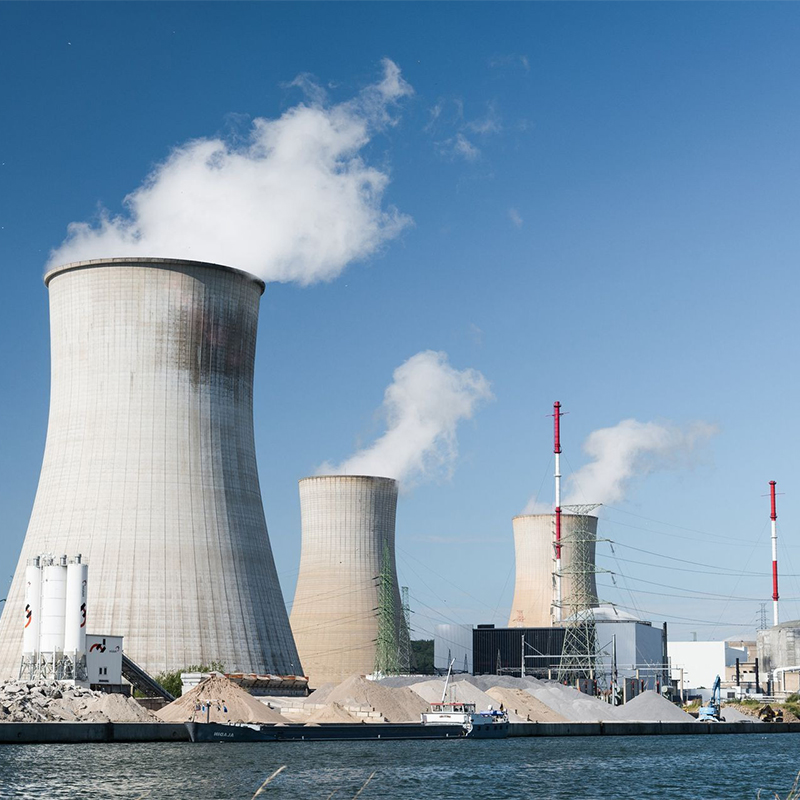
We Provide Cooling Tower Solution

Views: 0 Author: Cindy Publish Time: 2026-11-28 Origin: Site


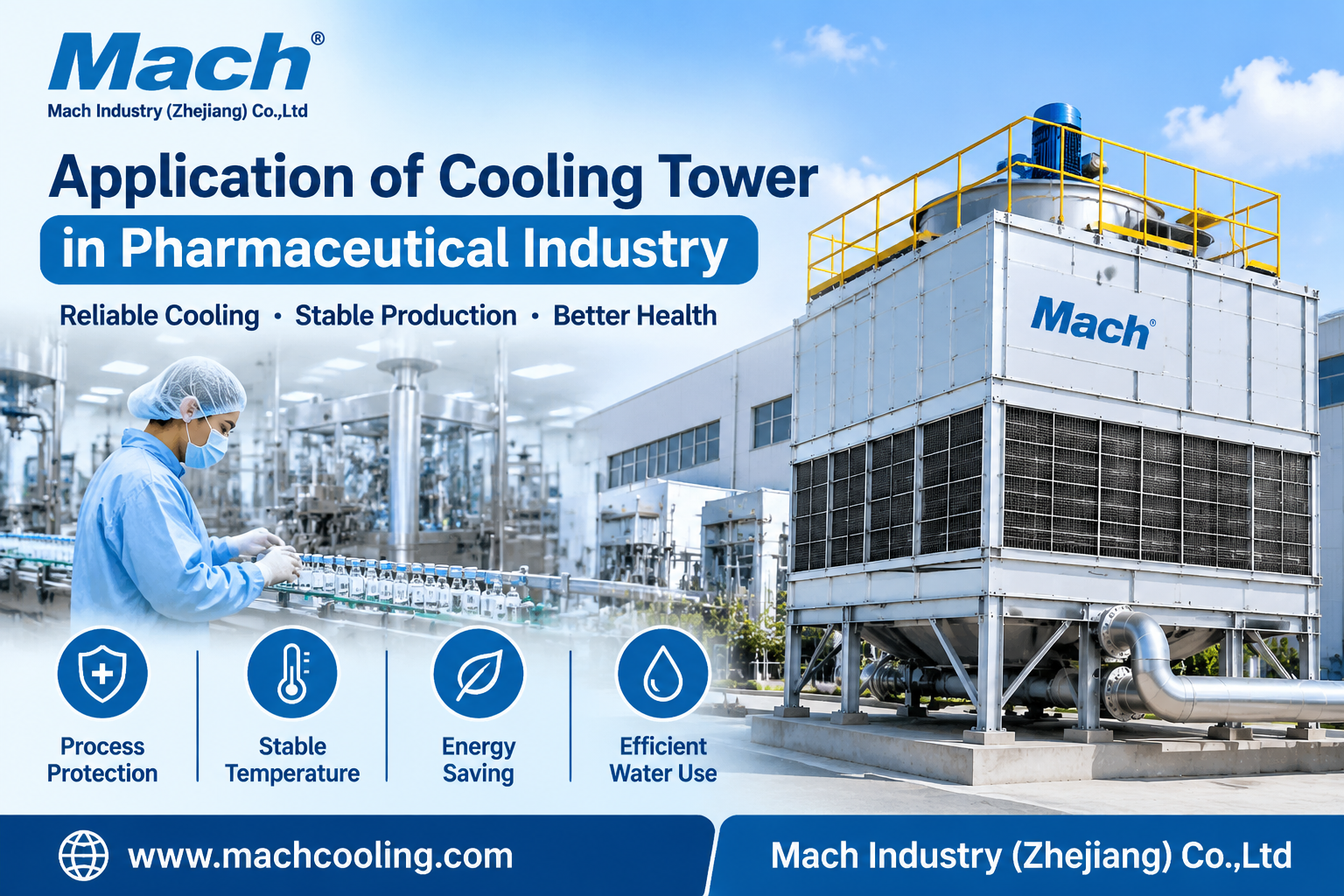
Pharmaceutical manufacturing depends on accuracy, consistency, and carefully controlled operating conditions. From producing active pharmaceutical ingredients (APIs) to manufacturing tablets, capsules, vaccines, and liquid medicines, many processes generate heat. If that heat is not removed effectively, production equipment may become unstable, product quality may be affected, and operating costs can rise.
This is where an industrial cooling tower becomes an important part of the plant's utility system.
A cooling tower removes unwanted heat from circulating water and releases it into the atmosphere. The cooled water can then return to chillers, heat exchangers, condensers, and other equipment that need continuous cooling. Think of it as the heat-management center of a pharmaceutical facility: it helps different systems operate within their required temperature ranges.
However, pharmaceutical cooling is not simply about making water colder. Engineers must also consider water quality, equipment reliability, energy consumption, maintenance access, and the separation between utility systems and product-contact systems.
In this guide, we will explore the main applications of cooling towers in the pharmaceutical industry, explain how to select the right equipment, and introduce Mach Industry (Zhejiang) Co., Ltd. as a manufacturer of industrial cooling tower solutions.
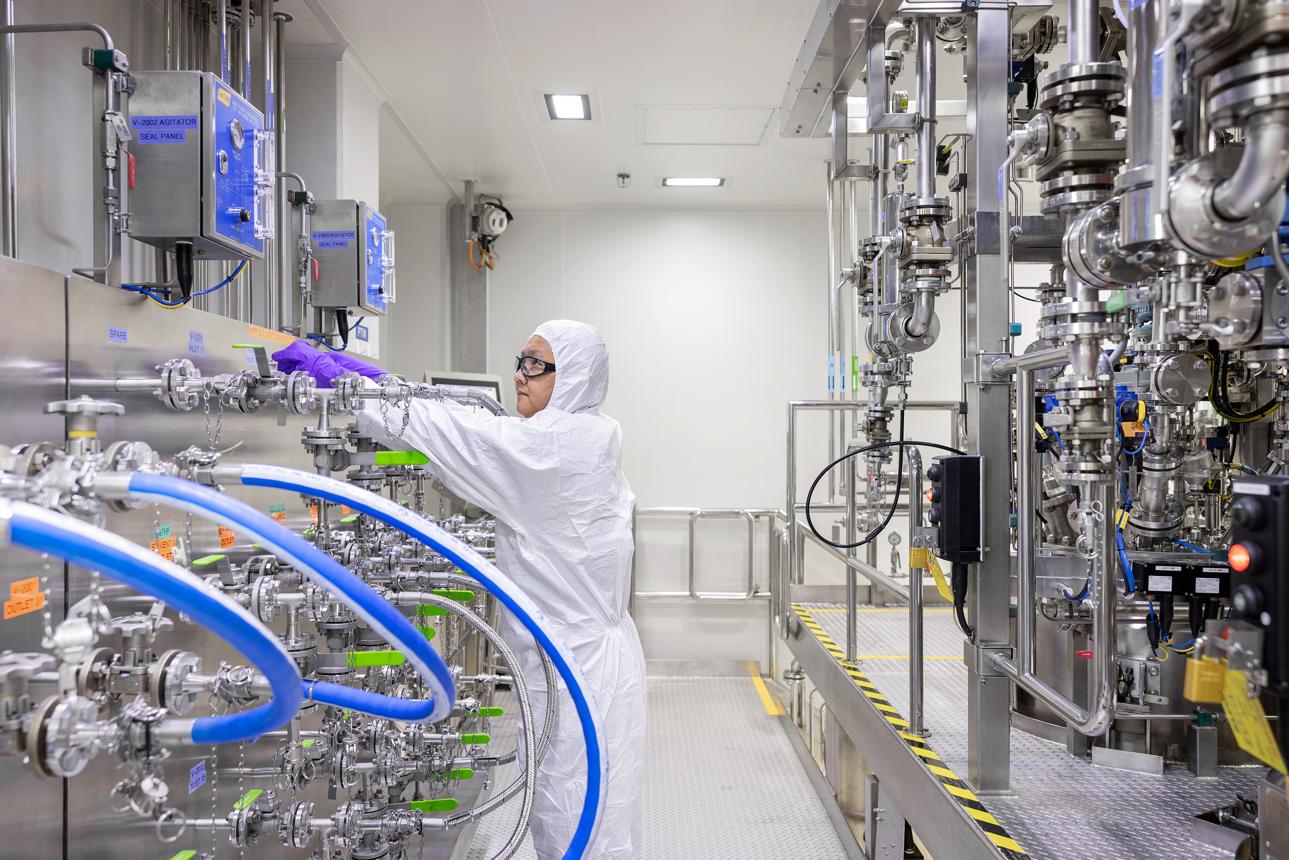
A cooling tower is a heat-rejection device that cools circulating water through heat exchange with air. In a typical evaporative cooling tower, warm water is distributed over fill media while air moves through the tower. A small portion of the water evaporates, carrying heat away from the remaining water.
The cooled water collects in a basin and is pumped back to the equipment that needs cooling. The cycle continues as long as the process operates.
Cooling towers are commonly used with water-cooled chillers, industrial heat exchangers, condensers, and other equipment. They are especially useful when a facility needs to remove large amounts of heat continuously.
The operating principle is straightforward:
Warm return water enters the cooling tower.
A distribution system spreads the water across the fill or heat-transfer surface.
Air moves through the tower, either naturally or with fan assistance.
Heat transfers from the water to the air, with evaporation providing much of the cooling effect.
Cooler water collects in the basin or outlet section.
A pump sends the water back to the cooling system.
The actual cooling performance depends on several factors, including entering water temperature, required leaving water temperature, water flow rate, ambient wet-bulb temperature, airflow, and tower configuration.
A typical mechanical-draft cooling tower includes a casing or structure, fill media, water distribution pipes and nozzles, drift eliminators, fans, motors, a water basin, and supporting components.
Each part has a specific job. Fill media increases the contact area between air and water. Fans provide the airflow needed for heat transfer. Drift eliminators reduce the amount of water droplets carried out with the exhaust air. The basin collects cooled water for recirculation.
The quality and compatibility of these components affect the tower's performance, operating life, and maintenance requirements.
Pharmaceutical facilities use many types of equipment that produce or transfer heat. Cooling towers help remove this heat and support stable operation across the plant.
Temperature control is important in many pharmaceutical processes. Chemical reactions, mixing operations, crystallization, and other production stages may require specific temperature conditions.
A cooling tower can provide cooling water to heat exchangers or chillers that serve these processes. When the cooling system is properly designed, it helps maintain stable operating conditions and reduces the risk of temperature-related interruptions.
It is important to understand that a cooling tower usually does not control the process temperature directly. Instead, it rejects heat from the cooling-water circuit. The final process temperature is controlled by the complete system, including heat exchangers, chillers, pumps, sensors, and control valves.
Pharmaceutical plants often require carefully controlled indoor environments. Depending on the product and production activity, HVAC systems may need to manage temperature, humidity, air cleanliness, and air movement.
Cooling towers commonly support central chilled-water systems. In a water-cooled chiller installation, the chiller removes heat from the building's chilled-water circuit and transfers it to condenser water. The cooling tower then rejects that heat to the outdoor air.
This arrangement can support air-handling units serving production rooms, laboratories, warehouses, and other controlled spaces.
A key point: the cooling tower is part of the utility system, not a device that directly supplies cleanroom air. Cleanroom environmental control depends on the complete HVAC design, filtration, air distribution, pressure control, and monitoring strategy.
High temperatures can increase stress on motors, compressors, pumps, hydraulic systems, and other equipment. Reliable cooling helps these systems remain within their specified operating limits.
For a pharmaceutical plant, an unexpected equipment shutdown can affect production schedules and increase maintenance costs. A properly sized cooling tower, combined with suitable pumps, heat exchangers, and control systems, helps reduce the risk of cooling-related interruptions.
Cooling systems can consume a significant amount of electricity, particularly in facilities that operate for long hours. Cooling tower fan power, condenser-water pump power, chiller efficiency, and operating conditions all influence total energy consumption.
An appropriately selected tower can help improve overall system efficiency. Variable-frequency drives (VFDs), efficient fans, suitable heat-transfer surfaces, and well-designed water distribution can help reduce unnecessary energy use.
Remember, the most efficient cooling tower is not necessarily the smallest or the cheapest. It is the unit that meets the required thermal duty under actual site conditions without excessive energy or water consumption.
Cooling towers can support several utility and production-related systems. Their exact role depends on the plant layout, process requirements, and cooling-water design.
One of the most common applications is supporting central air-conditioning systems.
Large pharmaceutical facilities may use water-cooled chillers to provide chilled water to air-handling units. The cooling tower receives heat from the chiller's condenser-water circuit and releases it outdoors.
This arrangement can support:
Cleanroom HVAC systems
Production-area air conditioning
Laboratory temperature control
Office and administration buildings
Warehouse climate control
Utility and equipment rooms
The cooling tower capacity must be matched to the chiller's heat-rejection requirement, not simply to the chiller's nominal refrigeration capacity. The condenser heat load is normally greater than the cooling load delivered to the chilled-water system.
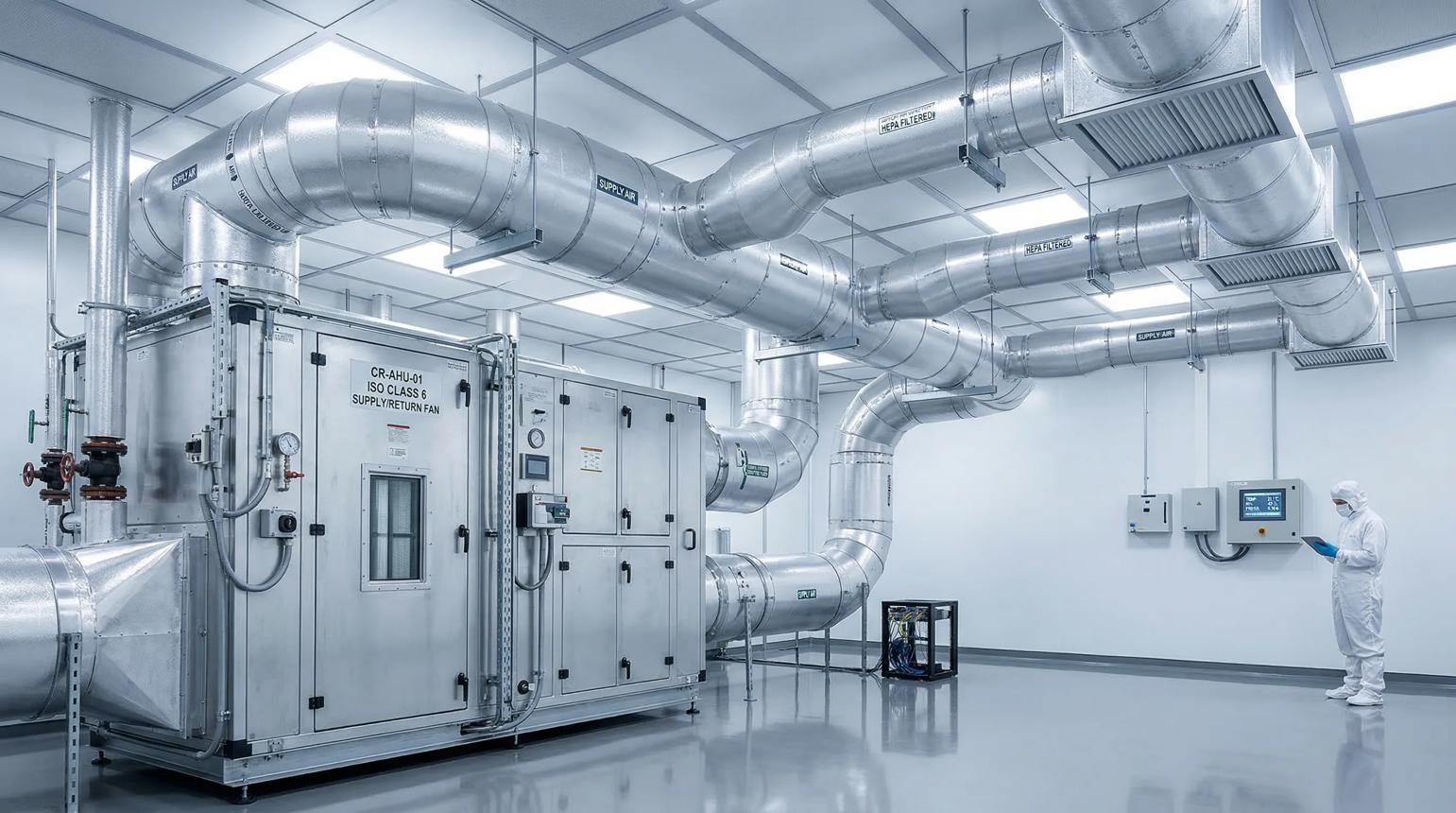
Pharmaceutical plants may use reactors, mixing tanks, and process vessels for chemical synthesis, formulation, and other manufacturing operations. These vessels can generate heat during operation.
A cooling-water circuit may supply a jacket or external heat exchanger to remove process heat. In some installations, the cooling tower supplies water directly to an intermediate heat exchanger. In others, it supports a chiller or secondary cooling circuit that provides more precise temperature control.
For sensitive processes, engineers should confirm the required temperature range, allowable temperature variation, heat load, and compatibility of the cooling medium with the process equipment.
A cooling tower provides the heat-rejection capacity; the process control system determines how much cooling is delivered and when.
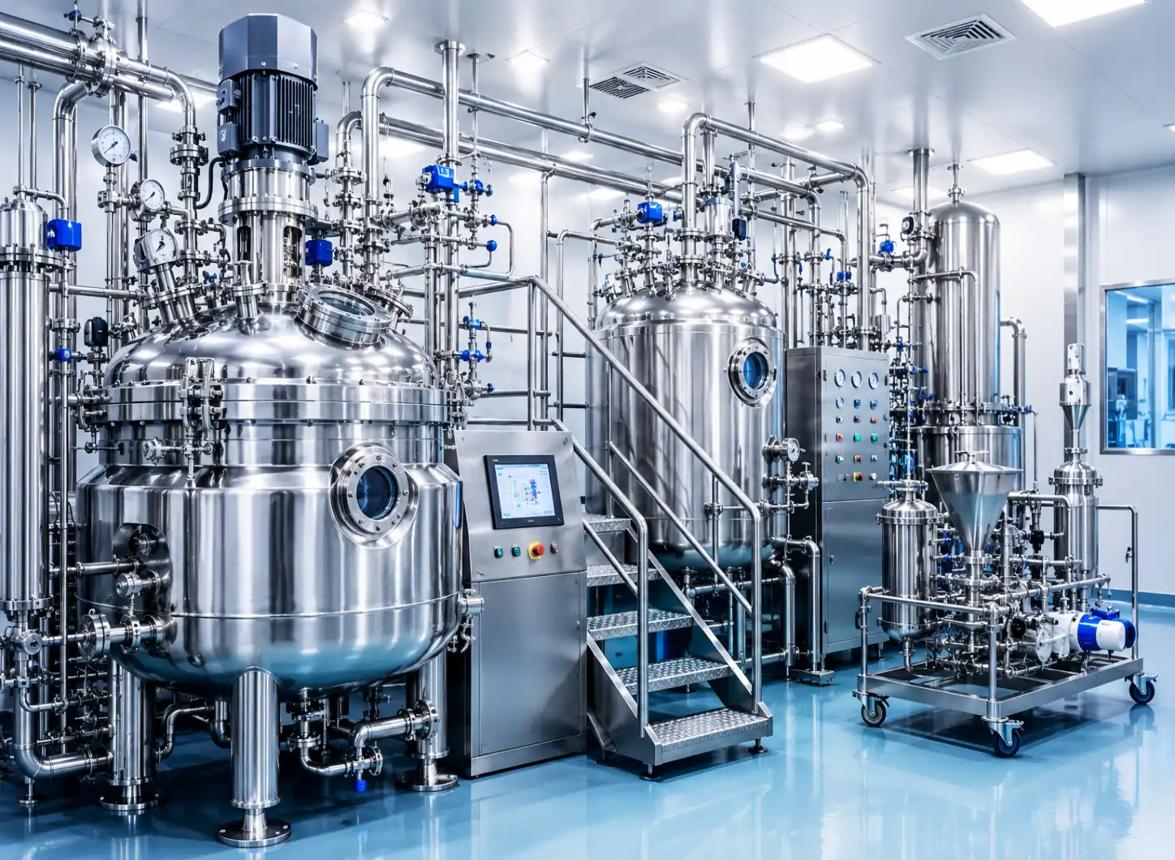
Water is widely used in pharmaceutical manufacturing, cleaning, and utility operations. Facilities may have purified water systems, water-for-injection systems, and other specially designed water-treatment processes.
Cooling towers may support auxiliary equipment used in water production, such as water-cooled chillers, compressors, or heat exchangers. They may also provide cooling for selected utility systems associated with water-treatment equipment.
However, cooling-tower water is not purified water and must never be treated as a substitute for purified water or water for injection. Product-contact water systems have their own design, material, sanitization, qualification, and monitoring requirements.
Where heat must be transferred between a cooling-tower circuit and a high-purity water system, an appropriately designed heat exchanger provides separation between the two circuits.
Compressed air is used in many pharmaceutical facilities for instruments, automation, packaging, and other operations. Air compressors generate heat during compression and often require cooling.
A cooling tower may support compressor cooling through a water-cooled heat exchanger or an intermediate cooling circuit. It may also serve other utilities, such as selected vacuum systems, hydraulic equipment, and industrial refrigeration equipment.
The cooling-water supply must meet the equipment manufacturer's requirements for temperature, flow, pressure, and water quality. Poor cooling can cause high discharge temperatures, equipment trips, or reduced operating efficiency.
Research laboratories and pilot plants often use smaller reactors, test equipment, condensers, and temperature-control units.
A central cooling-water system connected to a cooling tower may serve several pieces of equipment. Alternatively, smaller dedicated chillers or cooling units may be more appropriate where precise temperature control or independent operation is required.
When selecting a cooling arrangement, consider whether the equipment needs ordinary cooling water, chilled water, or a tightly controlled temperature range. A cooling tower alone cannot replace a precision temperature-control system.
Packaging lines and production equipment may include motors, compressors, vacuum pumps, sealing systems, and other heat-generating components.
Cooling towers can support these systems indirectly through central chilled-water or process-water networks. Their role is particularly useful in large facilities where several production areas share a central utility plant.
A stable cooling-water supply helps prevent equipment from operating under excessive thermal stress and supports more consistent production schedules.
Choosing between an open and a closed circuit cooling tower is an important decision for pharmaceutical projects. Both designs reject heat, but they handle the circulating fluid differently.
In an open circuit cooling tower, the circulating water is distributed directly inside the tower and comes into contact with the airflow. Heat is removed through evaporation and air-water heat exchange.
Potential advantages include:
A relatively straightforward system design
Effective evaporative heat rejection
Broad availability of equipment configurations
Suitability for many central HVAC and industrial cooling applications
However, the circulating water is exposed to the environment. It can collect airborne particles, and its dissolved mineral concentration can increase as water evaporates. Water treatment, filtration where appropriate, basin cleaning, and biological control are therefore important.
A closed circuit cooling tower uses a coil or heat exchanger to keep the primary process fluid separate from the external spray-water circuit.
The process fluid flows inside the coil, while spray water circulates over the coil surface and air passes through the tower. Heat transfers through the coil wall and is then rejected to the atmosphere.
This arrangement can help protect the primary fluid from direct exposure to outdoor contaminants and reduce fouling within the process circuit.
Closed circuit towers may be worth considering for selected pharmaceutical utility applications where maintaining a cleaner or more stable primary cooling-water circuit is important. They still require appropriate treatment and maintenance of the external spray-water circuit.
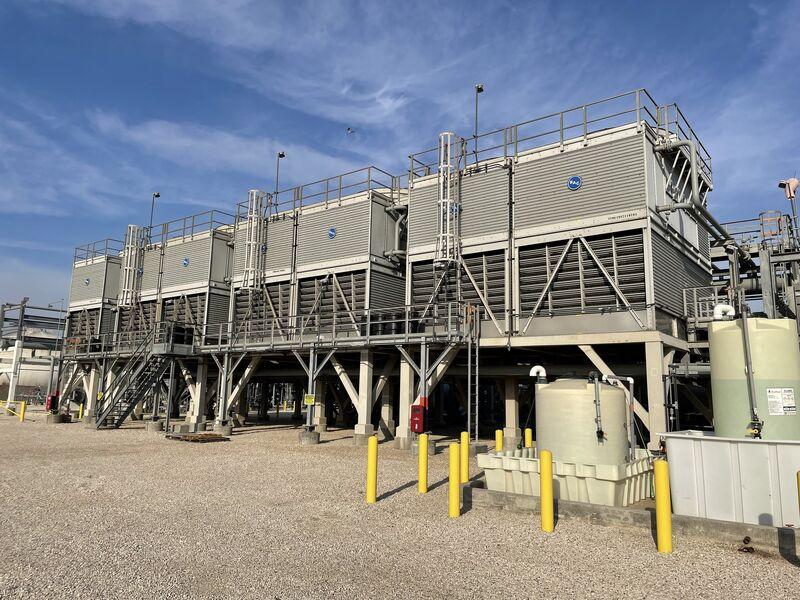
There is no universal answer. The right configuration depends on the process, fluid quality requirements, water availability, climate, operating schedule, and lifecycle cost.
An open cooling tower may be suitable for a central condenser-water loop when the plant has an effective water-treatment program. A closed circuit cooling tower may be preferred when the primary fluid needs to remain isolated from direct contact with the tower environment.
For either design, confirm the required heat rejection, water flow, entering and leaving temperatures, wet-bulb conditions, and installation constraints before selecting a model.
A pharmaceutical facility should evaluate more than cooling capacity. The cooling tower must fit the plant's engineering standards, maintenance program, and operating environment.
Cooling towers operate in environments where water, air, temperature changes, and treatment chemicals can affect materials.
FRP, galvanized steel, stainless steel, and other materials may be used in different components, depending on the design. Each has its own advantages and limitations.
For example, FRP can offer corrosion resistance and relatively low weight, while steel structures may be selected for particular structural or large-capacity requirements. The right choice depends on water chemistry, ambient conditions, mechanical loads, temperature, and expected service life.
Do not select a material based on its name alone. Ask the manufacturer for the actual material grade, coating or resin specification, and suitability for the intended operating conditions.
Water management is one of the most important aspects of cooling tower operation.
Evaporation removes water but leaves most dissolved minerals behind. As a result, scale-forming substances and other impurities can become more concentrated in the circulating water. Airborne dust and debris can also enter the system.
A suitable water-treatment program may include:
Monitoring conductivity and cycles of concentration
Controlling scale and corrosion
Managing suspended solids and sediment
Maintaining appropriate biological control
Checking makeup water and blowdown
Cleaning the basin and distribution system
Cooling towers can create conditions that support the growth of microorganisms, including Legionella, if they are not properly managed. Pharmaceutical facilities should establish a site-specific water management and maintenance program in line with applicable regulations and recognized guidance.
Water treatment should be designed and supervised by qualified specialists. Simply adding chemicals occasionally is not a reliable substitute for monitoring and documented control.
Pharmaceutical plants may run continuously or operate according to strict production schedules. Cooling equipment must therefore provide dependable performance under the site's expected operating conditions.
When requesting a quotation, provide the heat load, water flow rate, entering and leaving water temperatures, and local design wet-bulb temperature. These details allow the manufacturer to evaluate the required thermal capacity.
A tower selected using incomplete or unrealistic data may fail to deliver the expected cooling performance during the hottest periods of the year.
Cooling tower fans and motors contribute to operating costs and noise levels. Their selection should consider airflow requirements, motor efficiency, fan design, and the site's acoustic limits.
VFD control can help adjust fan speed according to cooling demand. However, the control strategy must be designed around the system's operating range and equipment limitations.
Pump selection also matters. Excessive flow, unnecessary pressure losses, or poor piping design can increase energy consumption even when the cooling tower itself is efficient.
A cooling tower that is difficult to inspect can become expensive to operate.
Look for accessible inspection points, practical basin cleaning arrangements, replaceable components, safe access platforms where required, and clear maintenance instructions.
For pharmaceutical facilities, maintenance activities should also be coordinated with site procedures. Work permits, risk assessments, isolation, cleaning records, and restart checks may be necessary depending on the facility's quality and safety systems.
Selecting a cooling tower is an engineering decision, not simply a product comparison. The following steps can help purchasing teams and project engineers evaluate suppliers more effectively.
Start by identifying every piece of equipment that will connect to the cooling-water system.
Collect the heat-rejection requirement, water flow rate, entering water temperature, required leaving water temperature, and operating hours. For a chiller system, obtain the manufacturer's condenser heat-rejection data rather than using only the nominal cooling capacity.
Also consider whether all equipment will operate simultaneously. The design load should reflect the plant's actual operating strategy and any required spare capacity.
Cooling tower performance is closely related to the outdoor wet-bulb temperature.
A tower designed for one climate may not provide the same leaving-water temperature in another location. The design wet-bulb condition should therefore match the project site and the required operating period.
If the facility experiences seasonal changes, engineers should review both peak summer conditions and normal operating conditions.
Ask suppliers to provide expected fan power, water flow, makeup-water demand, and other relevant operating data at the specified design conditions.
For evaporative towers, water consumption includes evaporation, blowdown, and drift losses. The actual amount depends on the heat load, operating conditions, water quality, and treatment strategy.
Compare lifecycle cost rather than purchase price alone. A lower initial price may not represent the best value if the equipment requires more electricity, water, or maintenance over time.
Pharmaceutical facilities often have limited mechanical-room, rooftop, or outdoor utility space. Before selecting a tower, check its dimensions, operating weight, maintenance clearance, piping connections, lifting requirements, and foundation conditions.
Also review the location of nearby building air intakes, access routes, noise-sensitive areas, and other equipment.
If the plant may expand, consider modular or multi-cell arrangements where appropriate. A well-planned system can make future capacity increases easier without requiring a complete redesign.
Even a high-quality cooling tower needs regular inspection and maintenance. A maintenance plan protects equipment performance and helps reduce the risk of unplanned shutdowns.
Operators should inspect the tower according to the manufacturer's instructions and the site's maintenance schedule.
Typical checks include:
Fan and motor condition
Vibration and unusual noise
Water distribution and nozzle condition
Basin level and cleanliness
Drift eliminator condition
Leakage and corrosion
Pump operation and piping connections
Instrument readings and control alarms
Record inspection results and address abnormal conditions before they develop into larger problems.
The water-treatment program should be based on makeup-water quality, system design, operating conditions, and local requirements.
Monitor conductivity, pH, treatment chemical levels, and other parameters specified by the water-treatment specialist. Clean basins and remove sediment as required. Inspect fill media and spray nozzles for scaling, blockage, or biological fouling.
Biological control must be part of the planned water management program. Cleaning and disinfection should be performed using safe procedures by trained personnel.
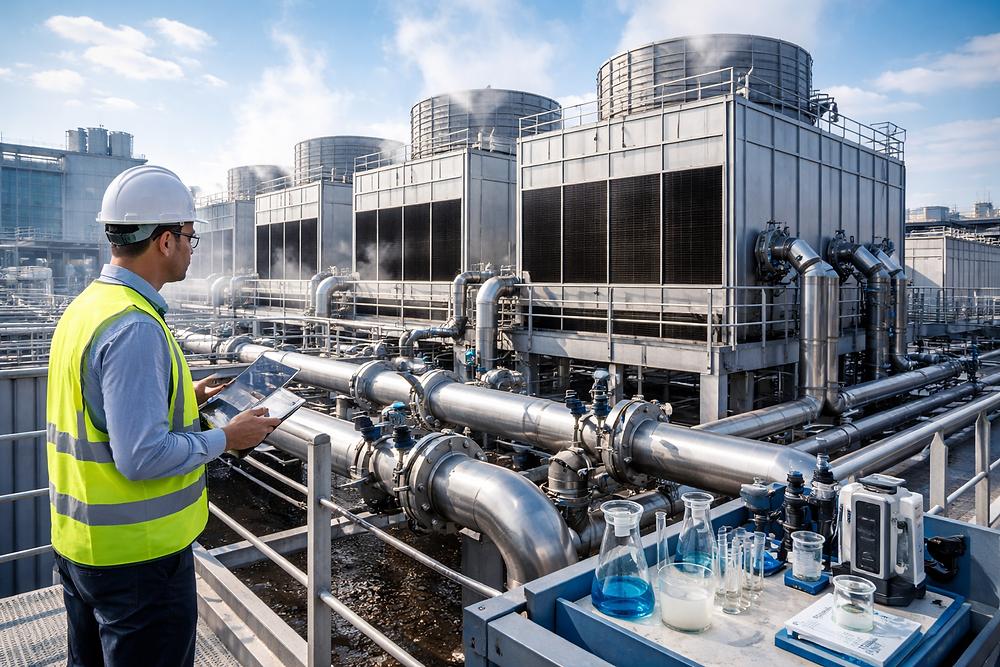
Fans, motors, pumps, bearings, belts, and gearboxes should be checked according to the equipment manufacturer's recommendations.
Pay attention to vibration, alignment, lubrication, electrical connections, and signs of wear. Replace damaged components promptly and verify that safety guards and electrical protections are correctly installed.
A preventive maintenance schedule is usually more cost-effective than waiting for a major component to fail during production.
Choosing a cooling tower manufacturer is an important part of planning a reliable pharmaceutical utility system. Buyers need a supplier that can understand the project's thermal requirements and recommend equipment that fits the intended application.
Mach Industry (Zhejiang) Co., Ltd., also known as Mach Cooling, is a cooling tower manufacturer offering a range of industrial cooling equipment.
Its product range includes:
Open circuit cooling towers
Closed circuit cooling towers
Counterflow cooling towers
Crossflow cooling towers
Mixed-flow closed cooling towers
Industrial cooling tower configurations
These product options give project teams different configurations to evaluate for central HVAC systems and selected industrial process-cooling applications.
For pharmaceutical projects, the equipment selection should be based on the actual utility requirements. The engineering team should confirm cooling capacity, design wet-bulb temperature, water flow, materials, fan and motor specifications, noise limits, water-treatment requirements, and maintenance access.
Mach can be contacted to discuss project requirements and identify a suitable cooling tower configuration. Buyers should provide complete operating data so that the proposed solution can be evaluated against the plant's design conditions.
Visit the official website to learn more about Mach's products and submit an inquiry:
Website: https://www.machcooling.com
The main application is heat rejection for central HVAC and industrial utility systems. Cooling towers commonly support water-cooled chillers, heat exchangers, compressors, and selected process-cooling circuits.
Yes, but usually as part of the central chilled-water system that supports cleanroom HVAC. The cooling tower does not directly clean or condition the air inside a cleanroom. Air cleanliness, temperature, humidity, and pressure are controlled by the HVAC system and its associated equipment.
It can be a good option when the primary cooling fluid needs to remain isolated from direct exposure to the tower environment. However, it is not automatically the best choice for every project. Engineers should compare thermal performance, water use, initial cost, maintenance, and process requirements.
No. Cooling-tower water is utility water and should not be treated as purified water or water for injection. If a process requires high-purity water, it needs a separately designed and controlled water-production system.
There is no single interval suitable for every installation. Cleaning frequency should be based on the site's water management plan, inspection results, operating conditions, local regulations, and the manufacturer's recommendations. Biological control and water-quality monitoring should continue throughout operation.
At minimum, provide the required heat-rejection capacity, water flow rate, entering and leaving water temperatures, design wet-bulb temperature, operating hours, site location, installation space, electrical supply, and material preferences.
Mach's published product range includes closed cooling tower configurations, including counterflow, crossflow, and mixed-flow types. Contact Mach with your project data to confirm the suitable model and its detailed technical specifications.
Cooling towers play an important supporting role in pharmaceutical manufacturing. They help reject heat from central air-conditioning systems, process heat exchangers, compressors, and other utility equipment. When correctly selected and maintained, they contribute to stable operation, reliable production support, and efficient energy use.
However, pharmaceutical cooling systems need careful engineering. Buyers should evaluate cooling capacity, water quality, biological control, corrosion resistance, energy consumption, maintenance access, and the separation of utility water from product-contact systems.
For pharmaceutical manufacturers planning a new facility or upgrading an existing cooling system, Mach Industry (Zhejiang) Co., Ltd. offers open and closed circuit cooling tower options for industrial applications.
To discuss your project, visit https://www.machcooling.com and share your cooling requirements with the Mach team.