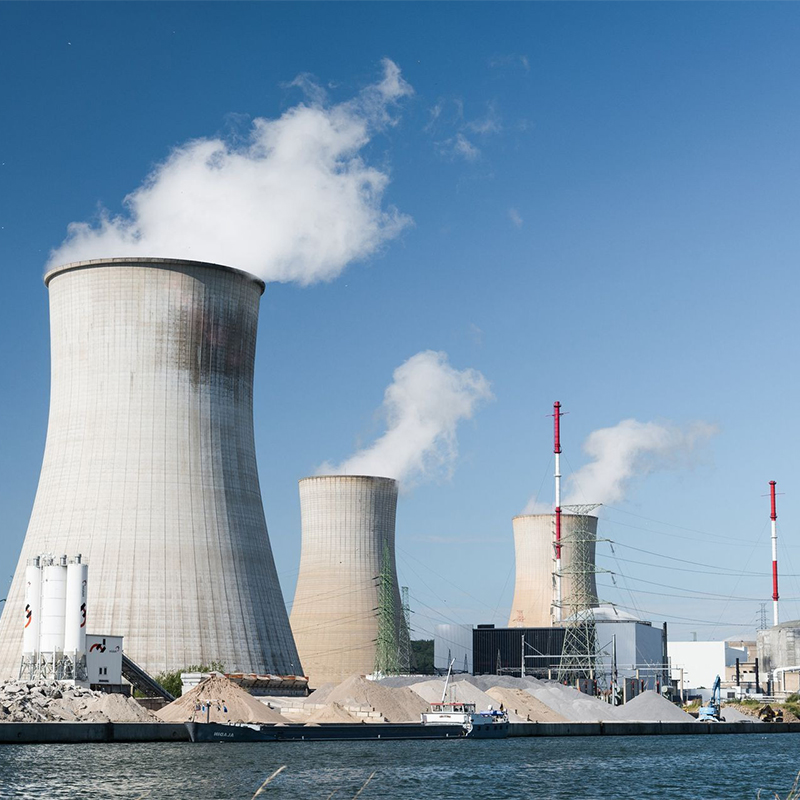
We Provide Cooling Tower Solution

Views: 0 Author: Site Editor Publish Time: 2025-11-24 Origin: Site


Cooling towers are essential heat-dissipation devices used in industrial plants, commercial buildings, and HVAC systems. Their efficiency directly affects energy consumption, production stability, and equipment lifespan. As energy costs continue to rise, improving cooling tower efficiency has become a priority for many companies.
This article explains structural optimization, operational management, and energy-saving technology to help enhance cooling tower performance, combined with engineering experience from MACH Cooling (https://www.machcooling.com/) to provide practical solutions.
Before making improvements, it is essential to understand the current performance of the cooling tower.
Formula:

Thot: Hot water temperature
Tcold: Cooled water temperature
Twb: Wet-bulb temperature
The closer the result is to 100%, the closer the tower is to its theoretical cooling limit.
Indicates the system’s water-handling capability.
A lower drift rate means less water loss and better efficiency.
| Indicator | Definition | Ideal Range |
|---|---|---|
| Cooling Tower Efficiency (%) | Actual cooling / theoretical cooling | 60–80% |
| Drift Rate (%) | Water carried away by airflow | ≤0.01% |
| Fan Power Consumption (kWh) | Energy consumed by fan operation | Lower is better |
| Circulating Water Flow (m³/h) | Water handled per hour | Stable and consistent |
The following strategies apply to most industrial cooling towers and can be combined with MACH Cooling’s engineering programs for enhanced results.
High-quality fill improves water film distribution and increases contact area between air and water, boosting evaporation cooling.
Recommended Image (JPG format):
Diagram: Structure and water distribution pattern of high-efficiency film fill.
MACH Cooling’s inclined-wave fill media can increase heat-exchange efficiency by 10–25%.
Uneven water distribution causes:
Poor heat exchange
Dry spots
Increased energy consumption
Improvements include:
Using reliable nozzles
Regular cleaning
Adjusting spray angles
(e.g., MACH Cooling’s aluminum alloy axial fans)
Benefits:
Larger airflow
Lower noise
Higher energy efficiency
VFD control can:
Reduce power consumption by 20–40%
Extend equipment life
Deliver adaptive temperature control
Water quality issues such as scaling, corrosion, or biological growth significantly reduce thermal performance.
Removes suspended solids and prevents fill blockage.
Scale inhibition
Corrosion control
Bacteria management
These can reduce water loss by 95–99%.
(MACH Cooling offers closed-circuit models)
Advantages:
Lower water consumption
More stable outlet water temperature
Higher efficiency
Application industries:
Chemical
Pharmaceutical
Food processing
Central air-conditioning
As a professional manufacturer, MACH Cooling (https://www.machcooling.com/) provides multiple upgrade programs
 |  |  |  |
Energy savings of 15–30%.
Efficiency increases of 10–25%.
Achieves intelligent operational optimization.
Includes:
Fan upgrade
Fill replacement
Water distribution optimization
Structural enhancement
Improving cooling tower efficiency requires a combination of structural upgrades, operating optimization, equipment improvements, and water management. By:
Using high-performance fill
Installing energy-efficient fans
Applying VFD control
Maintaining high-quality circulation water
Choosing reliable manufacturers (such as MACH Cooling)
Companies can significantly reduce energy consumption, increase cooling performance, and extend equipment lifespan.