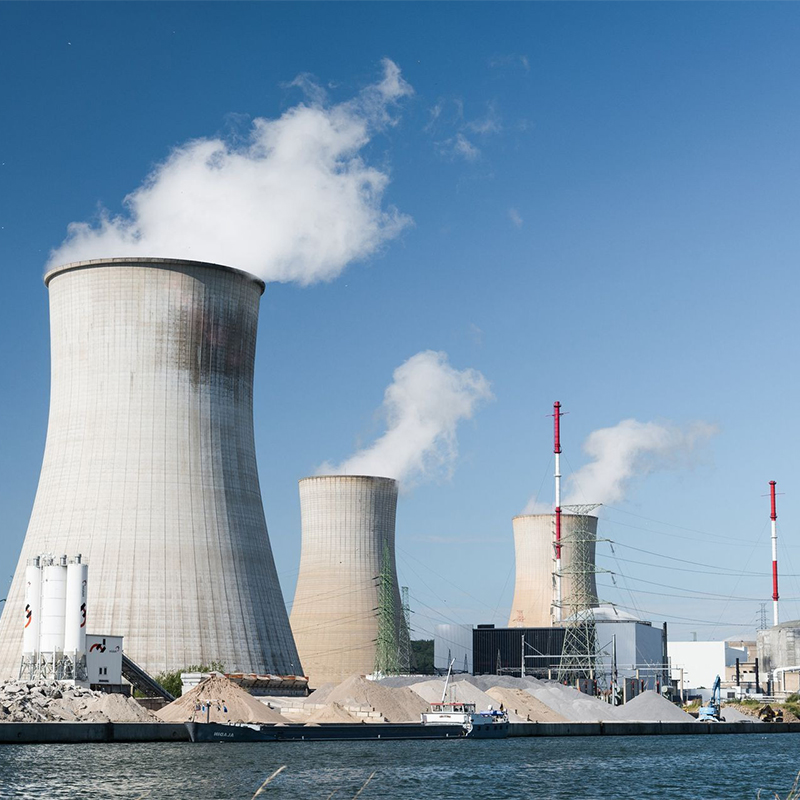
We Provide Cooling Tower Solution

Views: 0 Author: Site Editor Publish Time: 2026-01-27 Origin: Site


Cooling towers are the unsung heroes of industrial cooling systems. If you’ve ever wondered what a 1000 cooling tower is, how it performs, and why it’s vital in industries like HVAC, power plants, and manufacturing, you’re in the right place. In this guide, we’ll break down everything you need to know about capacity, performance, types, and optimization—all in plain, human-friendly language.
The term “1000 cooling tower” typically refers to the cooling capacity, measured in tons. Essentially, it tells you how much heat the tower can remove from a system per hour. Mach Cooling Tower (machcooling.com) offers solutions from 3 tons to 5000 tons per cell, making them highly versatile for different industries.

Capacity is the heartbeat of a cooling tower. A 1000-ton tower is designed to reject heat equivalent to 1000 tons of refrigeration, which translates roughly into removing 12 million BTU of heat per hour. But it’s not just about the number—it’s about how efficiently that heat is removed.
Imagine a giant air conditioner for industrial water systems. A 1000 cooling tower is like saying, “I can cool 1000 tons of water per hour.” Capacity depends on:
Water flow rate
Temperature difference (ΔT)
Fill type and surface area
Fan type and speed
Several factors impact performance:
Ambient temperature and humidity
Water flow rate
Fill type and surface area
Fan type and speed
Choosing a tower without considering these can lead to underperformance.
Performance isn’t just about cooling water; it’s about doing so efficiently. Key metrics include thermal efficiency, water flow, fan energy use, and heat rejection rate.
Thermal efficiency measures how close the tower operates to its ideal cooling potential. A 1000-ton tower with 85% efficiency is doing an excellent job removing heat without wasting energy.
The more water passes through, the more heat you can remove. A 1000 cooling tower is engineered for optimal water distribution, ensuring uniform cooling across all cells.
Fans and pumps consume power. High-performance towers from Mach use energy-efficient motors and adjustable-speed fans to minimize electricity costs while maintaining cooling output.
Not all towers are created equal. Understanding the type helps in matching your application.
Counterflow: Water flows downward, air flows upward. High efficiency, compact design.
Crossflow: Air moves horizontally across falling water. Easier maintenance, lower pressure drop.
Open towers: Direct contact between water and air. Efficient but requires water treatment.
Closed circuit towers: Water circulates in a closed loop. Safer for sensitive fluids, lower contamination risk.
These towers are versatile and widely used.
Used in power plants, petrochemical, sugar, and textile industries to remove heat from processes. They can handle continuous operation and high heat loads.
Large HVAC systems in malls, hospitals, and skyscrapers rely on 1000-ton towers to maintain comfortable indoor climates efficiently.
Calculate peak load, ambient conditions, and water flow requirements. Factor in seasonal variations.
Look for towers that balance initial investment and operating costs. Energy-efficient fans, durable fills, and corrosion-resistant materials are key.
Even the best tower fails if installed or maintained poorly.
Level the base, ensure proper airflow clearance, connect piping correctly, and follow manufacturer instructions.
Regularly clean fills, strainers, and fans. Monitor water quality, check motors, and lubricate bearings.
Use variable-speed fans, drift eliminators, and water treatment systems to minimize consumption.
Common problems include scale buildup, vibration, noise, and reduced efficiency. Regular inspection and timely maintenance fix most issues.
A 1000 cooling tower is more than a piece of equipment—it’s the heart of industrial cooling. Choosing the right capacity, understanding performance, and maintaining it properly ensures maximum efficiency and reliability. Mach Cooling Tower (machcooling.com) provides expert solutions for every industrial and commercial need.