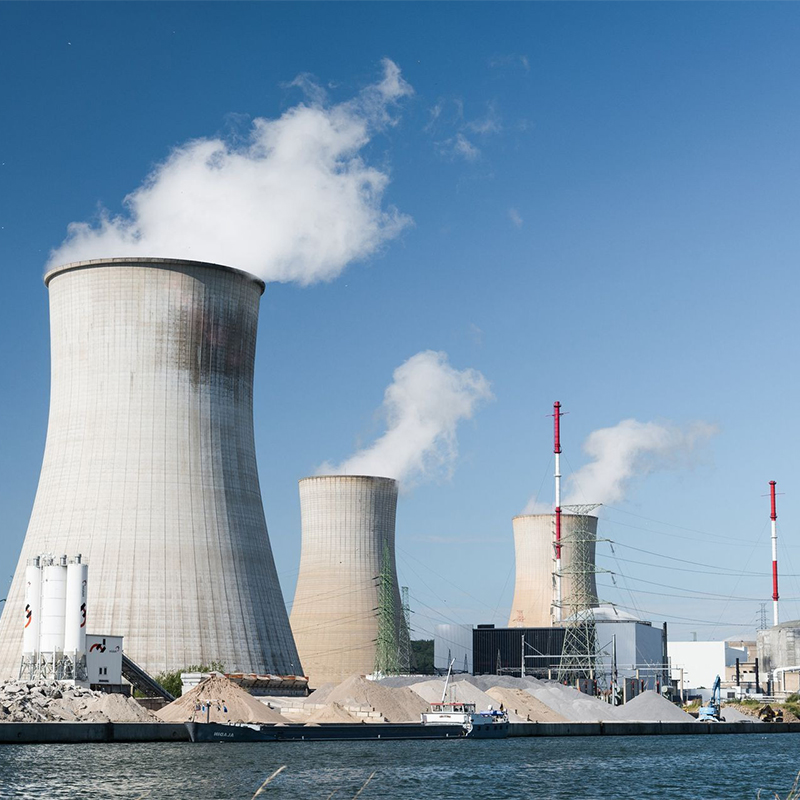
We Provide Cooling Tower Solution

Views: 0 Author: Site Editor Publish Time: 2026-01-29 Origin: Site


Cooling towers play a critical role in industrial plants and HVAC systems, acting as the backbone of heat rejection. However, even the most advanced cooling tower cannot operate efficiently without proper chemical treatment. Among all treatment practices, cooling tower chemical dosage and control methods are the most decisive factors in preventing scale, corrosion, and biological fouling.
So how do you dose chemicals correctly? And how do you control them without wasting money or damaging the system? Let’s walk through it step by step—in plain, practical language.
Cooling tower chemical dosage refers to the controlled addition of treatment chemicals into the cooling water system to maintain water quality and protect equipment. These chemicals are not optional add-ons; they are essential for stable operation.
Without proper dosage, cooling towers quickly become inefficient, unsafe, and expensive to maintain. With the right dosage and control strategy, they become reliable, long-lasting, and cost-effective.
Chemical dosage in cooling towers is a balancing act. Think of it like maintaining the right blood pressure—too high or too low, and problems start appearing.
Accurate chemical dosage helps to:
Prevent mineral scale on heat transfer surfaces
Reduce corrosion of carbon steel, copper, and stainless steel
Control bacteria, algae, and biofilm growth
Improve heat exchange efficiency
Extend the service life of the cooling tower and connected equipment
Overdosing wastes chemicals and increases environmental risk, while underdosing invites scaling, corrosion, and biological outbreaks.
Different problems require different chemical solutions. A complete cooling tower chemical program usually includes several types of chemicals working together.
Scale inhibitors prevent calcium carbonate, calcium phosphate, and silica from forming hard deposits on heat exchanger surfaces. These deposits act like insulation, reducing heat transfer efficiency and increasing energy consumption.
Corrosion inhibitors form a protective layer on metal surfaces, reducing oxidation and metal loss. They are essential for protecting pipes, heat exchangers, and cooling tower structures.
Biocides control bacteria, algae, and fungi that thrive in warm, wet cooling tower environments. Both oxidizing and non-oxidizing biocides are commonly used.
Dispersants keep suspended solids, silt, and organic matter from settling and forming sludge. They help maintain clean system surfaces and stable water flow.
Before setting chemical dosage rates, water chemistry must be understood. Ignoring this step is like prescribing medicine without diagnosing the patient.
Cycles of concentration describe how many times water is reused before being discharged as blowdown. Higher cycles save water but increase mineral concentration, which raises scaling and corrosion risks.
The quality of make-up water—hardness, alkalinity, pH, and total dissolved solids—directly affects chemical selection and dosage requirements.
There is no one-size-fits-all dosing method. The right approach depends on system size, operating conditions, and control requirements.
Manual dosing involves adding chemicals by hand at scheduled intervals. While simple and low-cost, it is inconsistent and highly dependent on operator experience.
Continuous dosing uses metering pumps to add chemicals steadily. This method provides more stable protection and is widely used in industrial systems.
Shock dosing applies a high concentration of chemicals—usually biocides—for short periods. It is effective for controlling sudden biological growth.
Chemical control methods ensure that dosing responds to real-time water conditions instead of guesswork.
Conductivity controllers monitor dissolved solids in the water and automatically trigger blowdown or chemical dosing when preset limits are reached.
Oxidation-Reduction Potential (ORP) control ensures biocides remain effective while avoiding excessive chemical use.
Maintaining the correct pH improves chemical efficiency and minimizes corrosion risks across the system.
Automation is the modern standard for cooling tower chemical control. Automatic dosing systems deliver accuracy, consistency, and measurable cost savings.
A typical automated system includes:
Chemical storage tanks
Metering pumps
Sensors for conductivity, pH, and ORP
Controllers or PLC systems
Together, these components ensure chemicals are added precisely when and where they are needed.
Many cooling tower problems stem from incorrect dosing strategies. Common issues include:
Scale formation caused by insufficient inhibitor dosage
Corrosion due to poor pH or inhibitor control
Algae growth from ineffective biocide programs
Excessive chemical costs from overdosing
These problems are best solved through automated control, regular water testing, and system-specific chemical programs.
To maintain stable and efficient operation:
Test cooling water regularly
Match chemicals to water chemistry
Use automated dosing systems whenever possible
Maintain accurate treatment records
Work closely with experienced cooling tower manufacturers
Consistency is more important than complexity.
Modern cooling tower chemical programs must balance performance with environmental responsibility. Proper control reduces chemical discharge, minimizes blowdown volume, and improves operator safety.
Eco-friendly and low-toxicity chemical solutions are increasingly preferred across industrial applications.
Cooling tower manufacturers play a crucial role in chemical treatment success. Well-designed towers ensure uniform water distribution, stable flow rates, and easy installation of sensors and dosing equipment.
A poorly designed tower makes even the best chemical program ineffective.
Mach Cooling (https://www.machcooling.com/) designs cooling towers with chemical treatment efficiency in mind. Their systems support:
Easy integration with automatic dosing systems
Stable operating conditions for accurate chemical control
Reduced chemical consumption
Long-term system reliability
For manufacturers, HVAC contractors, and industrial operators, Mach Cooling delivers cooling tower solutions that work seamlessly with modern chemical control strategies.
How often should cooling tower chemicals be dosed?
Most systems require continuous dosing with adjustments based on water analysis.
Can cooling tower chemicals be overdosed?
Yes. Overdosing increases corrosion risk, causes foaming, and raises environmental concerns.
Is automatic chemical dosing necessary?
For medium to large systems, automatic dosing is highly recommended for accuracy and cost control.
Cooling tower chemical dosage and control methods are not just maintenance tasks—they are strategic decisions that affect efficiency, cost, and equipment lifespan. By combining proper chemical selection, accurate dosing, and intelligent control systems, cooling towers can operate at peak performance year after year.
When these practices are paired with a well-engineered cooling tower from Mach Cooling, chemical treatment becomes simpler, safer, and more effective—turning a potential problem into a long-term advantage.