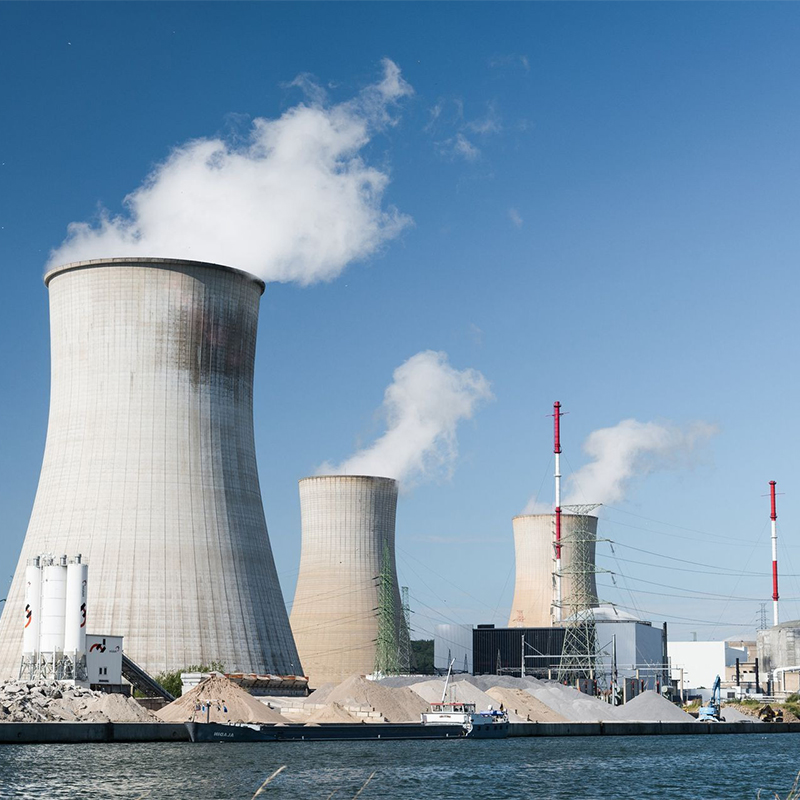
We Provide Cooling Tower Solution

Views: 0 Author: Site Editor Publish Time: 2026-01-29 Origin: Site


Cooling towers are no longer just heat-rejection equipment sitting quietly on rooftops or in industrial yards. Today, they are highly regulated systems tied closely to public health, environmental protection, and workplace safety. That’s why monitoring and reporting for cooling tower compliance has become a core responsibility for facility owners and operators—not an optional task.
Monitoring tells you what is happening inside the system. Reporting proves that you are in control. Without both, compliance is impossible.
Cooling tower compliance monitoring is the ongoing process of measuring, tracking, and evaluating system conditions to ensure they meet regulatory and operational requirements. Reporting transforms this data into documented evidence that can be reviewed internally or presented to regulators.
Together, monitoring and reporting form the foundation of a defensible compliance program.
Why all the emphasis? Because cooling towers can pose serious risks when they are poorly controlled.
Proper monitoring and reporting help to:
Detect water quality issues early
Control Legionella and other harmful microorganisms
Verify chemical treatment effectiveness
Demonstrate compliance during inspections and audits
Protect employees, occupants, and the public
In regulatory terms, undocumented work is treated as work that never happened.
Compliance requirements differ by region, but their intent is universal: reduce health and environmental risks through accountability.
Cooling tower monitoring and reporting obligations are typically driven by:
Public health authorities
Environmental protection agencies
Occupational safety regulations
Industry standards and guidelines
Most require routine monitoring, written procedures, corrective actions, and long-term record retention.
Because cooling towers are associated with Legionella outbreaks, regulators place strong emphasis on consistent monitoring and documented control measures.
Not every parameter needs constant attention, but critical indicators must be tracked consistently.
pH affects corrosion and chemical performance, while conductivity reflects dissolved solids levels. Together, they provide a quick snapshot of system balance.
Monitoring total dissolved solids and cycles of concentration helps prevent scale formation and excessive blowdown.
Legionella testing is a cornerstone of cooling tower compliance. Sampling frequency, testing methods, and response actions must be clearly defined and documented.
Modern compliance relies on reliable measurement tools rather than assumptions.
Online sensors for pH, conductivity, ORP, and temperature provide real-time data and immediate alerts when conditions drift outside acceptable limits.
Manual testing can work for small systems, but it is labor-dependent and prone to inconsistency. Automated monitoring offers continuous visibility, faster response, and stronger compliance evidence—especially for regulated facilities.
Monitoring only becomes meaningful when data is properly recorded.
Compliance records typically include:
Water quality readings
Microbiological test results
Chemical dosing information
Maintenance and inspection logs
Corrective actions and follow-up results
Records should be organized, secure, and retained for the required compliance period.
Reporting converts monitoring data into accountability.
Internal reports help maintenance teams and management track trends, identify risks, and make informed decisions before problems escalate.
In many regions, cooling tower owners must submit reports related to Legionella testing, system registration, or environmental discharge.
Digital compliance platforms simplify reporting by centralizing data, automating alerts, and generating audit-ready reports. These tools reduce human error and make compliance easier to maintain over time.
For many facilities, digital reporting is the difference between reactive compliance and proactive control.
Even well-run facilities face challenges such as:
Incomplete or missing data
Inconsistent monitoring schedules
Manual record errors
Lack of clear responsibility
Poor system design that limits sensor placement
Addressing these challenges early prevents compliance gaps later.
Effective compliance programs share common habits:
Monitor critical parameters continuously or frequently
Standardize data collection and reporting formats
Review trends, not just individual readings
Train staff on compliance responsibilities
Integrate monitoring with maintenance planning
Consistency is the real key to compliance success.
Compliance begins with design. A well-designed cooling tower supports:
Easy access for sensors and sampling
Stable water flow for accurate readings
Simplified inspection and maintenance
Long-term operational consistency
Poor design increases monitoring difficulty and compliance costs.
Mach Cooling (https://www.machcooling.com/) designs cooling towers with compliance in mind from the very beginning. Their systems are engineered to:
Integrate easily with modern monitoring equipment
Provide stable operating conditions for accurate measurement
Support inspection, sampling, and reporting requirements
Adapt to evolving compliance standards
By combining smart design with effective monitoring strategies, Mach Cooling helps operators meet compliance requirements with confidence.
How often should cooling towers be monitored?
Critical parameters should be monitored continuously or daily, with periodic laboratory testing as required by regulations.
Are digital records better than manual logs?
Yes. Digital records are more reliable, searchable, and audit-friendly.
What happens if monitoring records are missing?
Missing or incomplete records often result in compliance violations, fines, or mandatory corrective actions.
Monitoring and reporting for cooling tower compliance are no longer optional tasks—they are essential safeguards for health, safety, and operational reliability. When done correctly, they turn compliance from a regulatory burden into a system of control and confidence.
By combining disciplined monitoring, clear reporting, and compliance-ready cooling tower design from Mach Cooling, facility operators can meet regulatory demands while improving performance and long-term reliability.