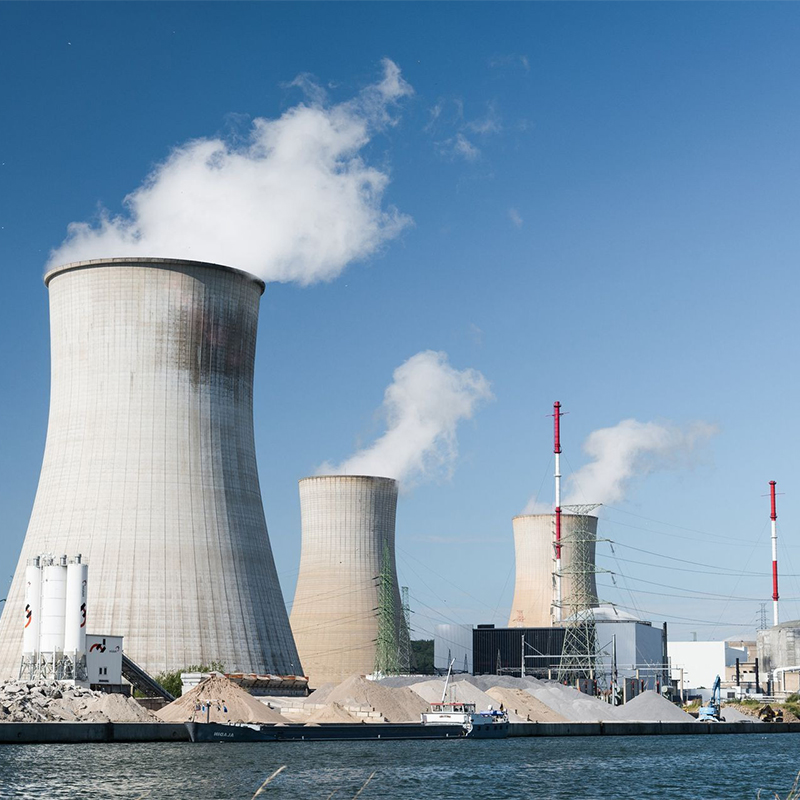
We Provide Cooling Tower Solution

Views: 0 Author: Cindy Publish Time: 2026-09-10 Origin: Site


Choosing a cooling tower is not simply a matter of looking at a number and saying, “I need a 400 ton cooling tower.”
That number is only the starting point.
A 400 ton cooling tower can be used for HVAC systems, industrial process cooling, manufacturing facilities, power-related applications, chemical processing, and many other heat-rejection systems. But two cooling towers with the same nominal capacity can have very different dimensions, water flow rates, fan configurations, energy consumption, materials, and operating requirements.
So, how do you choose the right one?
You need to look beyond the 400-ton label and understand the actual heat load, entering and leaving water temperatures, wet-bulb temperature, water flow, tower type, installation space, water quality, energy requirements, and long-term maintenance needs.
In this guide, we will walk through everything you should consider before buying a 400 ton cooling tower and explain how to avoid some of the most common selection mistakes.
Before getting into the details, let's clarify what “400 ton” actually means.
A refrigeration ton is a unit of heat-rejection capacity. In cooling-tower applications, 400 tons represents a substantial heat load, but the exact thermal performance depends on the design conditions.
For example, some commercial 400-ton cooling tower products are specified around 1,190–1,200 GPM of water flow. However, this should not be treated as a universal rule. One manufacturer's 400-ton tower may operate at a different flow rate or temperature range from another manufacturer's model.
That is why capacity should always be evaluated together with the operating conditions.
| Parameter | Typical Consideration |
|---|---|
| Nominal capacity | 400 tons |
| Heat rejection | Depends on design conditions |
| Water flow | Often around 1,190–1,200 GPM in commercial examples |
| Cooling range | Depends on entering/leaving water temperature |
| Approach | Depends on wet-bulb temperature and tower design |
| Tower type | Counterflow, crossflow, open or closed circuit |
| Construction | FRP, galvanized steel, stainless steel or other materials |
| Fan system | Single or multiple fans, fixed or variable speed |
| Fill media | Film fill or splash fill depending on application |
| Application | HVAC, industrial process cooling and other heat-rejection systems |
The important point is simple: 400 tons is a capacity target, not a complete specification.
The first question should not be, “Which 400 ton cooling tower should I buy?”
Instead, ask:
How much heat does my system actually need to reject?
This sounds obvious, but it is one of the easiest parts of cooling-tower selection to get wrong.
If your actual heat load is significantly below the tower's rated capacity, you may end up paying for equipment you do not need. On the other hand, if your real heat load exceeds the tower's practical capability, the tower may struggle to maintain the required cold-water temperature.
Your engineering team should determine the expected heat rejection under actual operating conditions.
Consider:
Chiller capacity
Process heat load
Condenser-water temperature
Water flow
Outdoor wet-bulb temperature
Seasonal operating conditions
Future load growth
Required operating redundancy
Don't size the tower based only on today's average load if your facility is expected to expand.
A little planning now can save you from another expensive equipment upgrade later.
The term “400 ton cooling tower” can be misleading if you are new to cooling-tower engineering.
A ton of cooling is not the same thing as the physical weight of the tower.
In other words, a 400-ton tower does not weigh 400 tons.
The number describes thermal capacity.
Think of it like the horsepower rating of a vehicle. Horsepower tells you something about performance, but it doesn't tell you the vehicle's dimensions, fuel consumption, transmission, or operating environment.
The same principle applies here.
A 400 ton cooling tower still needs to be evaluated according to its complete performance specification.
Water temperature is one of the most important factors in cooling tower selection.
You need to know:
Entering water temperature
Leaving water temperature
Required temperature drop
Outdoor wet-bulb temperature
For example, a system might be designed around water entering the tower at 95°F and leaving at 85°F.
That represents a 10°F cooling range.
But your project may have completely different requirements.
Cooling range is calculated as:
Entering Water Temperature − Leaving Water Temperature = Cooling Range
If water enters at 95°F and leaves at 85°F:
95°F − 85°F = 10°F
This temperature difference is fundamental to the tower's thermal design.
You cannot simply compare two 400-ton towers without checking whether they are rated at the same operating conditions.
Approach is another parameter that buyers often overlook.
It is the difference between the leaving water temperature and the entering-air wet-bulb temperature.
For example:
Leaving water temperature: 85°F
Wet-bulb temperature: 78°F
Approach: 7°F
A lower approach generally means the cooling tower needs to cool the water closer to the ambient wet-bulb temperature.
That can require a larger heat-transfer surface, more airflow, a larger tower, or a more sophisticated design.
Imagine two 400-ton cooling towers.
Tower A is designed for a relatively large approach.
Tower B is designed for a tighter approach.
They may both be called “400 ton cooling towers,” but their physical designs and operating requirements can be very different.
Never compare capacity alone.
Water flow is another critical specification.
A number of commercial 400-ton cooling tower products are listed around 1,190–1,200 GPM, but this is not a universal value.
Your required flow should come from the actual system design.
Insufficient water flow can create poor water distribution and reduce heat-transfer performance.
Excessive flow can increase pumping requirements, pressure drop, and hydraulic stress.
The goal is not simply to find the highest possible flow rate.
The goal is to find the flow rate that matches your system.
Once the thermal requirements are clear, you can start comparing cooling tower configurations.
Two common designs are:
Counterflow cooling towers
Crossflow cooling towers
Both can be effective, but they operate differently.
In a counterflow tower, air generally moves upward while water moves downward through the fill.
This arrangement can provide strong heat-transfer performance and can be attractive when footprint and thermal performance are major considerations.
In a crossflow tower, air moves horizontally across water flowing downward through the fill.
Crossflow designs can offer convenient access to certain components and may be attractive for maintenance-oriented applications.
Neither design is automatically “the best.”
The right choice depends on your project.
You also need to determine whether an open cooling tower or closed-circuit cooling tower is appropriate.
An open cooling tower directly exposes the circulating water to the air.
A closed-circuit cooling tower keeps the process fluid inside a closed heat-exchange circuit while cooling it through an external spray-water and air system.
A closed system may be attractive when fluid cleanliness, contamination control, or process-fluid separation is important.
For example, some industrial processes cannot tolerate direct exposure of process fluid to atmospheric contaminants.
Open cooling towers are widely used in HVAC and industrial heat-rejection systems where direct evaporative cooling of circulating water is acceptable.
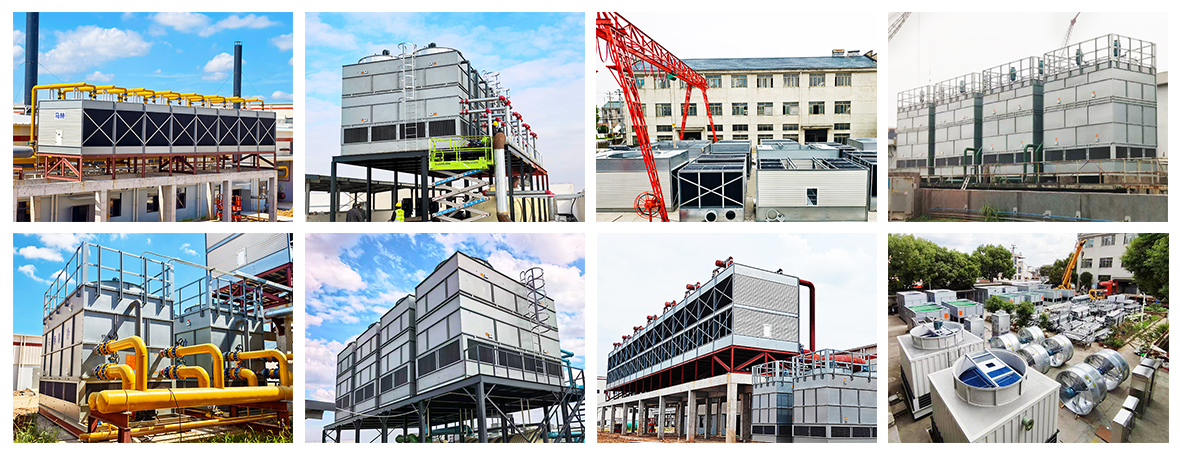
Mach Industry (Zhejiang) Co.,Ltd offers industrial, open and closed cooling tower configurations, including counterflow, crossflow and mixed-flow closed-circuit options.
Fill media is the heart of the heat-transfer process.
It gives water a large surface area so heat can transfer from the water to the air more effectively.
For a 400 ton cooling tower, you may encounter:
PVC film fill
PP film fill
Splash fill
Other application-specific fill designs
Film fill creates thin sheets or films of water over a large surface area.
Splash fill breaks water into droplets as it falls through the tower.
Film fill can provide excellent heat-transfer performance in applications with relatively clean circulating water.
Splash fill may be preferred in applications where suspended solids, fouling, or water quality creates a greater risk of fill blockage.
The correct choice depends on your water quality and operating environment.
Here is a question many buyers don't ask early enough:
What is actually in your cooling water?
Water quality can dramatically affect cooling tower performance and maintenance.
You should consider:
Hardness
Suspended solids
Biological growth
Corrosion potential
Scale formation
Chemical treatment
Conductivity
Cycles of concentration
A tower designed for clean HVAC condenser water may not be ideal for a heavily contaminated industrial process.
Poor water treatment can cause:
Scale
Corrosion
Biological fouling
Plugged nozzles
Blocked fill
Reduced heat transfer
Higher operating costs
A good 400 ton cooling tower is only part of the system. Good water treatment is the other half.
Never buy a 400 ton cooling tower before checking the available installation space.
You need to consider:
Overall length
Overall width
Overall height
Service clearance
Pipe routing
Fan discharge
Access platforms
Crane access
Transportation restrictions
One 400-ton tower might have a compact modular configuration, while another may require a much larger footprint.
For example, published 400-ton products show significant variation in dimensions and configuration, which demonstrates why there is no universal “400-ton cooling tower size.”
A tower that technically fits into the site may still be a poor choice if technicians cannot safely access the fan, motor, fill, nozzles, drift eliminators, or basin.
Leave enough room to maintain the equipment.
The fan system has a major effect on cooling tower performance and energy consumption.
When comparing 400 ton cooling towers, look at:
Fan diameter
Number of fans
Motor horsepower
Fan speed
Variable-frequency drive capability
Fan blade material
Gearbox or direct-drive configuration
Motor efficiency
Noise level
Some 400-ton designs use multiple smaller fans, while others use a single larger fan.
A fixed-speed fan operates at a relatively constant speed.
A variable-speed fan can adjust airflow according to the actual cooling demand.
This can provide more precise control and may reduce energy consumption during part-load operation.
If your facility spends a lot of time operating below full load, variable-speed control is worth serious consideration.
A cheap cooling tower is not necessarily a cheap cooling tower.
Why?
Because the initial purchase price is only one part of the total cost.
You should also consider:
Fan energy
Pumping energy
Water consumption
Chemical treatment
Maintenance
Replacement parts
Downtime
Expected service life
A tower that costs slightly more initially but consumes less energy and requires less maintenance can be the better investment.
Think about the tower as a long-term asset, not a one-time purchase.
Cooling towers depend heavily on ambient conditions.
The most important environmental factor is usually the entering-air wet-bulb temperature.
A tower that performs well in one climate may require a different design in another.
Evaporative cooling relies on the air's ability to absorb moisture.
The drier and cooler the air is, the greater its potential to absorb moisture.
That means your local design wet-bulb condition should be included when selecting the tower.
Don't use a generic catalog rating if your project has demanding environmental conditions.
A 400 ton cooling tower can generate significant airflow and mechanical noise.
If the tower is installed near:
Offices
Residential buildings
Hospitals
Hotels
Schools
Laboratories
Noise-sensitive production areas
then noise should become part of the specification.
Potential solutions include:
Low-noise fans
Variable-speed operation
Acoustic barriers
Optimized fan blades
Proper tower placement
It is much easier to address noise during design than after installation.
Drift refers to small water droplets carried out of the tower with the exhaust air.
A properly designed drift eliminator reduces this loss.
For a large cooling tower, even a small percentage of circulating water loss can become significant over time.
Therefore, compare:
Drift eliminator design
Expected drift rate
Makeup-water requirements
Blowdown requirements
Evaporation losses
Efficient water management can make a noticeable difference in operating cost.
A 400 ton cooling tower is not a small piece of equipment.
Before ordering, determine how it will reach the final installation location.
Ask:
Can the tower be shipped fully assembled?
Does it require field assembly?
What is the shipping weight?
What is the operating weight?
Is a crane required?
Are there site access restrictions?
Can the equipment be transported through existing roads and doors?
Modular or field-assembled designs can provide different advantages depending on the site.
Material selection becomes particularly important in industrial environments.
Common cooling tower construction materials include:
FRP
Galvanized steel
Stainless steel
Aluminum
PVC
PP
Other engineered materials
FRP is popular in many applications because of its corrosion resistance and relatively low maintenance requirements.
However, the best material depends on the environment.
A coastal facility, chemical plant, wastewater application, and commercial HVAC installation may have completely different corrosion risks.
Imagine buying a car where you cannot open the hood.
That would be ridiculous, right?
The same logic applies to cooling towers.
A good 400 ton cooling tower should allow technicians to inspect and service critical components.
Pay attention to access for:
Fan
Motor
Gearbox
Bearings
Nozzles
Fill media
Drift eliminators
Water basin
Pipes
Valves
Easy maintenance can reduce labor costs and shorten downtime.
This is one of the smartest questions you can ask a supplier:
“Will I still be able to get replacement parts five or ten years from now?”
Important replacement components may include:
Cooling tower fill
Spray nozzles
Drift eliminators
Fan blades
Motors
Gearboxes
Bearings
Shafts
Belts
Seals
Louvers
PVC or PP components
A tower is a long-term investment.
You don't want to discover several years later that a simple replacement component has become impossible to source.
Not every project can be solved with an off-the-shelf cooling tower.
Your actual requirements may fall between standard models.
This is where customization becomes valuable.
A manufacturer should be able to discuss:
Required cooling capacity
Water flow
Design temperatures
Wet-bulb condition
Tower type
Installation dimensions
Material requirements
Fan configuration
Fill type
Water quality
Electrical requirements
Mach Industry (Zhejiang) Co.,Ltd positions itself as a cooling tower manufacturer and supplier with industrial, open and closed cooling tower solutions. Its official website also states that it provides customized cooling tower solutions and supports a wide range of cooling capacities.
Want a faster and more accurate quotation?
Don't simply send an email saying:
“Please quote a 400 ton cooling tower.”
That leaves too many questions unanswered.
Instead, provide as much of the following information as possible:
Required cooling capacity
Water flow rate
Entering water temperature
Leaving water temperature
Design wet-bulb temperature
Installation location
Available footprint
Tower height limitations
Water quality
Required material
Power supply
Noise requirements
Open or closed circuit
Counterflow or crossflow preference
Required delivery schedule
The more complete your technical information is, the easier it is for the manufacturer to recommend the right model.
“400 tons” does not tell you everything.
Always compare the rating conditions behind that number.
A tower's performance depends heavily on ambient conditions.
Compact equipment may look attractive, but insufficient thermal margin can create operating problems.
The wrong fill or water-distribution system can create serious maintenance issues.
Energy and maintenance costs continue for years after the purchase.
If your plant may expand, discuss future load requirements before selecting the tower.
Before signing a purchase order, check the following:
| Selection Item | What to Confirm |
|---|---|
| Capacity | 400 tons under your actual design conditions |
| Water flow | Matches system requirements |
| Entering water temperature | Confirm design value |
| Leaving water temperature | Confirm required outlet temperature |
| Wet-bulb | Use site-specific design conditions |
| Approach | Confirm required performance |
| Tower type | Open or closed circuit |
| Airflow | Adequate for thermal load |
| Fan | Size, quantity and control |
| Motor | Power, voltage and efficiency |
| Fill | Film or splash according to water quality |
| Materials | Suitable for operating environment |
| Dimensions | Fits the site with maintenance clearance |
| Noise | Meets site requirements |
| Water treatment | Compatible with system chemistry |
| Spare parts | Available long term |
| Service | Installation and technical support |
| Warranty | Clearly defined |
| Supplier | Engineering and manufacturing capability |
Selecting the right tower is easier when you work with a manufacturer that understands the complete system rather than simply selling a standard product.
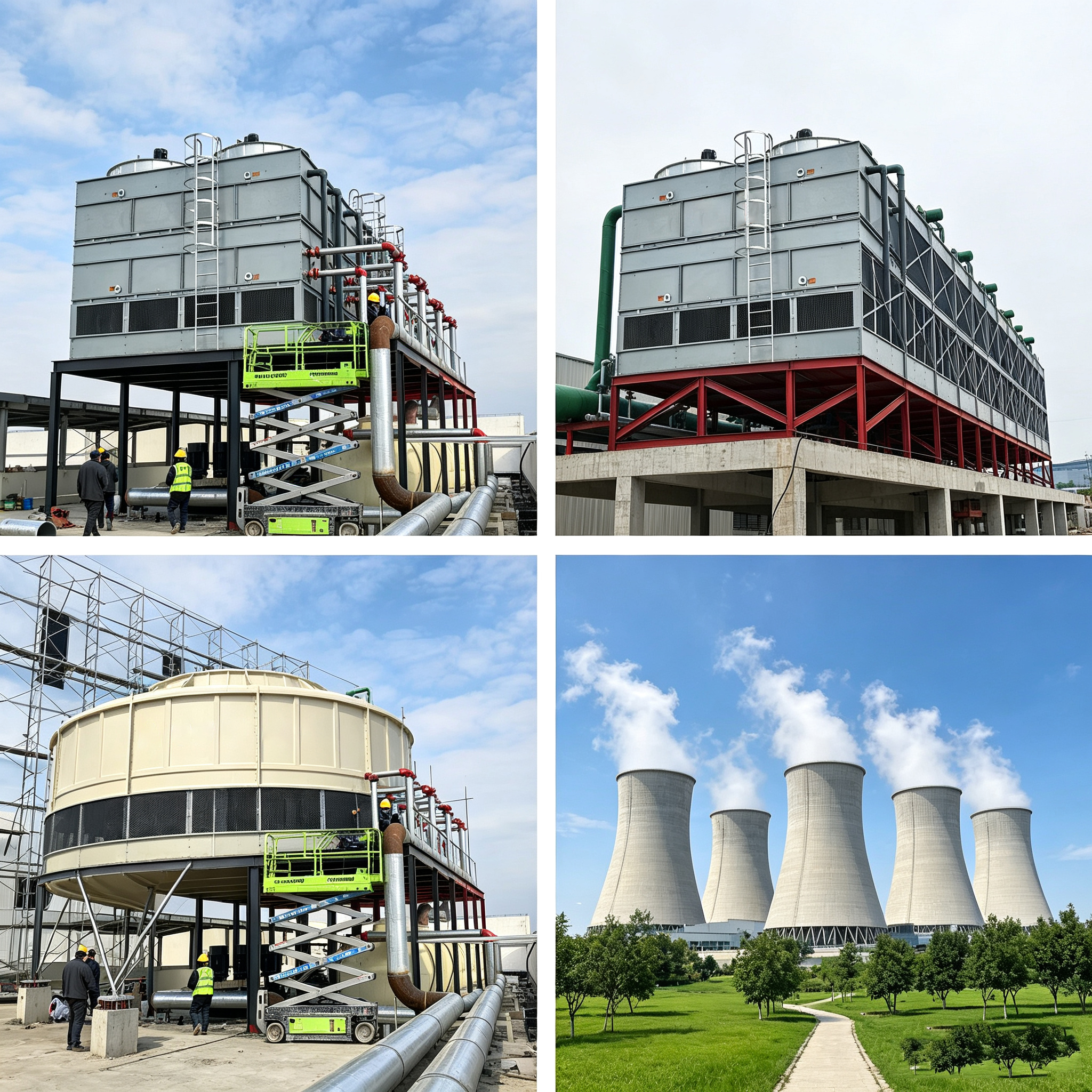
Mach Industry (Zhejiang) Co.,Ltd provides cooling tower solutions for industrial and commercial applications, including industrial cooling towers, open cooling towers, closed cooling towers, counterflow designs and crossflow designs. The company also states that it provides customized solutions for customers with different cooling requirements.
For a 400 ton project, the key is to match the tower to the actual operating conditions.
Instead of asking only for a “400 ton cooling tower,” provide your thermal and hydraulic requirements. This allows the manufacturer to evaluate the appropriate tower configuration, dimensions, airflow, fan system, fill media and materials.
You can learn more about Mach Industry's cooling tower solutions at:
There is no single universal answer.
Some published 400-ton cooling tower products specify approximately 1,190–1,200 GPM, but actual flow depends on the design heat load, temperature range and manufacturer's thermal design.
There is no standard physical size.
Dimensions vary according to tower type, airflow, fan arrangement, construction and thermal design. Always request the manufacturer's dimensional drawing before planning the foundation.
Yes. A 400 ton tower can be used for large HVAC and chiller systems, provided its thermal performance matches the project's design requirements.
Yes.
Industrial facilities can use 400 ton cooling towers for process cooling, manufacturing, power-related systems and other heat-rejection applications.
The correct configuration depends on the process fluid, water quality, operating temperatures and required reliability.
There is no universal winner.
Counterflow and crossflow designs have different characteristics related to airflow, water distribution, footprint, maintenance access and installation.
Your project conditions should determine the choice.
Service life depends on construction materials, water treatment, operating environment, maintenance quality and component replacement.
Regular inspection and timely replacement of consumable or wear components can significantly extend the useful life of the overall system.
Choosing the right 400 ton cooling tower is really about matching the equipment to the job.
Don't stop at the words “400 ton.”
Look deeper.
Check the actual heat load. Confirm water flow. Define entering and leaving water temperatures. Calculate the approach. Use the correct design wet-bulb temperature. Compare counterflow and crossflow designs. Evaluate open versus closed circuit. Consider fill media, water quality, fan energy, noise, dimensions, maintenance access and replacement parts.
And perhaps most importantly, choose a manufacturer that is willing to understand your application rather than simply handing you a catalog.
A properly selected 400 ton cooling tower should not only meet today's cooling requirements. It should also be practical to install, economical to operate, straightforward to maintain and supported for years to come.
That's the difference between buying a cooling tower and choosing the right cooling tower.