We Provide Cooling Tower Solution

Views: 0 Author: Site Editor Publish Time: 2026-02-10 Origin: Site


In today’s industrial cooling world, not all FRP cooling towers are created equal. While traditional FRP cooling towers have long been valued for corrosion resistance and lightweight construction, a new generation of pultruded FRP cooling towers is rapidly setting a higher benchmark for strength, durability, and long-term performance.
So what makes pultruded FRP cooling towers stand out? Why are more engineers, plant owners, and EPC contractors choosing them over conventional FRP designs?
Let’s break it down—clearly, practically, and from a real-world engineering perspective.
Cooling towers operate in some of the harshest environments imaginable: constant moisture, chemical exposure, vibration, wind loads, and thermal cycling. Materials matter. That’s why Fiber Reinforced Plastic (FRP) has become a preferred alternative to steel and concrete.
But within FRP itself, there’s a major distinction—how the FRP is made.
Traditional FRP cooling towers rely on molded or hand lay-up components. Pultruded FRP cooling towers, on the other hand, use precision-engineered structural profiles manufactured through a controlled, automated process. The difference in performance is significant.
An FRP cooling tower uses composite materials made from fiberglass and resin to form its structure, casing, and internal components. Compared with steel or concrete towers, FRP cooling towers offer:
Excellent corrosion resistance
Reduced structural weight
Lower maintenance requirements
Longer service life in aggressive environments
However, these benefits depend heavily on the quality and consistency of the FRP structure itself.
Early FRP cooling towers were typically constructed using molded panels or hand-laid fiberglass. While effective in basic applications, these methods introduce variability in thickness, fiber orientation, and strength.
Pultruded FRP represents the next step in this evolution—bringing industrial-level consistency, strength, and predictability to cooling tower structures.
A pultruded FRP cooling tower uses load-bearing structural members produced by the pultrusion process. These include columns, beams, bracing, and support frames that form the backbone of the tower.
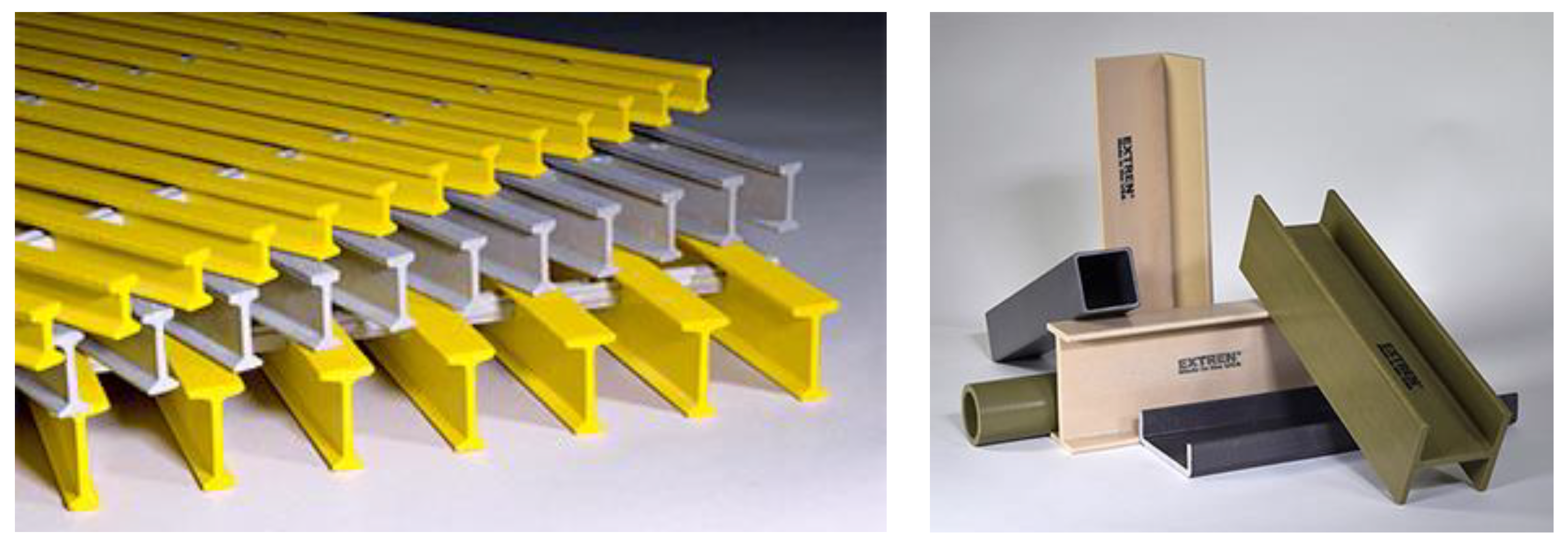

Unlike molded FRP panels, pultruded profiles are engineered specifically for structural performance, making them ideal for large and heavy-duty cooling tower systems.
Pultrusion is a continuous manufacturing process where fiberglass reinforcements are pulled through a resin bath and then shaped and cured in a heated die. The result is a profile with:
Continuous fiber alignment
Uniform resin distribution
Precise dimensions
High strength-to-weight ratio
Think of it as the difference between hand-poured concrete and factory-cast structural beams—one is variable, the other engineered for reliability.
Traditional FRP components often have randomly oriented fibers and inconsistent thickness. Pultruded FRP profiles, by contrast, align fibers along load paths, delivering superior tensile and flexural strength.
This structural consistency is one of the key reasons pultruded FRP cooling towers outperform traditional FRP designs in demanding industrial environments.
Traditional FRP cooling towers still offer several advantages, including corrosion resistance and lower upfront cost. However, they also face limitations such as:
Reduced load-bearing capacity
Structural creep over time
Deformation under wind and vibration
Greater dependence on field reinforcement
In small or low-stress applications, these limitations may be acceptable. In large-scale or mission-critical installations, they become risks.
Pultruded FRP cooling towers are designed as true structural systems—not just enclosures.
Pultruded FRP columns and beams can support larger fans, higher airflow rates, and heavier mechanical loads without deformation. This allows for taller towers and higher thermal performance.
In regions exposed to typhoons, hurricanes, or seismic activity, structural rigidity matters. Pultruded FRP frames maintain alignment and stability, reducing the risk of vibration-related failures.
One of the biggest advantages of FRP is corrosion resistance—but consistency is just as important.
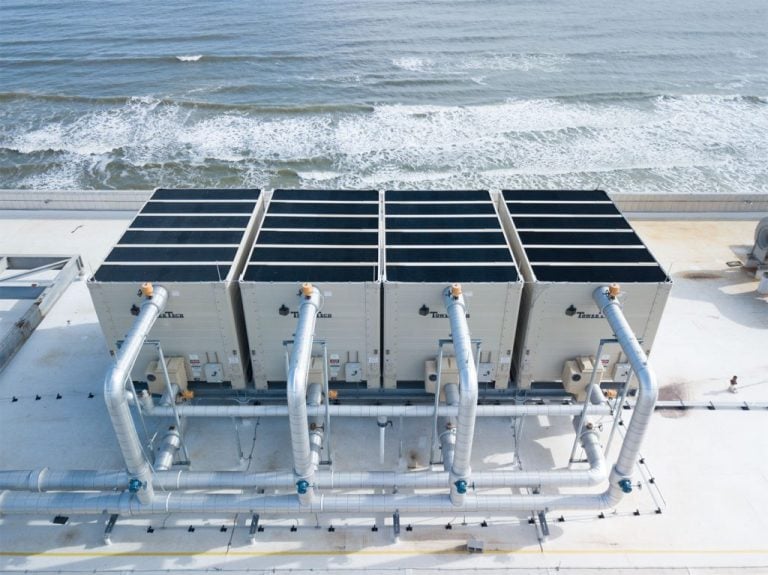
Pultruded FRP components feature controlled resin content and uniform fiber distribution. This ensures that every structural member resists corrosion in the same way, even in:
Coastal environments
Chemical plants
Power stations
High-humidity industrial zones
Traditional FRP cooling towers often require reinforcement or partial structural replacement after 10–15 years. Pultruded FRP cooling towers are engineered for 20–30 years or more of reliable service.
Their resistance to fatigue, UV exposure, and mechanical stress makes them ideal for continuous-operation facilities.
Pultruded FRP cooling towers are typically delivered as modular systems with pre-engineered structural members.
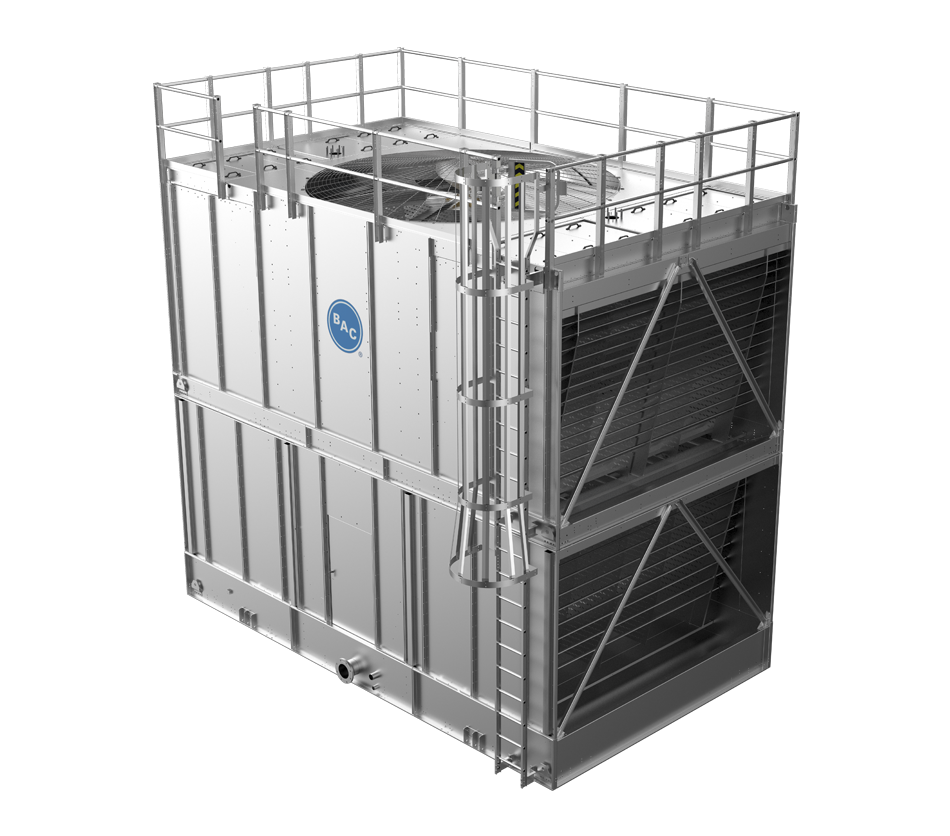
This approach offers clear benefits:
Faster on-site assembly
Reduced labor costs
Shorter plant downtime
Improved installation accuracy
Because pultruded FRP does not rust, warp, or delaminate like traditional materials, maintenance demands are significantly lower. There is no need for repainting, anti-corrosion treatment, or structural patching.
For plant operators, this means fewer shutdowns and lower operating costs.
While pultruded FRP cooling towers may carry a slightly higher initial cost, their long-term economics are compelling. Reduced maintenance, extended service life, and improved operational stability result in a lower total cost of ownership.
In long-term projects, lifecycle cost matters far more than upfront savings.
Structural rigidity directly impacts performance. Pultruded FRP frames keep fans, gearboxes, and drive systems properly aligned, minimizing vibration and energy losses.
The result is smoother operation, higher efficiency, and improved reliability over time.
Pultruded FRP cooling towers are especially well suited for:
Chemical and petrochemical plants
Power generation facilities
Refineries
Coastal and offshore installations
High-demand industrial cooling systems
Leading cooling tower manufacturers increasingly design their systems around pultruded FRP structures to meet modern performance expectations.
Mach Cooling, for example, integrates pultruded FRP frameworks into its cooling tower designs to ensure structural integrity, durability, and long-term reliability across global industrial projects.
Learn more at https://www.machcooling.com/
When selecting a supplier, look for:
Proven experience with pultruded FRP structures
Engineering-driven design capabilities
Customization for specific operating conditions
Strong industrial project references
A well-designed pultruded FRP cooling tower is only as good as the engineering behind it.
If traditional FRP cooling towers are reliable workhorses, pultruded FRP cooling towers are engineered heavy-duty performers. Stronger, more durable, and more consistent, they are built for long-term operation in demanding environments.
For facilities focused on reliability, lifecycle cost, and future-proof performance, pultruded FRP is not just an upgrade—it’s the smarter investment.
Are pultruded FRP cooling towers more expensive?
Initial costs may be slightly higher, but lifecycle costs are significantly lower.
Are they suitable for coastal or chemical environments?
Yes. Pultruded FRP excels in corrosive and high-humidity conditions.
Can pultruded FRP cooling towers be customized?
Absolutely. Structural design, airflow, and materials can all be tailored to project requirements.