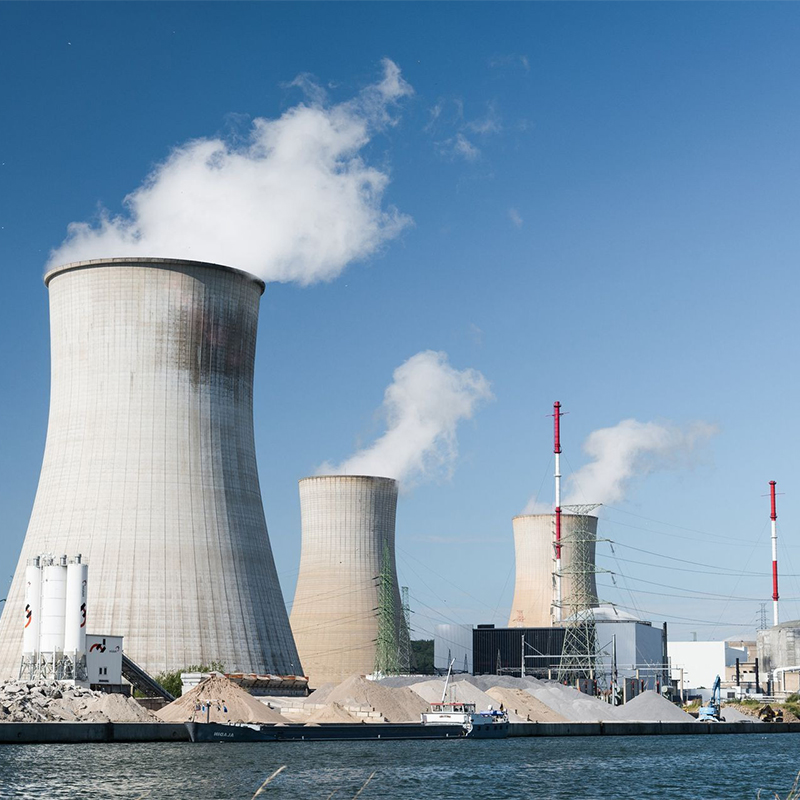
We Provide Cooling Tower Solution

Views: 0 Author: Site Editor Publish Time: 2026-02-12 Origin: Site


Water is a precious resource, yet industries worldwide often use vast amounts for cooling systems. Cooling towers are a cornerstone of industrial and commercial HVAC, but they can be water-intensive. Achieving sustainability means balancing evaporation—essential for cooling—with efficient water use.
With climate change, stricter regulations, and rising water costs, companies must rethink how cooling towers operate. This article explores practical solutions, advanced technologies, and real-world examples that optimize both cooling efficiency and water conservation.
Cooling towers remove heat from water used in HVAC, industrial, and power systems. Warm water enters the tower and spreads over fill media, increasing its contact with air. Some water evaporates, transferring heat to the atmosphere while cooling the remaining water.
Think of it as sweating: evaporation carries away heat, cooling the body—or in this case, the industrial water loop.
Evaporation is far more efficient than heat transfer via conduction or convection alone. While fans and coils help, the bulk of heat removal comes from water turning into vapor.
Evaporation is great for efficiency but leads to water loss. Every gallon that evaporates removes heat but isn’t immediately reusable unless treated and recycled.
High water consumption pressures local resources and ecosystems. Industries that ignore this face increased costs and regulatory scrutiny, particularly in water-scarce regions.
Hot, dry climates increase evaporation, while humid conditions slow it. Designing towers to accommodate these variables is key to sustainability.
Tower size, fan speed, and the heat load all affect water consumption. Optimizing airflow ensures the tower evaporates only what’s necessary for cooling.
Poor water quality leads to scaling, corrosion, and drift losses, increasing water consumption. Using proper chemical treatment and filtration can save both water and operational costs.
Industries compete with cities, agriculture, and ecosystems for freshwater. Efficient water use is not optional—it’s a necessity.
Municipal regulations and community expectations increasingly mandate reduced water use and environmental protection. Companies must act proactively.
Blowdown water can be treated and reused instead of being discarded. Closed-loop systems dramatically cut water usage while maintaining cooling efficiency.
High-quality drift eliminators capture water droplets that would otherwise escape. Optimized fill media improves evaporation efficiency, reducing unnecessary water loss.
Modern towers with improved airflow, fan controls, and optimized structural design minimize water use while maintaining cooling capacity.
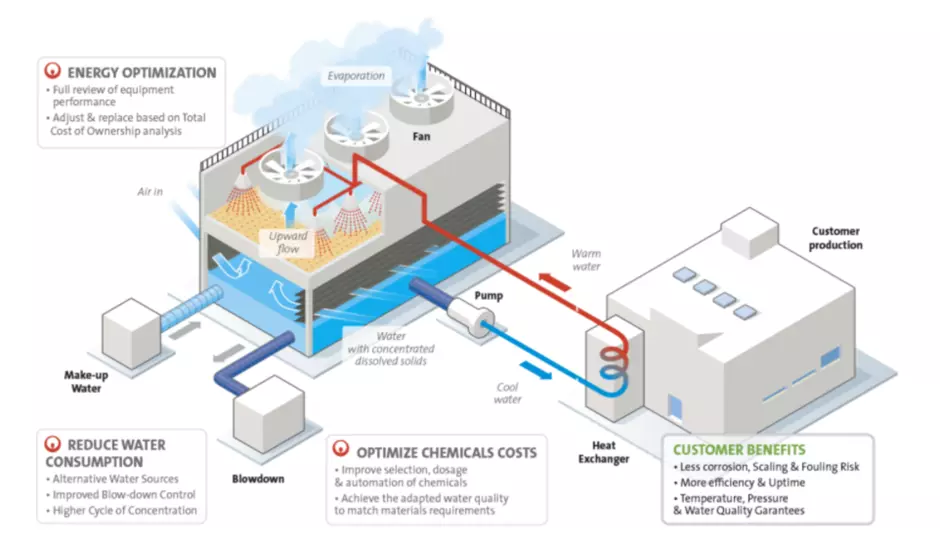
These systems capture blowdown water, treat it, and return it to the tower, reducing freshwater consumption significantly.
Sensors for temperature, conductivity, and water level enable automated adjustments in real-time. This precision control optimizes water use without compromising cooling performance.
FRP (Fiberglass Reinforced Plastic) is resistant to corrosion and leaks, ensuring the system remains tight and water-efficient over time.
Using lightweight composites reduces structural stress and pumping energy, contributing to long-term operational efficiency.

One industrial plant implemented a blowdown recycling system combined with real-time monitoring. Result: 40% water savings in one year with no drop in performance.
A commercial HVAC installation combined drift control, automated blowdown, and optimized fill design. The result: lower utility costs, regulatory compliance, and community approval.
Look for companies offering:
Integrated water recycling
Real-time monitoring
Durable, corrosion-resistant materials
Proven sustainability solutions
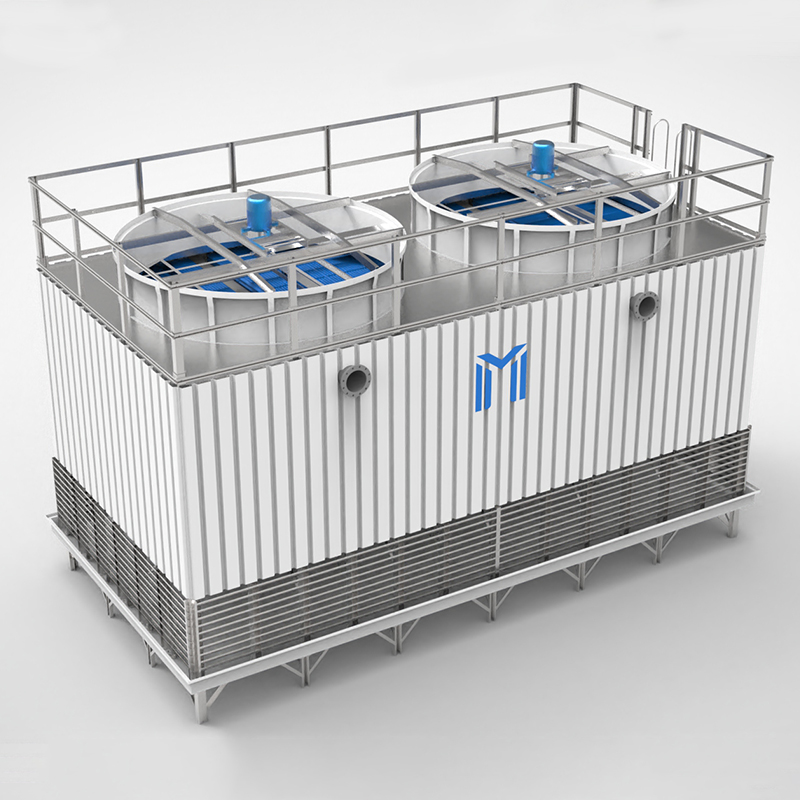
Mach Cooling specializes in custom, eco-friendly cooling towers. Their designs combine high efficiency, reduced water consumption, and advanced control systems, making them a trusted partner for industries worldwide.
AI-driven monitoring and predictive control
Hybrid wet-dry cooling systems
Advanced eco-materials for longevity and water efficiency
Global push toward low-water footprint systems
Balancing cooling efficiency with sustainable water use is both a challenge and an opportunity. Using advanced materials, smart controls, and water-recycling strategies ensures that industrial and commercial operations can stay cool, save water, and meet sustainability goals.
1. Why does evaporation matter in cooling towers?
It’s the primary mechanism for heat removal, but also the main source of water loss.
2. Can cooling towers operate without water loss?
No, but smart design and recycling can minimize losses drastically.
3. Does recycling affect cooling performance?
Properly designed systems maintain performance while cutting water use.
4. What materials reduce water loss?
Corrosion-resistant composites like FRP and lightweight, durable structures.
5. How does Mach Cooling support sustainable operations?
By providing water-efficient, durable, and high-performance cooling towers with integrated recycling and monitoring systems.