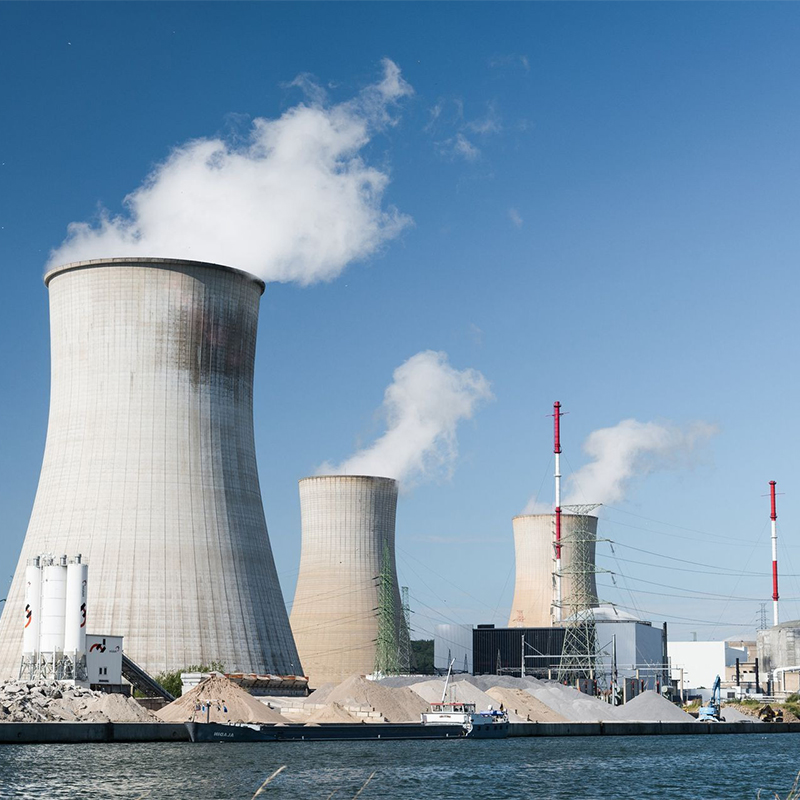
We Provide Cooling Tower Solution

Views: 0 Author: Site Editor Publish Time: 2026-01-24 Origin: Site


Fiberglass cooling towers are changing the game for industrial and commercial cooling systems. Unlike traditional steel or concrete towers, fiberglass offers a unique combination of durability, corrosion resistance, and lightweight construction. For facilities aiming to reduce maintenance costs and extend operational life, fiberglass towers are an excellent investment. Companies like Mach Cooling (https://www.machcooling.com/) specialize in high-quality fiberglass cooling towers designed for long-term reliability.
In industries where water and chemicals are constantly circulating, corrosion is a silent enemy. Steel towers can rust, concrete can crack, and both require intensive maintenance. Fiberglass towers, however, resist these challenges while maintaining efficiency. This article explores why fiberglass cooling towers are among the most durable solutions for modern industrial applications.
Fiberglass cooling towers use composite materials to construct their main components, including the fan casing, fill media support, and basin. These towers are engineered to provide robust heat exchange while resisting environmental and chemical stressors.
The key components include:
Fiberglass Reinforced Plastic (FRP) casing
Composite fill media supports
Corrosion-resistant basin and drift eliminators
These materials are bonded with resin systems that prevent water infiltration and chemical damage.
Unlike steel, fiberglass won’t rust, and unlike concrete, it doesn’t crack or spall under thermal cycling. Its lightweight nature also reduces structural load and simplifies installation, making it ideal for retrofits and modular applications.
Fiberglass towers aren’t just durable—they offer multiple operational advantages.
Fiberglass is inherently resistant to most industrial chemicals, including chlorides, acids, and alkaline solutions. This resistance dramatically reduces maintenance requirements and downtime.
Properly engineered fiberglass towers can last 20–30 years or more, even in harsh industrial environments. They maintain structural integrity far longer than steel or concrete alternatives.
Being lighter than steel or concrete allows easier transportation, quicker installation, and less stress on supporting structures, which is especially beneficial for rooftop or elevated applications.
Even modern towers face corrosion challenges if materials aren’t chosen carefully.
Factors include:
High humidity and water splashing
Chemical dosing for water treatment
Seasonal temperature changes
Microbial-induced corrosion in stagnant areas
Corroded towers lose heat transfer efficiency, increase water and energy consumption, and require frequent maintenance. In severe cases, structural failure may occur.
Fiberglass cooling towers address these challenges with several design and material innovations.
High-quality resin systems impregnate fiberglass layers to form a solid, impermeable composite. This protects against chemical attack and prevents water ingress.
Additional UV-resistant coatings extend lifespan in outdoor installations, preventing fading and surface degradation.
Fiberglass towers can be manufactured in modular components, which allows for easy replacement or upgrades of specific parts without dismantling the entire system.
Durability is influenced by design, material quality, and operational environment.
Fiberglass provides excellent tensile and compressive strength, resisting deformation under load and vibration.
Outdoor towers face sun, rain, wind, and temperature swings. Fiberglass resists cracking, warping, and UV degradation, maintaining performance over decades.
Routine cleaning and inspection are simple. Unlike steel, there’s no need for repainting or corrosion repairs, saving time and operational costs.
Fiberglass cooling towers have been successfully deployed in multiple industries.
Factories using chemicals or saline water find fiberglass ideal because it doesn’t corrode like steel. Operational reliability is improved, and energy costs drop due to better heat exchange.
In commercial HVAC systems, fiberglass towers reduce rooftop weight, minimize noise, and resist harsh weather, making them perfect for city installations.
Not all fiberglass towers are created equal. Selection criteria include:
Manufacturers with experience in composite materials ensure structural and thermal efficiency.
ISO-certified production, proper resin formulation, and rigorous testing guarantee long-term durability.
Mach Cooling (https://www.machcooling.com/) specializes in engineering, manufacturing, and supporting high-performance fiberglass cooling towers. They provide:
Custom designs for specific applications
High-quality FRP materials
Modular and retrofit-friendly systems
Technical support for maintenance and upgrades
Fiberglass cooling towers provide unmatched durability, corrosion resistance, and operational efficiency. They are ideal for industrial plants, HVAC systems, and chemical processing facilities. By choosing a reliable manufacturer like Mach Cooling, facilities can enjoy decades of low-maintenance, high-performance operation.