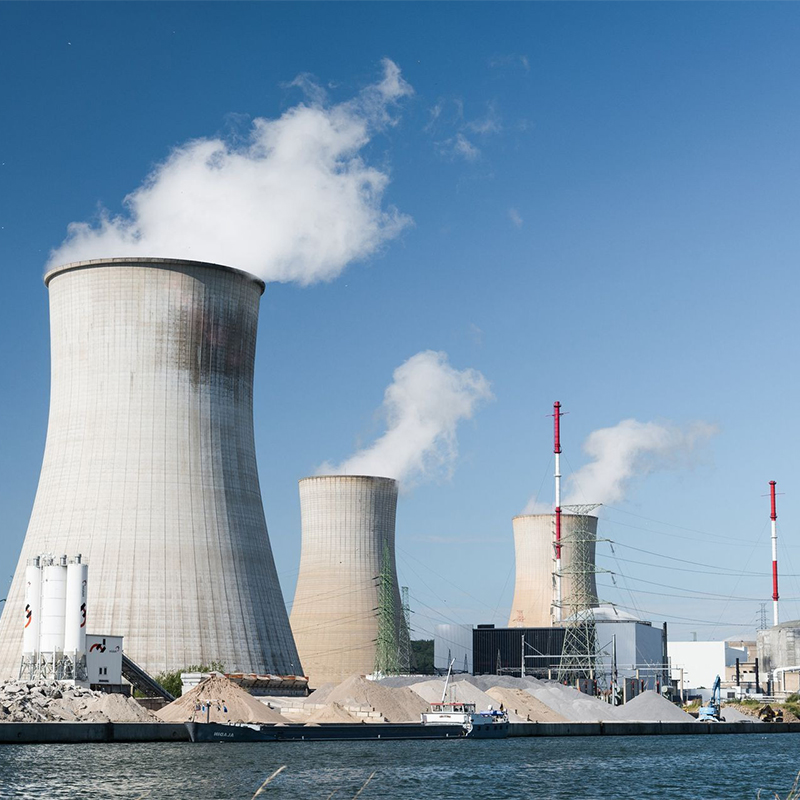
We Provide Cooling Tower Solution

Views: 0 Author: Site Editor Publish Time: 2025-11-20 Origin: Site


As industrial manufacturing continues to demand higher efficiency, reliability, and environmental responsibility, advanced cooling technologies have become essential for maintaining stable production processes. Among these technologies, closed circuit cooling towers have emerged as a preferred solution for industries that require precise temperature control, clean process fluids, and reduced maintenance costs.
Unlike traditional open cooling systems, closed circuit cooling towers use a sealed heat exchange coil to isolate the process fluid from external contaminants. This design provides significant advantages for manufacturing facilities where fluid quality and operational reliability are critical.
A closed circuit cooling tower is an evaporative cooling system designed to remove heat from a circulating process fluid without exposing that fluid directly to the atmosphere.
The system works through three primary components:
Closed-loop heat exchanger coil: The process fluid flows inside sealed tubes, preventing contamination and minimizing fluid degradation.
Spray water system: Water circulates over the outside surface of the coil to absorb heat.
Fan and airflow system: Air removes heat from the spray water through evaporation, completing the cooling process.
Because the process fluid remains enclosed, the system provides cleaner and more stable cooling compared with open cooling tower designs.
One of the biggest benefits of closed circuit cooling towers is the protection of the circulating fluid. Since the process liquid does not come into direct contact with air or spray water, the risk of contamination, biological growth, and chemical imbalance is significantly reduced.
This makes closed circuit systems ideal for industries where fluid purity directly affects product quality, including:
Electronics manufacturing
Pharmaceutical production
Food and beverage processing
Precision machining
Open cooling systems often experience problems caused by impurities entering the cooling loop. Closed circuit cooling towers minimize these issues by keeping the primary process fluid isolated.
Benefits include:
Less mineral buildup
Reduced corrosion risk
Longer equipment life
Lower chemical treatment requirements
These advantages help manufacturers reduce maintenance interruptions and improve overall system reliability.
Many industrial processes require strict temperature regulation. A closed circuit cooling tower provides consistent cooling performance because the process fluid remains within a controlled loop.
Applications that benefit from precise temperature management include:
Injection molding machines
Industrial furnaces
Laser equipment
Data centers
Chemical processing systems
Stable cooling conditions help improve product quality and prevent production losses caused by overheating.
Because the process circuit stays clean, closed circuit cooling towers generally require less maintenance compared with open systems.
Maintenance advantages include:
Reduced cleaning frequency
Lower water treatment demands
Fewer shutdowns for system servicing
Extended equipment operating life
For large manufacturing facilities, these savings can significantly reduce operating expenses.
Modern closed circuit cooling towers are designed with improved efficiency features, including:
High-efficiency fans
Optimized heat exchange coils
Variable-speed motors
Smart control systems
These technologies help reduce energy consumption while supporting industrial sustainability goals.
Closed circuit cooling towers are widely used across multiple industries:
Manufacturers rely on closed cooling systems for equipment that requires continuous and reliable temperature control, such as production machinery, hydraulic systems, and process equipment.
Injection molding processes generate significant heat. Closed circuit cooling towers help maintain consistent mold temperatures, improving production speed and product quality.
Chemical plants often require stable cooling conditions and protection against contamination. Closed circuit systems provide dependable cooling while maintaining process fluid integrity.
Food processing facilities benefit from cleaner cooling solutions that reduce contamination risks and support strict hygiene requirements.
Precision electronic manufacturing requires extremely stable temperatures. Closed circuit cooling towers provide the accuracy and reliability needed for sensitive equipment.
The future of industrial cooling will increasingly involve intelligent monitoring systems. Sensors and digital controls allow operators to track:
Temperature performance
Water quality
Energy consumption
Equipment status
Predictive maintenance powered by real-time data will help manufacturers prevent unexpected failures.
With rising energy costs and stricter environmental standards, manufacturers are seeking cooling systems that consume less power.
Future developments will focus on:
Advanced fan technologies
Improved heat exchanger designs
Automated capacity control
Energy-saving operating modes
Water conservation is becoming a major priority worldwide. Closed circuit cooling towers support sustainability by reducing water losses and improving cooling efficiency.
Future systems are expected to include:
Advanced water recycling solutions
Improved evaporation control
Smart water treatment technologies
Manufacturing facilities have different cooling requirements depending on production scale and operating conditions. Modular closed circuit cooling towers allow easier expansion, installation flexibility, and customized performance.
Closed circuit cooling towers provide a reliable and efficient cooling solution for modern industrial manufacturing. Their ability to protect process fluids, reduce maintenance needs, improve temperature control, and support sustainability makes them increasingly valuable across industries.
As manufacturing continues to move toward automation, energy efficiency, and smarter operations, closed circuit cooling technology will play an important role in creating cleaner, more reliable, and more sustainable industrial cooling systems.
 |  |