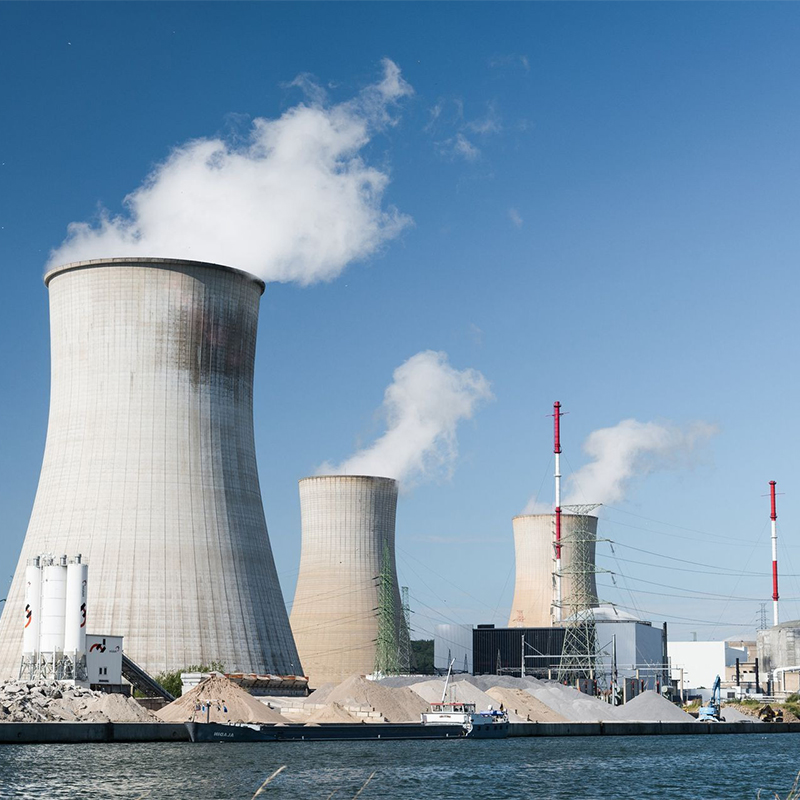
We Provide Cooling Tower Solution

Views: 0 Author: Site Editor Publish Time: 2026-01-23 Origin: Site


When people talk about cooling tower performance, fans, fills, and drift eliminators usually steal the spotlight. But here’s a quiet truth many systems learn the hard way: the cooling tower nozzle is where efficiency really begins.
Nozzle size, flow rate, and spray pattern decide how evenly water is distributed, how well heat is rejected, and how stable the system runs day after day. Get them right, and everything downstream works better. Get them wrong, and even the best cooling tower design struggles.
This guide breaks it all down in a clear, practical, and human way—no unnecessary jargon, just what actually matters in real projects.
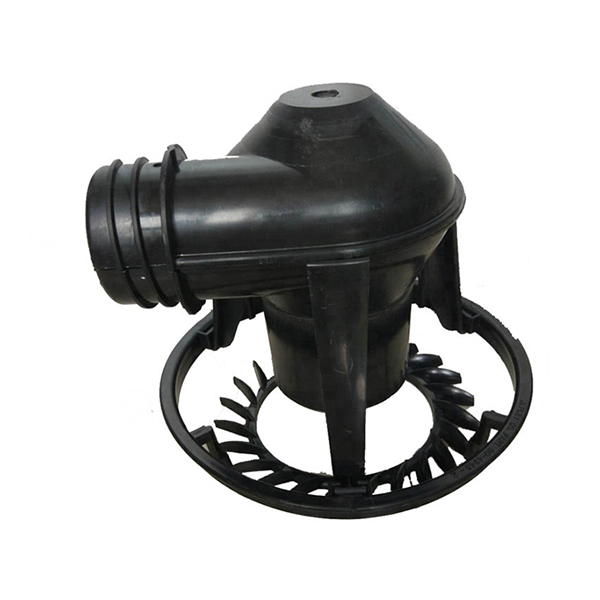
A cooling tower nozzle is responsible for distributing hot circulating water evenly over the fill media. Think of it like a garden sprinkler. If water pools in one corner and barely reaches another, your plants suffer. Cooling towers work the same way.
Uniform water distribution ensures maximum contact between water and air, which directly drives evaporation and heat transfer.

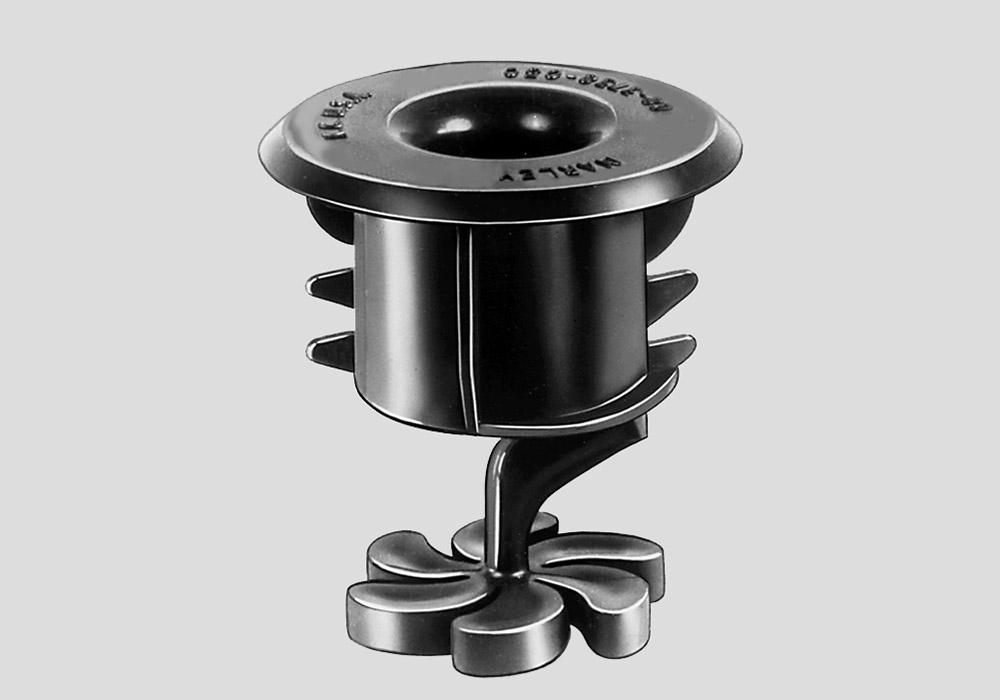
Poor nozzle design causes dry spots, scaling, biological growth, and uneven thermal performance. Over time, this leads to higher energy consumption, increased maintenance, and shorter equipment life.
Manufacturers such as Mach Cooling treat nozzle design as a core engineering component, not an accessory. By focusing on hydraulic balance and spray consistency, they help systems achieve stable long-term performance rather than short-lived efficiency gains.
Nozzle size refers to the internal orifice diameter that controls how much water flows through each nozzle. Bigger isn’t always better—and smaller isn’t automatically more efficient either.
A larger nozzle allows more water to pass but reduces exit velocity. This can lead to poor atomization and uneven coverage. A smaller nozzle increases velocity but may clog more easily or cause excessive pressure loss.
The goal is balance: enough velocity to form a proper spray, without sacrificing coverage or reliability.
Typical industrial cooling tower nozzles range from 3/8 inch to 2 inches, depending on system flow and tower size. Mach Cooling often customizes nozzle sizing to match actual operating conditions rather than relying on generic standards.
Flow rate—usually measured in GPM (gallons per minute) or LPM (liters per minute)—defines how much water each nozzle handles. It’s a critical factor in determining heat rejection capacity.
Higher flow rates mean more water contact with air, increasing heat removal—up to a point. Beyond that point, excess water reduces contact time and wastes pumping energy.
Properly designed nozzles ensure that every gallon contributes to effective cooling.
Engineers typically divide total system flow by the number of nozzles to determine individual nozzle flow. Pump head, static pressure, and distribution piping must also be considered to avoid uneven delivery.
For international projects, quick conversions help avoid costly mistakes:
1 GPM ≈ 3.785 LPM

Spray pattern defines how water spreads over the fill surface. Even the correct flow rate won’t help if water lands in the wrong places.
Full cone spray patterns distribute water evenly across a circular area. These are ideal for counterflow cooling towers, where uniform fill wetting is critical for performance.
Hollow cone patterns focus water on the outer edge of the spray. While less common in modern towers, they may still be used in specific retrofit or low-pressure applications.
Uneven spray creates hot spots, accelerates scaling, and shortens fill life. Mach Cooling nozzle designs aim for consistent droplet size and stable spray geometry to eliminate these issues.
This is where real-world performance is won or lost. Nozzle size, flow rate, and spray pattern must work together as a system.
A mismatch can cause splash-out, misting, or bypassing of the fill—quietly eroding efficiency while appearing “normal” during operation.
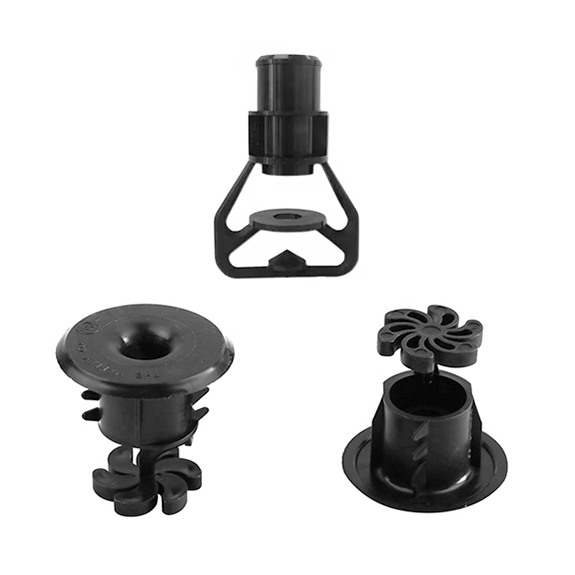
Fixed spray nozzles are simple, reliable, and low-maintenance. Rotary nozzles provide dynamic coverage but require sufficient water pressure to function correctly.
Mach Cooling offers both designs, selecting the right option based on system pressure, water quality, and maintenance expectations.
Crossflow cooling towers typically use gravity-fed, low-pressure nozzles. Counterflow towers rely on pressurized spray systems.
Using the wrong nozzle type for the tower configuration is like using the wrong fuel—it might run, but never efficiently.
Material choice affects corrosion resistance, strength, and service life.
Plastic materials such as PP and ABS are lightweight and corrosion-resistant, making them ideal for many industrial water conditions. Stainless steel nozzles excel in high-temperature or abrasive environments.
Mach Cooling selects nozzle materials based on real water chemistry and operating conditions—not assumptions.
Common errors include oversizing nozzles, ignoring pressure loss, and failing to plan for fouling. These mistakes don’t always cause immediate failure—but they slowly degrade performance over time.
Regular inspection, cleaning, and proper filtration keep nozzles operating as designed. Side-stream filtration is especially effective in preventing clogging and extending nozzle lifespan.
Mach Cooling integrates hydraulic analysis, application experience, and manufacturing precision to deliver nozzles that perform consistently in real-world conditions. Their designs support stable flow rates, uniform spray patterns, and long-term reliability across global installations.
Learn more at https://www.machcooling.com/.
Correct nozzle size
Matched flow rate
Appropriate spray pattern
Suitable material
Reliable manufacturer support
Cooling tower nozzle size, flow rate, and spray pattern are not minor details—they are the foundation of efficient heat rejection. When properly selected, they quietly improve performance, reduce energy consumption, and extend system life.
When ignored, they become hidden efficiency killers. Choose carefully, design thoughtfully, and work with experienced manufacturers like Mach Cooling to ensure your cooling tower performs the way it was meant to—day after day.