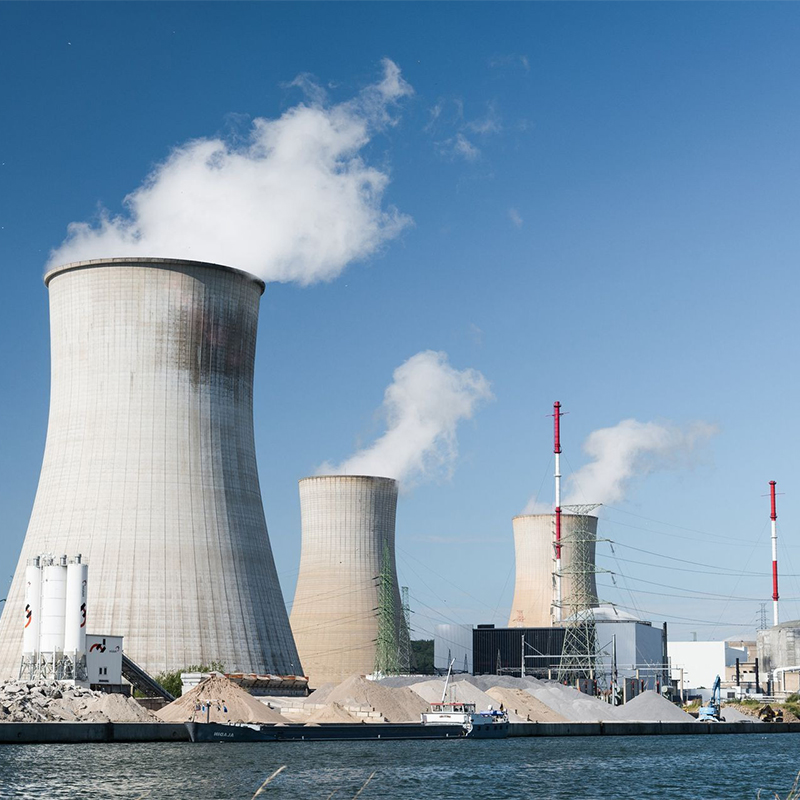
We Provide Cooling Tower Solution

Views: 0 Author: Cindy Publish Time: 2026-10-17 Origin: Site


Finding the right cooling tower supplier in Bangladesh is not simply about finding the lowest quotation. For industrial facilities, the cooling tower is a critical part of the production system. If it cannot remove enough heat, the entire process can suffer.
A properly selected cooling tower can help maintain stable operating temperatures, improve equipment reliability, reduce energy consumption, and control long-term maintenance costs.
Bangladesh has a growing demand for industrial cooling systems across textile manufacturing, pharmaceuticals, food processing, steel, power generation, plastics, commercial HVAC, and other industries. As a result, buyers have several options, from local engineering companies and distributors to established international brands and direct manufacturers.
But how do you know which supplier is right for your project?
This guide introduces 8 cooling tower suppliers and sourcing options for Bangladesh buyers and explains what you should consider before making a purchase. We will also look at the differences between local suppliers and international manufacturers and explain why direct factory sourcing from Mach Industry (Zhejiang) Co., Ltd. may be worth considering for certain projects.
Buyer’s note: The companies discussed below should be considered a practical supplier shortlist rather than an official ranking of the eight largest cooling tower companies in Bangladesh. Product availability, local representation, service coverage, and current project capabilities should always be confirmed directly before purchasing.
A cooling tower may look like a relatively simple piece of equipment, but its actual performance depends on many variables.
Water flow rate, hot-water temperature, cold-water temperature, heat load, ambient wet-bulb temperature, fill design, fan performance, water distribution, and tower construction all work together.
Think of a cooling tower as the heart of a heat-rejection system. If the heart is undersized, poorly selected, or poorly maintained, the entire system feels the pressure.
This is why choosing a supplier should involve more than asking, “How much does this cooling tower cost?”
A professional supplier should first understand your application. They should ask questions such as:
What is the required heat rejection?
What is the circulating-water flow rate?
What are the entering and leaving water temperatures?
What is the local summer design wet-bulb temperature?
How many hours per day will the tower operate?
What is the quality of the available makeup water?
How much installation space is available?
Is the application industrial or HVAC?
Do you need an open-circuit or closed-circuit system?
What level of after-sales support do you require?
Once these details are clear, you can compare suppliers on a technical basis instead of simply comparing numbers on a quotation.

There is no single cooling tower supplier that is perfect for every project.
Some buyers prioritize local installation and maintenance. Others prefer an established international brand. Some large industrial customers want a customized system directly from a manufacturer.
The following eight options represent different approaches to cooling tower procurement.
MHM Machineries BD Ltd. is a Bangladesh-based machinery supplier that promotes cooling tower products and related services.
Its cooling tower offerings include configurations such as counterflow and crossflow FRP cooling towers, along with cooling tower spare parts and maintenance-related services.
For buyers who want a local point of contact, a Bangladesh-based supplier can provide certain practical advantages. Communication, site visits, installation coordination, and routine service may be easier to arrange than with a manufacturer located overseas.
However, buyers should always clarify the actual manufacturing source of the proposed cooling tower.
Is the unit manufactured locally?
Is it imported?
Which brand and model will be supplied?
Who provides the warranty?
Who will handle commissioning?
These questions can make a significant difference when comparing quotations.
Before placing an order, request a complete technical proposal, performance data, material specifications, warranty terms, delivery schedule, and references for similar projects.
Advatech Technologies is another company that provides cooling tower products and related engineering solutions for the Bangladesh market.
Its published product range includes different cooling tower configurations, including crossflow and fiberglass cooling towers, as well as spare parts and associated equipment.
This type of supplier may be attractive to industrial buyers looking for both equipment and technical assistance.
However, product names alone do not tell you whether a cooling tower is suitable for your process.
For example, a tower may have a certain nominal capacity, but that capacity can change depending on the design wet-bulb temperature and required cold-water temperature.
When requesting a quotation, provide your actual operating conditions and ask the supplier to make the selection based on those conditions.
You should also confirm whether installation, commissioning, maintenance, and replacement parts are included in the proposed service package.
Technaf Engineering is a Bangladesh-based engineering supplier associated with industrial equipment, water-treatment products, ventilation systems, and cooling tower solutions.
This combination can be useful for facilities where cooling towers are only one part of a larger mechanical or water-treatment project.
Why does that matter?
Because a cooling tower does not operate alone.
It works together with pumps, piping, water-treatment systems, heat exchangers, controls, and sometimes chillers or other process equipment.
A supplier that understands these connections may be able to help coordinate a more complete system.
However, buyers should clearly define the supplier's responsibilities before signing a contract.
For example, does the supplier provide only the tower?
Does it include pumps and controls?
Who designs the water-treatment system?
Who performs startup and commissioning?
Who provides technical support after installation?
Getting these details in writing can prevent misunderstandings later.
Tradeasia Giant Limited operates in the Bangladesh market with cooling tower and related industrial equipment solutions.
Its product offering includes cooling towers, cooling tower fill materials, water-treatment-related equipment, and ventilation products.
This can be relevant for buyers looking for a broader cooling-system supply chain rather than a cooling tower alone.
However, buyers should distinguish carefully between a manufacturer, distributor, importer, and engineering contractor.
These business models can provide very different levels of technical support and customization.
If you receive a quotation from a trading or distribution company, ask for the original manufacturer's name, product model, country of origin, technical datasheet, warranty conditions, and spare-parts arrangement.
This is especially important for larger industrial installations where the cooling tower may operate continuously for many years.
Paharpur Cooling Towers is an established name in the cooling tower industry and is associated with engineered cooling solutions for industrial and power applications.
For large projects, buyers may want to consider established engineered cooling tower companies in addition to local suppliers of standard packaged equipment.
Large industrial cooling applications can be considerably more complicated than selecting a small factory cooling tower.
Power plants, steel plants, petrochemical facilities, process industries, and other high-capacity applications may require customized thermal design, structural engineering, multiple cells, sophisticated water distribution, and specialized controls.
If you are considering an engineered cooling tower solution, compare suppliers based on actual project experience.
Ask for comparable references, thermal performance information, structural requirements, maintenance access, and expected operating conditions.
Also confirm what level of technical and service support is available for the specific Bangladesh project.
Marley is a well-known cooling tower brand within SPX Cooling Technologies.
For industrial and commercial projects where an established international brand is preferred, Marley can be included in the supplier comparison.
This may be especially relevant when a facility is replacing an existing Marley cooling tower and wants to maintain compatibility with an established equipment platform.
However, brand recognition alone should not determine your purchasing decision.
For a Bangladesh project, confirm the current sales channel, product availability, delivery schedule, warranty terms, spare-parts access, and local service arrangements.
If you are replacing an existing cooling tower, provide the original tower model, dimensions, water flow rate, temperature range, and available site information.
A replacement tower should be selected according to the actual cooling duty rather than simply matching the old tower's nominal tonnage.

Baltimore Aircoil Company, commonly known as BAC, is an international manufacturer of evaporative heat-transfer and cooling equipment.
BAC is another brand that industrial buyers may evaluate when looking for engineered evaporative cooling solutions.
Depending on the application, buyers may consider equipment such as cooling towers and closed-circuit cooling solutions.
When evaluating an international manufacturer for a Bangladesh project, technical specifications are only one part of the decision.
You should also investigate regional availability, delivery time, local technical support, spare-parts logistics, warranty coverage, and commissioning arrangements.
For a high-value project, ask for performance data under the exact design conditions.
For example, if the tower must operate during Bangladesh's hottest and most humid period, make sure the selected capacity is based on an appropriate design wet-bulb temperature.
A tower that looks impressive on a standard datasheet may not deliver the same performance under your actual site conditions.

For buyers who are willing to source directly from an overseas manufacturer, Mach Industry (Zhejiang) Co., Ltd. is another option to consider.
Mach Cooling specializes in cooling equipment and provides cooling tower solutions for industrial and commercial applications.
Its product range includes different cooling tower configurations, including open-circuit and closed-circuit cooling towers, as well as counterflow and crossflow designs.
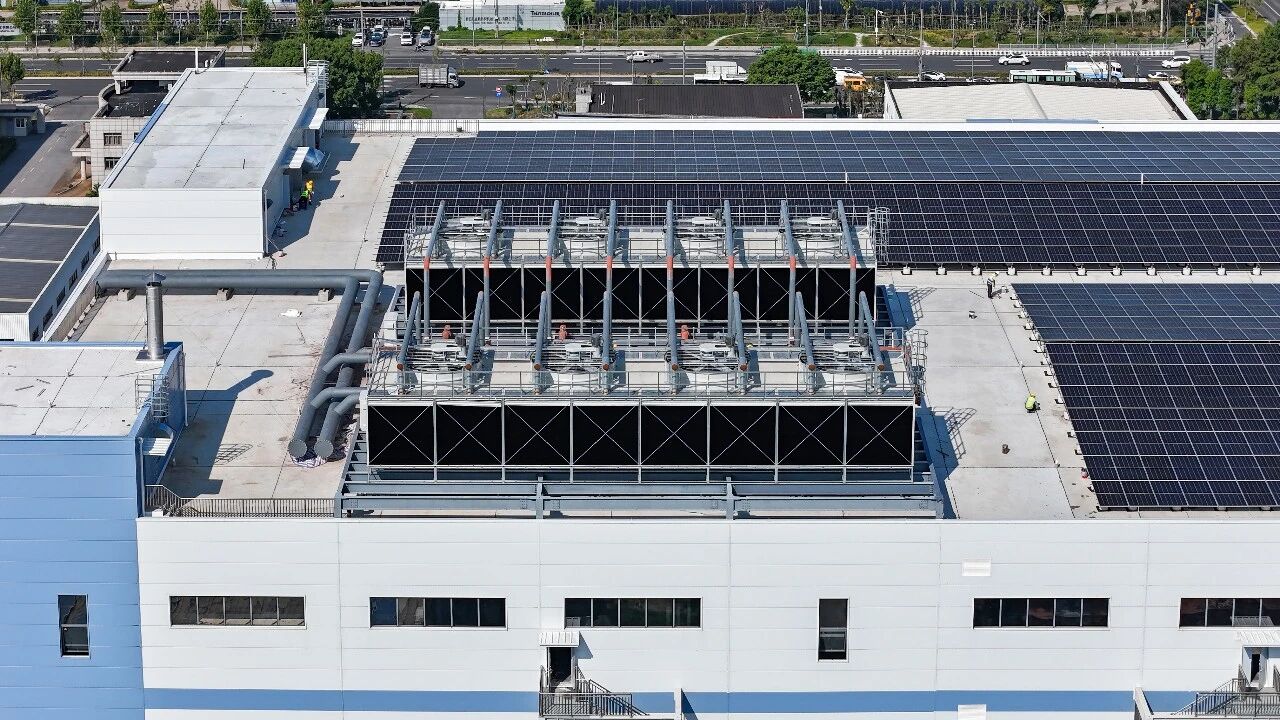
The company also provides other cooling equipment, allowing buyers to discuss different approaches to heat rejection depending on the application.
One advantage of working directly with a manufacturer is the opportunity to communicate about technical requirements before the final equipment is selected.
For example, instead of simply asking for a “500-ton cooling tower,” you can provide the actual heat load, water flow rate, inlet and outlet temperatures, design wet-bulb temperature, and site conditions.
The manufacturer can then determine a suitable configuration.
For Bangladesh buyers, direct international sourcing should also include a careful evaluation of shipping, import costs, installation, commissioning, spare parts, and after-sales support.
You can learn more about Mach Cooling's cooling tower solutions at www.machcooling.com.
Once you have several suppliers on your shortlist, how should you compare them?
The easiest mistake is to put all the quotations into a spreadsheet and immediately sort them from cheapest to most expensive.
Don't do that yet.
First, make sure all suppliers are quoting for the same technical requirements.
Otherwise, you may be comparing apples with oranges.
Cooling capacity should be one of the first things you evaluate.
Provide each supplier with:
Heat load
Water flow rate
Hot-water temperature
Cold-water temperature
Design wet-bulb temperature
Operating hours
Expected load variation
The required heat rejection is more important than a generic tower tonnage.
For example, two cooling towers advertised as having the same nominal capacity may perform differently if one is selected for a different wet-bulb temperature or temperature range.
Always ask the supplier to explain how the proposed model was selected.
Another important question is whether you need an open-circuit or closed-circuit cooling tower.
In an open-circuit cooling tower, the circulating water is distributed over fill media and comes into direct contact with moving air.
A portion of the water evaporates, removing heat from the system.
This design is widely used for HVAC condenser-water systems and many industrial applications.
A closed-circuit cooling tower, on the other hand, keeps the process fluid inside a heat exchanger or coil.
External spray water and air remove heat from the coil.
This can help protect the process fluid from direct atmospheric exposure.
Which is better?
Neither is universally better.
Open-circuit systems can offer attractive economics for many applications, while closed-circuit systems may be preferable when process-fluid cleanliness or separation is important.
The right answer depends on your process.
Material selection can have a major effect on cooling tower service life.
Ask about the construction of the casing, basin, support structure, fasteners, heat-transfer components, and other critical parts.
FRP is widely used in cooling tower construction because of its corrosion resistance and relatively low weight.
Galvanized steel and stainless steel can also be used depending on the design and application.
But don't simply ask, “Is it stainless steel?”
Ask which components use stainless steel and what grade is specified.
Likewise, if FRP is used, ask about the construction quality and expected environmental resistance.
The best material depends on the water chemistry, surrounding environment, operating conditions, and required service life.
Energy efficiency matters because cooling towers can operate thousands of hours per year.
Fan motors are usually one of the main electrical loads, while pumps and other equipment may also contribute to system energy consumption.
When comparing suppliers, ask for:
Fan motor power
Fan type
Motor efficiency
Variable-speed control options
Expected operating points
Water flow requirements
Control strategy
A tower with a slightly higher purchase price may be more economical if it consumes less electricity throughout its operating life.
In other words, don't judge the tower by its price tag alone.
Look at the whole journey from purchase to retirement.
Water is another major operating cost.
Cooling towers lose water through evaporation, drift, and blowdown.
Evaporation is necessary because it is the mechanism that removes heat.
Drift should be minimized through suitable drift eliminators.
Blowdown is used to control the concentration of dissolved solids in the circulating water.
Water consumption depends on the heat load, cycles of concentration, ambient conditions, and tower design.
If water availability is limited or expensive, ask suppliers to provide an estimated water consumption figure based on your actual operating conditions.
A cooling tower is not finished when it arrives at your factory.
It must be installed, connected, commissioned, and maintained.
Ask the supplier:
Who installs the tower?
Who performs commissioning?
Are foundation requirements provided?
Are piping connections included?
Are electrical controls included?
Is operator training available?
How quickly can spare parts be supplied?
Who handles warranty claims?
These questions become particularly important when buying from an overseas manufacturer.
A competitive factory price can lose its advantage if installation and spare-parts arrangements are unclear.
Bangladesh has a diverse industrial sector, and cooling towers are used in many applications.

The textile industry is one of the most important industrial sectors in Bangladesh.
Cooling may be required for production processes, chillers, compressors, dyeing equipment, and other machinery.
A textile factory may operate multiple production lines simultaneously, creating significant and variable heat loads.
When selecting a cooling tower, buyers should consider operating schedules, water quality, ambient conditions, and airborne dust or fibers.
Maintenance access is also important because production facilities cannot always afford long shutdown periods.
Pharmaceutical and food-processing facilities often require reliable temperature control.
Cooling systems may support HVAC systems, process equipment, refrigeration, or other heat-generating machinery.
In these applications, water quality and contamination control deserve particular attention.
A closed-circuit cooling system may be worth evaluating when the process fluid needs to remain separated from the external cooling-water environment.
The cooling tower itself must also be easy to inspect and maintain.
Steel manufacturing and heavy industrial processes can generate substantial quantities of heat.
Large cooling towers may be required to support continuous industrial processes, heat exchangers, furnaces, hydraulic equipment, compressors, or auxiliary systems.
For these applications, reliability is often more important than simply minimizing initial cost.
A properly engineered system should account for peak heat load, structural requirements, water chemistry, redundancy, maintenance access, and long operating hours.
Power plants can require large-scale cooling systems because substantial amounts of waste heat must be rejected.
Depending on the plant design, cooling towers may support condenser systems, auxiliary cooling loops, or other heat-rejection equipment.
Large projects should involve detailed thermal calculations and engineering review.
Buyers should request performance guarantees and confirm how the tower will perform under actual design conditions.
Cooling towers are also widely used with water-cooled chillers in commercial buildings.
Hotels, shopping centers, hospitals, office buildings, and large commercial complexes may require cooling towers to reject condenser heat.
In these applications, noise, footprint, aesthetics, roof loading, maintenance access, and water treatment may all influence equipment selection.
The tower should be evaluated together with the chiller because the two systems operate as a connected heat-rejection package.
Should you buy from a local Bangladesh supplier or directly from an international manufacturer?
There is no universal answer.
A local supplier can offer convenient communication, local site visits, installation assistance, and potentially faster access to service.
An international manufacturer may provide broader equipment configurations, factory-direct communication, engineering support, customization, or competitive manufacturing costs.
For overseas purchases, however, you need to calculate the total landed cost.
This may include:
Equipment price
Packaging
Ocean or air freight
Insurance
Import duties and taxes
Port charges
Local transportation
Installation
Commissioning
Spare parts
Future maintenance
A factory quotation is therefore not necessarily the same thing as the final project cost.
At the same time, a local supplier's quotation may include services that are not included in an overseas manufacturer's factory price.
The best comparison is therefore based on the complete project scope, not simply the equipment price.
Want to get accurate quotations from suppliers?
Give them accurate information.
At minimum, your technical request should include:
Cooling capacity: State the required heat rejection if known.
Water flow rate: Provide the circulating-water flow rate.
Entering water temperature: Tell the supplier the hot-water temperature entering the tower.
Leaving water temperature: Specify the target cold-water temperature.
Design wet-bulb temperature: This is critical for evaporative cooling tower selection.
Operating hours: Explain whether the tower runs continuously, seasonally, or intermittently.
Application: Identify whether the tower is for HVAC, process cooling, machinery cooling, power generation, or another use.
Water quality: Provide available water-analysis data if possible.
Installation conditions: Mention available space, elevation, environmental restrictions, and noise limitations.
Power supply: Include the local electrical requirements.
The more complete your information, the more meaningful the quotation will be.
If you are contacting Mach Industry (Zhejiang) Co., Ltd., you can provide these technical details through the official Mach Cooling website for discussion of the appropriate cooling solution.
The cheapest tower is not necessarily the cheapest solution.
If it consumes more electricity, requires frequent maintenance, or fails to reach the required cold-water temperature, the long-term cost can become much higher.
A cooling tower's capacity depends on its operating conditions.
Always make sure suppliers use the same water temperatures, flow rate, and design wet-bulb temperature when preparing quotations.
Even a high-quality cooling tower can suffer from scale, corrosion, fouling, and biological growth if the water system is poorly managed.
Water treatment should be considered part of the cooling system—not an optional extra.
Don't size your tower based on average weather.
The tower needs to perform when your facility is under the greatest thermal stress.
Peak summer design conditions should be considered during selection.
Fans, motors, bearings, belts, nozzles, fill media, drift eliminators, and other components may eventually need replacement.
Ask the supplier how these parts will be sourced and how long they typically take to arrive.
“500-ton cooling tower” sounds precise, but it isn't enough information for proper selection.
You need the actual heat load and operating conditions.
Thermal performance should always be evaluated against a defined duty.
There is no single supplier that is best for every application.
The right supplier depends on your cooling capacity, operating temperatures, project budget, installation requirements, water conditions, and service expectations.
For a small or medium project, local support may be particularly valuable. For a large customized project, an experienced international manufacturer may be worth considering.
Yes.
Direct purchasing from a Chinese manufacturer can be an option for Bangladesh industrial buyers.
However, you should consider the complete import process, including shipping, customs, installation, commissioning, warranty support, and spare parts.
A factory-direct purchase makes the most sense when the supplier can provide clear technical documentation and a reliable project-support process.
There is no universal answer.
The correct tower depends on the factory's heat load, water flow, inlet and outlet temperatures, operating schedule, available water, and site conditions.
Counterflow and crossflow cooling towers are both used in industrial applications.
The supplier should select the equipment based on the actual process requirements.
Cooling tower prices can vary substantially depending on capacity, type, materials, brand, efficiency, accessories, installation, and whether the equipment is locally supplied or imported.
For this reason, giving one generic price can be misleading.
The best approach is to request quotations based on identical technical conditions and compare the complete scope of supply.
The most important information includes heat load, water flow rate, hot-water temperature, required cold-water temperature, and design wet-bulb temperature.
Additional information about water quality, operating hours, installation location, power supply, and future capacity requirements can also help the supplier make a better selection.
It depends on your priorities.
Choose a local supplier when local installation, service, and communication are your highest priorities.
Consider a direct manufacturer when you need customization, factory-direct technical communication, competitive manufacturing costs, or specific equipment configurations.
For larger projects, it can be useful to obtain quotations from both routes and compare the complete lifecycle cost.
Finding the right cooling tower supplier in Bangladesh requires more than searching for the lowest price.
You need to consider thermal performance, cooling capacity, water consumption, energy efficiency, construction materials, maintenance, spare parts, installation, and long-term service.
Local suppliers can provide valuable on-site support, while international manufacturers can offer direct factory sourcing and a broader range of engineering options.
Companies and brands such as MHM Machineries BD Ltd., Advatech Technologies, Technaf Engineering, Tradeasia Giant Limited, Paharpur Cooling Towers, Marley, and BAC can be included in a buyer's research process, subject to confirmation of current product availability and Bangladesh project support.
For buyers interested in sourcing directly from a manufacturer, Mach Industry (Zhejiang) Co., Ltd. is another option to evaluate.
The most important lesson is simple: don't buy a cooling tower based only on its price or nominal tonnage.
Start with your actual heat load.
Define your operating temperatures.
Consider Bangladesh's design climate.
Evaluate water and energy costs.
Then compare suppliers using the same technical requirements.
That approach turns a confusing purchasing decision into a much clearer engineering comparison.
To explore cooling tower solutions and discuss your industrial cooling requirements, visit Mach Cooling's official website.