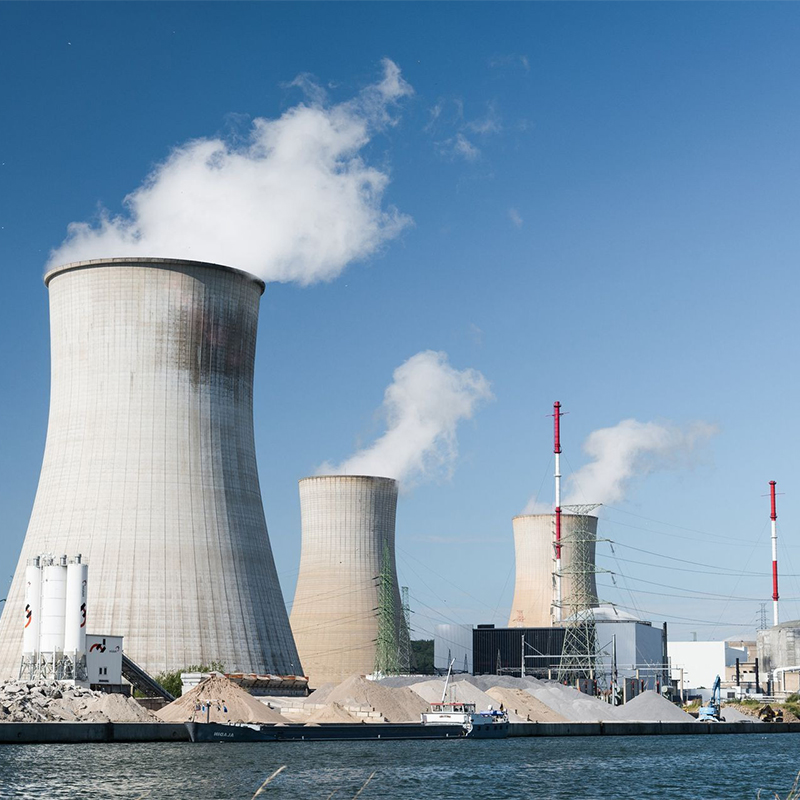
We Provide Cooling Tower Solution

Views: 0 Author: Cindy Publish Time: 2026-09-07 Origin: Site


A cooling tower may look simple from the outside, but inside, it is constantly fighting heat, water, corrosion, scale, dirt, and mechanical wear.
Whether you operate an industrial cooling tower, an HVAC system, a power plant, or a process-cooling facility, regular maintenance is essential. A neglected tower can slowly lose cooling capacity, consume more energy, develop mechanical problems, and eventually cause unexpected downtime.
So, how do you keep a cooling tower working efficiently for years?
The answer is not complicated: inspect it regularly, keep it clean, monitor water quality, maintain mechanical components, and repair small problems before they become major failures.
This guide explains everything you need to know about cooling tower maintenance, including inspection, cleaning, preventive maintenance, common failures, repair strategies, and long-term service planning.
Think of your cooling tower as the heat-rejection heart of the entire system.
If the heart becomes clogged or weak, the rest of the system has to work harder.
A poorly maintained cooling tower can experience:
Reduced heat-transfer efficiency
Higher fan and pump energy consumption
Increased water consumption
Scaling and biological fouling
Corrosion
Uneven water distribution
Fan and motor failures
Excessive vibration and noise
Damaged cooling tower fill
Higher operating costs
Unexpected production downtime
Regular maintenance helps prevent these problems before they become expensive.
MACH's technical guidance also emphasizes cleaning the fill, checking fans and gearboxes, monitoring water chemistry, maintaining drift eliminators, and keeping airflow passages clear.
Cooling tower maintenance is much more than washing the basin once a year.
A complete maintenance program normally includes five major areas:
Visual inspection
Mechanical inspection
Electrical inspection
Water treatment and cleaning
Repair and component replacement
Each area supports the others.
For example, poor water treatment can damage the fill. Damaged fill can reduce heat transfer. Reduced heat transfer can force the fan to operate longer. More fan operation means more energy consumption.
One small problem can create a chain reaction.
That is why preventive maintenance matters.
The first step is a systematic inspection.
Don't simply walk around the tower and look for something obvious. Use a checklist and inspect each major component.
A basic cooling tower inspection should cover:
Tower structure
Water basin
Fill material
Spray nozzles
Distribution pipes
Drift eliminators
Fans
Motors
Gearboxes
Bearings
Belts and pulleys
Shafts
Pumps
Valves
Electrical connections
Vibration
Noise
Water quality
The exact inspection frequency depends on the tower design, operating environment, water quality, and manufacturer's recommendations.
Daily checks do not need to be complicated.
In many facilities, operators can identify early warning signs simply by observing the tower.
Look at the basin or sump.
Is the water level normal?
A low level may indicate excessive blowdown, leakage, or a problem with the make-up water system.
A high level may point to an issue with the float valve, control system, or drainage arrangement.
Does the fan sound normal?
A new rattling, grinding, knocking, or humming sound should never be ignored.
Fans often give you an early warning before a serious mechanical failure occurs.
Excessive vibration may indicate:
Fan imbalance
Bearing wear
Shaft misalignment
Loose fasteners
Motor problems
Gearbox problems
Small vibrations can become big problems surprisingly quickly.
Weekly inspections should go deeper.
Check the condition of the fan, motor, belts, bearings, gearbox, pump, and water-distribution system.
Look for:
Loose bolts
Oil leakage
Belt wear
Corrosion
Unusual temperature
Abnormal vibration
Water leakage
Blocked nozzles
Damaged components
If your tower operates continuously in a demanding industrial environment, more frequent inspections may be appropriate.
A monthly inspection should provide a more complete picture of tower condition.
Measure and record operating data such as:
Entering water temperature
Leaving water temperature
Water flow
Fan operating condition
Motor current
Vibration
Basin condition
Water chemistry
Ambient conditions
Keeping historical records is extremely useful.
Why?
Because a cooling tower can lose performance gradually. Without historical data, you may not notice the decline until the problem becomes serious.
With records, you can identify trends.
Cleaning is one of the most important parts of cooling tower maintenance.
A tower operates with large volumes of water and air. That means it naturally collects dust, dirt, minerals, leaves, debris, and biological growth.
The main areas requiring cleaning include:
Cooling tower basin
Fill
Spray nozzles
Distribution pipes
Screens
Drift eliminators
Air inlets
Fan blades
Water collection areas
Cleaning frequency depends heavily on the operating environment.
A tower located beside a dusty industrial process may require much more frequent cleaning than one installed in a relatively clean commercial environment.
Safety comes first.
Before cleaning or repairing a tower, isolate the equipment and follow your facility's lockout/tagout procedures.
Turn off fans, pumps, and associated equipment according to the site's approved shutdown procedure.
Never work inside or around moving mechanical equipment.
Before removing deposits, identify where the dirt, scale, corrosion, or biological growth is concentrated.
This can reveal the cause of the problem.
Remove sludge, leaves, sediment, and other debris.
A dirty basin can become a reservoir for biological growth and can also restrict water flow.
Inspect the fill carefully.
Scale and biological deposits can block airflow and reduce effective heat-transfer surface area.
Do not use aggressive cleaning methods that could damage delicate fill material.
Blocked nozzles can create uneven water distribution.
Some areas may receive too much water while others become relatively dry.
That means the tower is no longer using its heat-transfer surface efficiently.
The fill is one of the most important components in an evaporative cooling tower.
Its job is to increase the contact area between water and air.
You can think of cooling tower fill as the tower's "heat-transfer workspace."
If that workspace becomes blocked with scale, dirt, or biological deposits, cooling performance falls.
During inspection, look for:
Cracks
Deformation
Scaling
Biofilm
Blockages
Broken sheets
Material deterioration
If the fill is badly damaged or blocked, cleaning may no longer be enough. Replacement may be the better solution.
The fan moves air through the tower.
Without sufficient airflow, even a well-designed tower cannot deliver its expected cooling performance.
Inspect:
Fan blades
Hub
Shaft
Bearings
Belts
Pulleys
Gearbox
Motor
Fasteners
Check for cracks, imbalance, corrosion, excessive vibration, and abnormal noise.
A damaged fan blade should never be treated as a minor cosmetic issue.
A rotating blade carries significant mechanical energy. If it fails, the consequences can be severe.
The motor provides the power. The gearbox, where used, transfers that power to the fan at the required speed.
Both require regular attention.
Inspect:
Motor temperature
Electrical connections
Insulation condition
Current draw
Bearings
Vibration
Unusual noise
For geared systems, check:
Oil level
Oil condition
Leakage
Bearing condition
Gear noise
Vibration
Shaft alignment
Lubrication should always follow the component manufacturer's specifications.
Too little lubrication is harmful, but more lubrication is not automatically better.
Water quality is at the center of cooling tower reliability.
Three major problems should always be controlled:
Minerals can deposit on heat-transfer surfaces and fill.
Scale acts like an insulating blanket. The thicker it becomes, the harder it is for heat to move from the water into the air.
Corrosion can attack metal components, pipes, fasteners, heat-transfer surfaces, and structural elements.
Microorganisms and biological deposits can create fouling and contribute to operational and health risks.
Water treatment should therefore be based on the tower's actual operating conditions, water chemistry, local requirements, and qualified treatment procedures.
Maintenance prevents problems, but maintenance cannot prevent every failure.
Eventually, components wear out.
Common cooling tower repair requirements include:
Fan replacement
Motor replacement
Bearing replacement
Belt replacement
Gearbox repair
Shaft repair
Pump repair
Nozzle replacement
Fill replacement
Drift eliminator replacement
Structural repair
Pipe repair
Electrical repair
The key is timing.
Repairing a worn bearing today is much cheaper than replacing a damaged fan assembly tomorrow.
Mechanical problems often develop gradually.
For example, a worn bearing may initially produce a faint sound. Later, vibration increases. Eventually, the bearing can fail and damage the shaft or fan.
Typical warning signs include:
Increasing vibration
Unusual noise
Rising motor temperature
Oil leakage
Fan imbalance
Loose fasteners
Reduced airflow
Increased energy consumption
Don't wait for a component to fail completely.
A maintenance team should investigate unusual operating conditions as soon as they appear.
Cooling towers also depend on electrical equipment.
Common electrical issues include:
Loose electrical connections
Motor overheating
Insulation deterioration
Overcurrent
Faulty sensors
Control-panel problems
Variable-frequency-drive faults
Electrical inspection should be performed by appropriately qualified personnel.
If a motor suddenly begins drawing more current than normal, don't simply reset the protection device and move on.
The increased current may be a symptom of mechanical overload, bearing problems, poor airflow, or another underlying issue.
The tower structure deserves just as much attention as the mechanical components.
Inspect:
FRP panels
Steel structures
Supports
Bolts
Platforms
Ladders
Handrails
Access areas
Basin structures
Look for:
Cracks
Corrosion
Deformation
Loose connections
Material deterioration
Water leakage
For large industrial cooling towers, structural inspection should be performed according to the tower design, site conditions, and applicable engineering requirements.
Maintenance requirements can vary depending on tower design.
A cross flow cooling tower typically has a different air and water arrangement from a counterflow tower, so access to components and cleaning procedures can differ.
In a counterflow cooling tower, water moves downward while air moves upward through the heat-transfer area.
In a crossflow tower, air moves horizontally through the falling water.
Neither design is automatically "better" for every project.
The maintenance strategy should match the actual tower design.
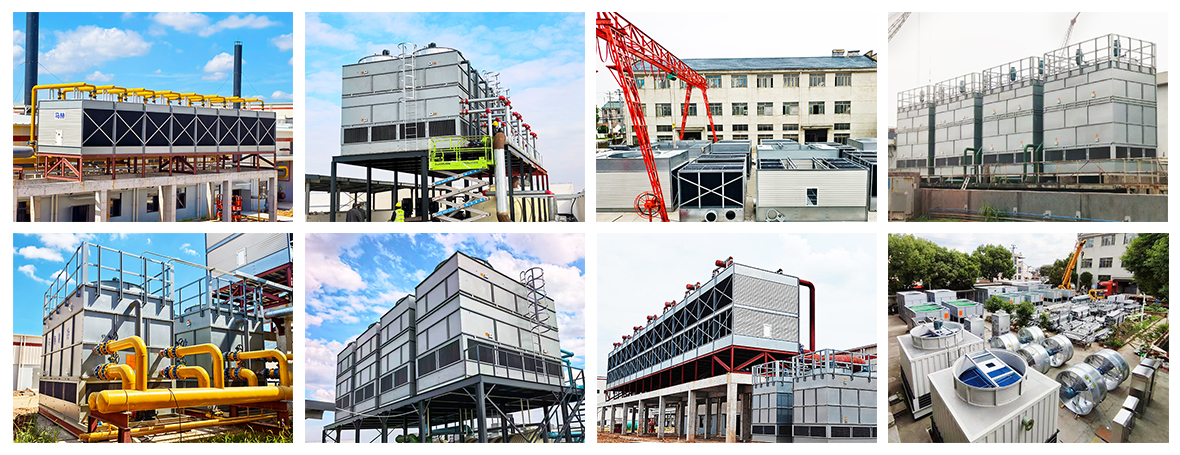
MACH manufactures both crossflow and counterflow cooling tower configurations, including industrial and closed-circuit products.
A closed circuit cooling tower requires attention to both the external evaporative system and the internal process-fluid circuit.
Inspect:
Heat-exchange coils
Spray system
Spray nozzles
Fans
Pumps
Water basin
Drift eliminators
Coil condition
Water chemistry
One advantage of a closed-loop system is that the process fluid can remain separated from the evaporative water circuit.
That can be particularly useful in applications where process-fluid cleanliness and equipment protection are important.
A good maintenance schedule should be simple enough for operators to follow consistently.
Check:
Water level
Fan operation
Noise
Vibration
Visible leaks
Abnormal operating conditions
Inspect:
Fan and motor
Belts
Bearings
Pumps
Water distribution
Basin condition
Review:
Electrical systems
Structural condition
Water chemistry
Fill condition
Drift eliminators
Performance data
Consider a comprehensive inspection covering:
Mechanical components
Electrical components
Structural condition
Fill
Water-distribution system
Fan system
Gearbox
Coatings
Corrosion
Overall thermal performance
The actual schedule should always be adjusted according to the manufacturer's instructions and site operating conditions.
Not every problem requires an emergency shutdown, but certain warning signs deserve immediate investigation.
Watch for:
1. Sudden temperature increase
The tower may no longer be removing the required heat.
2. Abnormal vibration
This could indicate fan, bearing, shaft, or gearbox problems.
3. Unusual noise
Grinding or knocking sounds can indicate mechanical damage.
4. Visible leakage
Leaks may indicate damaged piping, basin problems, seals, or structural deterioration.
5. Heavy scaling
Scale can seriously reduce heat-transfer efficiency.
6. Reduced water flow
Blocked nozzles, pumps, valves, or piping may be responsible.
7. Excessive water drift
This may indicate problems with drift eliminators or airflow.
8. Increasing energy consumption
A gradual increase in fan or pump energy can be an early sign of declining system performance.
Maintenance does not have to mean spending more money.
In fact, good maintenance often reduces total operating costs.
Start with data.
Record:
Cooling-water temperatures
Flow rates
Fan current
Pump current
Vibration
Water chemistry
Cleaning dates
Repair history
Component replacement dates
Over time, this creates a performance history for the tower.
You can then identify trends before they become failures.
For example, if fan vibration increases slightly every month, you can investigate the cause before the fan develops a serious mechanical problem.
That is the difference between preventive maintenance and emergency repair.
Sometimes the maintenance team knows something is wrong but cannot determine exactly what needs to be repaired.
This is where manufacturer support becomes valuable.
An experienced cooling tower manufacturer can help with:
Technical diagnosis
Spare-parts selection
Cooling tower inspection
Performance analysis
Fill replacement
Fan replacement
Nozzle replacement
Mechanical repairs
System upgrades
Maintenance training
Customized cooling solutions
MACH Industry (Zhejiang) Co., Ltd. is a specialized cooling tower manufacturer offering industrial, open, closed, counterflow, and crossflow cooling tower solutions. Its official product range also includes cooling tower spare parts and related technical support.
For maintenance, the manufacturer's original design information can be particularly useful because technicians can work from the correct component specifications instead of guessing.
MACH focuses on cooling tower equipment for applications including central air conditioning, power, petroleum, metallurgy, sugar, printing, dyeing, and other industrial sectors.
Its cooling tower portfolio includes:
Industrial cooling towers
Counterflow industrial cooling towers
Crossflow industrial cooling towers
Closed cooling towers
Counterflow closed cooling towers
Crossflow closed cooling towers
Mixed-flow closed cooling towers
Open cooling towers
This range is useful because maintenance requirements can vary significantly between tower types.
MACH also provides technical information related to inspection, cleaning, maintenance, and repair. Its published maintenance guidance recommends monitoring water chemistry, inspecting fans and gearboxes, cleaning fill, and maintaining unobstructed airflow.
For maintenance-related equipment, spare parts, or customized cooling tower requirements, you can learn more through the MACH Industry official website.
Here is a practical checklist you can use as a starting point:
| Component | What to Check | Typical Action |
|---|---|---|
| Basin | Dirt, sludge, leakage | Clean and inspect |
| Fill | Scale, fouling, damage | Clean or replace |
| Nozzles | Blockage, uneven spray | Clean or replace |
| Fan | Damage, imbalance | Inspect and repair |
| Motor | Heat, vibration, current | Test and service |
| Gearbox | Oil, leakage, noise | Lubricate or repair |
| Bearings | Wear and vibration | Lubricate or replace |
| Belts | Tension and wear | Adjust or replace |
| Drift Eliminators | Damage and blockage | Clean or replace |
| Structure | Corrosion and cracks | Repair or reinforce |
| Water | pH, hardness, biological control | Treat according to program |
| Electrical | Connections and protection | Test and repair |
Use this checklist as a framework rather than a substitute for the manufacturer's maintenance manual or site-specific procedures.
There is no single maintenance interval that works for every cooling tower.
A tower operating 24/7 in a chemical plant may require much more attention than a lightly loaded commercial HVAC tower.
As a practical framework:
Daily: visual and operational checks
Weekly: mechanical and water-system inspection
Monthly: detailed equipment and water-quality review
Quarterly: deeper mechanical and structural inspection
Annually: comprehensive shutdown inspection and servicing
The environment matters too.
Dust, humidity, water chemistry, operating hours, ambient temperature, and biological conditions can all change maintenance requirements.
These terms are related but not identical.
Maintenance is proactive.
You inspect, clean, lubricate, adjust, monitor, and replace components before they fail.
Repair is corrective.
You fix a problem that has already developed.
The best strategy combines both.
If you only repair equipment after failure, your maintenance program becomes expensive and unpredictable.
If you maintain equipment consistently, many repairs become smaller, simpler, and less disruptive.
In other words:
Maintenance keeps the tower healthy. Repair restores it when something goes wrong.
A cooling tower is not a "fit it and forget it" machine.
It is a continuously operating heat-rejection system that depends on clean water, unrestricted airflow, effective heat transfer, reliable mechanical components, and proper control.
The good news?
Most serious cooling tower problems do not appear out of nowhere.
They usually leave clues:
A little more vibration.
A little more noise.
A little higher water temperature.
A little more energy consumption.
A little more scale.
If you pay attention to those clues, you can often solve the problem while it is still small.
For facility managers and plant operators, the smartest approach is therefore simple:
Inspect regularly. Clean systematically. Monitor water quality. Maintain mechanical components. Repair problems early. Keep detailed records.
And when a repair requires specialized knowledge or replacement components, working directly with an experienced cooling tower manufacturer can reduce uncertainty and downtime.
With the right maintenance strategy, your cooling tower can deliver reliable heat rejection, stable performance, and a much longer service life.
Basic operating conditions should be checked regularly, often daily. Mechanical, electrical, water-quality, and structural inspections should follow a more detailed weekly, monthly, quarterly, and annual schedule based on the equipment and operating environment.
There is no single component. Water treatment, heat-transfer fill, water distribution, fans, motors, bearings, and structural components all matter. However, controlling water quality and maintaining effective heat transfer are fundamental to reliable operation.
A poorly maintained tower can develop scale, corrosion, biological fouling, blocked nozzles, damaged fill, fan problems, higher energy consumption, reduced cooling capacity, and eventually unexpected downtime.
Yes, if the fill is still structurally sound and the deposits can be safely removed. Severely damaged, brittle, deformed, or permanently blocked fill may need replacement.
Look for abnormal vibration, unusual noise, water leakage, reduced cooling performance, high motor current, damaged fan blades, excessive scaling, uneven water distribution, or structural deterioration.
Preventive maintenance means inspecting, cleaning, lubricating, testing, and servicing equipment before failures occur. The goal is to reduce unexpected downtime and maintain stable cooling performance.
Yes. Clean fill, proper water distribution, efficient fans, healthy motors, and good airflow help the tower transfer heat more effectively. Fouling and mechanical problems can force equipment to work harder and consume more energy.
MACH Industry (Zhejiang) Co., Ltd. is a cooling tower manufacturer offering industrial, open, closed, crossflow, and counterflow cooling tower solutions, along with technical support and spare-parts capabilities. Its published technical guidance also covers inspection and maintenance practices.
For customized cooling tower solutions and technical assistance, visit the MACH Cooling official website.