We Provide Cooling Tower Solution

Views: 0 Author: Cindy Publish Time: 2026-10-12 Origin: Site


You walk into a modern factory and something feels different. The machines are running smoothly, production is steady, yet that massive, noisy cooling tower that once dominated the yard is gone. In its place stands a compact, quiet unit that handles the heat with far less fuss. This is the mini cooling tower shift, and factories everywhere are making the move.
Traditional cooling systems no longer match how manufacturers operate today. Space is expensive, energy costs keep rising, and downtime is the last thing any plant manager wants. Mini cooling towers solve these problems in a practical, cost-effective way. Here’s why more factories are switching—and how the right manufacturer can make the transition seamless.
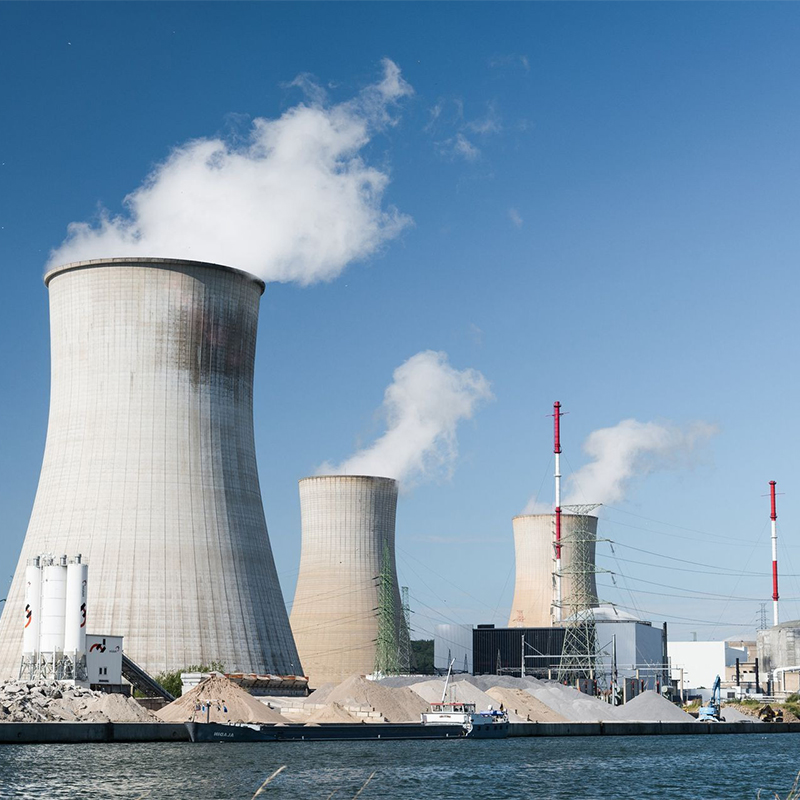
Every production process creates heat. Plastic injection molding, food processing, compressed air systems, chemical reactions, and precision machining all generate thermal loads that must be removed. For decades the answer was a large conventional cooling tower. Those units worked, but they came with serious drawbacks that modern factories can no longer ignore.
Big twers consume large amounts of land, electricity, and water. Installation is slow and disruptive. Maintenance is frequent and often messy. In a competitive manufacturing environment, these inefficiencies add up quickly. Factories need cooling that is smaller, smarter, and cheaper to run. That is exactly what mini cooling towers deliver.
A mini cooling tower uses the same evaporative principle as its larger cousins: hot process water is distributed over fill media while air is drawn through, allowing a small portion of the water to evaporate and cool the rest. The difference lies in the engineering. Everything is scaled down, optimized, and designed for real-world factory constraints.

These units typically cover capacities from a few tons up to several hundred tons—ideal for individual machines, small process lines, or modular plant expansions. They are built for tight spaces, lower operating costs, and simpler ownership. Leading manufacturers such as **Mach Industry (Zhejiang) Co., Ltd.** have refined these systems into reliable, high-performance solutions trusted across multiple industries.
In manufacturing, every square meter counts. Equipment that occupies unnecessary space is essentially lost production capacity.
A well-designed mini cooling tower often requires less than half the footprint of a traditional tower of similar capacity. Many models fit against a wall, on a rooftop, or even in a dedicated plant room. The space that is freed up can be used for additional production lines, storage, or simply a safer, cleaner working environment.
When production needs grow, mini towers allow modular expansion. You can add capacity unit by unit instead of replacing an entire oversized system. This flexibility is one of the strongest reasons factories are making the switch.
Energy is one of the largest controllable expenses in any factory. Mini cooling towers attack this cost directly.
Modern mini towers use high-efficiency motors, optimized fill media, and frequently variable-frequency drives. Fans run only as hard as the current heat load requires. The result is a noticeable drop in daily electricity consumption.
Many plants report 20–40% reductions in cooling-related energy costs after switching. Combined with lower water usage, the total cost of ownership falls significantly. Those savings can be reinvested in equipment, staff, or improved competitiveness.
Long installation projects disrupt production schedules and delay payback.
Mini cooling towers are largely pre-assembled at the factory. On-site work is usually limited to piping and electrical connections. Many installations are completed in days rather than weeks, so the benefits—and the return on investment—begin much sooner.
Business rarely stands still. Orders increase, new products are introduced, and cooling demand rises. Mini systems make expansion straightforward: add another unit, connect it, and continue operating. Traditional towers often force plants into oversized, expensive installations “just in case.” Mini towers let you grow at your own pace.
Environmental regulations continue to tighten. Factories that stay ahead avoid compliance risks and potential penalties.
Mini cooling towers generally consume less water and produce less drift thanks to advanced eliminators and efficient designs. Lower water consumption and reduced chemical treatment needs make it easier to meet local environmental standards while also cutting operating costs.
Traditional towers can feel like they require constant attention—scaling, clogged nozzles, difficult access, and frequent component replacements.
Mini towers are engineered for accessibility. Components are easier to reach, materials resist corrosion better, and cleaning intervals are longer. The outcome is higher uptime and lower maintenance labor costs. Your maintenance team will notice the difference immediately.
These compact units are not limited to a single sector.
Injection molding shops rely on them for consistent mold temperature control. Food processors appreciate clean, reliable cooling. Pharmaceutical and laboratory facilities value precise temperature stability and the small footprint. Even data centers and commercial buildings with limited outdoor space are adopting them. Wherever heat must be rejected efficiently, mini cooling towers are proving their value.
Large conventional towers still have a role in massive continuous-process plants. For the majority of factories, however, the comparison strongly favors mini systems on space, energy use, installation speed, maintenance, and flexibility. The only remaining question is how quickly a plant wants to capture those advantages.
Not every mini cooling tower delivers the same performance. Look for:
- Durable FRP or corrosion-resistant casing
- High-efficiency film or splash fill matched to water quality
- Low-noise, high-efficiency fans
- Easy-access doors and maintenance-friendly layout
- Reliable motors and optional smart controls
- Transparent performance data from the manufacturer
These are the standards that experienced manufacturers consistently meet.
When investing in cooling equipment, the manufacturer is as important as the product itself.
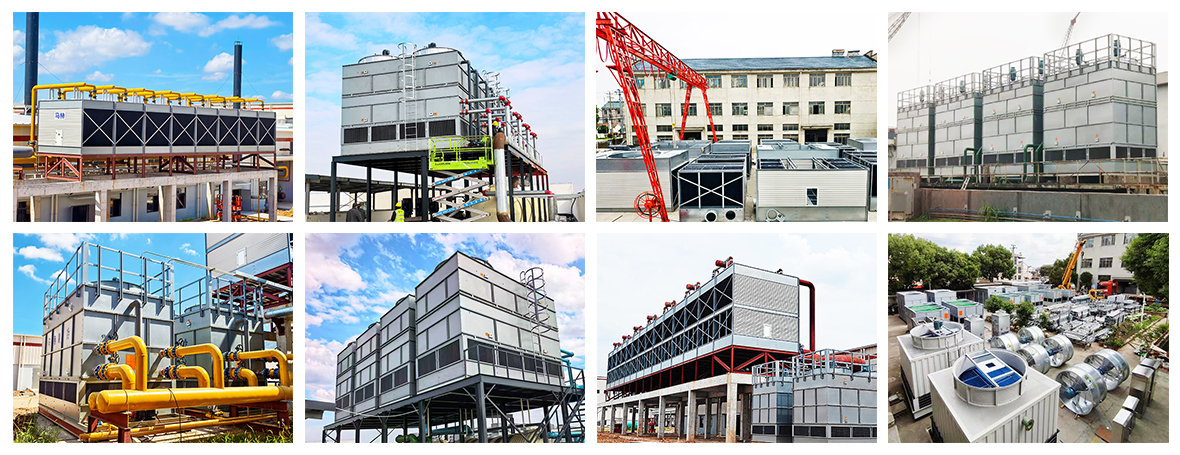
**Mach Industry (Zhejiang) Co., Ltd.**, established in 2009 and rooted in a region with more than forty years of cooling-tower manufacturing heritage, specializes in open and closed cooling towers, air coolers, and related equipment. Their products serve refrigeration, air conditioning, chemical processing, power generation, textiles, food processing, and many other industries.
The company holds multiple national patents and ISO certifications. Its manufacturing base in Shangyu, Zhejiang, combines modern production equipment with deep process knowledge. Whether a standard mini cooling tower or a customized solution is required, Mach Industry delivers reliable performance backed by real engineering experience.
Full product details and technical support are available at:
**https://www.machcooling.com**
Plants that have switched report a consistent pattern: lower energy bills within the first months, more usable floor space, fewer maintenance calls, and the confidence to expand production without cooling becoming a bottleneck. These are everyday outcomes, not theoretical promises.
Begin by assessing current heat loads and available space. Work with a manufacturer that understands both technical performance and practical factory realities. Request clear performance data, warranty terms, and responsive support. Schedule installation during a planned shutdown when possible, although many mini systems can be installed with minimal disruption. Then monitor the improvements in energy use, uptime, and operating cost.
As factories become leaner, smarter, and more modular, oversized cooling infrastructure looks increasingly outdated. Mini cooling towers align with the direction manufacturing is already heading—flexible, efficient, and cost-conscious. The trend is not slowing; it is accelerating.
If your factory is still managing an oversized, energy-hungry cooling tower, it may be time to ask a simple question: What could we achieve with the recovered space, the energy savings, and the reduced maintenance burden?
Mini cooling towers from experienced manufacturers such as **Mach Industry (Zhejiang) Co., Ltd.** provide a clear path forward.
Visit **https://www.machcooling.com** to review their range of cooling solutions, download technical information, or speak with their team about your specific application.
The factories making the switch are not only cooling more efficiently—they are building stronger, more competitive operations. The only remaining question is whether you will join them.