We Provide Cooling Tower Solution

Views: 0 Author: Cindy Publish Time: 2026-10-14 Origin: Site


Choosing the right cooling tower system is an important decision for any industrial facility, commercial building, or manufacturing plant. The right system helps remove unwanted heat, maintain stable operating temperatures, protect equipment, and improve overall energy efficiency. However, cooling towers come in different designs, and each type has its own advantages, limitations, and ideal applications.
Some cooling towers allow water to contact air directly, while others keep process fluids inside a separate heat exchanger. Some use fans to move air, while others rely on natural airflow. You can also choose between crossflow and counterflow designs, as well as wet, dry, and hybrid cooling technologies.
So, which type of cooling tower is right for your application?
In this guide, we will explore the main types of cooling tower systems, explain how they work, compare their structures and operating principles, and share practical tips to help you make an informed purchasing decision.
A cooling tower is a heat-rejection device that removes excess heat from circulating water and releases it into the atmosphere. It is widely used in industrial manufacturing, HVAC systems, power generation, chemical processing, and many other applications.
Think of a cooling tower as a giant heat exchanger that uses air and, in many designs, water evaporation to carry unwanted heat away.
When industrial equipment or a water-cooled chiller generates heat, circulating water absorbs that heat and transports it to the cooling tower. The tower then cools the water so it can return to the equipment and repeat the cycle.
Cooling towers are available in different sizes and configurations. A small packaged tower may serve a commercial building, while a large industrial installation may contain multiple tower cells working together to reject substantial amounts of heat.
The most suitable design depends on several factors, including cooling capacity, water quality, ambient temperature, available space, energy consumption, and maintenance requirements.
Understanding these factors is the first step toward selecting a reliable cooling tower system.
Most cooling tower systems transfer heat from warm water to the surrounding air. However, the exact process depends on the tower's structure and cooling method.
In a conventional wet cooling tower, hot water enters the tower and spreads across fill media. Air passes through the fill, allowing heat and mass transfer to occur. A small portion of the water evaporates, removing heat from the remaining water.
The cooled water collects in a basin and returns to the process equipment. The cycle continues as long as the system operates.
A typical cooling tower system follows several steps:
Warm water returns from a chiller, condenser, or industrial process.
A distribution system spreads the water across the tower's heat-transfer section.
Air moves through the tower, either naturally or with the help of fans.
Heat transfers from the water to the air, and some water may evaporate.
The cooled water collects in the basin or returns through a closed-circuit heat exchanger.
Pumps circulate the water back to the equipment that requires cooling.
The process sounds simple, but the performance depends on the balance between water flow, airflow, heat-transfer surface area, and ambient conditions.
For evaporative cooling towers, the outdoor wet-bulb temperature is particularly important. Under normal conditions, a wet cooling tower cannot cool water below the entering air's wet-bulb temperature through evaporation alone.
This is why cooling tower capacity should always be evaluated against the actual design conditions rather than a nominal capacity rating alone.
Water and air work together to remove heat. Fill media increases the contact area between them, helping heat transfer occur more effectively.
Good water distribution is equally important. If some areas of the fill remain dry while others receive too much water, the tower may not perform as expected.
Airflow also affects efficiency. Insufficient airflow can limit cooling, while excessive airflow may increase fan power consumption without providing a worthwhile improvement in performance.
A well-designed cooling tower balances heat-transfer efficiency, water consumption, fan energy, pressure drop, and maintenance needs.
Cooling tower systems can be divided into three major categories according to how the process fluid interacts with the cooling environment: open-circuit, closed-circuit, and hybrid cooling towers.
Each type serves different operational requirements.
An open-circuit cooling tower allows circulating water to come into direct contact with air.
Warm water enters the tower and flows over fill media. As air passes through the fill, a portion of the water evaporates, removing heat from the remaining water. The cooled water then collects in the basin and returns to the system.
Open-circuit cooling towers are widely used because they offer effective evaporative cooling and a relatively straightforward structure.
Common applications include:
Water-cooled HVAC systems
Industrial manufacturing plants
Plastic processing and molding
Compressor cooling
General industrial process cooling
One major advantage is that direct contact between air and water supports efficient heat transfer.
However, the circulating water is exposed to airborne dust, debris, and biological contaminants. Operators must manage water treatment, filtration, scaling, corrosion, and biological growth.
If water quality is poor or maintenance is neglected, deposits can accumulate on fill surfaces and reduce cooling performance.
A closed-circuit cooling tower keeps the process fluid inside a coil or heat exchanger.
Instead of allowing the process fluid to contact air directly, the system transfers heat through the coil wall. Spray water flows over the outside of the coil, while air passes through the tower and helps remove heat.
This arrangement helps isolate the process fluid from the outside environment.
Closed-circuit cooling towers may be suitable for applications where fluid cleanliness is important, where a specialized process fluid is used, or where contamination could create operational problems.
Their advantages can include:
Reduced exposure of the process fluid to airborne contaminants
Better isolation of the primary fluid circuit
Potentially reduced process-side fouling
Suitability for selected industrial and HVAC applications
However, the coil adds heat-transfer resistance and may increase the initial equipment cost. The spray-water circuit also requires appropriate treatment and maintenance.
A closed-circuit tower is not automatically more efficient than an open-circuit tower. The best choice depends on the heat load, required temperatures, coil design, fluid properties, and operating conditions.
Hybrid cooling towers combine wet and dry heat-rejection methods.
Depending on the design, a hybrid system can use a dry heat exchanger under suitable conditions and employ evaporative cooling when additional heat rejection is required.
This flexibility can help facilities manage water consumption, visible plume, or seasonal changes in cooling demand.
Hybrid systems may be worth considering in locations where water resources are limited or environmental requirements place restrictions on plume formation.
However, they generally involve more complex equipment and controls than a basic wet cooling tower. Their economic benefits depend on the local climate, operating schedule, water costs, energy prices, and system design.
Before investing in a hybrid system, compare expected annual operating costs rather than relying only on peak-performance figures.
Another important classification is based on the direction of airflow relative to the falling water.
The two main configurations are crossflow and counterflow cooling towers.
In a crossflow cooling tower, air travels horizontally across the water as it moves downward through the fill.
The water distribution system is usually positioned above the fill, allowing water to flow down while air enters through the tower's sides.
Crossflow cooling towers can provide convenient access to certain water-distribution components, which may simplify inspection and maintenance.
They are used in many commercial HVAC systems and industrial cooling applications.
Potential advantages include accessible water-distribution areas and a configuration that can be suitable for a range of installation layouts.
However, actual performance depends on the tower's thermal design, fill type, water distribution, airflow, and environmental conditions.
Buyers should also consider the tower footprint, access requirements, inlet-air clearance, and the potential for debris to enter the water-distribution system.
In a counterflow cooling tower, air moves upward while water flows downward.
The opposing flow directions support heat and mass transfer as the water passes through the fill and the air travels in the opposite direction.
Counterflow designs can provide a compact footprint for some applications, although overall dimensions vary according to cooling capacity and equipment configuration.
Water distribution is particularly important. Uneven water flow can create poorly wetted areas, reducing the effective heat-transfer surface.
When comparing crossflow and counterflow cooling towers, consider more than airflow direction. Review thermal performance, fan power, pump head, noise, maintenance access, and installation requirements.
Neither design is universally better. The right option is the one that meets your operating requirements at a reasonable lifecycle cost.
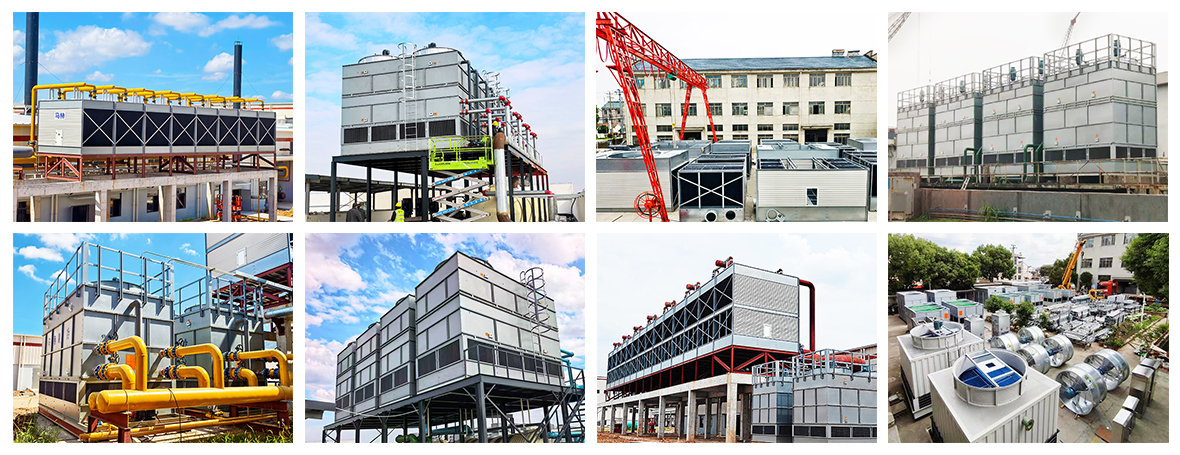
Draft refers to how air moves through a cooling tower.
Some towers use mechanical equipment to control airflow, while others rely on natural buoyancy and tower geometry.
Mechanical-draft cooling towers use fans to move air through the tower.
Depending on the design, fans may push air into the tower or pull it through the heat-transfer section. Fan motors, drives, and associated components provide controlled airflow that can be adjusted to match changing operating conditions.
These towers are widely used in manufacturing facilities, commercial buildings, and industrial plants because they can be designed for a broad range of cooling capacities.
Their major advantages include controllable airflow, flexible capacity, and suitability for many installation environments.
However, fans consume electricity and require routine inspection. Motors, drive systems, bearings, and other moving components must be maintained according to the manufacturer's recommendations.
Variable-frequency drives can help adjust fan speed to match cooling demand. When properly designed and controlled, this approach may reduce energy consumption during periods of lower load.
Natural-draft cooling towers rely on differences in air density and tower geometry to create airflow.
Warm, moist air rises, and cooler outside air enters lower parts of the tower to replace it. This process generates natural circulation without relying on large fans as the primary air-moving mechanism.
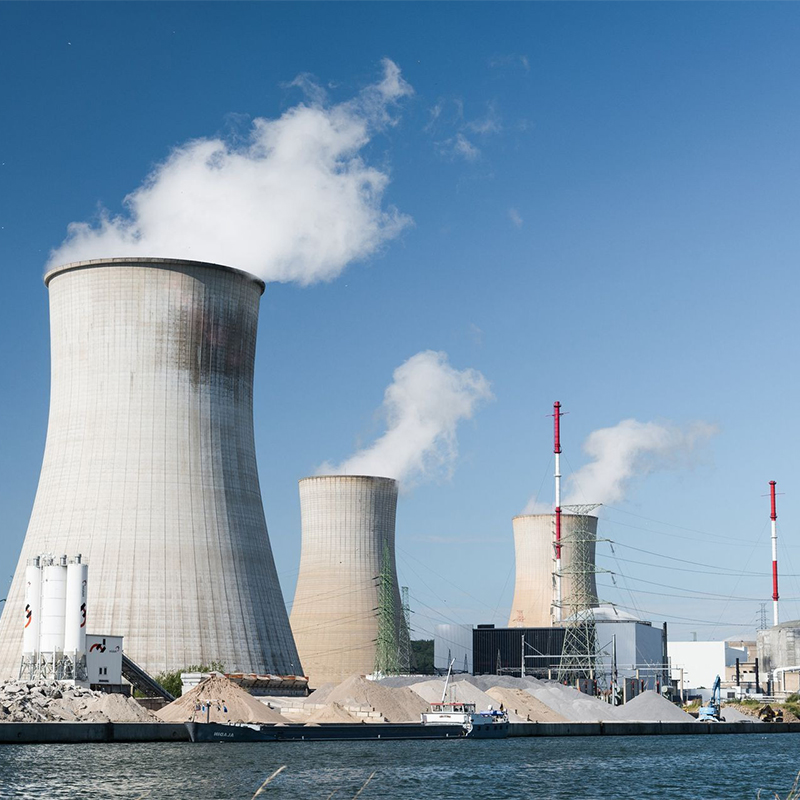
Large hyperbolic cooling towers at some power stations are familiar examples.
Natural-draft systems are generally associated with very large heat loads and substantial civil structures. They require significant construction space and careful engineering.
Although they can avoid the need for large mechanical-draft fans, they are not necessarily the most economical choice for smaller installations.
For most commercial buildings and ordinary manufacturing plants, mechanical-draft cooling towers are often more practical. Natural-draft designs are usually considered when project scale, site conditions, and engineering requirements justify them.
Cooling towers can also be classified according to how they release heat into the environment.
Wet cooling systems use evaporation, dry cooling systems transfer heat through a heat exchanger without relying on evaporative cooling water during normal operation, and hybrid systems combine both approaches.
Wet cooling towers are widely used because evaporative cooling can remove substantial amounts of heat.
They are suitable for many industrial and HVAC applications, including condenser-water systems and manufacturing processes.
However, water consumption is an important consideration. Makeup water replaces losses caused by evaporation, blowdown, drift, and other operating conditions.
Water treatment is essential to manage scaling, corrosion, and biological growth. Operators must also monitor water chemistry and maintain the tower according to an appropriate water-management program.
Wet cooling performance is strongly influenced by wet-bulb temperature. In hot, humid weather, the cooling capacity available at a given tower size may be lower than under cooler or drier conditions.
Dry cooling systems transfer heat from a process fluid to the air through a heat exchanger, often using finned tubes and fans.
The process fluid remains inside the tubes, while outside air carries away the heat. Unlike conventional wet cooling towers, dry systems do not rely on evaporating circulating cooling water during normal operation.
Their main advantage is reduced cooling-water demand, making them attractive in water-constrained areas.
However, performance depends heavily on outdoor dry-bulb temperature. When ambient air is hot, the system may struggle to achieve low leaving-fluid temperatures without additional heat-transfer surface area or fan power.
Dry cooling systems should therefore be evaluated against the required process temperatures and the site's seasonal weather conditions.
Hybrid wet-dry systems combine features of wet and dry cooling technologies.
Depending on the design, the system may operate in dry mode under suitable conditions and use evaporative assistance when additional cooling is needed.
This arrangement can help balance water consumption, cooling performance, and plume management.
However, the actual benefits vary with climate, operating hours, load profile, and control strategy.
A proper comparison should consider annual water use, electricity consumption, maintenance, and total equipment cost. A system that performs well during peak summer conditions may have a very different cost profile during cooler months.
A cooling tower is more than a shell and a fan. It is a coordinated system of heat-transfer surfaces, water-distribution equipment, airflow components, pumps, piping, and controls.
Each component contributes to overall performance.
Cooling tower fill media increases the contact area between water and air, helping heat transfer take place efficiently.
Two common fill categories are film fill and splash fill.
Film fill spreads water into thin layers across closely spaced surfaces. It can provide high heat-transfer performance when water quality and operating conditions are suitable.
Splash fill breaks water into droplets as it falls over specially designed elements. Depending on the design, it may be considered for applications with greater fouling potential.
The correct fill type depends on water quality, suspended solids, temperature, airflow resistance, and the tower's original design.
Water distribution is equally important. Blocked nozzles or uneven flow can reduce performance even when the fill itself remains in good condition.
When replacing cooling tower fill, check dimensions, material, support arrangement, temperature compatibility, and airflow requirements. A replacement should match the tower's design rather than simply fit into the available space.
Fans provide controlled airflow in mechanical-draft cooling towers. Their design and operating speed influence cooling performance and electricity consumption.
Motors, gearboxes, belts, bearings, and drive systems—depending on the configuration—require regular inspection and appropriate maintenance.
Drift eliminators reduce the amount of liquid water carried out of the tower with the exhaust air.
It is important to distinguish drift from evaporation. Drift consists of liquid droplets carried away by the airflow, while evaporation occurs when liquid water changes into vapor as part of the cooling process.
Properly installed and maintained drift eliminators help reduce liquid-water loss. Damaged or incorrectly fitted components may increase drift and affect system performance.
Pumps circulate water between the cooling tower and the equipment being cooled.
Piping layout, valves, strainers, and balancing devices influence water flow and pumping energy. Poorly designed piping or incorrect pump operation can prevent the tower from receiving the required water flow.
Modern cooling tower systems may also use sensors and automated controls to monitor water temperatures, basin levels, fan operation, and alarms.
Variable-speed drives and coordinated control sequences can help match equipment operation to changing cooling loads.
Proper commissioning is essential. Even a well-designed cooling tower can underperform if fan rotation, water flow, sensor calibration, or control settings are incorrect.

Different industries have different heat-rejection requirements, so cooling tower selection should reflect the actual application.
Water-cooled chillers use cooling towers to reject heat from the refrigeration cycle. Open-circuit mechanical-draft towers are common in these systems, although closed-circuit or other configurations may be appropriate for particular designs.
Important considerations include seasonal load changes, water treatment, energy consumption, noise, and available rooftop or ground-level space.
Manufacturing plants may need cooling for molds, compressors, production machinery, hydraulic systems, and process equipment.
The correct tower depends on the heat load, required water temperatures, process-fluid quality, and operating schedule.
Some applications prioritize low operating costs, while others place greater importance on process-fluid cleanliness or uninterrupted operation.
Power stations and other large facilities can require substantial heat-rejection capacity. Large mechanical-draft or natural-draft systems may be used depending on the project's scale and engineering requirements.
These installations require detailed thermal calculations, careful water management, and appropriate maintenance planning.
Chemical plants and other process facilities may have special requirements related to fluid properties, corrosion, contamination, and temperature control.
Closed-circuit cooling systems may be suitable when the process fluid needs to remain isolated from the surrounding environment. The final design should be based on the process requirements and a complete engineering evaluation.
Choosing the right cooling tower begins with a clear understanding of your operating conditions.
Before requesting a quotation, collect the essential design information and provide it to potential suppliers. This makes technical comparisons more meaningful and reduces the risk of selecting equipment that cannot meet the required duty.
Start with the heat load and the required entering and leaving water temperatures.
You should also establish the water flow rate and the relevant local design ambient conditions. For evaporative cooling towers, wet-bulb temperature is especially important.
Ask suppliers to confirm the tower's thermal performance at your specified conditions instead of comparing nominal tonnage figures alone.
If future expansion is planned, include a realistic allowance based on engineering requirements. Excessive oversizing can increase capital costs and may lead to inefficient part-load operation.
Water quality can strongly influence tower performance and service life.
Suspended solids, hardness, dissolved minerals, biological growth, and process contamination can contribute to scaling, fouling, or corrosion.
Film fill may provide strong heat-transfer performance, but narrow passages can be more vulnerable to clogging under unsuitable water conditions. Splash fill may be worth evaluating for some applications with higher fouling potential.
Discuss filtration, water treatment, cleaning access, inspection intervals, and replacement-part availability before choosing a design.
The purchase price is only one part of the total cost of ownership.
Fans and pumps consume electricity, while makeup water, treatment chemicals, maintenance, and replacement components create ongoing expenses.
A tower with a higher initial price may prove more economical if it reduces energy use or maintenance requirements over its operating life.
When comparing options, review:
Fan power and pump requirements
Expected water consumption
Water-treatment costs
Maintenance accessibility
Replacement-component costs
Control options and part-load performance
For facilities with variable cooling demand, variable-speed operation or multiple tower cells may offer operational advantages, depending on the design.
The available installation area can narrow your choices.
Check the tower's footprint, height, structural requirements, maintenance clearances, lifting access, and connections to existing piping.
Noise restrictions, prevailing wind, nearby air intakes, and local regulations may also affect the installation.
In cold climates, freezing protection and seasonal operation need attention. In water-constrained locations, dry or hybrid cooling systems may deserve closer consideration.
The best equipment is not simply the one that fits the space. It must also operate reliably under the site's actual conditions.

Even experienced buyers can overlook important details when comparing cooling tower systems.
One common mistake is selecting a tower based only on nominal capacity without confirming design temperatures and local ambient conditions. A unit rated under different conditions may not deliver the required performance at your facility.
Another mistake is ignoring water quality. A fill design that performs well with clean water may experience frequent clogging in an application with high suspended solids.
Buyers sometimes focus on the lowest purchase price without considering electricity, water consumption, maintenance, or component replacement. These costs can accumulate throughout the equipment's service life.
It is also unwise to assume that crossflow is always easier to maintain or that counterflow is always more compact. Actual performance depends on the specific equipment design.
To avoid these problems, provide accurate operating data, request documented thermal performance, and compare the full lifecycle cost of each suitable option.
Regular maintenance helps maintain cooling capacity, control operating costs, and extend equipment life.
Start by inspecting the fill for scale, biological deposits, deformation, and clogging. Check the water-distribution system for blocked nozzles, damaged pipes, and uneven flow.
Fans, motors, drive components, drift eliminators, basins, strainers, and piping should also be inspected according to the manufacturer's maintenance schedule.
A suitable water-treatment program is essential for managing scale, corrosion, and biological growth. The treatment approach should reflect water chemistry, system materials, operating conditions, and applicable requirements.
Performance monitoring can reveal problems before they become serious. Track entering and leaving water temperatures, water flow, fan power, and ambient conditions. If cooling performance gradually declines, investigate the cause rather than immediately assuming the tower is undersized.
Always follow the manufacturer's instructions and the site's safety procedures when inspecting or cleaning equipment.
Selecting a cooling tower supplier involves more than comparing product prices. You need a solution that matches your application, meets the required operating conditions, and can be maintained throughout its service life.
Mach Industry (Zhejiang) Co.,Ltd provides cooling tower solutions for industrial and commercial cooling needs.

When evaluating a cooling tower solution from Mach, prepare information about your heat load, required water temperatures, flow rate, local design conditions, water quality, installation space, and operating schedule. These details help the supplier assess the appropriate configuration and discuss relevant technical requirements.
For replacement projects, it is also helpful to provide the existing tower model, equipment dimensions, piping arrangement, and photographs of the installation where available.
A careful technical review can help you compare suitable options, identify compatibility requirements, and avoid unnecessary changes during installation.
To learn more about cooling tower products and solutions, visit the official website:
Mach Industry (Zhejiang) Co.,Ltd
Website: https://www.machcooling.com
The main system categories are open-circuit, closed-circuit, and hybrid cooling towers. They can also be classified by airflow direction, draft method, and cooling technology. Each category serves different operational requirements.
Crossflow towers move air horizontally across descending water, while counterflow towers move air upward against falling water. The difference affects tower layout, water distribution, airflow, maintenance access, and overall performance.
Not in every application. Closed-circuit towers isolate the process fluid from direct environmental exposure, which can be valuable when fluid cleanliness matters. However, coil resistance, spray-water operation, design conditions, and maintenance also affect performance and energy use.
Dry cooling systems generally use much less evaporative cooling water during normal operation than conventional wet cooling towers. Hybrid systems may reduce water consumption under suitable conditions, but the actual savings depend on climate, operating load, and control strategy.
Start by confirming your heat load, required water temperatures, flow rate, local weather conditions, water quality, installation space, and budget. Then compare suitable designs using verified performance data and expected lifecycle costs.
There is no single cleaning interval that suits every tower. The appropriate schedule depends on water quality, operating conditions, contamination levels, and the manufacturer's recommendations. Regular inspection helps determine when cleaning or other maintenance is necessary.
In many cases, yes. Fill replacement may restore performance when the existing fill is clogged, damaged, or deteriorated. However, the replacement must be compatible with the tower's dimensions, support structure, water distribution, airflow, and operating conditions.
Understanding the different types of cooling tower systems helps you select equipment that matches your process requirements, climate, water conditions, and budget.
Open-circuit cooling towers provide direct evaporative cooling, closed-circuit systems isolate the process fluid, and hybrid designs combine wet and dry heat-rejection methods. Crossflow and counterflow towers differ in airflow direction, while mechanical-draft and natural-draft systems use different methods to move air. Wet, dry, and hybrid technologies also offer different balances of cooling performance, water consumption, and operating cost.
There is no single cooling tower type that is best for every application. The right choice comes from matching verified thermal performance with actual operating requirements, maintenance needs, installation constraints, and long-term costs.
If you are planning a new cooling system or replacing existing equipment, work with a supplier that can evaluate your technical requirements and recommend a suitable configuration.
Contact Mach Industry (Zhejiang) Co.,Ltd through https://www.machcooling.com to explore cooling tower solutions for your industrial or commercial application.