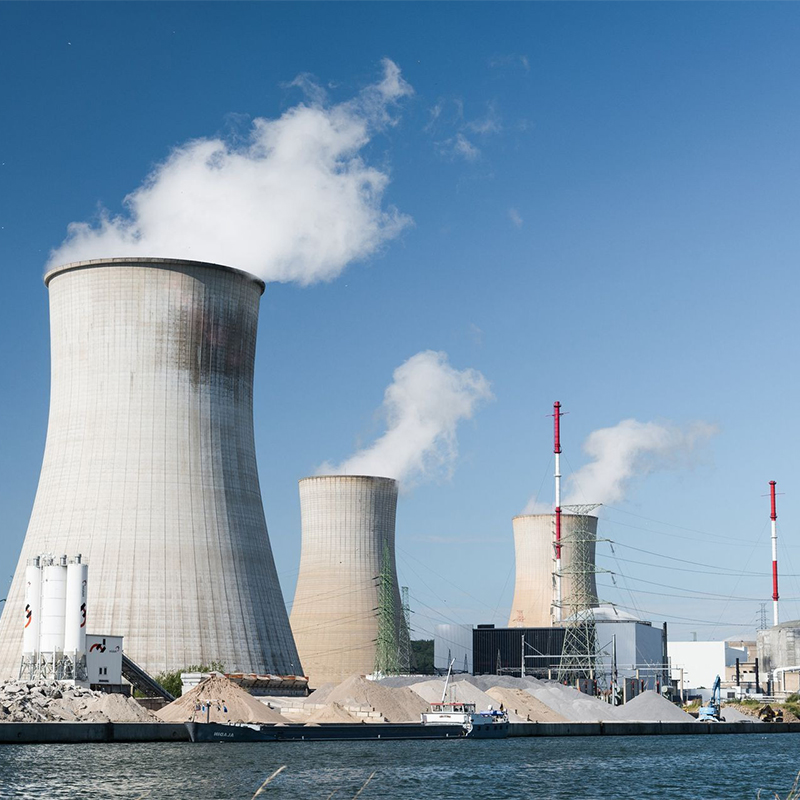
We Provide Cooling Tower Solution

Views: 0 Author: Cindy Publish Time: 2026-10-09 Origin: Site


When you search for industrial cooling tower manufacturers in India, you will quickly discover that there are many suppliers offering different tower designs, capacities, materials, and services. But how do you know which manufacturer is actually right for your project?
Choosing an industrial cooling tower is about much more than comparing prices. The right tower can reduce energy consumption, improve process stability, control water usage, and lower maintenance costs over many years. On the other hand, a poorly selected tower can become a constant source of performance problems.
India has a large and diverse industrial sector, including power generation, steel, chemicals, petrochemicals, manufacturing, HVAC, food processing, and other heat-intensive industries. As a result, demand for reliable industrial cooling systems continues to grow.
In this guide, we look at five industrial cooling tower manufacturers in India that buyers may consider when developing a supplier shortlist. We will also explain what to look for in a manufacturer and why international suppliers such as Mach Industry (Zhejiang) Co.,Ltd can be an option for buyers seeking customized cooling tower solutions.
An industrial cooling tower is essentially the heat-rejection engine of many industrial facilities.
During production, industrial equipment and processes generate large quantities of heat. Cooling water absorbs that heat and carries it away from the process. The cooling tower then removes the heat from the water and releases it into the atmosphere, allowing the water to return to the system and repeat the cycle.
Without effective heat rejection, water temperatures can rise beyond acceptable operating limits. Equipment may operate less efficiently, production processes can become unstable, and energy consumption may increase.
That is why industrial cooling tower selection should never be treated as a simple equipment purchase.
You need to consider thermal performance, water flow, ambient conditions, airflow, fill efficiency, fan power, materials, maintenance requirements, and expected operating life.
A reliable cooling tower manufacturer should do more than provide a standard product catalog.
The manufacturer should understand your actual operating conditions and be able to recommend a cooling tower configuration that matches your application.
Several factors deserve special attention.
Industrial cooling projects rarely fit perfectly into a standard specification.
Your project may require a particular heat load, water flow, cold-water temperature, footprint, noise level, or material configuration. The tower may also need to operate in a hot or humid climate, at high altitude, or under challenging water-quality conditions.
A capable manufacturer should be able to consider these variables during the design process.
The key question is simple:
Can the manufacturer design a tower around your process instead of forcing your process to fit the tower?
Cooling towers operate outdoors and are continuously exposed to water, air, chemicals, sunlight, vibration, and changing temperatures.
For that reason, component quality matters.
Buyers should examine the structural materials, corrosion protection, fan and motor system, fill media, drift eliminators, nozzles, piping, fasteners, and other components.
A cheap tower may look attractive on a quotation sheet. But if its components wear out quickly, the initial saving can disappear surprisingly fast.
Cooling towers are long-term industrial equipment.
Over time, components such as fill, nozzles, fans, motors, valves, drift eliminators, and other parts may require maintenance or replacement.
Before choosing a manufacturer, ask about technical support, spare parts availability, maintenance assistance, warranty conditions, and response times.
A good supplier should still be useful after the purchase order has been signed.

India has a well-developed industrial cooling market, with manufacturers and suppliers serving applications ranging from HVAC systems to large process plants.
The following companies are useful starting points when researching industrial cooling tower manufacturers in India. Buyers should always verify current product specifications, project references, certifications, service coverage, and technical capabilities directly with each company before making a final decision.
Kirloskar is one of the most recognized engineering names in India and has a long history of serving industrial markets.
Its broad engineering background and presence in fluid-handling and industrial equipment make it a company worth considering when researching cooling and water-management solutions.
For industrial buyers, working with an established engineering group can provide access to experience across different industrial environments.
However, brand recognition should not be the only selection criterion.
Before choosing a specific cooling tower solution, buyers should confirm the exact tower configuration, thermal performance, operating conditions, project scope, and current product availability.
For large industrial projects, it is particularly important to compare the manufacturer's proposed design against competing proposals using the same operating parameters.
Paharpur is a prominent name in the Indian cooling tower industry and has extensive experience with large-scale industrial cooling applications.
The company is particularly relevant to buyers researching cooling solutions for demanding industrial environments, including power generation and process industries.
When evaluating a supplier such as Paharpur, buyers should look beyond the manufacturer's general reputation.
Ask for details about similar projects.
Has the manufacturer supplied towers for a comparable heat load? Has it worked under similar ambient conditions? What materials were used? What type of fill and fan system was selected?
These questions help transform a general supplier comparison into a meaningful engineering comparison.

Bell Cooling Tower is another company that industrial buyers may encounter when researching cooling tower manufacturers serving the Indian market.
As with any supplier, the most important consideration is whether its products match the actual requirements of your application.
Buyers should evaluate available tower configurations, customization capabilities, structural materials, components, thermal performance, and project experience.
A useful purchasing strategy is to give each shortlisted supplier exactly the same technical specification.
For example, provide the required water flow, hot-water temperature, cold-water temperature, design wet-bulb temperature, heat load, and site conditions.
Then compare the technical proposals rather than simply comparing the quoted prices.
Cooling Tower Systems represents another category of supplier that buyers can investigate when building a shortlist of Indian industrial cooling tower companies.
The company's suitability should be evaluated based on the requirements of the individual project.
Why?
Because cooling tower performance depends heavily on operating conditions.
A tower operating in a mild climate may require a very different design from one installed in a hot industrial region. Water quality, seasonal temperature changes, process loads, and available installation space can also influence the final configuration.
This is why a good technical proposal should explain not only what equipment is being offered but also why that equipment is appropriate for the application.
Universal Cooling Tower is another name that buyers may consider when researching Indian suppliers for industrial cooling applications.
When evaluating this type of supplier, look at more than product availability.
Consider project references, manufacturing capabilities, materials, component selection, energy performance, maintenance requirements, and technical support.
For large projects, references from similar applications can be particularly valuable.
A cooling tower designed for a small HVAC system is not necessarily the best solution for a steel mill, refinery, chemical plant, or power facility.
The closer the supplier's experience is to your actual application, the easier it becomes to assess the potential fit.

When researching industrial cooling tower manufacturers in India, buyers do not necessarily need to limit their comparison to domestic suppliers.
International manufacturers can also be considered when a project requires customized engineering, specific configurations, or international manufacturing capabilities.
One option worth evaluating is Mach Industry (Zhejiang) Co.,Ltd.
Mach Industry (Zhejiang) Co.,Ltd
Mach Industry focuses on industrial cooling tower solutions and can be considered by buyers looking for customized cooling equipment for industrial applications.
For international buyers, comparing an Indian supplier with an overseas manufacturer can provide a broader view of available technologies, components, designs, and pricing.
The goal is not simply to find the cheapest supplier.
The goal is to find the right combination of thermal performance, reliability, efficiency, serviceability, and lifecycle cost.
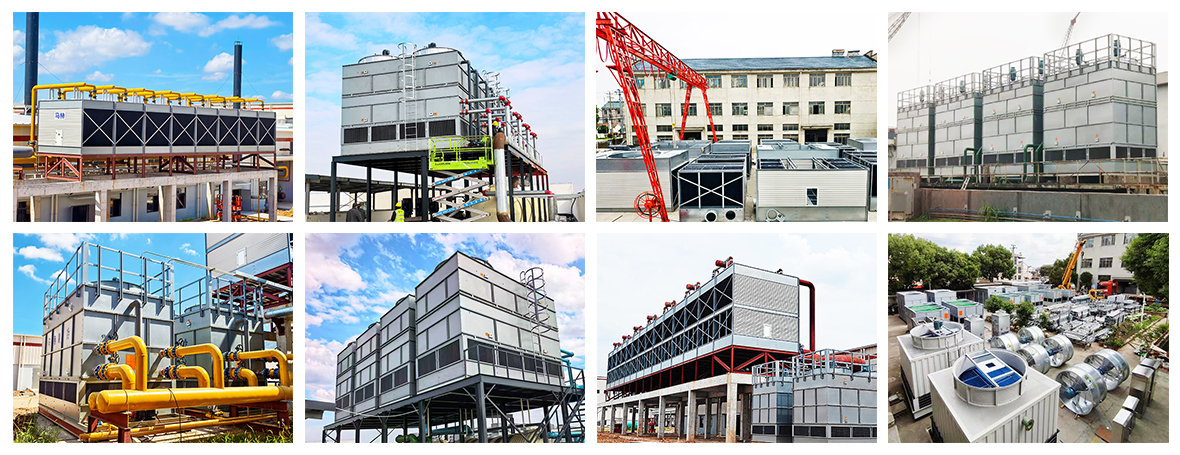
Industrial facilities often have unique requirements.
Perhaps the plant has limited installation space. Perhaps the process requires a specific cold-water temperature. Maybe the ambient wet-bulb temperature is high, or the circulating water contains suspended solids.
These factors can influence the tower design.
Mach Industry can be considered when a project requires a customized industrial cooling approach rather than a simple standard package.
For buyers, the most important question should always be:
Can the manufacturer deliver the required cooling performance under my actual site conditions?
That question is more valuable than simply asking which supplier has the lowest price.
Industrial cooling systems can use several different tower configurations.
Depending on the application, buyers may consider:
Counterflow cooling towers
Crossflow cooling towers
Closed-circuit cooling towers
Open-circuit cooling towers
Customized industrial cooling towers
Each configuration has different characteristics.
The correct choice depends on heat load, water flow, available footprint, maintenance requirements, water quality, ambient conditions, and required outlet-water temperature.
Energy efficiency is becoming increasingly important for industrial cooling systems.
Why?
Because a cooling tower does not simply consume water. Its fan and pump systems also consume electricity.
A tower that requires excessive airflow or operates with inefficient equipment can create significant operating expenses over its lifetime.
High-efficiency cooling therefore requires the entire system to work together.
Efficient fill improves air-water contact. Proper water distribution ensures that the fill is used effectively. An optimized fan moves the necessary amount of air without wasting energy. Variable-frequency drives can allow fan speed to respond to changing cooling loads.
Think of it like an orchestra.
A great fan cannot compensate for poor water distribution, just as excellent fill cannot compensate for inadequate airflow.
Everything has to work together.
Before selecting a manufacturer, it helps to understand the major cooling tower configurations.
In a counterflow cooling tower, water generally flows downward while air moves upward through the tower.
This creates strong contact between the air and water and can provide efficient heat transfer within a relatively compact footprint.
Counterflow towers are widely considered for industrial applications where thermal performance and space efficiency are important.
They can also work well with modern film-fill technologies that increase the available contact area between air and water.
In a crossflow cooling tower, air moves horizontally across water that is flowing downward.
One potential advantage of this arrangement is practical accessibility for certain maintenance activities.
Crossflow towers are frequently used in large industrial and HVAC applications where operating convenience and maintenance considerations are important.
The choice between crossflow and counterflow should not be based on a simple rule that one is always better.
Instead, the decision should consider the complete system.
Closed-circuit cooling towers are particularly useful when the process fluid needs to remain separated from the external cooling-water environment.
Instead of directly exposing the process fluid to the tower water, the process fluid passes through a heat-exchange coil.
This approach can be useful for applications where fluid cleanliness and process reliability are important.

Industrial cooling towers are used wherever large amounts of process heat need to be rejected.
Some applications are particularly demanding.
Power plants require effective heat rejection to support condenser operation and other cooling requirements.
Even relatively small changes in cooling performance can influence plant efficiency.
For this reason, power-generation applications often require carefully engineered cooling systems with reliable operation under changing environmental conditions.
Chemical and petrochemical facilities often contain multiple processes that generate substantial heat.
Cooling water may be used throughout the facility to maintain process temperatures.
Material selection is especially important because water chemistry can create scaling, corrosion, or biological-growth problems.
A cooling tower for a chemical plant therefore needs to be considered as part of the wider water-management system.
Steel production is extremely heat-intensive.
Cooling water may be required for furnaces, casting equipment, rolling systems, hydraulic equipment, and other processes.
These applications can place heavy demands on cooling tower reliability.
A tower that is difficult to maintain or loses performance because of poor water quality can quickly become a production problem.
Cooling towers are also common in large HVAC systems and general manufacturing.
Factories, food-processing facilities, plastics plants, and other industrial facilities may use cooling towers to remove heat from chillers or production equipment.
Although these applications may have lower heat loads than major power plants, energy efficiency and reliability remain important.
Selecting a cooling tower manufacturer should begin with technical requirements rather than brand names.
Prepare a clear project specification and ask every shortlisted supplier to work from the same information.
This makes comparisons much easier.
Start with the fundamental operating parameters:
Heat load
Circulating-water flow
Hot-water temperature
Cold-water temperature
Design wet-bulb temperature
Ambient conditions
Site elevation
Water quality
The cooling range is the difference between entering-water temperature and leaving-water temperature.
The approach is the difference between leaving-water temperature and the ambient wet-bulb temperature.
These values provide a much clearer picture of actual tower performance than vague marketing terms such as “high performance” or “super-efficient.”
Fan and pump electricity can become significant operating expenses.
Ask manufacturers about fan diameter, motor efficiency, airflow requirements, operating power, and VFD compatibility.
Do not only ask:
“How much does the tower cost?”
Also ask:
“How much electricity will this tower consume over the next 10 years?”
That second question can completely change the purchasing decision.
Cooling towers operate in challenging environments.
Depending on the site, buyers may need FRP, galvanized steel, stainless steel, PVC, PP, or other materials.
Coastal environments can present salt-related corrosion risks. Industrial water can introduce scaling or chemical exposure. High temperatures can affect certain plastics.
The best material is therefore application-specific.
More expensive does not automatically mean better.
The correct material is the one that provides the required service life under the actual operating conditions.
Maintenance should be considered before the tower is installed.
Can technicians inspect the fill easily?
Can they access the fan and motor?
Can nozzles be cleaned?
Can damaged fill packs be replaced without major dismantling?
Are spare parts readily available?
These questions may seem simple, but they can have a major impact on the total cost of ownership.
There is no single standard price for an industrial cooling tower.
Cost can depend on:
Cooling capacity
Water flow
Tower configuration
Construction materials
Fill type
Fan and motor system
Water distribution system
Drift eliminators
Controls
VFDs
Transportation
Installation
Customization
Site conditions
A buyer should therefore be careful when comparing two quotations that appear dramatically different.
One supplier may quote a basic configuration, while another may include higher-grade materials, better controls, more efficient motors, or additional accessories.
A lower quotation is not necessarily a lower total cost.
Imagine buying a car based only on its purchase price.
You would not know how much fuel it uses, how often it needs maintenance, or how expensive replacement parts will be.
Industrial cooling towers work in much the same way.
The true cost includes:
Purchase + Energy + Water + Treatment + Maintenance + Spare Parts + Downtime
This is why lifecycle cost should be part of every serious cooling tower comparison.
Even a well-designed tower can lose efficiency over time.
The most common causes include dirty fill, blocked nozzles, scaling, biological growth, damaged drift eliminators, poor water distribution, incorrect water flow, and inefficient fans.
Regular maintenance helps prevent these problems.
Cooling tower fill is one of the most important heat-transfer components inside the tower.
Film fill creates a large surface area over which water can spread while air passes through the fill.
When the fill becomes clogged with dirt, scale, algae, or debris, airflow and water distribution can be affected.
In some cases, cleaning may restore performance.
If the fill is seriously damaged or deteriorated, replacement may be the better option.
Water should be distributed as evenly as possible across the active fill area.
Poor distribution creates dry areas that contribute little to heat transfer while placing excessive water on other sections.
Operators should regularly inspect spray nozzles, distribution pipes, valves, basins, and other components.
A small blocked nozzle may look insignificant.
Across an entire industrial cooling tower, however, dozens of blocked or damaged nozzles can have a meaningful effect.
The fan determines how much air moves through the tower.
Damaged fan blades, incorrect blade pitch, poor alignment, worn bearings, or inefficient motors can reduce airflow and increase power consumption.
Variable-frequency drives can provide another useful tool.
Instead of operating the fan at full speed all the time, a VFD allows operators to adjust fan speed according to actual cooling demand.
Before selecting one of the industrial cooling tower manufacturers in India, use this checklist:
The supplier should understand the actual process requirements rather than simply recommend a standard tower.
Thermal performance should be based on defined operating conditions.
Consider corrosion, scaling, biological growth, temperature, and environmental exposure.
Compare fan and pump power, not just the purchase price.
Accessibility can significantly affect long-term maintenance costs.
Check the availability of fill, nozzles, fans, motors, drift eliminators, valves, and other components.
Experience with similar industrial applications is valuable.
Ask about commissioning, technical support, warranty, maintenance, and replacement parts.
Finding the right industrial cooling tower manufacturers in India is about much more than creating a list of suppliers.
The best choice depends on your actual application.
You need to consider thermal performance, water flow, ambient conditions, construction materials, energy consumption, maintenance requirements, spare parts, and long-term operating costs.
Indian manufacturers can offer valuable local market experience and service capabilities. At the same time, international manufacturers such as Mach Industry (Zhejiang) Co.,Ltd provide another option for buyers who want to compare customized industrial cooling tower solutions from outside India.
Mach Industry (Zhejiang) Co.,Ltd
The smartest purchasing strategy is simple: give every shortlisted manufacturer the same technical requirements, compare the engineering proposals carefully, and evaluate total lifecycle cost rather than focusing only on the initial quotation.
After all, a cooling tower is not just another piece of equipment sitting on your plant site.
It is part of the plant's thermal heartbeat.
When it performs efficiently, your entire cooling system has a better chance of running reliably, economically, and consistently for years to come.