We Provide Cooling Tower Solution

Views: 0 Author: Site Editor Publish Time: 2026-01-15 Origin: Site


When it comes to cooling tower design, many focus on performance metrics like heat rejection, airflow, or water treatment. But have you ever thought about the structural design? A cooling tower is often dozens of meters tall, made of heavy materials, and exposed to wind, water, and temperature fluctuations. If the structure fails, the tower fails, regardless of how efficient it is.
This article dives into all critical structural considerations in cooling tower design, step by step, highlighting practical insights and how MACH Cooling approaches these challenges.
Imagine a tower swaying dangerously in strong winds or collapsing under its own weight. Scary, right? That’s exactly why structural design comes first. Engineers calculate loads, stresses, and forces to ensure stability and safety, not just efficiency.
A strong structure isn’t just about standing upright—it’s about longevity. Poor structural design increases maintenance costs, downtime, and risk to personnel. A well-engineered tower survives decades of harsh conditions.
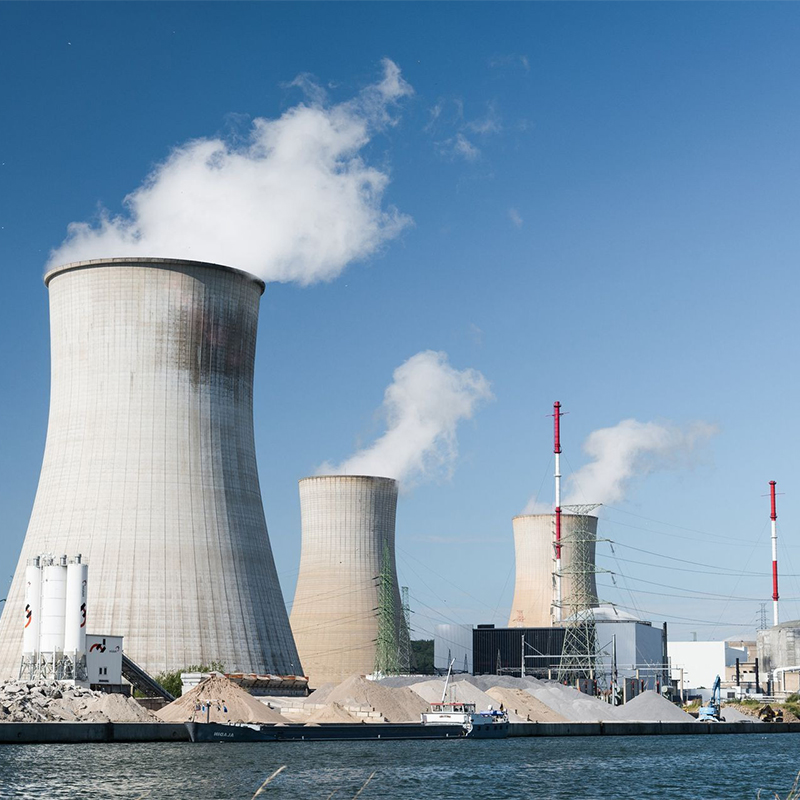
These hyperbolic towers rely on buoyancy to draw air through the system. The structure itself must support huge heights and resist wind pressure, making material choice and wall thickness critical.
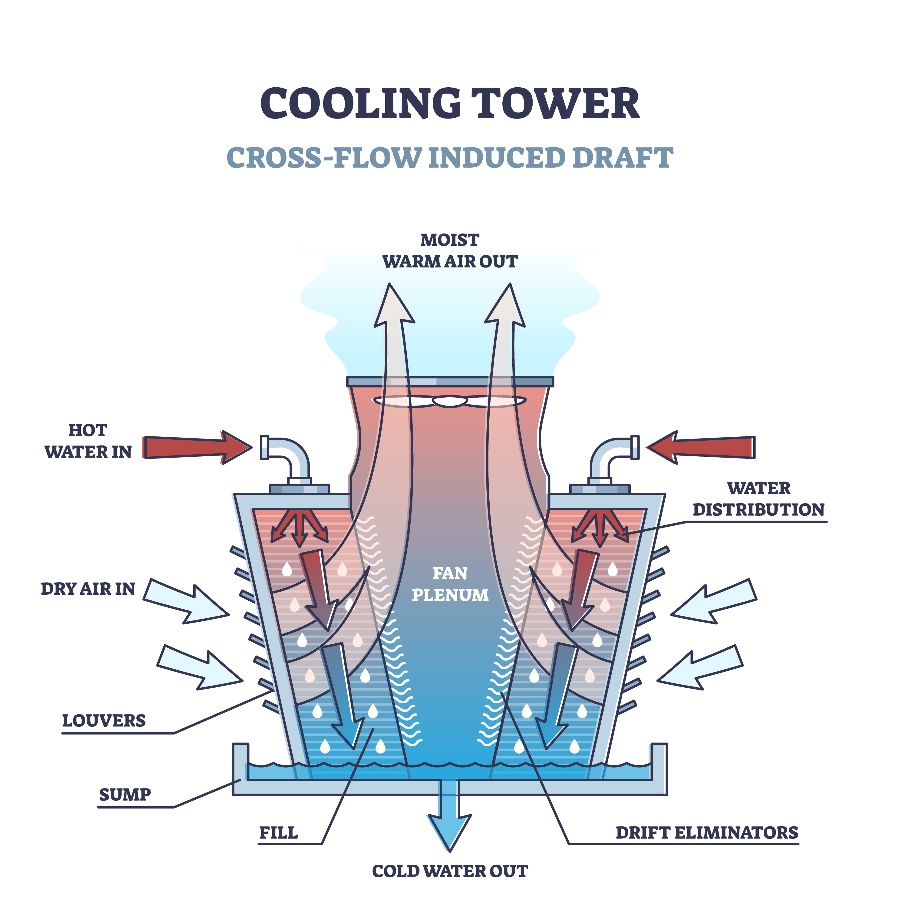
Mechanical draft towers are typically rectangular or cylindrical, with fans and motors on top. Structural considerations focus on vibration, fan deck support, and load distribution.
Hybrid towers combine natural and mechanical draft designs. Engineers must account for combined stresses from airflow, fan operation, and environmental forces.

Concrete towers are durable, fire-resistant, and capable of handling high wind loads. Reinforced concrete is standard for hyperbolic natural draft towers.
Steel towers are lighter, easier to assemble, and ideal for mechanical draft towers. Protective coatings are essential to prevent corrosion.
Fiberglass-reinforced plastics (FRP) and composites are corrosion-resistant and lightweight, making them popular in modern mechanical and hybrid towers.
Dead loads include the weight of the structure, fill, water, and fans. Live loads account for personnel, maintenance equipment, and temporary operational loads.
Wind is a major factor for tall towers. The shell and foundation must resist gusts, storms, and potential seismic activity.
Constant temperature fluctuations cause materials to expand and contract. Ignoring thermal effects can lead to cracking, warping, or structural failure.
The foundation must support enormous weight. Engineers analyze soil type, bearing capacity, and settlement potential before design.
Common foundation types include mat foundations, spread footings, and pile foundations. The choice depends on soil and tower type.
The shell must handle internal and external pressures, resist wind, and maintain shape under load. Hyperbolic curves in natural draft towers add strength and stability.
Columns support fan decks, platforms, and mechanical equipment. Beam design ensures proper load distribution and prevents deflection.
Fan decks carry motors, fans, and drives. Engineers account for vibration, torque, and dynamic forces.
Cooling towers operate in wet, sometimes chemically treated water environments, which accelerates corrosion if not properly addressed.
Paints, galvanization, epoxy coatings, and FRP linings protect structures and extend service life.


Safe access points allow technicians to reach fans, motors, and water distribution systems securely.
Design includes removable panels, platforms, and handrails to simplify maintenance and inspections.
At MACH Cooling, structural design integrates with mechanical and thermal considerations. Using advanced simulation tools, MACH Cooling optimizes materials, shell geometry, and load distribution, ensuring towers are:
Safe under extreme wind and seismic conditions
Durable for decades with minimal maintenance
Efficient in supporting heavy mechanical equipment
This holistic approach guarantees reliability and long-term performance.
Lightweight composite materials for faster assembly
Modular designs for easier expansion
Smart monitoring for structural health and vibration
Eco-friendly coatings to reduce environmental impact
Innovation continues to blend safety, efficiency, and sustainability.
Structural design is not an afterthought—it’s the backbone of every cooling tower. From materials selection to load calculations, foundation design to corrosion protection, ignoring structure can lead to costly failures.
By prioritizing structure, companies like MACH Cooling ensure towers that are safe, durable, and optimized for long-term performance. After all, a cooling tower is only as strong as its skeleton.


