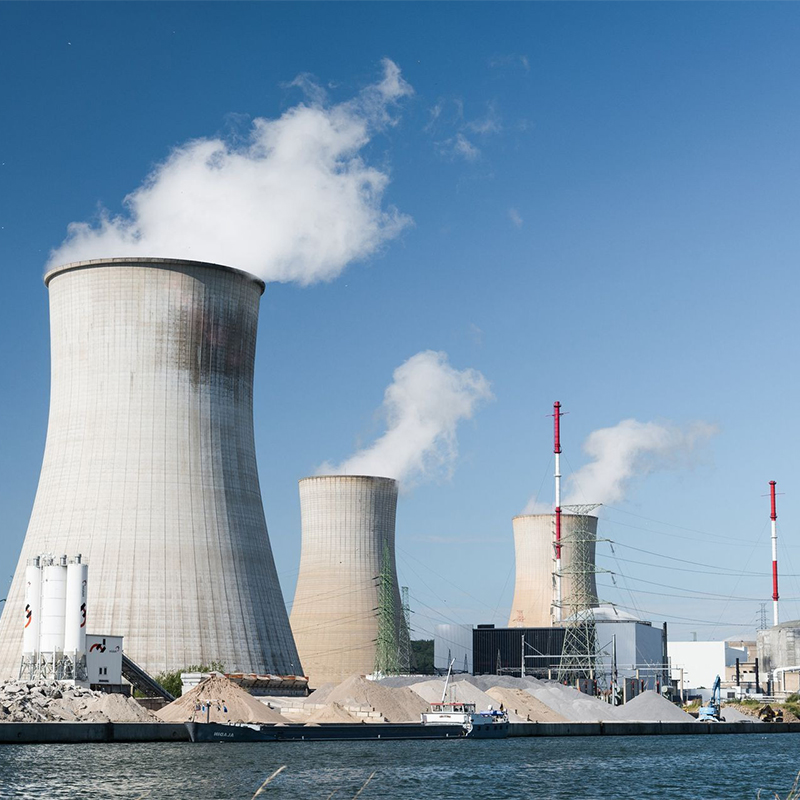
We Provide Cooling Tower Solution

Views: 0 Author: Site Editor Publish Time: 2026-01-03 Origin: Site


A properly matched cooling tower and chiller system is essential for achieving high energy efficiency, stable operation, and long equipment lifespan in commercial HVAC and industrial cooling applications.
In a water-cooled chiller system, the cooling tower is responsible for rejecting heat absorbed by the refrigerant cycle and transferring it into the atmosphere. If the cooling tower capacity, water flow rate, or operating conditions do not match the chiller requirements, the entire cooling system can suffer from reduced efficiency, increased operating costs, and premature equipment failure.
Understanding how to properly match a cooling tower with a chiller helps engineers, facility managers, and industrial users optimize system performance while reducing energy consumption.
This guide explains the key factors involved in chiller and cooling tower matching, including cooling tower sizing calculations, condenser water requirements, temperature selection, common mistakes, and efficiency improvement strategies.
A water-cooled chiller system consists of several interconnected components:
Chiller unit
Condenser water pump
Cooling tower
Cooling water piping system
Control system
The chiller removes heat from the process or building cooling load, but the removed heat must eventually be rejected through the cooling tower.
The cooling tower and chiller operate as a complete heat rejection system.
If the cooling tower is undersized:
Condenser water temperature increases
Compressor pressure rises
Chiller efficiency decreases
Energy consumption increases
Equipment reliability is affected
If the cooling tower is oversized:
Initial investment increases
Fan energy may increase unnecessarily
Equipment operates inefficiently at low loads
Therefore, selecting the correct cooling tower capacity is critical for achieving maximum system efficiency.
A water-cooled chiller uses refrigeration technology to remove heat from chilled water.
The basic cooling process includes:
The cooling tower does not create cooling capacity. Instead, it removes the heat generated by the chiller system.
A cooling tower reduces the temperature of condenser water before it returns to the chiller.
The typical process:
Chiller condenser → Hot condenser water → Cooling tower → Cooled condenser water → Chiller
The performance of the cooling tower directly affects condenser entering water temperature, which influences chiller efficiency.
Lower condenser water temperature generally improves chiller COP and reduces compressor workload.
The first step is understanding that cooling tower capacity is not equal to chiller cooling capacity.
A cooling tower must reject:
Cooling load
Compressor heat
Motor heat losses
For most water-cooled chiller systems:
Cooling Tower Capacity ≈ Chiller Capacity × 1.25
Example:
A 500-ton refrigeration (TR) chiller:
500 TR × 1.25 = 625 TR
The recommended cooling tower capacity is approximately:
625 TR
However, the actual selection depends on:
Chiller efficiency
Condenser temperature
Ambient wet bulb temperature
System design conditions
Water flow rate is one of the most important parameters when matching a cooling tower with a chiller.
Insufficient water flow can cause:
Poor heat transfer
Higher condenser pressure
Reduced cooling efficiency
Typical condenser water flow:
Approximately 3 gallons per minute (GPM) per refrigeration ton
For example:
500 TR chiller:
500 × 3 GPM
= approximately 1500 GPM condenser water flow
The selected cooling tower must handle this water flow while maintaining the required temperature range.
Cooling tower performance depends heavily on two temperature factors:
Range refers to:
Hot water entering cooling tower temperature
minus
Cold water leaving cooling tower temperature
Example:
Entering water temperature:
95°F (35°C)
Leaving water temperature:
85°F (29.4°C)
Range:
10°F (5.6°C)
Approach is the difference between:
Cold water leaving cooling tower
and
Outdoor wet bulb temperature
Example:
Leaving water temperature:
85°F
Wet bulb temperature:
78°F
Approach:
7°F
A smaller approach requires:
Larger cooling tower size
More airflow
Higher investment
A larger approach reduces cost but may reduce chiller efficiency.
Cooling tower sizing requires evaluating heat rejection rather than simply matching nominal tonnage.
The basic calculation considers:
Chiller capacity
Compressor power
Condenser heat rejection
Design temperature conditions
Assume:
Chiller capacity:
1000 TR
Chiller efficiency:
0.6 kW/TR
Compressor power:
1000 × 0.6
= 600 kW
Heat rejection:
Cooling load + compressor heat
1000 TR + approximately 205 TR equivalent heat
Total heat rejection:
≈1205 TR
Therefore, the cooling tower should be selected based on approximately:
1200 TR heat rejection capacity
This approach provides more accurate system design compared with simply selecting a tower equal to the chiller tonnage.
Different applications require different cooling tower designs.
Open cooling towers directly expose process water to airflow.
Advantages:
High heat transfer efficiency
Lower initial cost
Widely used in HVAC systems
Applications:
Commercial buildings
Large HVAC plants
District cooling systems
A closed circuit cooling tower uses a coil heat exchanger to separate process fluid from cooling air.
Advantages:
Cleaner operation
Reduced contamination risk
Less water treatment requirement
Suitable for sensitive industrial processes
Applications:
Manufacturing plants
Data centers
Chemical processing
Precision cooling systems
For industrial applications requiring stable cooling performance, a closed circuit cooling tower is often the preferred solution.
A 500 TR chiller does not always require a 500 TR cooling tower.
The tower must handle total heat rejection.
Cooling tower performance depends on local climate conditions.
A tower selected for a mild climate may not perform properly in hot and humid regions.
Too little flow reduces heat transfer.
Too much flow increases pump energy consumption.
Proper hydraulic design is essential.
Poor water quality can cause:
Scale formation
Corrosion
Biological growth
Reduced heat transfer
Regular water treatment improves efficiency and extends equipment life.
Installing VFD-controlled fans allows cooling towers to adjust airflow according to actual load.
Benefits:
Lower energy consumption
Better temperature control
Reduced mechanical stress
Lower condenser water temperature improves chiller efficiency.
However, operating too aggressively may increase fan energy.
The best strategy is balancing:
Fan power
Compressor power
Cooling demand
Modern cooling tower systems can integrate:
Temperature sensors
Automatic fan control
Energy monitoring
Building management systems (BMS)
Cooling tower and chiller combinations are widely used in:
Applications:
Injection molding
Metal processing
Electronics production
Benefits:
Reliable heat rejection
High-efficiency cooling operation
Applications:
Process cooling
Equipment temperature control
Cooling towers support large-scale heat rejection requirements.
Selecting the right cooling tower manufacturer is important for achieving long-term system reliability.
Mach Cooling provides industrial cooling tower solutions designed for:
High efficiency
Customized capacity requirements
Different operating environments
Industrial applications
With professional cooling system design experience, Mach Cooling helps customers select suitable cooling towers for chillers, manufacturing processes, and heat rejection applications.
Whether you need an open cooling tower, closed circuit cooling tower, or customized cooling solution, proper engineering analysis ensures better performance and lower lifecycle costs.
Cooling tower size depends on total heat rejection, not only chiller capacity. In many systems, cooling tower capacity is approximately 1.25 times the chiller capacity, but actual selection requires considering operating conditions.
Yes. An oversized cooling tower increases initial cost and may operate inefficiently if not properly controlled.
Typical condenser water temperatures are around 85°F to 95°F (29°C to 35°C), depending on climate and system design.
Open towers directly cool water through evaporation, while closed circuit cooling towers use a heat exchanger coil to keep the process fluid separated from the atmosphere.
A properly selected cooling tower reduces condenser water temperature, lowers compressor workload, and improves overall chiller COP.
Matching a cooling tower with a chiller correctly is one of the most important steps in designing an efficient water-cooled cooling system.
The selection process should consider:
Total heat rejection capacity
Condenser water flow
Temperature range
Approach temperature
Climate conditions
Application requirements
A properly designed chiller and cooling tower system delivers better efficiency, lower operating costs, and longer equipment life.
By working with an experienced cooling tower manufacturer, businesses can develop reliable and energy-efficient heat rejection solutions for HVAC and industrial applications.