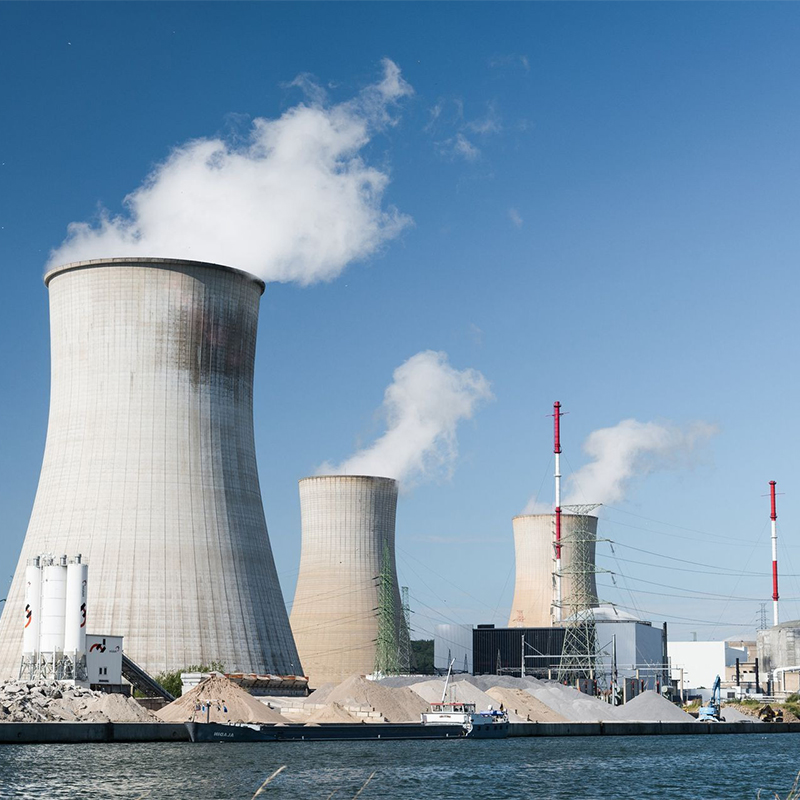
We Provide Cooling Tower Solution


Product Description
Full name: Evaporative Condenser, abbreviated as evaporative cooling, is an integrated refrigeration and heat exchange equipment that combines a condenser, cooling tower, and circulating water pump. It replaces the traditional system of "shell and tube condenser+independent cooling tower+pipeline water tank".
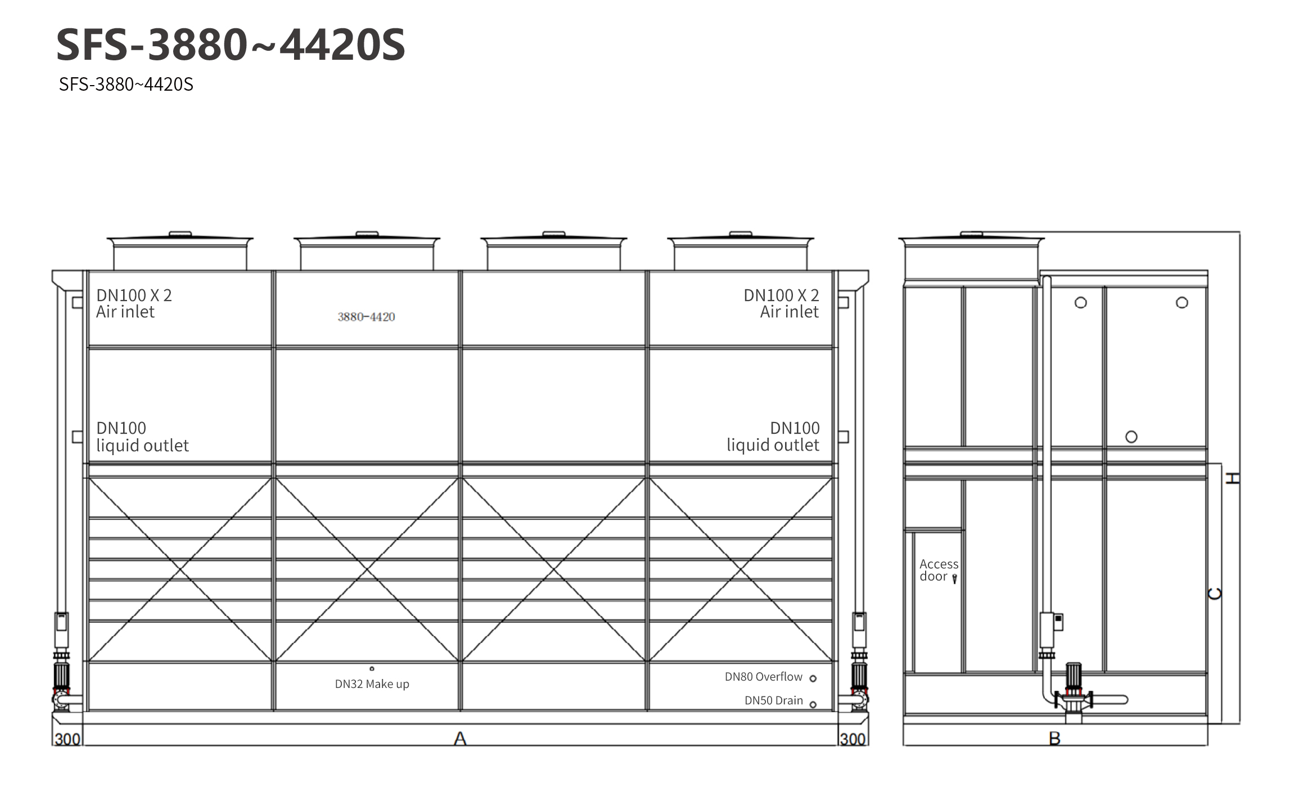
Top axial flow induced draft fan: extracts humid and hot air (suction type main flow);
Water collector (water blocking plate): intercepts floating water and reduces water loss;
Spray water distribution system: spray pipe+nozzle, evenly sprinkle water;
Core condensing coil (heat exchange tube bundle): High temperature refrigerant flows through the tube, commonly made of seamless steel pipe/304 stainless steel pipe, suitable for refrigerants such as ammonia R717, R22, R404A, R134a, etc;
Lower air inlet louver+PVC filling: pre cooled circulating water;
Bottom collection tank+circulating water pump: storing cooling water and circulating spray water.
1.The compressor discharges high-temperature and high-pressure gaseous refrigerant into the pipe from the upper end of the coil and flows downwards;
2.The water pump draws water from the sink to the top for spraying, forming a continuous water film on the outer wall of the coil;
3.The fan forces cold air to enter from the lower part of the equipment and pass through the coil upwards. Some of the sprayed water absorbs heat and evaporates, relying on the latent heat of water evaporation to take away a large amount of heat from the coil. The high-temperature refrigerant inside the tube releases heat and condenses into liquid, which flows out from the lower end to the liquid storage tank;
4.The unevaporated water is returned to the sink for recycling, only supplementing a small amount of tap water lost through evaporation.
5.The condensation temperature is close to the ambient wet bulb temperature, which is 3-5 ℃ lower than traditional water cooling, and the compressor is significantly energy-efficient.
discharge superheated and high-pressure gaseous refrigerant from the compressor → cool down and liquefy into high-pressure liquid, ensuring continuous operation of the refrigeration cycle. Without a condenser, the refrigeration system cannot cool down and cool down;
Take away all the heat generated by compression work and evaporator heat absorption, and dissipate it to the external environment;
Eliminate external cooling towers, cooling water pumps, civil water tanks, and a large number of connecting water pipes, shorten on-site installation pipelines, and reduce civil construction costs;
If the temperature is too low, the sprinkler water pump can be turned off and only the fan can be used for air cooling, further saving water and electricity.
Upward suction type (most commonly used): The fan is located at the top of the equipment and is standard in cold storage and food factories;
Side blowing type (low-noise version): The fan is located on the side of the equipment, with low noise, suitable for installation near shopping malls, factories, and residential areas;
ammonia evaporative cooling (R717, cold storage, chemical industry), Freon evaporative cooling (R22/R404, small and medium-sized cold storage, central air conditioning);
single box body, multi link assembly type (super large cooling capacity chemical/cold chain project).

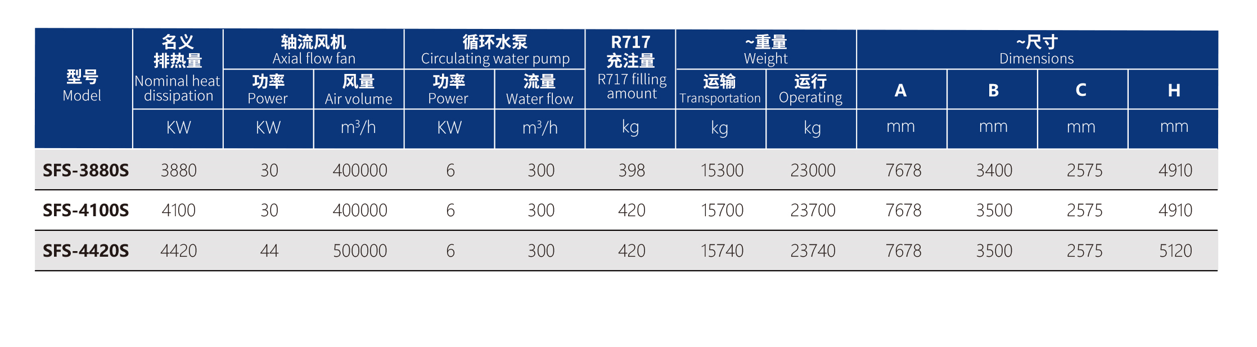
Various types of cold storage: high-temperature preservation warehouse (0 ℃), low-temperature freezing warehouse (-18 ℃), quick freezing warehouse (-35 ℃), cold chain logistics distribution center;
Food processing plant: equipped with refrigeration units for quick freezing of slaughtered meat, seafood processing, dairy products, beverages, and beer fermentation.
Production of synthetic ammonia, methanol, and urea: process gas condensation, compressor stage cooling, tail gas recovery condensation;
Petroleum refining: tower top oil and gas condensation, natural gas liquefaction pre cooling, chemical reaction kettle supporting cooling.
Large shopping malls, hospitals, airports, and industrial parks use screw/centrifugal chillers for heat dissipation, replacing traditional cooling towers and shell and tube condenser systems.
Pharmaceutical factory: low-temperature synthesis refrigeration for raw materials;
Plastic industry: Injection molding machine ice water unit, mold cooling system;
Power plants and metallurgy: auxiliary cooling equipment for generator sets and condensing equipment for waste heat power generation.
Data center liquid cooling and heat dissipation, cold storage ice making unit, and ship onshore refrigeration unit.
 |  |