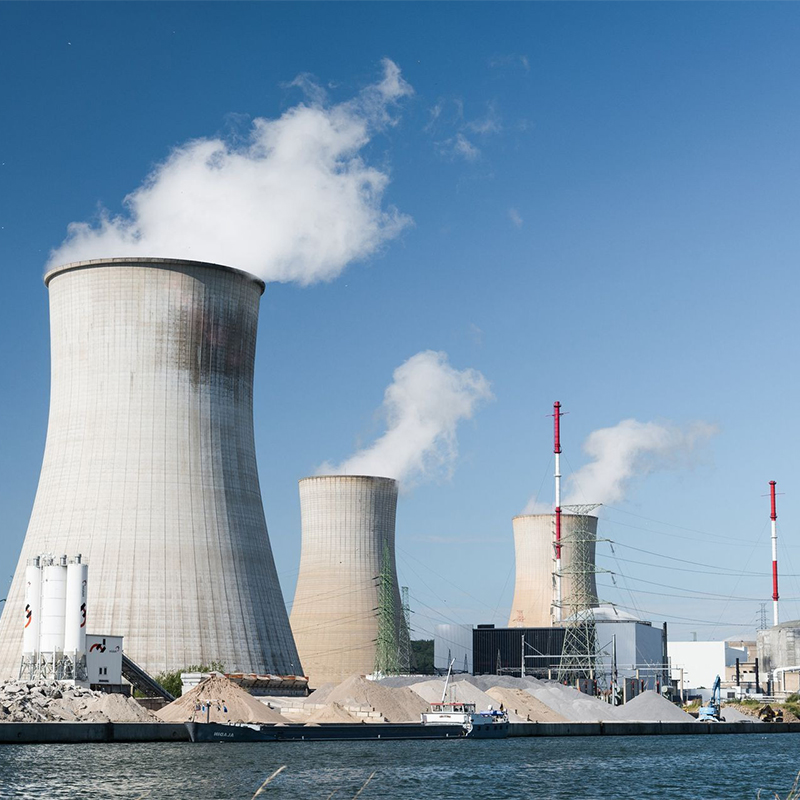
We Provide Cooling Tower Solution


Product Description
A dry cooler (also known as a dry cooler) is a closed, non water consuming air cooling device that uses fluid inside the tube and air outside the tube for heat exchange, without relying on water evaporation for heat dissipation throughout the process. It is widely used in industrial and data centers for waste heat discharge.
Similar to car radiators, for sensible heat transfer (without evaporation or phase change):
The hot fluid (water/ethylene glycol solution) is pumped into the finned tube bundle.
Axial flow/EC fans force air to sweep across the fins, taking away heat from the pipe wall.
After the fluid inside the tube cools down, it flows back to the process equipment, completing a closed cycle.
Characteristics: The fluid does not come into direct contact with air, only transfers heat without mass transfer, and there is no evaporation of water.
Copper/stainless steel tube+aluminum fins, high-density arrangement, maximizing heat exchange area.
Top/side mounted EC variable frequency fan, adjustable wind speed, energy-saving and noise reduction.
Galvanized steel/anti-corrosion alloy, supporting and protecting internal components, regulating airflow.
Inlet and outlet, valve, flange, ensuring medium circulation and sealing
Zero water consumption under standard operating conditions, no evaporation or floating water, suitable for water scarce areas.
No white mist, no Legionella risk, no need for water treatment agents.
The closed system is not prone to scaling and only requires regular cleaning and inspection of the fan.
Can be filled with ethylene glycol antifreeze, which is not easy to freeze and crack in winter.
Unaffected by air humidity, stable operation in high temperature and high humidity environments.

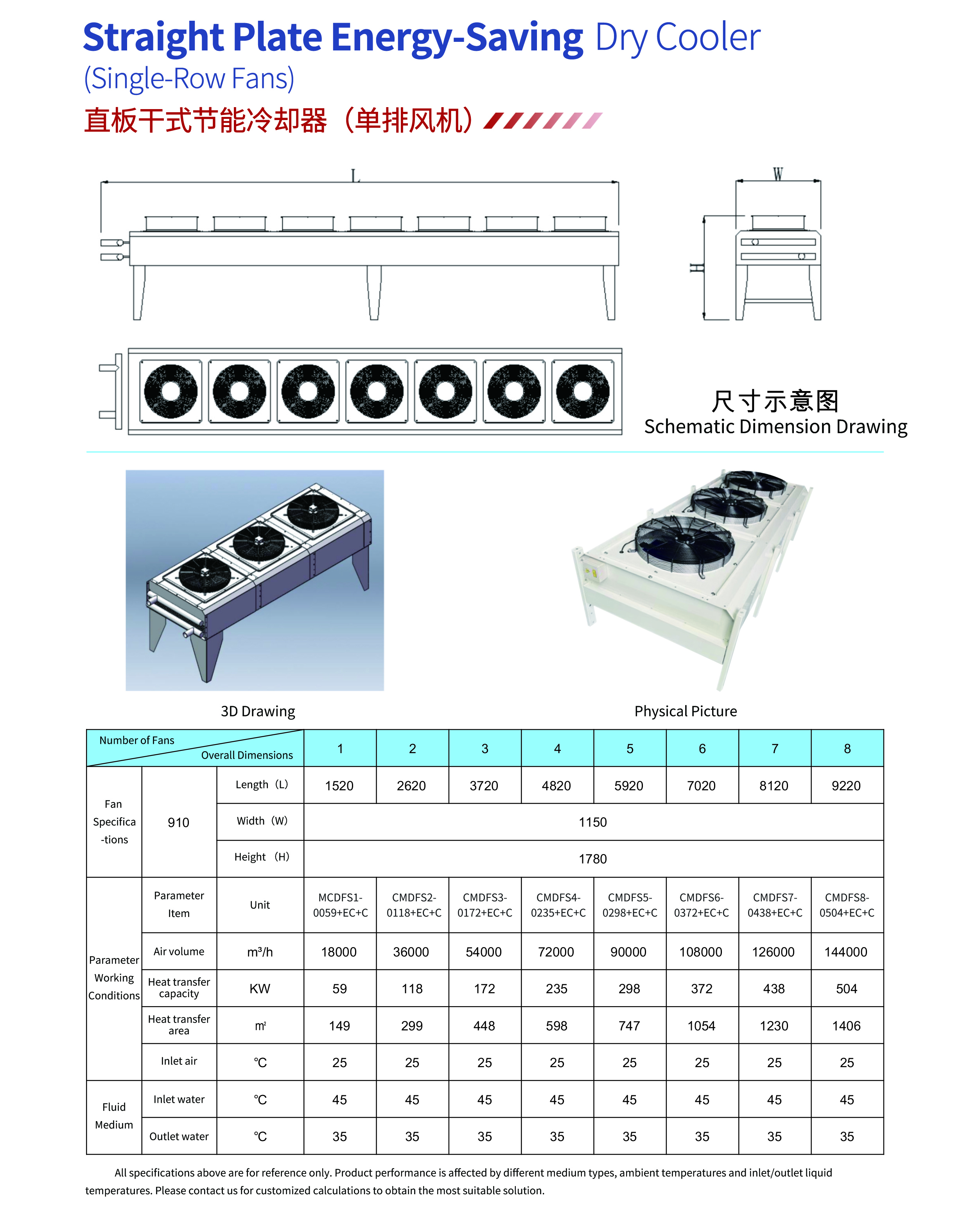
It assists in circulating cooling water to supply cold sources for server heatdissipation, ensuring stable operation of the data center.
It cools the immersion medium (such as mineral oil) heated by electronicequipment to maintain the operating temperature of the devices.
It dissipates heat generated during operation of power equipment such as transformersand frequency converters, ensuring reliable operation of the power system.
It cools the secondary refrigerant (e.g., ethylene glycol solution) in air conditioningsystems to provide cooling capacity for indoor temperature regulation.
 |  |
| |
 | |