We Provide Cooling Tower Solution

Views: 0 Author: Site Editor Publish Time: 2026-02-05 Origin: Site


Cooling towers are the unsung heroes of industrial plants, commercial buildings, and large HVAC systems. They quietly reject heat, keep processes stable, and protect expensive equipment. But inside every cooling tower, there is a hidden threat that slowly eats away at performance: scale buildup.
Ignoring scale is like driving a car with the parking brake half on—you might still move forward, but you’re burning fuel, stressing components, and shortening the system’s life. That’s exactly why cooling tower descaling is essential for system efficiency, not just good maintenance practice.
From the outside, a cooling tower can look perfectly healthy. Fans rotate smoothly, water cascades down the fill, and temperatures seem under control. Yet inside the system, mineral deposits may already be forming on heat transfer surfaces.
These deposits don’t announce themselves loudly. Instead, they quietly reduce heat transfer, increase energy consumption, and push pumps, fans, and chillers to work harder than necessary. By the time performance problems become obvious, efficiency losses have often been accumulating for months—or even years.
Cooling tower descaling is the process of removing mineral scale deposits from internal components such as fill media, heat exchanger tubes, spray nozzles, basins, and piping.
Scale is a hard, crystalline layer formed when dissolved minerals in water—most commonly calcium and magnesium—precipitate out of solution and adhere to surfaces. Once attached, these minerals harden and act as an insulating barrier.
Cooling towers rely on evaporation to reject heat. As water evaporates, dissolved solids become more concentrated. If cycles of concentration rise too high or water chemistry is not properly controlled, minerals exceed their solubility limits and begin to crystallize. Over time, these crystals grow into stubborn scale layers.

Not all scale behaves the same way, and understanding the type of scale present helps determine the most effective descaling strategy.
This is the most common type of scale found in cooling towers. It forms quickly in high-hardness water and creates a dense, insulating layer that significantly reduces heat transfer efficiency.
Silica and sulfate scales are harder and more chemically resistant. They often require specialized descaling chemicals and carefully controlled cleaning procedures to avoid damage to system components.
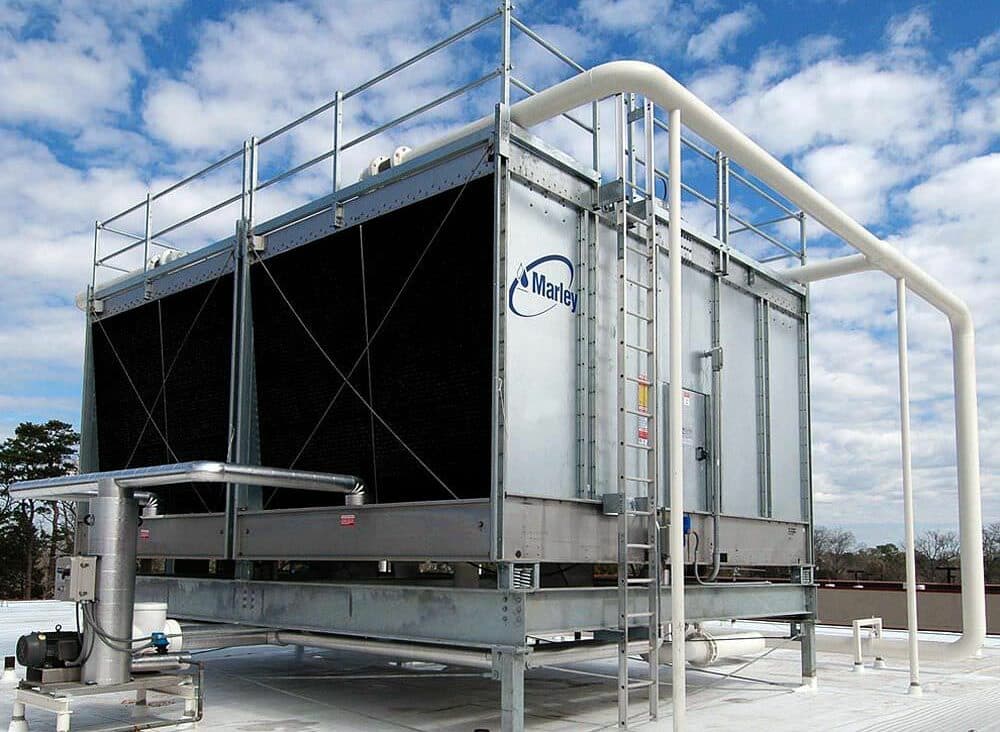
Scale may look thin and harmless, but even a small buildup can have an outsized effect on performance.
Scale acts like insulation. Even a thin layer can drastically reduce heat transfer efficiency, forcing the cooling tower to operate longer to achieve the same cooling effect.
When heat transfer is impaired, fans and pumps must run longer and at higher loads. Chillers may also work overtime to compensate. The result is higher electricity consumption and rising operating costs.
Efficiency loss is only part of the story. Scale also introduces a range of operational risks.
As scale accumulates inside pipes and spray nozzles, water flow becomes restricted. Uneven distribution reduces effective heat exchange and creates hot spots within the system.
Poor heat rejection leads to elevated operating temperatures. Over time, this increases the risk of unplanned shutdowns, alarm trips, and even equipment failure.

Descaling removes the barrier between your system and optimal performance. Think of it as clearing plaque from arteries—suddenly, everything flows better.
Once scale is removed, heat transfer surfaces can perform as originally designed. Cooling efficiency improves almost immediately after a successful descaling operation.
Clean surfaces and proper water flow reduce resistance. Pumps and fans operate more efficiently, drawing less power while delivering better performance.
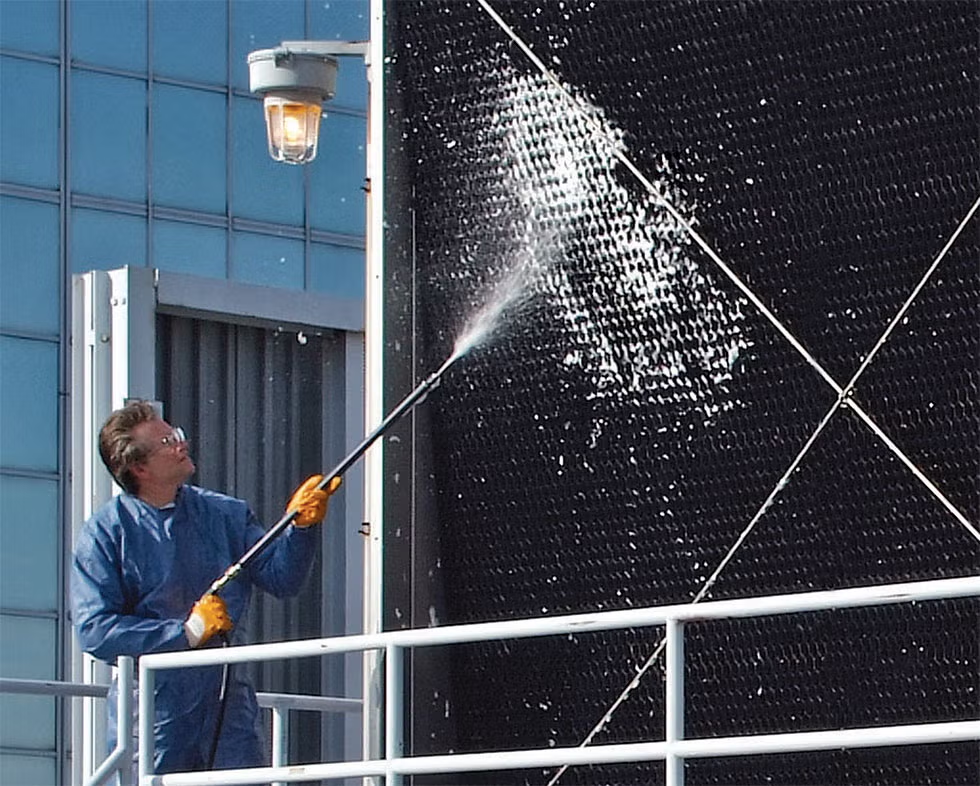
There are two primary approaches to descaling, and the best choice depends on scale severity and system design.
Chemical descaling uses specially formulated solutions to dissolve mineral deposits without damaging system components.
Acid-based descalers are highly effective against calcium carbonate scale. However, they must be applied carefully, with proper monitoring and neutralization to ensure safety.
Modern biodegradable descaling chemicals offer strong cleaning performance while minimizing environmental impact and disposal concerns.
Mechanical methods, such as high-pressure water jetting or brushing, remove loose deposits. While useful as a supplement, they are generally less effective against hardened scale.
Online descaling allows the system to remain operational during cleaning, making it ideal for facilities that cannot afford downtime. Offline descaling, on the other hand, provides deeper cleaning and is better suited for severe scale conditions. The right approach depends on operational priorities and system condition.
Most cooling towers benefit from annual or semi-annual descaling. Systems operating with high-hardness water, high cycles of concentration, or heavy thermal loads may require more frequent treatment.
Descaling is not an expense—it’s a cost-control strategy. Reduced energy consumption, fewer breakdowns, and lower maintenance demands often result in a rapid return on investment. In many cases, the energy savings alone can justify the descaling cost.
Scale accelerates corrosion and mechanical wear. By keeping internal surfaces clean, regular descaling helps extend the lifespan of fill media, piping, pumps, and heat exchangers—often by several years.
Professional descaling ensures chemicals are handled responsibly and disposed of properly. This protects personnel, equipment, and the surrounding environment while maintaining regulatory compliance.
Analyze water chemistry before selecting descaling chemicals
Follow manufacturer-recommended cleaning procedures
Rinse thoroughly after descaling to remove residues
Combine descaling with a comprehensive water treatment program
Descaling delivers the best results when the cooling tower itself is designed with maintenance in mind.
As a professional cooling tower manufacturer, Mach Cooling designs systems that simplify inspection, cleaning, and descaling. With optimized water distribution, accessible internal components, and durable materials, Mach Cooling towers help customers maintain high efficiency with less maintenance effort. Learn more at https://www.machcooling.com/.
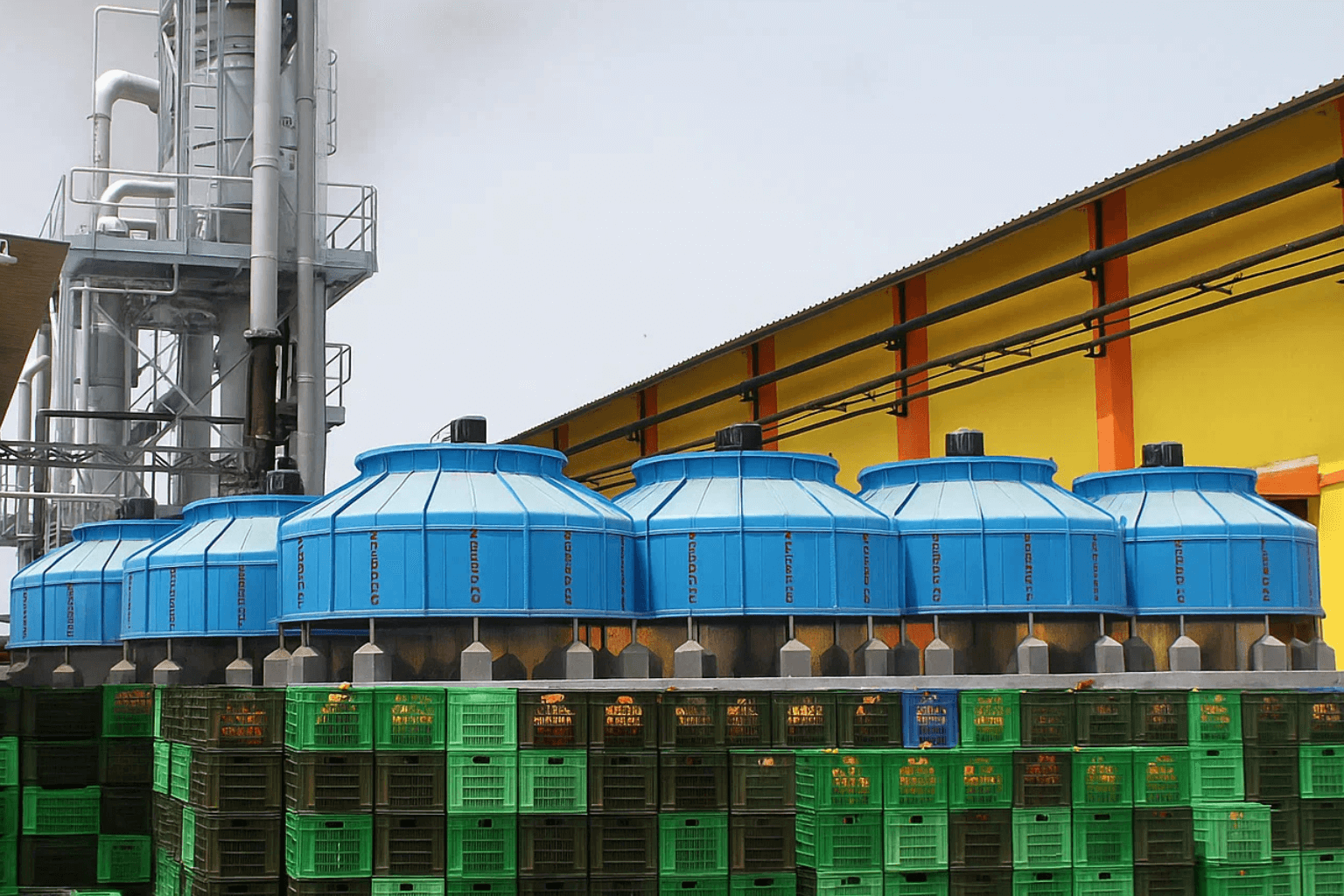
A manufacturing facility experienced a steady 15% increase in energy consumption over one year. After a professional cooling tower descaling program, heat transfer efficiency was restored and energy use returned to baseline levels within weeks—without replacing any major equipment.
Cooling tower descaling is more than routine maintenance. It’s a strategic action that protects efficiency, controls costs, and safeguards equipment reliability. By removing scale, you unlock better heat transfer, lower energy consumption, and longer system life.
When paired with a well-designed system from an experienced manufacturer like Mach Cooling, regular descaling becomes one of the smartest investments you can make for long-term operational efficiency.