We Provide Cooling Tower Solution

Views: 0 Author: Site Editor Publish Time: 2026-02-26 Origin: Site


If you’ve ever wondered why some cooling towers hum along smoothly while others sputter, gasp, or spike in energy costs, there’s a good chance the answer lies below the surface — literally.
We’re talking about the sump tank — the hidden hero of the cooling tower system. It’s easy to overlook this unsung component, but without it, your cooling tower’s efficiency, reliability, and performance could take a serious hit.
In this article, we’ll dive deep into the role of sump tanks in cooling tower efficiency, why they matter, how they work, and how you can make them work harder for you.
You’ve heard the saying, “Slow and steady wins the race.” In the world of cooling towers, that steady foundation often starts with the sump tank.
Think of the sump tank as the heart’s reservoir in a cooling tower system. It quietly receives water, balances flows, supports pumps, and keeps everything running smoothly — just like blood flowing through veins.
If the sump tank is poorly designed, clogged, or neglected, the whole system feels it. Pumps strain, energy costs climb, water quality deteriorates, and you start hearing complaints instead of compliments.
So, let’s unpack what a sump tank really does — and why it’s more than just a bucket of water.
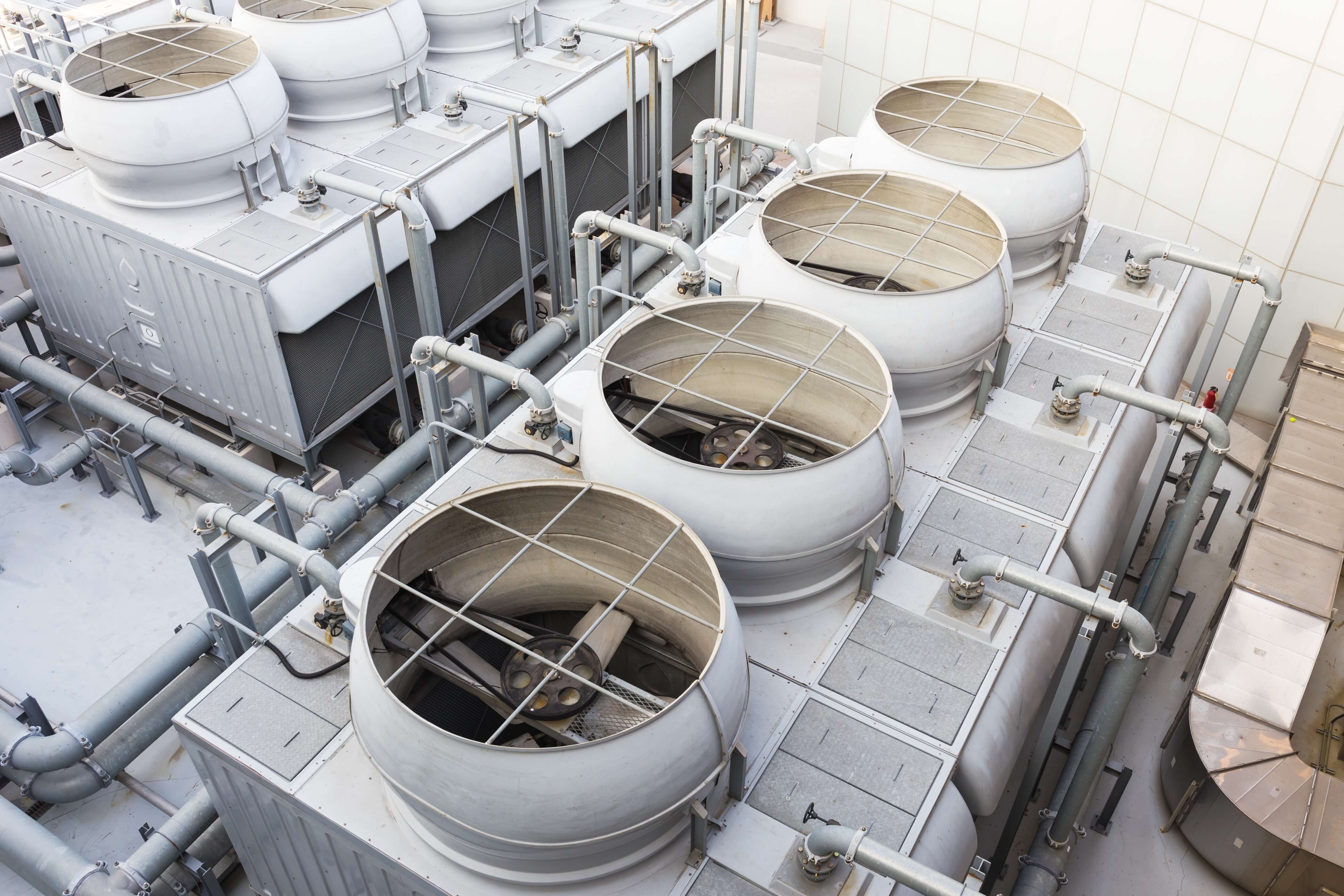
At its simplest, a sump tank (also called a water basin or reservoir) is the low point in the cooling tower where return water collects after circulating through the system.
Imagine rainwater pooling in a birdbath. That’s essentially what the sump tank does — it gathers water that’s returned from your system’s heat exchangers, chillers, or condensers before sending it back into circulation.
But unlike a birdbath, a sump tank needs to:
Maintain a stable water level
Provide suction for pumps
Support filtration and treatment
Handle debris and fluctuations
A typical sump tank has:
️ Basin Structure — Usually made of concrete, FRP, or steel
Inlet and Outlet Lines — For water return and discharge
Pumps and Suction Points — To keep water moving
Sensors and Controls — To monitor levels and quality
Each of these elements plays a role in keeping your cooling tower efficient and dependable.
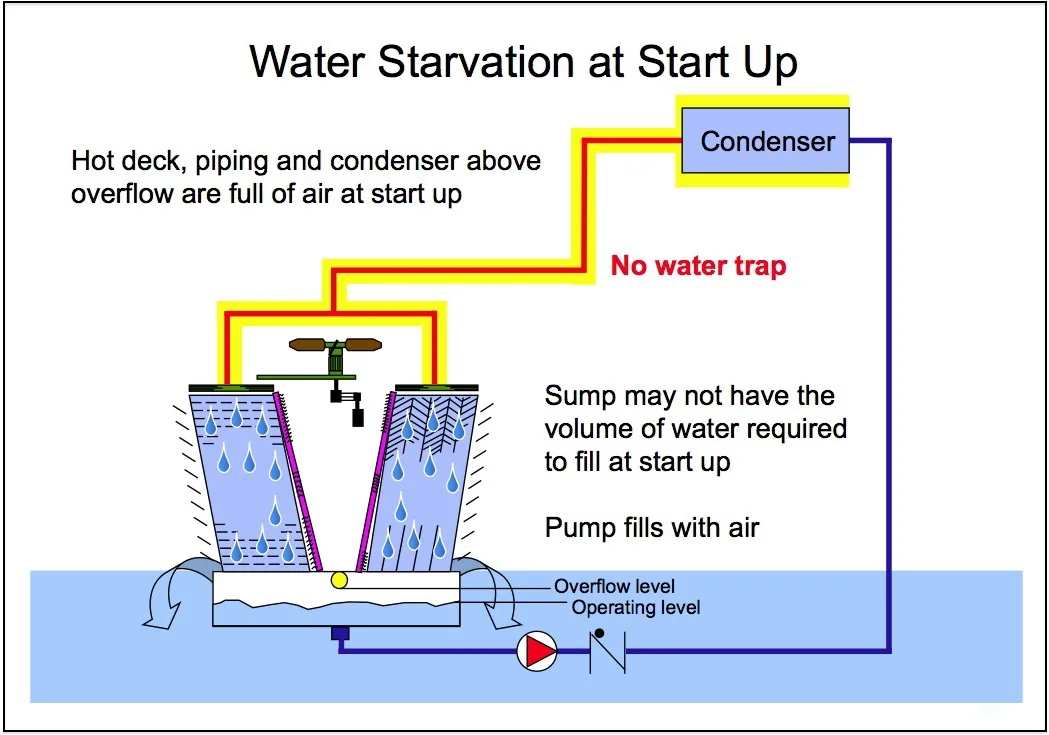
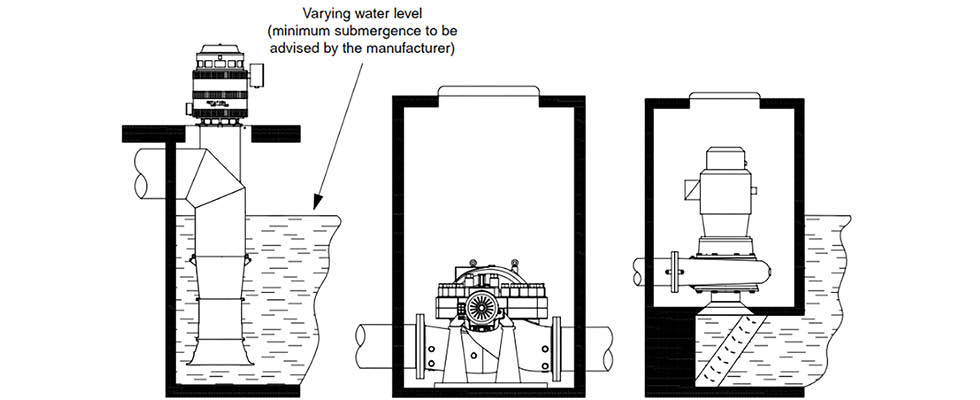
Every time your cooling tower rejects heat, water returns to the tower’s base. The sump tank collects that water and holds it temporarily so it can be recirculated.
Imagine a bucket catching rainwater before you pour it back into a watering can. If the bucket had holes or never filled up enough, you’d never water your garden properly — same idea here.
Water demand in a cooling system is rarely constant. Sometimes loads spike, sometimes they drop, and the sump tank acts as the buffer zone that keeps levels steady.
This buffer helps:
✔ Prevent pump cavitation
✔ Reduce stress on components
✔ Maintain consistent heat exchange
Pumps don’t like to drink from a trickle — they need a steady, adequate supply of water.
The sump tank:
Keeps the suction point submerged
Prevents dry pumping
Protects the pump from overheating
Without a properly managed sump, pumps can overwork or even fail prematurely — and no one wants that.
A sump tank that maintains the right water level ensures pumps don’t have to work harder than necessary. When pumps struggle, they use more electricity — and nobody enjoys higher bills.
By stabilizing flow and reducing turbulence, a good sump design helps save energy — literally pennies at a time that add up fast.
Efficient cooling towers rely on good heat transfer between water and air. If the sump tank allows debris or air pockets to form, that exchange gets interrupted.
Clean, consistent water supply enhances:
Thermal conductivity
Consistent temperature gradients
⚙ Smooth overall operations
A stable water supply helps the system handle:
Load fluctuations
Temperature changes
Demand surges
Without a properly functioning sump tank, these variations translate to stress on the whole system.
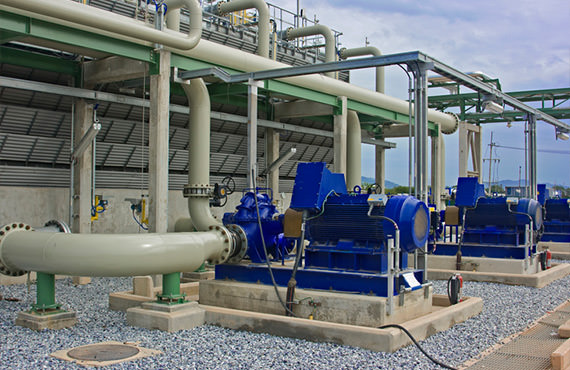
Over time, dust, scale, leaves, and other particulates settle in the sump tank. If left unchecked, this gunk:
Clogs pumps
Impedes flow
Harms water quality
Regular cleaning is essential — otherwise you’re asking for trouble.
Depending on materials and water chemistry, corrosion can occur. Rust weakens structure and compromises efficiency.
Using corrosion‑resistant materials — like FRP or coated steel — can help extend life.
Unexpected rainfall, high makeup water supply, or control failures can cause:
⚠ Overflow
⚠ Water loss
⚠ Environmental concerns
Smart sensors and overflow controls help keep the system in check.
Schedule:
✔ Sediment removal
✔ Visual inspections
✔ Pump checks
Because when you see debris early, you fix early — saving costs down the line.
Water that’s too hard, too acidic, or full of impurities accelerates scale and corrosion — in both the sump and the whole cooling tower.
A proactive water treatment plan makes all the difference.
Sensors must be accurate, and pumps must be responsive. Periodic calibration ensures your system:
Keeps levels optimal
Avoids false alarms
Maintains peak performance
IoT sensors can monitor:
Water level
Flow rate
⚠ Anomalies in real time
With alerts and analytics, you’re not guessing — you’re knowing.
Materials like:
FRP (fiber‑reinforced plastic)
Stainless steel alloys
Advanced coatings
These materials resist corrosion and reduce long‑term costs — especially in harsh environments.
A mid‑size HVAC facility was battling inconsistent water levels and frequent pump failures. After an audit and sump redesign (including improved basins, better sensors, and routine maintenance schedules), the system saw:
18% reduction in energy use
25% fewer pump replacements
More stable water flow
Partnering with a trusted supplier like Mach Cooling was key — their expertise helped redesign the sump and align water management with performance goals.
The role of a sump tank in a cooling tower isn’t glamorous, but it’s foundational. From balancing water levels to protecting pumps, improving efficiency, and supporting heat transfer — the sump tank is a quiet, essential partner in your system’s success.
By understanding how sump tanks work, tackling common challenges, and investing in smart maintenance and technology, you can keep your cooling tower operating at peak
performance — day in, day out.
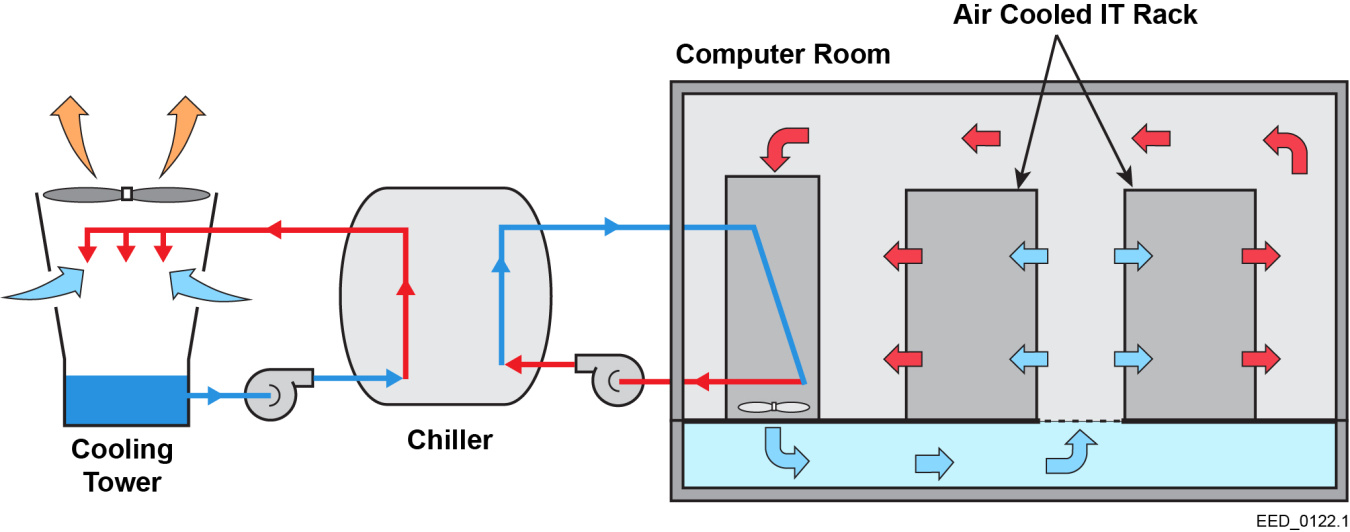
1. What is the main purpose of a cooling tower sump tank?
It collects return water, stabilizes water levels, and provides suction for pumps.
2. How often should a sump tank be cleaned?
Depending on usage, at least quarterly — more in dirty environments.
3. Can the sump tank affect pump life?
Yes — poor sump performance leads to pump cavitation and early failure.
4. Are there sensors used in sump tanks?
Yes — level sensors, flow meters, and water quality sensors help optimize performance.
5. Does the sump tank impact energy costs?
Absolutely — proper management improves flow and reduces pump energy use.