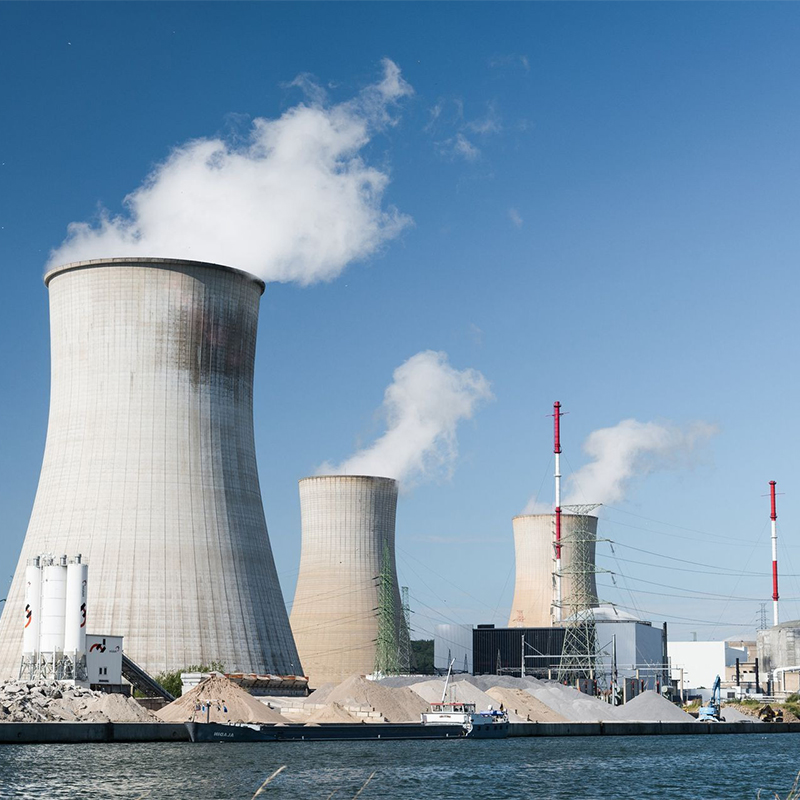
We Provide Cooling Tower Solution

Views: 0 Author: Site Editor Publish Time: 2025-12-16 Origin: Site


Improving cooling tower performance is essential for industrial plants, commercial buildings, and power facilities that rely on a stable and efficient water cooling tower system. A well-optimized water cooled tower not only enhances heat rejection capacity but also reduces operating costs, minimizes water consumption, and ensures compliance with cooling tower water quality standards.
This article provides a complete and practical guide on how to improve cooling tower performance, covering cooling water tower design, water quality management, flow control, efficiency optimization, and water-saving strategies. The solutions discussed are applicable to both open and closed loop cooling towers, with engineering best practices aligned with the experience of MACH Cooling (https://www.machcooling.com/), a professional manufacturer of high-efficiency cooling towers.
Cooling tower performance is defined by the system’s ability to remove heat from process or HVAC water using minimal energy and water. The key indicators include:
Cooling range and approach temperature
Cooling tower water flow rate stability
Cooling tower water efficiency
Total cooling tower water usage
Reliability of the cooling tower water supply
A high-performing water cooling tower maintains thermal performance under varying loads while controlling water losses and maintaining water quality.
A well-engineered cooling water tower design forms the foundation of high performance. Poor design leads to uneven water distribution, airflow short-circuiting, and excessive water losses.
Key design principles include:
Accurate heat load calculation
Proper airflow-to-water balance
High-efficiency fill media selection
Uniform water distribution systems
An optimized design improves heat transfer efficiency and reduces fan power consumption.
Oversized or undersized towers reduce performance and waste resources. Matching the water cooling tower system capacity to actual operating conditions ensures:
Stable outlet water temperature
Lower energy consumption
Reduced mechanical stress
Professional manufacturers such as MACH Cooling provide customized tower designs to suit specific process and climate conditions.
Maintaining proper water quality is critical for heat transfer and equipment protection. Poor water quality leads to scaling, corrosion, and biological fouling, which directly reduce cooling efficiency.
Typical cooling tower water quality standards focus on:
Controlled pH levels
Acceptable hardness and alkalinity
Low suspended solids
Microbial control
Meeting these cooling tower water requirements extends equipment life and improves operational reliability.
Regular cooling tower water testing is essential for performance improvement. Key parameters to monitor include:
pH
Conductivity
Hardness
Chloride concentration
Biological activity
Based on test results, chemical treatment programs can be optimized to control scale, corrosion, and biofouling, ensuring consistent thermal performance.
A stable cooling tower water supply and properly controlled cooling tower water flow rate are critical to effective heat rejection.
Best practices include:
Maintaining flow rates within design specifications
Ensuring even water distribution across fill media
Avoiding pump cavitation caused by low water levels
Proper flow control maximizes contact time between air and water, improving heat transfer efficiency.
Maintaining the correct cooling tower water level prevents operational issues such as pump damage, excessive blowdown, or chemical dilution.
Recommended measures:
Automatic makeup water valves
Level sensors with alarms
Regular visual inspections
Stable water levels support consistent performance and reduce maintenance risks.
Improving cooling tower water efficiency focuses on reducing losses while maintaining cooling capacity. Key loss areas include:
Evaporation
Drift
Blowdown
Efficiency improvement strategies include:
High-efficiency drift eliminators
Optimized cycles of concentration
Automated blowdown control systems
These measures directly reduce cooling tower water usage and operating costs.
Water conservation is increasingly important for sustainable operations. Effective cooling tower water savings strategies include:
Increasing cycles of concentration
Using side-stream filtration
Recovering and reusing blowdown water
Efficient water management not only reduces costs but also supports environmental compliance.
Modern control systems significantly enhance cooling tower water management by enabling:
Real-time monitoring of flow, conductivity, and water level
Automatic chemical dosing adjustments
Predictive maintenance alerts
Smart systems help operators maintain optimal performance under changing load and climate conditions.
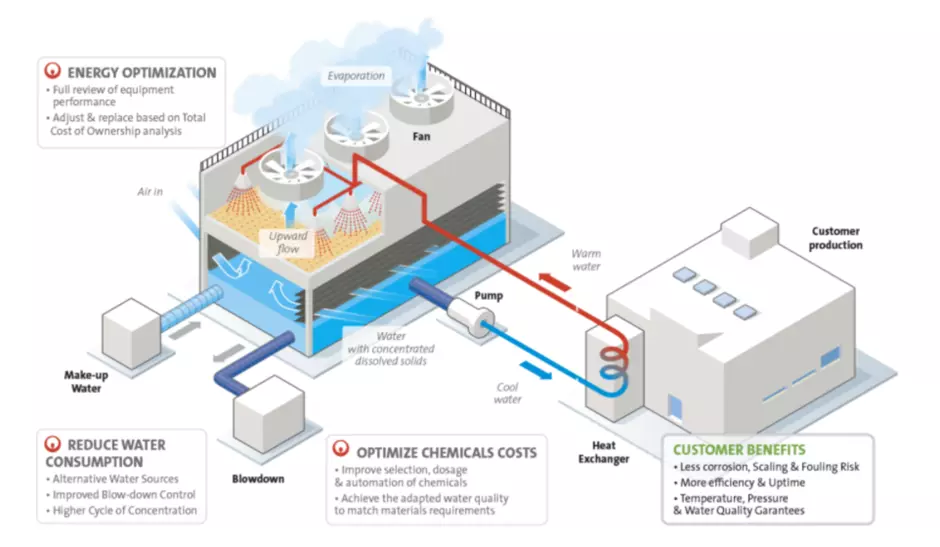
A closed loop cooling tower isolates process fluid from the external environment, reducing contamination and water treatment demand. Benefits include:
Improved water quality stability
Lower chemical consumption
Reduced scaling and fouling risks
Closed loop systems are ideal for processes requiring strict fluid cleanliness and consistent thermal performance.
MACH Cooling (https://www.machcooling.com/) is a professional manufacturer specializing in advanced water cooling towers, water cooled towers, and customized cooling solutions.
Optimized cooling water tower design
Focus on energy and water efficiency
Support for water quality management and testing
Solutions for industrial, HVAC, and process cooling applications
By combining engineering expertise with high-quality materials, MACH Cooling helps customers improve cooling tower performance while reducing total operating costs.
| Parameter | Purpose | Recommended Practice |
|---|---|---|
| pH | Prevent corrosion and scale | 7.0 – 8.5 |
| Conductivity | Control dissolved solids | As per design limits |
| Water Flow Rate | Ensure heat transfer | Stable at rated value |
| Water Level | Protect pumps | Maintain design range |
| Drift Loss | Reduce water waste | High-efficiency eliminators |
| Indicator | Meaning | Improvement Method |
|---|---|---|
| Approach Temperature | Heat rejection efficiency | Improve airflow and fill |
| Energy Consumption | Operating cost | Use VFDs and automation |
| Fouling Rate | Water quality impact | Improve water testing |
| Water Usage | Sustainability metric | Optimize blowdown control |
Improving cooling tower performance requires a comprehensive approach that integrates cooling water tower design, precise water quality control, stable cooling tower water flow rate, and advanced cooling tower water management strategies. By focusing on efficiency, water savings, and reliable operation, facilities can significantly reduce costs and extend equipment life.
For engineered solutions, customized designs, and expert support in water cooling tower systems, visit MACH Cooling at:
https://www.machcooling.com/
A high-performance cooling tower is not just an asset—it is a long-term investment in efficiency, sustainability, and operational excellence.