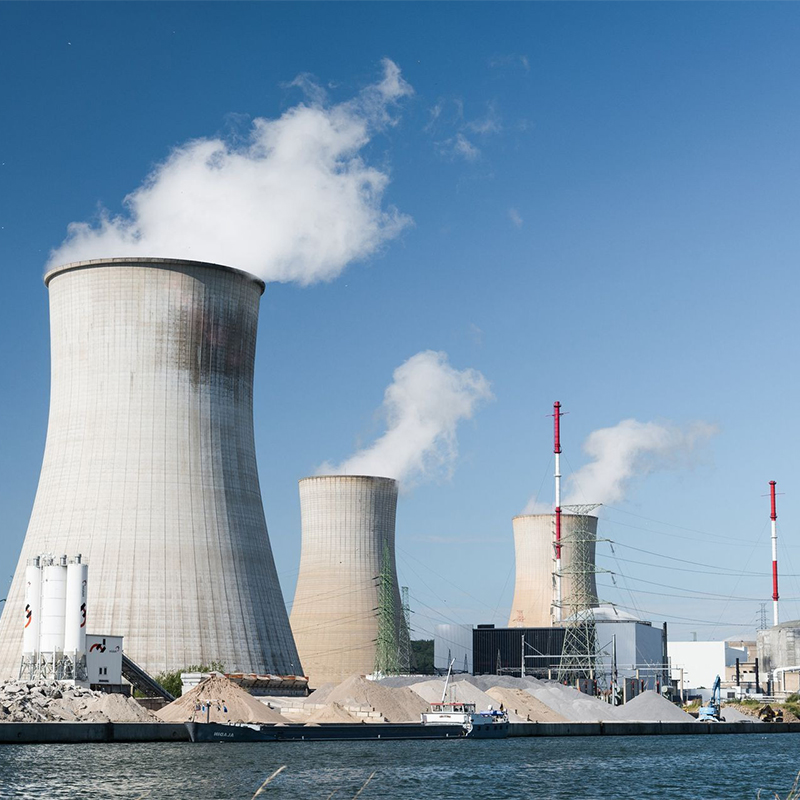
We Provide Cooling Tower Solution

Views: 0 Author: Site Editor Publish Time: 2025-11-19 Origin: Site


Industrial cooling towers play a vital role in heat dissipation, ensuring continuous, stable, and efficient operation of factories, data centers, HVAC systems, and energy facilities. Proper maintenance can significantly extend equipment lifespan, reduce failure rates, and ensure stable thermal performance.
This guide summarizes the ten essential cooling tower maintenance tips.
A well-maintained cooling tower not only reduces energy consumption but also prevents scale buildup, corrosion, fan failure, and reduced cooling efficiency. Without regular inspection, issues such as spray system blockage, fill aging, or motor overload may gradually develop, causing unplanned shutdowns or higher operating costs.
This guide provides a complete maintenance strategy grounded in real industrial operation practices.
The fill is the core component responsible for heat exchange.
Dust, scale, algae, and biological deposits can reduce cooling efficiency by 10–30%.
Clean the fill every 3–6 months
Check for deformation, brittleness, or blockage
Replace if breakage exceeds 20%
 |  |
Clogged nozzles reduce water distribution uniformity, leading to temperature rise.
Monthly inspection of nozzle flow and spray angle
Remove scale with mild acid cleaners
Replace damaged nozzles immediately
Fan operation directly affects airflow.
Check blade balance and alignment
Inspect for cracks or loosening
Lubricate bearings every 1–2 months
Ensure motor amperage is within rated value
 |  |  |
Without stable water flow, cooling performance drops significantly.
Check pump vibration and noise
Monitor seal leakage
Clean strainers
Measure actual flow vs. rated flow
Drift eliminators reduce water loss and prevent droplets from escaping.
Check structure integrity
Clean accumulated dust and algae
Replace if deformation affects airflow
Water quality affects corrosion, scaling, and microbial growth.
Clean basin quarterly
Maintain appropriate biocide dosage
Keep conductivity within recommended rang
Electrical components determine the safe operation of motors and control systems.
Inspect contactors, thermal overloads, and wiring
Check vibration sensors
Ensure VFD parameters are correct
Cooling tower casing and framework must be corrosion-free and structurally sound.
Check for corrosion in galvanized steel towers
Inspect FRP tower shells for cracks
Tighten bolts and metal connectors
A uniform water distribution system improves cooling efficiency.
Ensure even water distribution over fill
Clean header pipes
Repair leaks in joints or elbows
For cold regions, seasonal preparation is crucial.
Anti-freeze measures during winter
Thorough cleaning before summer peak load
Replace aging components before high-demand periods
| Component | Inspection Frequency | Maintenance Content |
|---|---|---|
| Fill | Every 3–6 months | Cleaning, blockage check, aging inspection |
| Spray system | Monthly | Nozzle cleaning and replacement |
| Fan & Motor | Monthly | Lubrication, vibration testing |
| Pump | Monthly | Seal, noise, flow inspection |
| Basin | Quarterly | Sediment removal, disinfection |
| Electrical system | Monthly | Controls and wiring inspection |
| Drift eliminator | Every 3–6 months | Cleaning and deformation check |
| Structure | Quarterly | Corrosion and bolt tightening |
| Water quality | Weekly | Conductivity and chemicals |
| Seasonal prep | Twice yearly | Winterization / summer overhaul |
Regular maintenance is the key to improving cooling tower reliability, efficiency, and lifespan.
Following these ten essential tips can reduce failure rates, enhance thermal performance, and keep operations stable.
For high-efficiency and easy-maintenance cooling tower solutions,
Mach Cooling provides professional design, manufacturing, and technical support: