We Provide Cooling Tower Solution

Views: 0 Author: Cindy Publish Time: 2026-10-15 Origin: Site


Choosing the right industrial cooling tower supplier in the Philippines is an important decision for factories, commercial buildings, and process plants. A reliable cooling tower helps remove unwanted heat, maintain stable operating temperatures, and support efficient production. However, selecting the right system involves more than comparing equipment prices. Cooling capacity, energy consumption, water quality, material durability, installation requirements, and after-sales support all influence long-term performance.
For companies planning a new cooling system or replacing existing equipment, understanding these factors can make purchasing decisions easier and more cost-effective. This guide explains how to select an industrial cooling tower, compare suppliers, estimate project costs, and evaluate international manufacturers.
Mach Industry (Zhejiang) Co., Ltd. is one manufacturer that industrial buyers can consider when evaluating cooling tower solutions. Visit Mach Cooling to learn more about the company and discuss your project requirements.
The Philippines has a tropical climate, with high temperatures and humidity affecting industrial cooling requirements throughout much of the year. Manufacturing plants, hotels, commercial buildings, food-processing facilities, and industrial refrigeration systems all depend on effective heat rejection.
An industrial cooling tower removes heat from circulating water and releases it into the atmosphere. In an evaporative cooling tower, a small portion of the water evaporates, carrying heat away from the remaining water. The cooled water then returns to the equipment or process that requires cooling.
When a cooling tower is properly selected, it can help maintain stable operating temperatures, support chiller efficiency, and reduce the risk of heat-related production interruptions.
However, not every cooling tower performs equally well under the same conditions. Ambient wet-bulb temperature, water flow, required outlet-water temperature, and installation layout all influence performance. Buyers should therefore select equipment based on actual operating conditions rather than relying on nominal capacity alone.
Understanding the main cooling tower configurations is an essential first step when choosing a supplier. Different designs offer different advantages in terms of footprint, maintenance access, process-fluid protection, and operating requirements.
Counterflow cooling towers move air upward while water flows downward through the fill media. Because the air and water move in opposite directions, the arrangement supports effective heat and mass transfer.
Counterflow towers are commonly considered for industrial processes, chiller plants, and applications where space efficiency matters. Their performance depends on the fill design, airflow, water distribution, and specified operating temperatures.
When comparing counterflow cooling towers, request rated capacity, dimensions, fan and motor specifications, and the design conditions used for the performance rating.
In a crossflow cooling tower, air moves horizontally across water flowing downward through the fill. Depending on the design, the water distribution system may be relatively accessible for inspection and maintenance.
Crossflow towers can suit industrial installations where the available layout supports horizontal airflow and convenient maintenance access. Nevertheless, the choice between crossflow and counterflow should be based on engineering requirements rather than a general assumption that one design is always more efficient.
Consider footprint, airflow, noise, water distribution, maintenance access, and total operating cost before deciding.
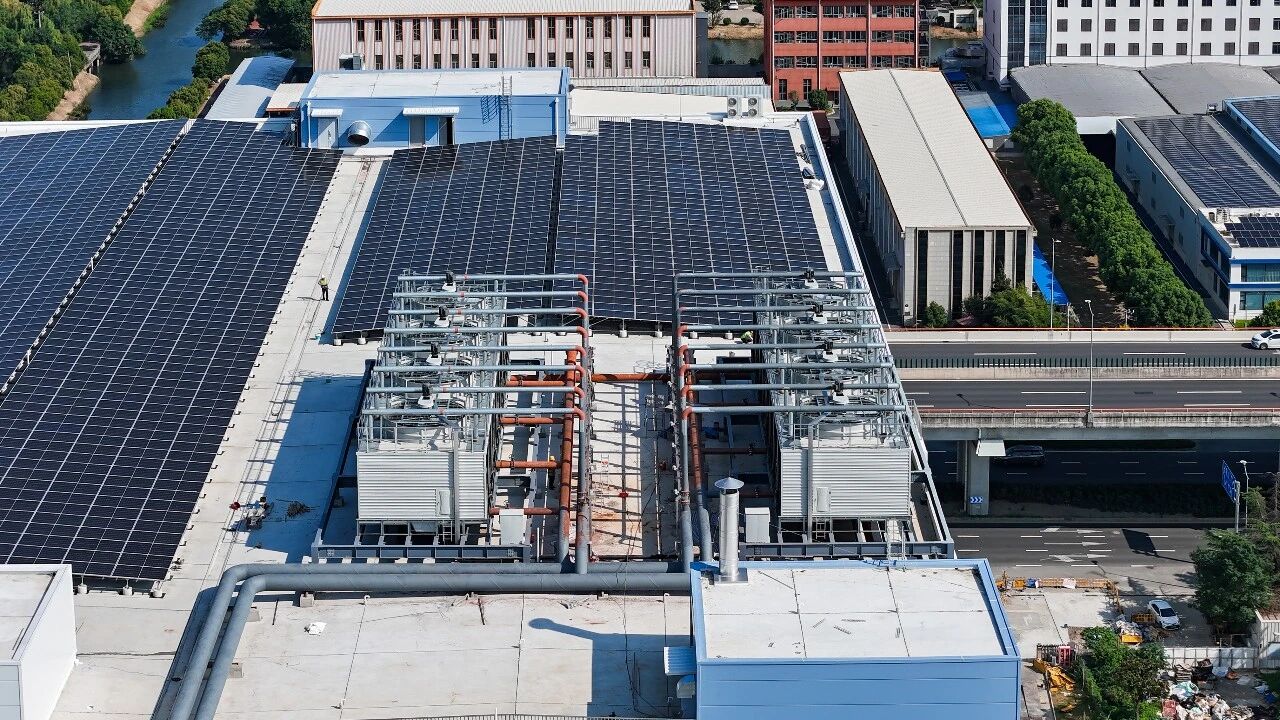
Open-circuit cooling towers bring circulating water into direct contact with air. This arrangement is widely used in industrial heat-rejection systems and central air-conditioning plants.
Open-circuit designs can provide effective cooling, but water treatment is essential because the water is exposed to the surrounding environment. Scale, corrosion, suspended solids, and biological growth can affect system performance if they are not properly controlled.
Before purchasing an open-circuit tower, evaluate water quality, filtration needs, maintenance access, and the treatment program required for your facility.
Closed-circuit cooling towers circulate process fluid through a coil, separating it from the external spray water and air. This arrangement can help protect the process fluid from environmental contamination and may reduce cleaning requirements within the process loop.
Closed-circuit equipment can be suitable for applications where process-fluid cleanliness or system separation is important. However, its purchase price and maintenance requirements may differ from those of an open-circuit system.
The best option depends on the value of protecting the process fluid, the required cooling performance, and the total cost over the equipment's service life.
A reliable industrial cooling tower supplier should understand your application before recommending a model. Providing accurate operating data helps reduce the risk of purchasing equipment that cannot meet the required cooling performance.
Cooling capacity describes the amount of heat a tower must reject under specified conditions. To determine the appropriate capacity, engineers typically need the circulating-water flow rate, hot-water temperature, required cold-water temperature, and design wet-bulb temperature.
The difference between the entering and leaving water temperatures is known as the range. The difference between the leaving-water temperature and the entering-air wet-bulb temperature is called the approach.
Both values influence cooling tower selection. A smaller approach generally requires more demanding heat-transfer performance and may affect equipment size and cost.
Do not select a tower simply because its advertised tonnage matches a rough estimate. Ask the supplier to confirm performance at your actual design conditions and provide supporting technical documentation.
Water quality has a direct effect on cooling tower reliability. Hard water can cause mineral deposits, while unsuitable water chemistry can accelerate corrosion. Suspended solids and biological growth may block fill passages, reduce heat transfer, and increase maintenance requirements.
Before requesting a quotation, identify the water source and any known water-quality issues. Explain whether your system uses municipal water, groundwater, recycled water, or another supply.
Ask the manufacturer about compatible materials, filtration requirements, water distribution design, and recommended water-treatment practices. These details are particularly important for facilities operating continuously or using water with high mineral content.
A cooling tower's energy consumption is influenced by fan power, motor efficiency, airflow requirements, control systems, and the operating conditions of the connected equipment.
Variable-frequency drives may help adjust fan speed to changing cooling demand when the system is designed and controlled appropriately. However, energy-saving claims should be supported by performance data rather than general marketing statements.
When comparing suppliers, evaluate fan and motor specifications alongside the tower's thermal performance. Also consider how the cooling tower interacts with chillers, pumps, and other components in the cooling system.
A lower initial price may not represent the best value if the equipment consumes more electricity throughout its operating life.
Cooling towers operate in wet environments, so construction materials matter. Depending on the design, equipment may use fiberglass-reinforced plastic, galvanized steel, stainless steel, or other materials.
Each material has different characteristics in terms of strength, corrosion resistance, maintenance, and cost. In coastal areas of the Philippines, salt-laden air can increase corrosion risks for unsuitable components.
Ask suppliers to specify the materials used for the casing, structural supports, fasteners, water distribution components, and other critical parts. Confirm that the selected construction is appropriate for the installation environment and expected service conditions.
Finding a suitable supplier means evaluating both the product and the company's ability to support the project. A detailed quotation, clear technical documentation, and realistic delivery commitments can help prevent costly misunderstandings.
Ask prospective suppliers about their experience with industrial cooling towers and applications similar to yours. Relevant experience may include comparable cooling capacities, process temperatures, water conditions, or environmental exposure.
Request technical datasheets, general arrangement drawings, installation requirements, and performance information. If you are working with a distributor rather than the manufacturer, clarify how technical questions will be handled and whether factory engineering support is available.
A supplier should be able to explain why a particular design suits your application instead of recommending equipment based only on its nominal capacity.
Some projects require special dimensions, specific water connections, corrosion-resistant materials, noise controls, or integration with an existing cooling system.
Confirm which options are available and whether customization affects price, production time, or warranty conditions. Before production begins, review drawings and technical specifications carefully.
Good documentation should identify the selected model, cooling conditions, dimensions, electrical requirements, connection details, accessories, and maintenance clearances. Clear information helps purchasing teams, engineers, installers, and maintenance personnel coordinate their work.
Cooling towers need ongoing inspection and maintenance. Depending on the design, components such as fans, motors, gearboxes, bearings, fill media, drift eliminators, and spray nozzles may require servicing or replacement.
Ask how replacement parts are identified and ordered, whether common components are readily available, and what troubleshooting support the supplier provides.
For overseas purchases, clarify shipping arrangements and expected spare-parts lead times. A competitive initial quotation is less attractive if obtaining essential replacement components later becomes difficult or expensive.
Philippine buyers can evaluate local suppliers, regional distributors, installation contractors, and international manufacturers. Each option can offer different advantages.
Local companies may provide convenient site inspections, installation coordination, and faster on-site response. International manufacturers may offer different product configurations, direct factory communication, or equipment customized to specific requirements.
Neither option is automatically the best choice. The right decision depends on technical suitability, total delivered cost, project schedule, and available support.
When comparing quotations, make sure each supplier is pricing a comparable scope of work. Check cooling capacity, design temperatures, construction materials, fan and motor specifications, accessories, packaging, warranty terms, and delivery arrangements.
One quotation may cover only the cooling tower, while another may include controls, installation, commissioning, or additional components.
Freight, insurance, import duties, taxes, customs clearance, and inland transportation can also influence the final project cost. Ask suppliers to identify which costs are included and which remain the buyer's responsibility.
An overseas manufacturer may be a practical option when its product range matches the application, technical support is accessible, and the total delivered cost is competitive.
Before placing an order, confirm the equipment specifications, drawing approval process, production schedule, shipping terms, warranty coverage, and spare-parts arrangements in writing.
It is also important to determine who will handle installation and commissioning in the Philippines. A qualified local contractor may be needed to coordinate the foundation, piping, electrical connections, and start-up procedures.
Mach Industry (Zhejiang) Co., Ltd. is a manufacturer that industrial buyers can evaluate when sourcing cooling tower equipment for projects in the Philippines and other international markets.
Visit the official website, https://www.machcooling.com/, to explore the company's cooling tower offerings and contact its team about your application.
Industrial cooling requirements vary considerably between projects. A manufacturing plant may need cooling for process machinery, while a commercial building may require equipment to support a central chiller system.
When contacting Mach Cooling, provide the process description, required cooling capacity, circulating-water flow rate, hot- and cold-water temperatures, design wet-bulb temperature, available installation space, and preferred construction materials.
If you are replacing an existing cooling tower, share the current model details, nameplate information, drawings, and known performance problems where available. This information gives the manufacturer a clearer basis for evaluating possible solutions.
Successful international procurement depends on clear technical and commercial communication.
Ask Mach Industry to clarify the applicable product specifications, drawing approval process, packaging, delivery arrangements, warranty conditions, and spare-parts support for your destination.
Buyers should also confirm what documentation will be supplied and whether commissioning assistance is available. Establishing responsibilities before production begins helps coordinate the manufacturer, freight forwarder, local installer, and end user.
As with any supplier, verify the equipment's suitability and all commercial terms directly before making a purchasing decision.
Cooling towers support many industries, but each application has its own operating conditions and priorities.
Manufacturing facilities may use cooling towers to support process chillers, compressors, plastic molding equipment, and other heat-generating machinery.
Food and beverage facilities may need particular attention to water quality, hygiene, and separation between process fluids and cooling water. Engineers should determine whether an open- or closed-circuit arrangement is more appropriate for the application.
The selected tower should match the actual heat load and the facility's ability to perform routine maintenance.
Hotels, shopping centers, hospitals, office buildings, and large commercial facilities may use cooling towers as part of central chiller systems.
These projects often need to balance cooling performance, footprint, noise, water consumption, and energy efficiency. Tower placement is particularly important because restricted airflow or hot-air recirculation can reduce performance.
Designers should also provide suitable access for cleaning, inspection, and safe maintenance.

Power-related facilities and process industries may require continuous cooling under demanding conditions. Depending on the application, water chemistry, reliability, material compatibility, and operating temperatures can be critical.
Work with qualified engineers to confirm the thermal design, safety requirements, and appropriate maintenance strategy. For critical operations, multiple cells or backup capacity may help maintain cooling availability during inspection or maintenance.
There is no single price for an industrial cooling tower. The final cost depends on capacity, tower configuration, materials, accessories, customization, supplier, and delivery arrangements.
A small packaged cooling tower and a large industrial installation represent very different investments. For that reason, buyers should request quotations based on their actual operating conditions rather than relying on generic prices.
Key cost factors include:
Required heat-rejection capacity and design temperatures
Counterflow, crossflow, open-circuit, or closed-circuit configuration
Construction materials and corrosion protection
Fan, motor, gearbox, and control specifications
Fill media, drift eliminators, and water distribution components
Special dimensions or project-specific customization
Packaging, freight, insurance, customs costs, and local transportation
Installation, commissioning, and required site work
Ask suppliers to separate equipment costs from optional accessories and site services. This makes it easier to compare quotations accurately.
The purchase price is only one part of the total cost of ownership. Electricity, water consumption, treatment chemicals, cleaning, inspections, spare parts, and downtime can all affect long-term expenses.
A higher-priced model may provide better value if its verified performance reduces operating costs or if its design makes maintenance easier. Evaluate such benefits using realistic operating schedules and project-specific data.
A cooling tower is a long-term investment. Its value should be measured by reliable performance throughout its service life, not simply by the price shown on the first quotation.
Correct installation is essential for cooling tower performance. The foundation must support the equipment, and the surrounding layout should provide sufficient airflow and maintenance access.
Piping, electrical connections, drainage, vibration control, and safety provisions should be designed and installed by qualified personnel. The installer should follow the manufacturer's instructions and applicable local requirements.
Before start-up, inspect the equipment, clean the water circuit, verify fan rotation, check water distribution, and complete the required commissioning procedures.
Record baseline water temperatures, flow rates, vibration levels, and power consumption. These measurements provide a useful reference for future maintenance and troubleshooting.
Regular maintenance helps protect cooling performance and extend equipment life. In tropical environments, airborne debris, mineral deposits, and biological growth can affect water distribution and fill surfaces.
Create a maintenance schedule based on operating hours, water quality, environmental exposure, and manufacturer recommendations. Keep records of inspection findings, repairs, and water-treatment results.
Water treatment helps control mineral scale, corrosion, suspended solids, and biological growth. The correct treatment program depends on the source water, system materials, cycles of concentration, and applicable regulations.
Monitor water chemistry and maintain makeup-water and blowdown controls as designed. Poorly managed cooling water can reduce performance and create operational and health risks, so treatment procedures should be established and maintained by qualified personnel.
Inspect fans and drive assemblies for unusual noise, vibration, loose fasteners, and visible wear. Check motors and electrical components according to the manufacturer's safety procedures.
Examine fill media for blockage, damage, or deposits. Inspect drift eliminators for correct positioning and condition, and verify that spray nozzles and distribution pipes deliver water evenly.
Any cleaning, inspection, or repair should follow appropriate isolation procedures and the manufacturer's safety instructions.
Several mistakes can lead to unnecessary costs or poor cooling performance.
The first is choosing equipment based only on the lowest quotation. A low initial price may exclude important accessories, shipping expenses, or installation services.
The second is comparing nominal capacity ratings without checking the design conditions behind them. Two towers with similar advertised capacities may perform differently under the same ambient conditions.
Other common mistakes include overlooking water quality, failing to check maintenance access, ignoring spare-parts availability, and ordering equipment before confirming the actual heat load.
To avoid these problems, prepare a technical specification, request comparable quotations, review drawings, and clarify warranty and delivery responsibilities before placing an order.
Before selecting an industrial cooling tower supplier in the Philippines, ask the following questions:
What cooling capacity can the equipment deliver under my specified operating conditions?
Which materials are used in the main structural and heat-transfer components?
What are the equipment dimensions, electrical requirements, and maintenance clearances?
Which accessories are included in the quotation?
What is the expected production and delivery schedule?
What does the warranty cover, and what exclusions apply?
How can replacement parts be ordered?
Who is responsible for installation and commissioning?
What technical support is available after delivery?
What additional shipping, import, or site costs should I budget for?
Clear answers help you compare suppliers on technical suitability, service capability, and overall project value.
Start with the required heat-rejection load, water flow rate, hot-water temperature, cold-water temperature, and design wet-bulb temperature. Also consider site elevation, airflow restrictions, water quality, and future capacity requirements.
Ask the supplier to confirm the equipment's performance under your specified conditions and provide supporting technical documentation.
Yes. Overseas procurement can be practical when the manufacturer offers suitable equipment and the buyer plans for shipping, import procedures, installation, and after-sales support.
Confirm specifications, drawings, packaging, delivery terms, warranty coverage, and spare-parts arrangements in writing. You can contact Mach Industry (Zhejiang) Co., Ltd. through Mach Cooling to discuss your cooling requirements and available options.
Maintenance frequency depends on operating hours, water chemistry, environmental conditions, and manufacturer recommendations. Routine inspections may be needed frequently, while deeper cleaning and component checks should follow a planned schedule.
Water-treatment monitoring should be ongoing. A qualified maintenance team should establish the final schedule based on the equipment design and site conditions.
Provide the required cooling capacity, water flow rate, entering and leaving water temperatures, design wet-bulb temperature, water source, installation location, available space, and any special material requirements.
If possible, include existing equipment drawings or photographs. More complete information helps the supplier evaluate the application and prepare a more relevant quotation.
Choosing the right industrial cooling tower supplier in the Philippines requires a balance of thermal performance, durability, energy consumption, maintenance needs, and total delivered cost.
Start by defining your cooling requirements and operating conditions. Then compare suppliers using consistent technical and commercial criteria. Consider the tropical environment, water quality, installation constraints, availability of spare parts, and the level of support available after delivery.
Mach Industry (Zhejiang) Co., Ltd. is one manufacturer you can evaluate for your industrial cooling project. Visit https://www.machcooling.com/ to explore its offerings and contact the company with your requirements.
A well-selected cooling tower is more than a piece of industrial equipment. It is an investment in stable production, manageable operating costs, and dependable long-term cooling performance.