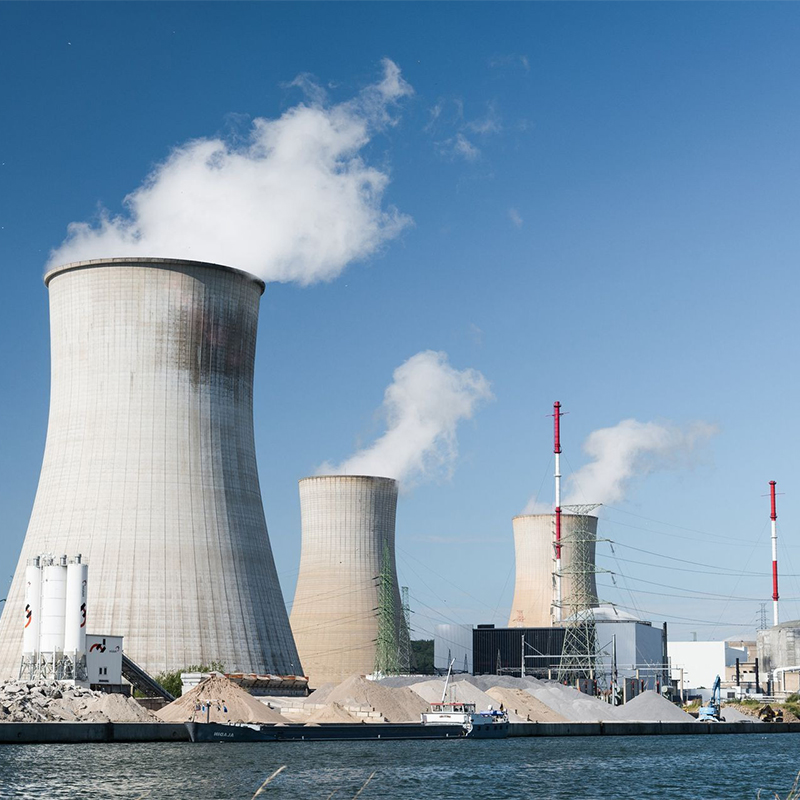
We Provide Cooling Tower Solution

Views: 0 Author: Cindy Publish Time: 2026-10-21 Origin: Site


A cooling tower basin may look like a simple water collection area, but it plays a critical role in the entire cooling system. It collects cooled circulating water and directs it back to the process or heat exchanger. When the basin develops leaks, corrosion, blockages, or structural damage, the consequences can extend far beyond the basin itself.
For industrial facilities, even a minor defect can lead to water loss, higher operating costs, unstable pump operation, and unplanned downtime. If the problem is ignored, a small crack or a layer of accumulated sludge may eventually develop into a more expensive maintenance issue.
So, how can you identify common cooling tower basin defects, determine their causes, and choose the right treatment method?
This article explains the most frequent cooling tower basin problems, practical repair techniques, inspection procedures, and preventive maintenance strategies. It also discusses how reliable cooling tower design and professional manufacturing support long-term system performance.
A cooling tower basin, also called a cold-water basin or collection basin, is the lower section of a cooling tower. It collects water after the water passes through the fill section and releases heat into the atmosphere.
The basin stores enough water to support stable circulation and provides the suction supply for the circulating water pumps. Depending on the cooling tower design, it may be made from reinforced concrete, galvanized steel, stainless steel, or corrosion-resistant composite materials.
The basin has several essential functions:
Collecting cooled water: It receives water returning from the cooling tower's heat-rejection process.
Maintaining water supply: It provides a reservoir for circulating pumps.
Supporting stable operation: A suitable water level helps prevent pump suction problems and air entrainment.
Allowing sediment collection: Some suspended particles settle at the bottom and must be removed through cleaning and blowdown.
Supporting water management: The basin works with the makeup water, overflow, drain, and water treatment systems.
A basin defect can interfere with any of these functions. For example, a blocked suction screen can restrict water flow, while a leak can reduce the available operating water volume.
Different materials have different weaknesses, so the treatment method should match the basin structure.
Concrete basins are commonly used in large industrial cooling towers. They are durable, but cracks, joint deterioration, reinforcement corrosion, and surface erosion can develop over time.
Metal basins are often used in packaged or modular cooling towers. Their main risks include corrosion, damaged protective coatings, weakened joints, and leakage around connections.
FRP and other composite basins offer low weight and good corrosion resistance. However, impact damage, poor joints, aging resin, or installation stress can still cause defects.
Before carrying out repairs, identify the basin material and construction method. A repair product suitable for concrete may not bond properly to metal or composite surfaces.

Cooling tower basins experience continuous exposure to water, chemicals, temperature changes, and suspended solids. Over time, these conditions can cause several recurring problems.
Water leakage is one of the most common cooling tower basin defects. It may appear around joints, drain connections, pipe penetrations, fasteners, or damaged basin walls.
In concrete basins, leakage often results from cracks, failed waterstops, deteriorated sealants, or porous concrete. In metal and composite basins, the cause may be corrosion perforation, loose connections, damaged seals, or manufacturing and installation defects.
Common warning signs include unexplained makeup water consumption, damp areas around the basin, visible dripping, and a water level that falls faster than expected when the system is not operating.
Treatment methods:
Locate the leakage point and determine whether it is caused by a surface defect, failed joint, or structural damage.
Isolate the affected area and lower the water level as required for safe repair.
Remove loose material, contamination, and failed sealant.
Apply a compatible repair mortar, sealant, patching system, or approved lining.
Allow the repair to cure according to the manufacturer's instructions.
Refill the basin and verify that the leakage has stopped.
For active leaks, severe cracking, or leaks caused by structural movement, a simple surface coating may not be sufficient. The underlying cause must be addressed before the basin is returned to service.
Concrete cracks can develop because of shrinkage, thermal movement, foundation settlement, excessive loading, reinforcement corrosion, or inadequate construction joints.
Not every crack indicates a serious structural problem. Fine, stable surface cracks may be relatively minor, while widening cracks, displaced sections, or cracks associated with leakage may indicate more significant damage.
Treatment methods:
Clean the crack and assess its width, depth, and movement.
Use a suitable crack filler or sealant for stable, non-structural cracks.
Consider an appropriate injection system for deeper cracks, selected according to whether the crack is dry, damp, or actively leaking.
Repair damaged concrete and restore protective coatings where necessary.
Obtain an engineering assessment for cracks associated with settlement, reinforcement damage, or structural instability.
A useful rule is to diagnose the crack before choosing the repair material. Filling a crack without understanding why it formed may only provide a temporary solution.
Metal basins can corrode when protective coatings deteriorate or when water chemistry creates an aggressive environment. Chlorides, unsuitable pH levels, deposits, and prolonged moisture exposure may accelerate corrosion, depending on the metal and operating conditions.
Early signs include discoloration, rust spots, blistered coatings, pitting, and flaking paint. More advanced corrosion can reduce the thickness of the basin plate and eventually create holes.
Treatment methods:
Remove deposits and loose coating from the affected area.
Assess the remaining metal thickness and check whether corrosion has penetrated the plate.
Repair or replace severely weakened sections using a qualified procedure suitable for the basin material.
Apply a compatible protective coating to properly prepared surfaces.
Correct the water chemistry or operating conditions contributing to corrosion.
Do not simply paint over active corrosion. If the metal underneath has become too thin, coating alone will not restore structural strength.
For replacement work, material selection should consider water chemistry, temperature, chemical treatment, expected service life, and maintenance requirements.
Sediment and sludge commonly collect at the bottom of a cooling tower basin. They may contain dust, sand, corrosion products, biological debris, and suspended solids carried into the system by circulating water or air.
Scale is different from loose sediment. It forms when dissolved minerals precipitate and adhere to surfaces. Both can create maintenance problems, but they may require different cleaning methods.
Excessive deposits can block suction screens, interfere with water circulation, increase the risk of under-deposit corrosion, and create favorable conditions for biological growth.
Treatment methods:
Drain or partially lower the basin in accordance with the maintenance plan.
Remove loose sludge using suitable vacuuming or sediment-removal equipment.
Clean surfaces using methods compatible with the basin material and protective lining.
Use an approved descaling product only when mineral scale is present and the product is compatible with the system.
Inspect the basin floor, drains, and suction screens after cleaning.
Review filtration, side-stream treatment, blowdown, and water treatment practices to reduce future accumulation.
Avoid directing high-pressure cleaning equipment at vulnerable coatings, joints, or thin metal sections. Aggressive cleaning can turn a manageable maintenance issue into a repair job.
Deformation may occur when a basin is improperly supported, subjected to excessive loading, exposed to foundation movement, or affected by deterioration of its supporting structure.
Possible signs include uneven basin floors, bulging walls, displaced joints, distorted panels, and unusual changes in water depth.
These symptoms should not be treated as cosmetic defects. Structural movement may affect water containment, pump suction conditions, and the stability of connected components.
Treatment methods:
Check the foundation, supports, anchors, and surrounding structure.
Compare the affected area with design drawings and installation requirements.
Determine whether the deformation is stable or continuing.
Repair or replace damaged panels, supports, or concrete sections as appropriate.
Have a qualified structural engineer assess significant movement or suspected load-bearing damage.
Simply filling a deformed area or adding sealant will not correct an underlying foundation or structural problem.
The suction screen prevents large debris from entering the circulating water pump. Over time, leaves, sludge, fibers, plastic fragments, and biological material can accumulate around the screen or outlet.
A blocked screen restricts water flow and may increase pump suction losses. Depending on the system design, this can contribute to reduced flow, unstable operation, noise, vibration, or cavitation risk.
Treatment methods:
Follow the plant's isolation and lockout procedures before accessing the basin.
Inspect the suction screen, outlet, and accessible pipe sections.
Remove accumulated debris using suitable tools.
Check the screen for damage and replace it if necessary.
Confirm that the water level and pump suction conditions meet operating requirements.
Investigate recurring blockage rather than treating it as an isolated cleaning issue.
If the basin repeatedly collects large amounts of debris, review air intake protection, housekeeping, filtration, and the placement of the suction screen.
Warm circulating water can support algae, bacterial growth, and biofilm formation when operating conditions allow. Algae may make basin surfaces slippery, while biofilm and accumulated organic matter can contribute to fouling and poor water quality.
Biological growth is not merely an appearance problem. It can affect system hygiene, increase cleaning requirements, and contribute to operational and occupational health risks.
Treatment methods:
Remove visible biological deposits using an approved cleaning procedure.
Apply a water treatment and disinfection program appropriate for the system.
Monitor relevant water chemistry and treatment performance.
Reduce stagnant areas and remove accumulated organic material.
Maintain records of cleaning, treatment, and water quality.
Cooling towers can present a Legionella risk when poorly managed. Cleaning and disinfection should follow applicable regulations and a site-specific water management plan. Do not rely on visual cleanliness alone as proof that water is microbiologically safe.
Repairing a defect is only part of the job. If the root cause remains, the same problem may return.
Protective coatings, sealants, gaskets, concrete, and composite materials gradually age. Chemical exposure, unsuitable cleaning agents, and poorly controlled water chemistry can accelerate deterioration.
The best response is to select repair materials compatible with the original basin and operating conditions. For long-term reliability, the maintenance team should also investigate whether the existing material remains appropriate for the system.
Incorrect leveling, inadequate support, poor joint preparation, and improperly installed connections can introduce stress into a basin from the beginning.
Foundation settlement can create additional movement that leads to cracks and leakage. If defects appear repeatedly in the same area, inspect the supporting structure and installation details rather than repeatedly patching the surface.
Uncontrolled scaling, corrosion, and biological growth can all shorten basin service life. Poor water treatment may also allow suspended solids to accumulate faster than normal.
A properly managed program should consider makeup water quality, cycles of concentration, corrosion control, scale prevention, biological control, and blowdown requirements. The correct treatment depends on the system and should be developed with qualified water treatment specialists.
In cold climates, water trapped in vulnerable areas can freeze and expand. Repeated freeze-thaw cycles may damage concrete, joints, coatings, and some pipe connections.
Temperature fluctuations can also create expansion and contraction stresses. Seasonal inspection, proper drainage of exposed sections, and appropriate winterization procedures help reduce these risks.
A reliable repair begins with a systematic inspection. Instead of fixing whatever is easiest to see, evaluate the basin as part of the complete cooling water system.
Look for cracks, rust, coating blisters, sediment, algae, damaged seals, and signs of leakage. Inspect drain connections, overflow lines, makeup water components, and accessible pipe penetrations.
Where safe and operationally appropriate, monitor water levels under known conditions. Account for evaporation, blowdown, drift, makeup water operation, and changes in system demand before concluding that a falling water level indicates a leak.
Never perform a water-level test that could expose pumps to insufficient suction or compromise the process cooling supply.
For concrete basins, assess crack patterns, joint condition, surface deterioration, and any evidence of reinforcement corrosion. For metal basins, inspect coating adhesion, corrosion depth, plate condition, and connection integrity.
Composite basins require attention to cracks, impact damage, delamination, and joint condition.
If damage is extensive or the basin's structural integrity is uncertain, obtain a specialist assessment before attempting repairs.
Water quality data can help explain recurring defects. Depending on the system, useful measurements may include pH, conductivity, hardness, alkalinity, chloride concentration, suspended solids, and indicators used by the site's water treatment program.
Also inspect pump suction conditions, screen cleanliness, drain function, and water distribution. This broader approach helps determine whether a basin defect is an isolated problem or a symptom of poor system operation.
The right treatment depends on the defect type, material, severity, and operating conditions.
For small, stable defects, compatible sealants and repair compounds may provide an effective solution. Deeper cracks, active water leakage, and defects associated with movement may require specialist injection, joint reconstruction, lining repair, or structural work.
Surface preparation is critical. Contaminants, loose material, and incompatible old coatings can prevent repair products from bonding properly.
After the repair has cured, inspect the area and verify its performance before returning the basin to normal service.
Corrosion treatment should begin with an assessment of the remaining material thickness. Remove corrosion products and failed coatings using a method suitable for the substrate, then repair damaged sections as required.
Apply a compatible protective coating according to the product specifications, including surface preparation, curing time, and operating limits. Where corrosion is widespread or the basin plate is seriously weakened, partial or complete replacement may be more reliable than repeated patching.
Remove loose deposits using appropriate mechanical or vacuum cleaning methods. If scale is present, select a cleaning chemical based on the deposit composition and the compatibility of the basin, seals, pipes, and coatings.
Follow the chemical supplier's safety instructions, including requirements for dilution, ventilation, personal protective equipment, neutralization, and disposal. Never mix cleaning chemicals unless the procedure explicitly permits it.
Once cleaning is complete, inspect the basin and improve solids control to prevent rapid reaccumulation.
A basin that retains water in unintended areas may have an uneven floor, obstructed drain, or poor drainage arrangement. Correcting these issues may require drain cleaning, local surface repair, panel adjustment, or engineering work.
Structural deformation and foundation settlement require more careful investigation. Identify the source of movement before making permanent repairs, or the defect may recur.
A complete cleaning procedure should remove sediment, debris, and biological deposits. If disinfection is required, use the site-approved method and chemical concentration, following applicable health and environmental requirements.
Before cleaning, isolate equipment and establish safe access. After cleaning, inspect screens and outlets, verify the water treatment system is ready for operation, and restore the basin according to the site's commissioning procedure.
Should you repair the basin or replace it? The answer depends on the condition of the structure, the extent of the defects, and the expected cost over the remaining service life.
Repair may be appropriate when damage is localized, the structure remains sound, and the repair can restore reliable water containment.
Replacement may be the better option when corrosion is widespread, cracks continue to reopen, the basin has significant deformation, or repeated repairs are costing more than a planned upgrade.
Consider the following factors before making a decision:
Extent and severity of the damage
Remaining structural strength
Compatibility and expected life of repair materials
Frequency of previous failures
Cost of repair, downtime, and future maintenance
Availability of replacement parts and technical support
A low initial repair cost does not always mean the best long-term value. A documented condition assessment can help maintenance teams make a more informed decision.
Preventive maintenance helps identify defects before they cause major leakage or cooling system interruptions. The schedule should reflect the tower design, operating environment, water quality, and manufacturer's recommendations.
A practical maintenance plan may include the following tasks:
During routine operating checks:
Observe basin water level and makeup water behavior.
Check for visible leakage, abnormal deposits, and obvious blockages.
Confirm that suction screens and accessible outlets are functioning properly.
During planned maintenance:
Inspect basin walls, floor, joints, coatings, drains, and connections.
Remove accumulated sediment and debris.
Review water treatment records and recurring maintenance issues.
Record defects with photographs, locations, and repair dates.
During annual or major shutdown inspections:
Assess the overall condition of the basin structure.
Examine recurring cracks, corrosion, and coating failures.
Review the effectiveness of previous repairs.
Plan replacement or rehabilitation where necessary.
The intervals above are a general framework, not a substitute for site-specific inspection requirements.
Good water management reduces scale, corrosion, and biological growth. Monitor the parameters specified in the site's water treatment program and adjust treatment based on actual operating conditions.
Where solids accumulation is a recurring problem, review filtration, blowdown, makeup water quality, and housekeeping around the cooling tower. Cleaning alone will not solve a persistent source of contamination.
Before winter, assess freeze protection, drainage, exposed connections, and any basin areas vulnerable to ice formation. Follow the tower manufacturer's instructions for cold-weather operation.
Before periods of high summer demand, verify that the basin is clean, water level controls operate correctly, screens are clear, and pumps receive an adequate water supply.
Seasonal preparation is especially valuable for facilities where cooling demand changes sharply throughout the year.
Cooling tower basin maintenance involves water, chemicals, electrical equipment, slippery surfaces, and potentially hazardous biological agents. Safety must come before speed.
Before maintenance begins:
Apply the site's lockout/tagout procedures and isolate relevant equipment.
Prevent pumps from starting unexpectedly.
Assess chemical hazards and use suitable personal protective equipment.
Provide safe access, fall protection, and appropriate ventilation.
Follow confined-space requirements whenever the work area meets the site's confined-space criteria.
Manage cleaning and disinfection according to the site's water management and occupational safety procedures.
Dispose of wastewater and chemical residues in accordance with applicable requirements.
Cooling tower water may expose workers to Legionella-containing aerosols. Avoid creating unnecessary aerosols during cleaning, and follow the site's risk assessment and applicable public health guidance.
Never enter a basin or confined area without the required authorization, atmospheric assessment, protective measures, and rescue arrangements.
The basin does not directly perform all the tower's heat-transfer work, but its condition strongly influences system reliability.
A leaking basin increases water consumption and can create water damage around the tower. A low water level may cause pump suction problems, while a blocked screen can restrict circulation. Excessive sludge can contribute to fouling, corrosion, and repeated maintenance shutdowns.
Poor water quality can also affect other cooling tower components, including fill, distribution nozzles, piping, and heat exchangers. In this way, a basin defect can become a system-wide problem.
The best maintenance strategy therefore combines basin inspection with monitoring of pump performance, water chemistry, circulation, and overall cooling demand.
Cooling tower reliability depends on more than the quality of individual components. Basin design, material selection, fabrication, installation, water treatment, and maintenance all influence service life.
When evaluating a cooling tower manufacturer or replacement solution, consider:
Material suitability: Is the basin material compatible with the expected water chemistry and operating environment?
Structural design: Are the basin supports, joints, and connections appropriate for the application?
Maintainability: Can operators access drains, screens, and inspection points safely?
Documentation: Are installation instructions, maintenance guidance, and technical specifications available?
Technical support: Can the supplier help identify suitable repairs or replacement options?
Lifecycle cost: Will the solution offer a reasonable balance between purchase price, maintenance, downtime, and service life?
Ask for technical details relevant to your actual operating conditions rather than choosing a product based on price alone.
Mach Industry (Zhejiang) Co., Ltd. serves the industrial cooling market through its cooling tower business. When evaluating cooling tower equipment or addressing basin-related problems, customers should consider the complete system, including basin construction, water circulation, materials, and maintenance access.
For existing cooling towers, the first step is to document the defect clearly. Useful information includes the tower model, basin material, operating water temperature, water treatment conditions, photographs of damaged areas, leakage observations, and any previous repair history.
This information helps the technical team evaluate whether the problem may be addressed through localized repair, component replacement, or a broader equipment upgrade.
For new equipment or replacement projects, buyers should confirm the available product range, basin specifications, material options, design conditions, and technical support directly with the manufacturer.
Visit the official website of Mach Industry (Zhejiang) Co., Ltd. at https://www.machcooling.com to learn more about its cooling tower solutions and discuss project requirements.
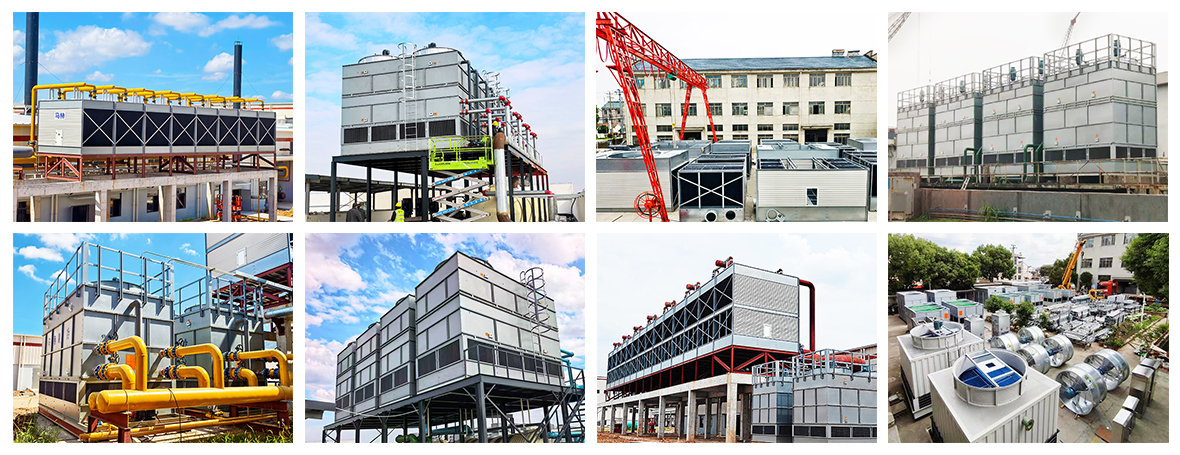
Cooling tower basin defects may begin as small leaks, surface corrosion, or sediment accumulation, but ignoring them can lead to greater water loss, pump problems, maintenance costs, and unplanned downtime.
The most effective approach combines accurate diagnosis, material-compatible repairs, safe cleaning procedures, and preventive maintenance. Cracks should be assessed before filling, corrosion should be evaluated before coating, and recurring sediment should prompt a review of water treatment and solids control.
When structural damage is severe or defects repeatedly return, basin replacement or professional rehabilitation may offer better long-term value than continued patching.
By inspecting the basin regularly and addressing the causes of defects—not just their visible symptoms—industrial facilities can improve cooling tower reliability and protect the wider cooling system.
The most common defects include water leakage, concrete cracking, metal corrosion, sludge and scale accumulation, structural deformation, blocked suction screens, and biological growth.
Look for visible water seepage, damp areas, unexplained makeup water consumption, and water-level changes that cannot be explained by evaporation, blowdown, drift, or operating conditions. Confirm the cause before beginning repairs.
Yes, many cracks can be repaired. However, the method depends on crack depth, movement, leakage, and structural condition. Significant or recurring cracks may require specialist assessment.
Cleaning frequency depends on water quality, airborne contamination, system operation, and the rate of sediment accumulation. Inspect regularly and establish a cleaning schedule based on actual basin conditions and the site's water management plan.
Sludge can form from airborne dust, suspended solids, corrosion products, biological debris, and material entering through the circulating water. Filtration, blowdown, water treatment, and regular cleaning can help control accumulation.
Replacement should be considered when corrosion is widespread, structural damage is serious, leakage repeatedly returns, or repair costs and downtime become unreasonable compared with a planned replacement.
A qualified cooling tower service provider or manufacturer can help assess equipment requirements and identify appropriate repair or replacement options. Contact Mach Industry (Zhejiang) Co., Ltd. through https://www.machcooling.com for information about its available cooling tower solutions.