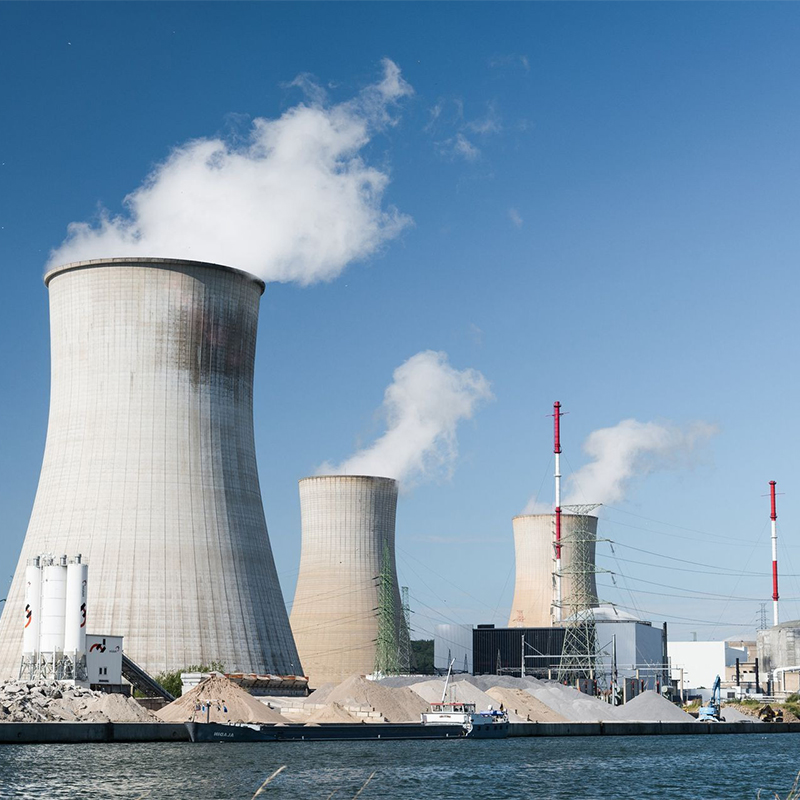
We Provide Cooling Tower Solution

Views: 0 Author: Site Editor Publish Time: 2026-10-16 Origin: Site


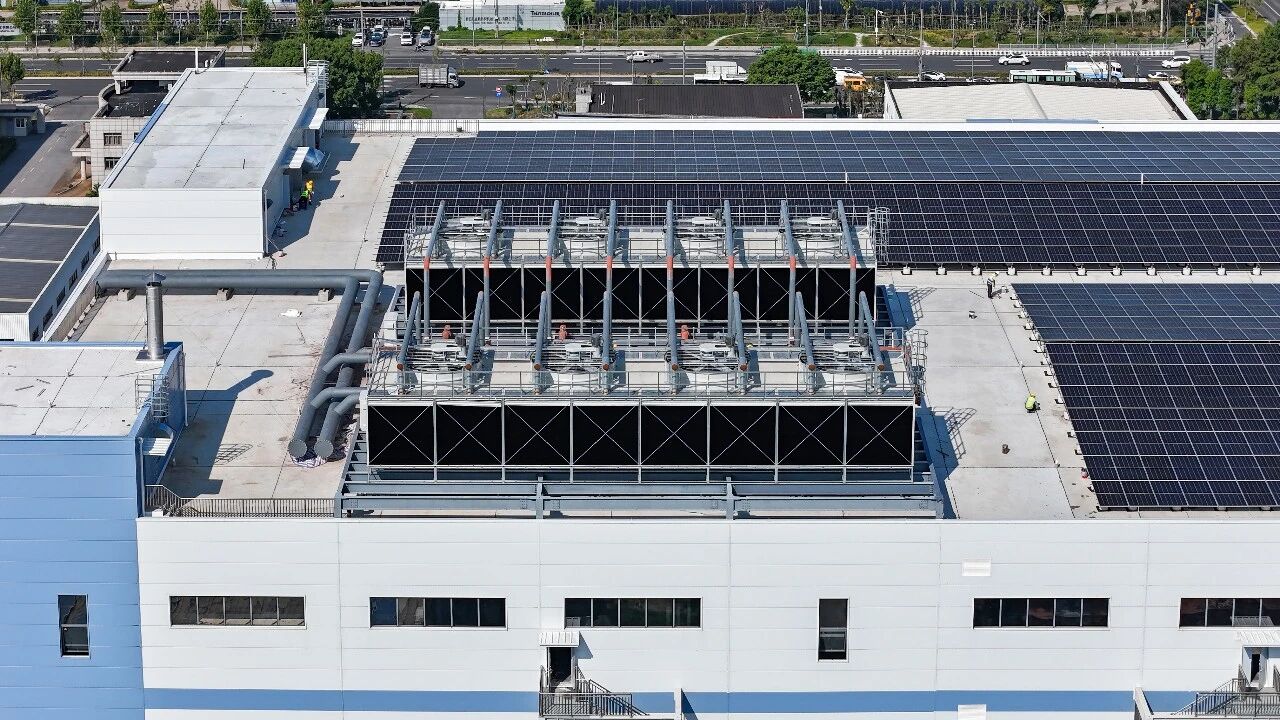
Choosing between a fluid cooler and a cooling tower can have a major impact on your industrial facility’s operating costs, water consumption, cooling performance, and maintenance requirements. Although both systems remove unwanted heat, they use different heat-rejection methods and may deliver very different results under the same operating conditions.
Some fluid coolers transfer heat directly to ambient air, while others use evaporative cooling to improve performance. Conventional cooling towers, meanwhile, typically rely on water evaporation to remove heat from circulating water. So, which system is right for your application?
The answer depends on several factors, including your process temperature, heat load, local climate, water availability, energy costs, and maintenance capabilities.
In this guide, we’ll explain the key differences between fluid coolers and cooling towers, compare their advantages and disadvantages, and help you determine which cooling solution best fits your requirements. We’ll also explain how Mach Industry (Zhejiang) Co., Ltd. can support your cooling tower selection process.
A fluid cooler is a heat-rejection device that removes heat from a circulating liquid, such as water or a water-glycol mixture. The warmed fluid flows through a heat exchanger, while fans move ambient air across the heat-transfer surface. Heat transfers from the liquid to the air, allowing the cooled fluid to return to the industrial process.
Unlike a conventional open-circuit cooling tower, a fluid cooler can keep the process fluid inside a closed circuit. This helps reduce direct exposure to airborne contaminants and limits fluid loss caused by evaporation when the unit operates in dry mode.
However, not all fluid coolers work the same way. The term generally covers two main designs: dry fluid coolers and evaporative fluid coolers. Understanding this distinction is essential when comparing a fluid cooler vs a cooling tower.
A dry fluid cooler uses sensible heat transfer to remove heat from the process fluid. The liquid flows through a coil or heat exchanger, and fans push ambient air across its external surface. Heat passes through the heat-exchanger wall into the air and is discharged into the surrounding environment.
Because the process fluid does not normally contact the outside air directly, the system can help maintain fluid cleanliness and reduce cooling-water requirements.
The biggest advantage is water conservation. A dry fluid cooler does not rely on evaporating cooling water during normal operation, making it attractive for facilities facing water restrictions or high water costs.
However, dry cooling has a limitation: its performance depends heavily on outdoor air temperature. When ambient temperatures rise, the unit may struggle to cool the process fluid sufficiently without a larger heat exchanger, increased airflow, or additional cooling equipment.
If your industrial process requires low fluid temperatures during the hottest days of the year, you should carefully evaluate the dry cooler’s rated performance before making a decision.
An evaporative fluid cooler combines a closed process-fluid circuit with evaporative cooling.
Warm process fluid circulates through a heat exchanger while water is sprayed over the outside of the coils. Fans move air through the equipment, allowing a portion of the spray water to evaporate. This evaporation removes heat from the coil surface and cools the fluid inside.
The process fluid remains separated from the external spray water, helping reduce direct contamination of the process circuit.
Compared with a dry fluid cooler, an evaporative fluid cooler can achieve better cooling performance under hot conditions because evaporation improves heat rejection. However, it consumes water and requires suitable water treatment, cleaning, and routine inspection.
In some applications, an evaporative fluid cooler may also be described as a closed-circuit cooling tower. Equipment terminology varies among manufacturers, so always check the actual design rather than relying on the product name alone.
A cooling tower is a heat-rejection system that removes heat from circulating water by bringing the water into contact with moving air. In a typical evaporative cooling tower, a small portion of the water evaporates, carrying heat away from the remaining water.
The cooled water collects in a basin or sump and returns to the equipment that needs cooling. Common applications include water-cooled chillers, industrial heat exchangers, manufacturing processes, power generation facilities, and large HVAC systems.
Cooling towers are widely used because evaporative heat rejection can achieve water temperatures closer to the outdoor wet-bulb temperature than a dry cooler can typically achieve relative to the outdoor dry-bulb temperature.
This can make cooling towers particularly attractive for large heat loads and applications that require relatively cool circulating water.
However, cooling towers also require proper water management. Evaporation, drift, and blowdown contribute to water consumption, while scaling, corrosion, fouling, and biological growth must be managed through suitable maintenance and water-treatment practices.

In an open-circuit cooling tower, warm circulating water is distributed over fill media, which spreads the water into thin films or droplets. Air moves through the tower, creating direct contact between the water and air.
Heat transfers from the water to the air, and a portion of the water evaporates. The remaining water becomes cooler and collects in the basin before returning to the cooling system.
The fill media increases the contact area between water and air, improving heat transfer within a relatively compact structure.
Open-circuit cooling towers can provide effective cooling for industrial and commercial applications, but the circulating water is exposed to the atmosphere. Dust, airborne particles, and other contaminants may enter the system, depending on the surrounding environment.
For this reason, regular inspection, water treatment, basin cleaning, and drift control are important parts of cooling tower operation.
A closed-circuit cooling tower uses a heat exchanger to separate the process fluid from the external spray water.
The process fluid flows through coils while spray water circulates over the coil surface. Fans move air through the unit, and evaporation helps remove heat from the process fluid.
This design combines the benefits of a closed process circuit with evaporative cooling performance.
Closed-circuit equipment can be useful when process-fluid cleanliness is important, when replacing the process fluid would be expensive, or when the application requires additional separation between the process and the external cooling-water circuit.
However, the external spray-water circuit still needs appropriate treatment and maintenance.
When comparing closed-circuit cooling towers with fluid coolers, confirm whether the proposed unit uses evaporative cooling or dry operation. This is one of the most important factors in understanding its water consumption, performance, and operating costs.
The main difference between a fluid cooler and a cooling tower is how each system transfers heat to the environment.
A dry fluid cooler transfers heat to air through a heat exchanger without relying on evaporation. An evaporative fluid cooler uses water evaporation outside a closed process circuit. A conventional open-circuit cooling tower brings circulating water into direct contact with air and uses evaporation to remove heat.
These differences affect almost every aspect of system performance, from water consumption to maintenance requirements.
A dry fluid cooler relies on air passing across a heat exchanger. Its performance depends primarily on ambient dry-bulb temperature, airflow, heat-transfer surface area, and fluid flow rate.
An evaporative fluid cooler and a conventional cooling tower use evaporation to improve heat rejection. Their performance is therefore strongly influenced by outdoor wet-bulb temperature.
Because wet-bulb temperature is often lower than dry-bulb temperature, evaporative systems can generally cool water to lower temperatures than dry systems under suitable conditions.
For example, a dry cooler operating on a hot summer day may have difficulty producing sufficiently cool fluid for a demanding process. An evaporative system may be able to achieve the required temperature under the same weather conditions.
However, actual results depend on the equipment design, ambient conditions, and required cooling duty. Neither system should be selected based on general performance claims alone.
Water consumption is one of the most important differences between dry fluid coolers and evaporative cooling towers.
A dry fluid cooler normally uses little or no cooling water during standard operation. It can therefore be an attractive option where water conservation is a priority.
An evaporative fluid cooler and a cooling tower consume water through several mechanisms:
Evaporation: Water evaporates to remove heat from the system.
Drift: Small water droplets can leave the equipment with the exhaust air.
Blowdown: Some circulating water is discharged to control dissolved solids and prevent excessive concentration.
The amount of water required depends on the heat load, local weather, equipment efficiency, and water-treatment strategy.
If your facility faces water restrictions or high water prices, a dry fluid cooler may reduce utility costs. However, water savings should be compared with possible increases in electricity consumption or equipment size.
The best choice is the system that balances water use, cooling performance, and total operating cost.
Ambient temperature plays a major role in determining how well a cooling system performs.
A dry fluid cooler transfers heat to the surrounding air. In normal operation, the leaving-fluid temperature cannot be lower than the entering air temperature without additional cooling methods, and a temperature difference is necessary for effective heat transfer.
An evaporative cooling system uses water evaporation, allowing it to cool circulating water closer to the ambient wet-bulb temperature.
This difference is particularly important in hot climates. If your process requires relatively low cooling-water temperatures, a cooling tower or evaporative fluid cooler may provide a practical advantage over a standard dry cooler.
However, high humidity can reduce evaporative cooling potential because the wet-bulb temperature approaches the dry-bulb temperature.
When evaluating equipment, request performance data based on your actual summer design conditions, required inlet and outlet temperatures, fluid flow rate, and heat load. A system that performs well during mild weather may not deliver the same capacity during peak summer conditions.
Energy consumption includes more than the fan motor. Depending on the design, it may also involve pumps, spray-water systems, and auxiliary equipment.
Dry fluid coolers may require larger heat exchangers or higher fan power to achieve demanding cooling temperatures when ambient air is hot.
Evaporative systems may achieve the same cooling duty with a different combination of fan and pump power. Their actual energy performance depends on the design, control strategy, and operating conditions.
Some facilities use hybrid cooling systems that operate in dry mode when outdoor conditions are favorable and use evaporative assistance when necessary. This approach can help balance water consumption and electricity use throughout the year.
To make a reliable comparison, evaluate annual energy consumption under realistic weather and load profiles. A single rated efficiency figure may not reflect the equipment’s actual performance across different seasons.
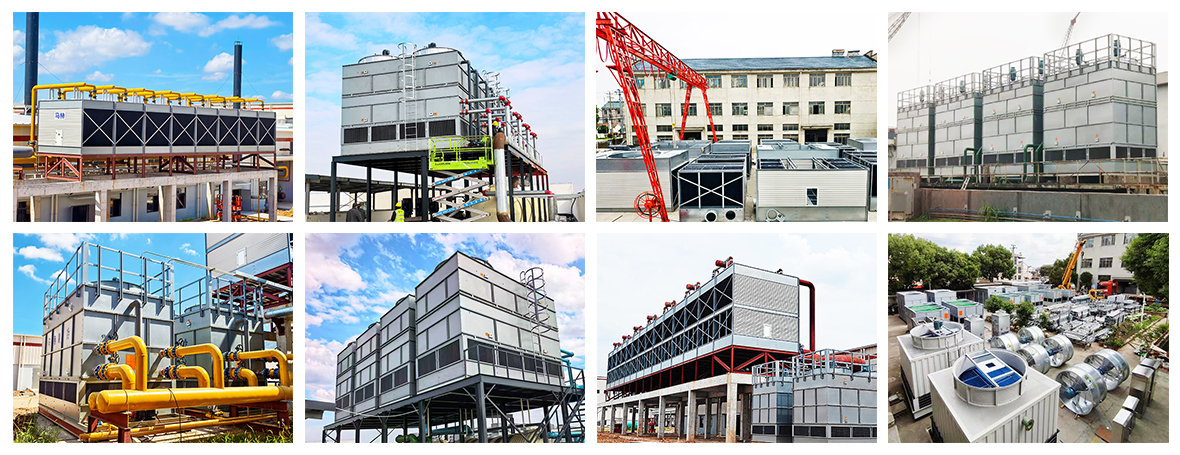
Dry fluid coolers generally have fewer cooling-water management tasks because they do not continuously circulate spray water during normal dry operation.
Typical maintenance includes:
Inspecting fans, motors, and electrical controls.
Cleaning heat-exchanger coils and air passages.
Checking for corrosion, leaks, and mechanical damage.
Confirming that airflow remains unobstructed.
Cooling towers and evaporative fluid coolers require additional maintenance because they use circulating water or spray-water systems.
Common tasks include inspecting water distribution nozzles, cleaning basins and strainers, checking drift eliminators, monitoring water chemistry, and controlling scale, corrosion, and biological growth.
The required maintenance frequency depends on the equipment design, local water quality, operating hours, and environmental conditions.
Before selecting a cooling system, consider whether your facility has the staff, equipment, and service support needed to maintain it properly. A system that looks economical at the purchase stage may become expensive if its operating requirements exceed your maintenance resources.
Water quality is another important consideration when comparing fluid coolers and cooling towers.
In an open-circuit cooling tower, circulating water comes into direct contact with air. Dust, organic matter, and other contaminants may enter the system, potentially increasing filtration and treatment requirements.
A closed-circuit fluid cooler keeps the process fluid inside a heat exchanger, reducing direct exposure to the external environment. This is useful when process-fluid cleanliness is important or when the liquid contains additives that would be expensive to replace.
However, closed-circuit designs do not eliminate every water-quality concern. Evaporative fluid coolers still need appropriate management of their external spray-water circuit, and the internal process fluid may require corrosion inhibitors or periodic checks.
Choose the equipment based on the cleanliness requirements of your process, the quality of available water, and the cost of maintaining each circuit.
The initial purchase price of a fluid cooler or cooling tower depends on several factors, including capacity, materials, heat-exchanger design, fan configuration, controls, and installation requirements.
A dry fluid cooler may need a larger heat-transfer surface to meet the required cooling duty during hot weather. An evaporative system may have additional spray-water components and water-treatment requirements, but it may offer favorable cooling performance under suitable conditions.
Operating costs should include:
Electricity for fans and pumps.
Water consumption and wastewater discharge.
Water-treatment chemicals and testing.
Routine inspection and cleaning.
Repairs and replacement components.
Labor and planned maintenance.
The lowest initial price does not necessarily mean the lowest lifetime cost.
For a fair comparison, request quotations based on the same cooling capacity, fluid temperatures, flow rate, and ambient design conditions. Ask suppliers to explain the assumptions behind their operating-cost estimates.
Installation requirements vary according to the equipment model, capacity, airflow requirements, and site layout.
Dry fluid coolers may need larger heat exchangers or greater airflow to achieve the required performance during hot weather. Cooling towers require sufficient airflow, access for maintenance, and appropriate placement to manage exhaust air and water drift.
Both systems need suitable structural support, service clearances, and consideration of nearby buildings and air intakes.
Noise is another factor to consider. Fans are often a major source of sound, while pumps and water distribution can contribute additional noise in evaporative systems.
Fan speed control, appropriate equipment placement, acoustic treatment, and suitable equipment selection can help reduce noise.
Rather than comparing equipment footprints alone, evaluate the complete installation, including pipework, access routes, electrical connections, and maintenance space.
The following table summarizes the typical differences between a dry fluid cooler, an evaporative fluid cooler, and an open-circuit cooling tower.
Comparison Factor | Dry Fluid Cooler | Evaporative Fluid Cooler | Open-Circuit Cooling Tower |
|---|---|---|---|
Cooling principle | Sensible heat transfer to air | Heat transfer with evaporative assistance | Evaporative cooling of circulating water |
Process fluid circuit | Usually closed | Closed | Open to air |
Cooling-water consumption | Normally none during dry operation | Yes | Yes |
Main ambient factor | Dry-bulb temperature | Wet-bulb and dry-bulb conditions | Wet-bulb temperature |
Process-fluid contamination risk | Low when the circuit remains sealed | Low for the process fluid | Greater exposure because water contacts air |
Water treatment | Depends on process-fluid requirements | Required for spray water | Generally required for circulating water |
Typical maintenance | Fans, coils, motors, controls | Fans, coils, spray system, water treatment | Fans, fill, basin, nozzles, drift eliminators |
Common selection priority | Water conservation and closed circulation | Closed process circuit with evaporative cooling | Effective evaporative heat rejection |
Key limitation | Performance decreases as ambient air temperature rises | Water use and spray-water maintenance | Water management and direct water-air contact |
Actual performance varies with equipment design, heat load, climate, water quality, and operating conditions.
Fluid coolers offer several advantages for industrial applications. Their closed process circuit can help maintain fluid cleanliness, while dry operation can reduce water consumption and simplify water management.
They are also suitable for applications where process-fluid isolation is important, including certain machinery-cooling systems, refrigeration installations, and industrial processes.
However, their suitability depends on the type of fluid cooler selected.
A dry fluid cooler can experience a significant performance reduction when outdoor air temperatures rise. If the process requires a low leaving-fluid temperature during peak summer conditions, the system may need a larger heat exchanger, additional fan power, or supplementary cooling equipment.
An evaporative fluid cooler can provide stronger heat rejection under hot conditions, but it requires water, water treatment, and additional maintenance.
The key is to match the equipment to your process instead of assuming every fluid cooler offers the same performance.
Consider a dry fluid cooler when water conservation is a major priority, the process can tolerate some variation in leaving-fluid temperature, or the facility operates for substantial periods in relatively cool weather.
It may also suit installations where reducing water treatment and keeping the process fluid isolated are important.
An evaporative fluid cooler is worth considering when you need a closed process circuit but also require evaporative cooling performance.
Before choosing either design, verify the maximum heat load, summer design conditions, fluid flow rate, fluid properties, and allowable temperature range. If the process cannot tolerate higher fluid temperatures during hot weather, do not size the equipment using annual-average outdoor temperatures.
Cooling towers are widely used because evaporative heat rejection can handle substantial heat loads and achieve relatively low circulating-water temperatures under suitable wet-bulb conditions.
They can support water-cooled chillers, industrial heat exchangers, manufacturing lines, and large commercial HVAC systems.
However, cooling towers consume water and require regular maintenance. Their operating costs may include water treatment, cleaning, inspection, blowdown, and replacement of worn components.
Open-circuit cooling towers also expose circulating water to the surrounding atmosphere, making water-quality management particularly important.
These requirements are manageable with appropriate equipment selection and a planned maintenance program, but they should be included in the project budget from the beginning.
A cooling tower is not automatically the cheapest choice for every facility, just as a dry fluid cooler is not automatically the most energy-efficient option.
A cooling tower is often a strong candidate when your process needs evaporative cooling, the heat load is substantial, water is available, and your facility can support a suitable water-treatment program.
It can be especially attractive when the required cooling-water temperature is difficult to achieve economically with a dry fluid cooler during peak summer conditions.
To determine suitability, evaluate the required heat rejection, water flow rate, inlet and outlet temperatures, local wet-bulb design conditions, available space, and maintenance resources.
For applications where process-fluid cleanliness is important, consider whether an open-circuit cooling tower or a closed-circuit configuration would be more appropriate.
Although both systems are called fluid coolers, dry and evaporative models operate differently.
A dry fluid cooler transfers heat through a heat exchanger without relying on water evaporation. It typically has lower cooling-water requirements, but its performance depends strongly on ambient dry-bulb temperature.
An evaporative fluid cooler uses spray water and airflow to improve heat transfer. It can achieve lower process-fluid temperatures under suitable conditions, but it consumes water and needs additional maintenance.
The right choice depends on your priorities.
If minimizing water consumption is essential and your process can tolerate the achievable fluid temperature, dry cooling may be a good fit. If your process needs stronger cooling performance while keeping the process fluid isolated from external water, an evaporative fluid cooler may be more suitable.
Always compare the equipment using the same heat load, fluid temperatures, flow rate, and ambient design conditions.
Fluid coolers and cooling towers serve a wide range of industries. However, the best configuration depends on the heat source, required temperature range, operating schedule, and local conditions.
Cooling towers are commonly used with water-cooled chillers because they can reject condenser heat through evaporation.
Dry fluid coolers may be used in dry-cooling systems, free-cooling applications, and facilities where reducing water consumption is important. Some buildings combine dry and evaporative cooling to balance energy use and water consumption across different seasons.
System selection should account for local climate, building load profiles, chiller requirements, noise restrictions, and maintenance capabilities.
Manufacturing facilities often require cooling for compressors, injection molding machines, hydraulic systems, furnaces, heat exchangers, and production equipment.
A dry fluid cooler may suit a closed-loop application where the process can operate at the fluid temperature the equipment can achieve. A cooling tower may be more appropriate when the process requires evaporative cooling and the facility can maintain the circulating water properly.
For sensitive liquids or expensive process fluids, a closed-circuit fluid cooler can help separate the process fluid from external cooling water.
Accurate equipment sizing requires information about actual heat generation, operating hours, process temperatures, and acceptable temperature variation.
Data centers and other high-heat facilities require reliable heat rejection, often throughout the year.
Depending on the cooling architecture, they may use dry coolers, cooling towers, evaporative fluid coolers, chillers, or combinations of these technologies.
Dry cooling can reduce water consumption, while evaporative cooling may improve heat rejection under hot conditions. The choice also affects electricity use, redundancy, maintenance planning, and performance during extreme weather.
For these applications, engineers should compare annual operating conditions and peak design requirements rather than selecting equipment based on one efficiency metric.
Selecting the right cooling system begins with understanding your process. A cooling tower or fluid cooler should be designed around the actual heat load and required operating temperatures, not simply chosen because another facility uses the same equipment.
Determine how much heat the system must reject under normal and peak operating conditions.
Identify the heat source, process-fluid flow rate, inlet and outlet temperatures, operating hours, and expected variations in demand.
If the load changes throughout the day, provide both typical and maximum values. Undersizing can lead to excessive process temperatures and production interruptions, while unnecessary oversizing can increase capital cost and create control challenges.
A qualified supplier can use your process data to calculate the required heat-rejection capacity.
Establish the required outlet temperature and the maximum temperature your process can tolerate.
Then compare that target with the local summer design conditions.
For dry cooling, outdoor dry-bulb temperature is a major limitation. For evaporative cooling, wet-bulb temperature and the equipment’s approach temperature are particularly important.
If the required fluid temperature is too close to or below the expected ambient dry-bulb temperature, a standard dry fluid cooler may not meet the duty without additional measures.
Make sure the supplier evaluates the hottest expected operating conditions rather than relying only on mild-weather performance.
Review local water costs, restrictions, supply reliability, and water chemistry.
Evaporative systems need water for evaporation and may require blowdown to control dissolved solids. Poor water quality can increase scaling, corrosion, fouling, and maintenance requirements.
A dry fluid cooler can reduce dependence on cooling water, but it may require greater heat-transfer capacity or additional fan energy.
Compare these trade-offs using your facility’s actual utility costs and process requirements.
Ask suppliers to separate the initial equipment cost from estimated operating expenses.
Your comparison should include fan and pump electricity, water consumption, treatment chemicals, inspection, cleaning, repairs, labor, and expected component replacement.
If the system operates year-round, relatively small efficiency differences can accumulate into significant costs over time.
Request the assumptions behind any annual operating-cost estimate, including operating hours, local weather data, expected load variation, and utility prices. This makes it easier to compare alternatives fairly.
Local weather can change the balance between dry and evaporative cooling.
A site with cool nights and mild seasons may benefit from dry operation for much of the year. A hot climate may require careful assessment of summer dry-bulb and wet-bulb temperatures to ensure adequate cooling capacity.
You should also consider whether your facility has the staff and service support to maintain the equipment. Evaporative systems require water management, while dry coolers still need regular coil cleaning and mechanical inspections.
The best technology is not simply the one with the lowest purchase price. It is the one your facility can operate reliably and economically over the long term.
One common mistake is comparing equipment using different performance conditions. Cooling capacity figures are meaningful only when the heat load, fluid flow rate, inlet and outlet temperatures, and ambient conditions are clearly defined.
Another mistake is assuming that every fluid cooler is a dry cooler. Some models use evaporative spray systems, so their water consumption and maintenance requirements can resemble those of cooling towers in important ways.
Buyers may also overlook peak summer performance, underestimate water-treatment costs, or ignore the space required for installation and maintenance.
Finally, avoid choosing equipment based solely on the initial quotation. Ask for a complete technical proposal and compare the expected lifetime cost, operating risks, and maintenance requirements.
A careful comparison at the beginning can help prevent expensive modifications later.
Selecting cooling equipment requires more than comparing product names or nominal capacities. You need a supplier who understands your process requirements, evaluates the design conditions, and recommends equipment suited to your heat load and site limitations.
Mach Industry (Zhejiang) Co., Ltd. provides cooling tower solutions for industrial and commercial applications. When evaluating a project, buyers should prepare the required heat-rejection capacity, fluid flow rate, inlet and outlet temperatures, ambient design conditions, water availability, and installation constraints.
These details help the manufacturer assess the appropriate cooling tower configuration and capacity for the application.
Whether you are planning a new industrial cooling system or evaluating alternatives to existing equipment, clear technical requirements are the starting point for a reliable solution.
To explore cooling tower solutions or discuss your project requirements, visit the official website: https://www.machcooling.com.
Working with a manufacturer during the specification stage can help you identify suitable equipment, clarify performance expectations, and avoid unnecessary expenditure over the system’s service life.
Not always. A dry fluid cooler transfers heat to air through a heat exchanger without relying on evaporation. An evaporative fluid cooler uses evaporation outside a closed process circuit. A conventional open-circuit cooling tower cools circulating water through direct contact with air and evaporation.
Some evaporative fluid coolers are also called closed-circuit cooling towers. Therefore, the equipment’s construction and operating principle matter more than the name alone.
A dry fluid cooler generally uses the least cooling water because it does not rely on evaporation during normal operation.
Evaporative fluid coolers and cooling towers consume water through evaporation, drift, and blowdown. Actual consumption depends on heat load, ambient conditions, equipment efficiency, and water-management practices.
There is no universal winner.
A dry fluid cooler may require more fan power or a larger heat exchanger to achieve a demanding cooling temperature in hot weather. Evaporative equipment may achieve lower temperatures under suitable wet-bulb conditions but requires water circulation and treatment.
For an accurate comparison, evaluate annual energy consumption at the same heat load and design conditions.
Sometimes, but not in every application.
A dry fluid cooler may be suitable if the process can tolerate the leaving-fluid temperature it can achieve. If the process requires cooling-water temperatures below ambient dry-bulb temperature, an ordinary dry cooler may not be sufficient during hot weather.
An evaporative fluid cooler may be a viable alternative for some closed-circuit applications. Before replacing a cooling tower, assess the heat load, required temperatures, ambient conditions, and total operating costs.
Start with the heat-rejection load, process-fluid flow rate, inlet and outlet temperatures, and peak ambient conditions.
Then account for fluid properties, operating schedules, possible future load increases, and installation limitations.
Share these details with the manufacturer and request performance data for your actual design conditions. Nominal tonnage alone is not enough to confirm that a unit will meet your requirements.
Yes. Conventional cooling towers and evaporative fluid coolers generally need an appropriate water-management program.
Treatment helps control scale, corrosion, fouling, and biological growth. The specific program depends on water chemistry, equipment materials, operating conditions, and applicable regulations.
Regular monitoring and maintenance are essential to maintaining reliable performance.
When comparing a fluid cooler vs a cooling tower, focus on the cooling principle, required fluid temperature, water consumption, energy use, maintenance, and total cost of ownership.
A dry fluid cooler can be an excellent choice when water conservation and closed fluid circulation are priorities. An evaporative fluid cooler may suit applications that need a closed process circuit and stronger evaporative heat rejection. A conventional cooling tower is often a practical solution for large heat loads where water is available and an appropriate water-treatment program can be maintained.
There is no single best cooling system for every industrial facility. The right choice comes from matching the equipment to your process requirements, local climate, and long-term operating priorities.
If you are evaluating cooling tower solutions for an industrial or commercial project, Mach Industry (Zhejiang) Co., Ltd. can be a starting point for discussing your requirements.
Visit Mach Cooling to learn more about cooling tower solutions and take the next step toward selecting a cooling system suited to your application.